October 2, 2026
 Categories: Business/Finance
America at 250: The Jewish Financiers Who Helped Build a Nation
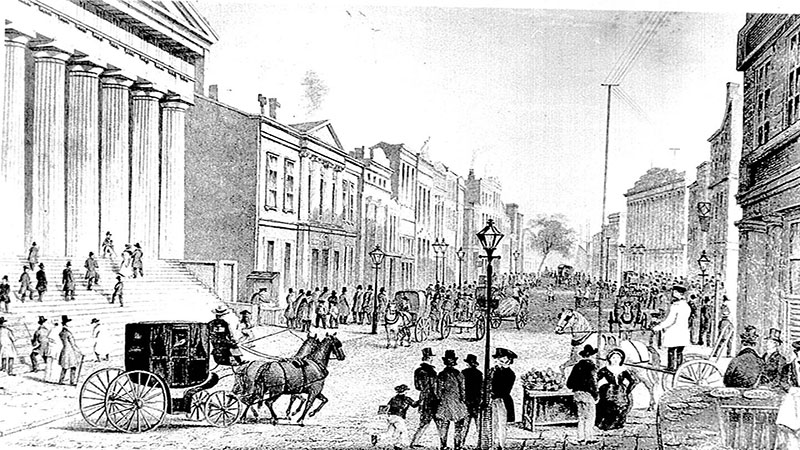


As America marks 250 years since its founding, I’d like to focus on a story rarely told with the prominence it deserves: the central role Jewish Americans have played in building the nation's financial architecture. From Revolutionary Philadelphia to modern Wall Street, Jewish financiers have not merely participated in the American economic story at pivotal moments; they have written entire chapters of it.
This is not a ranking. Choosing one figure per decade necessarily leaves out other towering contributors. It is, instead, a walk through 250 years of history, told through the men and women whose vision helped fund a revolution, build railroads, rescue cities from ruin, and construct institutions that still anchor the global economy. It is a record Jewish Americans can read with pride.
The 1770s – Haym Salomon, Financier of the Revolution: The story begins with the Revolution itself. As principal broker to the Continental Congress, Haym Salomon arranged loans, sold bills of exchange, and personally advanced funds to keep the fledgling war effort afloat when its cause seemed nearly lost. He is remembered as the "Financier of the Revolution," a title earned through real risk-taking at the birth of the republic, while he also stood as a pillar of Philadelphia's Jewish community.
The 1780s – Benjamin Nones, the Patriot-Merchant: A Revolutionary War veteran who became one of Philadelphia's leading merchants, Benjamin Nones represented something new: a Jew who could simultaneously be a soldier, businessman, and civic leader in the new republic, helping integrate Jewish commercial and civic life into America's earliest institutions.
The 1790s – Samuel Myers, Builder of New York's Foundations: As New York emerged as America's financial center, Samuel Myers stood among its most prominent Jewish merchants, helping develop the trade and capital networks the city needed to become a global commercial hub.
The 1800s – Judah Touro, America's Greatest Jewish Philanthropist: Few names are as synonymous with generosity as Judah Touro. He built his fortune in shipping and trade, made a point of never mortgaging properties to acquire new ones, and lived a simple life in a small apartment. "I have saved a fortune by strict economy," he said, "while others had spent one by their liberal expenditures." Touro turned his wealth into one of the great philanthropic legacies in American history, funding synagogues, cemeteries, hospitals, and civic institutions from Newport to New Orleans. Few financiers, in any era, have left a more enduring charitable footprint.
The 1810s – Joseph Simon, Frontier Financier: While much of early Jewish commerce centered on the coast, Joseph Simon helped extend financial networks into Pennsylvania and the western frontier, connecting frontier commerce to established markets in a critical link for America's westward expansion.
The 1820s – Mordecai Manuel Noah, Advocate and Builder: Few figures combined finance, journalism, and advocacy quite like Mordecai Manuel Noah. One of the most visible Jewish public figures of his era, Noah engaged in banking, real estate, and commercial ventures that contributed to New York's growth, while using his platform to advocate forcefully for Jewish civil rights. His bold vision for Jewish self-determination in America, conceived decades before modern Zionism took shape, reflected a conviction that the nation's promise of religious liberty should extend fully to Jews.
The 1830s – August Belmont, Connector of Continents: As the American representative of the Rothschild banking dynasty, August Belmont became one of the most powerful bankers of the nineteenth century, financing the railroads, government debt, and infrastructure that fueled America's expansion, while becoming one of the era's most significant political fundraisers.
The 1840s – Joseph Seligman, Investment Banking Pioneer: Joseph Seligman founded J. & W. Seligman & Co., a powerhouse that financed railroads and major government projects at a critical stage of American industrial development. His public exclusion from New York's Grand Union Hotel became one of the most cited episodes of American antisemitism, yet Seligman responded not with retreat but with redoubled devotion to Jewish charities and immigrant aid.
The 1850s – Marcus Goldman, Founder of an Institution: What began as a modest commercial paper business built by Marcus Goldman would eventually grow into Goldman Sachs, one of the most influential financial institutions in the world. Goldman pioneered new financing methods for growing companies during America's industrial expansion.
The 1860s – Mayer Lehman, From Cotton to Capital: Mayer Lehman helped transform a cotton brokerage into Lehman Brothers, a financial powerhouse that would play a defining role in financing industrial America after the Civil War, becoming one of Wall Street's most important institutions for more than a century.
The 1870s – Jacob Schiff, America's Most Influential Banker: Few individuals in American financial history wielded more influence than Jacob Schiff. As the leading force behind Kuhn, Loeb & Co., Schiff financed the railroads, industry, and infrastructure that powered America before World War I, and famously financed Japan during the Russo-Japanese War, altering the course of global geopolitics. He matched his financial power with extraordinary generosity, funding Jewish education, hospitals, and relief for persecuted Jews across Eastern Europe.
The 1880s – Jules Bache, Opening Global Markets: Jules Bache built J.S. Bache & Co. into one of Wall Street's largest brokerage firms, with expertise in mining, commodities, and international markets. At a time when investing abroad remained rare, Bache expanded American investors' access to global opportunity. The firm he built would go on to merge and evolve through several names over the following decades, eventually becoming part of what is today Wells Fargo Advisors, a testament to the staying power of the institution he founded.
The 1890s – Otto Hermann Kahn, Finance and Culture Combined: As a leading partner at Kuhn, Loeb, Otto Hermann Kahn helped reorganize major American railroads, making him one of the most prominent financiers of his generation. Equally renowned as a patron of the arts, Kahn used his stature to promote greater Jewish acceptance within elite American society.
The 1900s – Paul Warburg, Architect of the Federal Reserve: Every time the Federal Reserve sets interest rates today, it exercises authority that traces back to Paul Warburg, widely regarded as the intellectual father of the Federal Reserve System. He imported European central banking concepts that modernized American finance after devastating banking panics, an influence still felt more than a century later.
The 1910s – Bernard Baruch, From Wall Street to the White House: Bernard Baruch's career bridged worlds rarely connected: a legendary Wall Street speculator who became a trusted adviser to multiple presidents, directing American industrial mobilization during the First World War.
The 1920s – Julius Rosenwald, Retail Pioneer and Philanthropist: He built Sears, Roebuck into America's dominant retailer (the Amazon of its day). He donated tens of millions to causes nationwide, funding nearly 5,000 schools for Black children across the segregated South alongside Booker T. Washington, transforming American philanthropy and education.
The 1930s – Sidney Weinberg, "Mr. Wall Street": When the Depression nearly destroyed Goldman Sachs, Sidney Weinberg rescued and rebuilt it into Wall Street's premier advisory firm. Corporate leaders and presidents alike sought his counsel, earning him the nickname "Mr. Wall Street." Weinberg also played a vital role helping Jewish refugees escape Nazi Europe.
The 1940s – André Meyer, Inventor of Modern Dealmaking: At Lazard, André Meyer pioneered the modern era of mergers and acquisitions, advising corporations on the kind of transformational transactions that became the blueprint for investment banking as we know it today, while also dedicating himself to assisting European Jewish refugees after World War II.
The 1950s – Arthur Burns, Shaping Economic Policy: Arthur Burns brought his influence to bear on the highest levels of American economic policymaking, serving as chairman of the Council of Economic Advisers and later as Federal Reserve Chair.
The 1960s – Gus Levy, Pioneer of Modern Trading: Gus Levy rose from running Goldman Sachs's one-man trading desk to becoming senior partner of the firm, transforming Wall Street trading along the way. He pioneered the practice of block trading, executing what was at the time the largest such trade in history, and built the risk arbitrage business that would later become central to modern investment banking. Levy was also one of the era's great Jewish philanthropic fundraisers, raising enormous sums for Jewish charitable and communal causes in New York.
The 1970s – Felix Rohatyn, the Banker Who Saved New York: Felix Rohatyn's story is among the most remarkable on this list. A Holocaust survivor, Rohatyn engineered New York City's rescue from near-bankruptcy in 1975, becoming America's foremost restructuring banker through his work at Lazard, proof that financial expertise can stabilize not just companies, but entire governments.
The 1980s – Michael Milken, Creator of a New Capital Market: Michael Milken's innovations effectively created the modern high-yield bond market, opening access to capital for thousands of entrepreneurial companies that might never have secured financing otherwise. Despite the legal controversies that followed, the structural changes Milken brought to corporate finance proved enduring, and he subsequently became one of the most significant philanthropic supporters of medical research and education in the country.
The 1990s – Sandy Weill, Builder of the Modern Conglomerate: Sandy Weill built Citigroup through a series of landmark acquisitions that reshaped the structure of global banking. His "financial supermarket" model, combining banking, brokerage, insurance, and asset management under one roof, redefined what a modern financial institution could be.
The 2000s – Stephen Schwarzman, Institutionalizing a New Asset Class: Stephen Schwarzman built Blackstone into the largest alternative asset manager in the world, helping institutionalize private equity, private credit, and alternative investing as core pillars of global finance. His influence has reshaped how pension funds, endowments, and sovereign wealth funds invest trillions of dollars.
The 2010s – Larry Fink, Steward of the World's Capital: Under Larry Fink's leadership, BlackRock grew into the largest asset manager on earth, overseeing more than $6 trillion by the end of the decade. Beyond the firm's sheer scale, Fink helped democratize investing itself, expanding access to low-cost mutual funds, ETFs, and other investment vehicles that brought Wall Street within reach of millions of everyday Americans who previously had little access to the markets.
The 2020s – Janet Yellen, A Historic First: Janet Yellen made history as the first woman to chair the Federal Reserve and later became the first woman to serve as U.S. Treasury Secretary. In these roles, she has guided the country's response to inflation, banking sector stress, and post-pandemic economic challenges, directing both monetary and fiscal policy at one of the most consequential moments in modern American economic history.
A Legacy to Be Proud Of: Taken together, these twenty-five lives tell a remarkable story spanning two and a half centuries: immigrants and children of immigrants who, time and again, found themselves at the center of America's most important financial moments, financing its revolution, founding its great investment banks, architecting its central bank, rescuing its largest city, and stewarding trillions of dollars of the world's capital.
It is a story made more remarkable by the fact that so many of these figures achieved success while facing real antisemitism, from Joseph Seligman's public humiliation at a New York hotel to the broader prejudices Jewish bankers regularly confronted on Wall Street. And yet, decade after decade, they not only persevered but excelled, all while turning back toward their own community: funding synagogues and hospitals, rescuing refugees, and supporting Jewish causes around the world.
As American Jews navigate a difficult new wave of antisemitism, this history offers perspective, and pride. The Jewish American story is inseparable from the American financial story itself. Jewish Americans have, generation after generation, punched far above their weight, and they continue to do so today.