October 2, 2026
 Categories: Features / Money Matters
Are Prenuptial Agreements Necessary When a Couple Has Disparate Levels of Wealth?
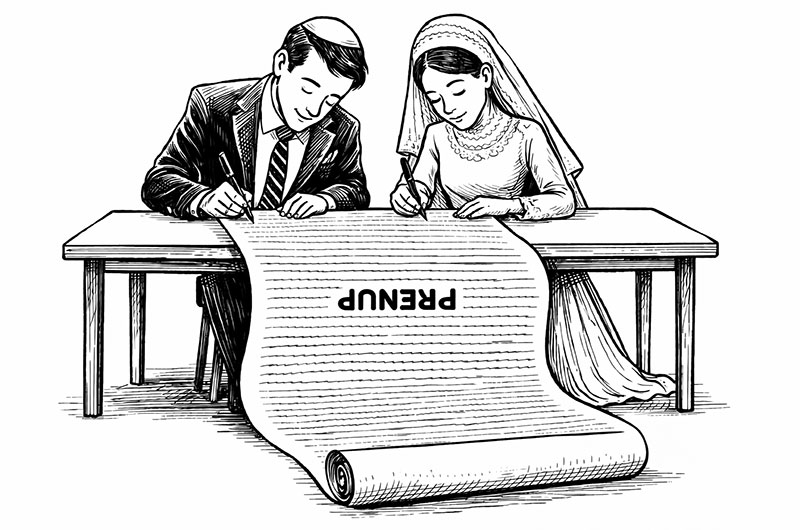


I recently attended a wedding where the bride and groom came from two very different financial backgrounds. One family possessed significant wealth, while the other had relatively modest financial means. Celebrating the joining of these two families made me reflect on an important question: when two people from very different levels of wealth get married, is a prenuptial agreement necessary?
This is not a simple question, and the answer is rarely one-size-fits-all. Every situation depends on a variety of factors, including the age of the couple, the level of family wealth, the dynamics between families, the couple’s career paths, and their long-term plans. While there is no universal rule, there are several guiding principles that families may find helpful when thinking through this issue.
What is a prenup? To begin with, it is worth understanding what a prenuptial agreement actually is. A prenuptial agreement (commonly referred to as a “prenup”) is a written, legally binding contract that couples sign before marriage. The document outlines how assets, debts, and financial responsibilities will be handled if the marriage ends through divorce. A prenup typically clarifies what property will remain separate, how marital property may be divided, and whether spousal support will be paid.
Prenuptial agreements can also address issues such as inheritances, family businesses, and premarital debt. However, there are limits to what they can control. For example, a prenup cannot determine child custody or child support arrangements. For the agreement to be legally valid, both parties must enter into it voluntarily, disclose their financial information fully, and sign the document in a formal manner, typically with notarization. Each partner should ideally have their own attorney to ensure the agreement is fair and properly structured.
Many couples choose to sign a prenup for a variety of reasons. Some want to protect significant premarital assets, others want to ensure that family wealth remains within the family, and some wish to protect themselves from a partner’s existing debts. In other cases, the agreement simply encourages open communication about financial expectations before the marriage begins. Importantly, any such agreement should be drafted well in advance of the wedding to avoid unnecessary pressure or emotional tension during an already stressful time.
Halachic prenup: Within the frum community, there is also an important distinction between a financial prenup and what is known as a halachic prenup. A halachic prenup is a rabbinically endorsed legal agreement designed to prevent situations in which a woman becomes an agunah, chained to a dead marriage and unable to remarry because her husband refuses to grant a get (i.e. Jewish bill of divorce).
This document creates financial incentives that strongly discourage the withholding of a get, and it has become one of the most effective modern tools for preventing abuse within Jewish divorce proceedings. Today, it is widely viewed as essential by rabbinic authorities across much of the Orthodox world. In my opinion, every couple entering into marriage should sign a halachic prenup regardless of their level of religious observance, background, or financial status. It serves as an important safeguard that protects both parties and helps prevent painful situations that can otherwise arise.
Financial prenup for couples with disparate levels of wealth: Returning to the financial question, the situation becomes more complicated when two individuals come from dramatically different levels of wealth. When one family possesses significant financial assets and the other does not, a financial prenup can sometimes make practical sense.
For example, a family with substantial wealth may wish to ensure that certain assets, such as inherited property, family businesses, or long-standing investment portfolios, remain separate from the marital estate. Without such protection, those assets could potentially become part of divorce negotiations in the future. In these situations, a carefully constructed prenuptial agreement may provide clarity and protection for both the individual and the family.
However, it is equally important to recognize that a prenup should not exist solely to protect the wealthier spouse. The spouse entering the marriage with fewer assets may also have legitimate concerns that deserve attention. Consider a situation in which the less wealthy spouse leaves the workforce or reduces their career ambitions because the couple relies on family wealth or support. If the marriage later ends after many years, that spouse may face significant financial challenges rebuilding their career and supporting themselves.
A thoughtfully constructed prenuptial agreement can address this imbalance by ensuring that the financially dependent spouse receives a fair level of protection. In other words, a prenup can function as a tool that protects both sides rather than serving as a purely defensive measure for the wealthier family. When structured properly, it can offer financial breathing room and stability to a spouse whose life circumstances may have changed dramatically due to the marriage.
When a financial prenup may not be needed: By contrast, the necessity for a financial prenup tends to be much lower when a couple begins marriage on relatively equal financial footing. When both individuals are early in their careers, possess limited assets, and are building their financial lives together, the philosophy of “what’s yours is mine and what’s mine is yours” often makes the most sense. In those situations, there may simply be fewer assets that require special protection.
Get it done correctly: Regardless of the circumstances, couples considering a financial prenuptial agreement should always consult experienced legal professionals. An attorney who specializes in matrimonial law or asset protection can help ensure that the agreement is fair, enforceable, and tailored to the couple’s unique situation. When handled thoughtfully and professionally, these discussions do not need to create tension or jeopardize a shidduch. Ideally, everyone involved can approach the topic with maturity and clarity, recognizing that the goal is not to undermine the marriage, but to establish a framework that protects both parties.
While discussions about prenuptial agreements can feel uncomfortable, they often reflect responsible financial planning rather than a lack of trust. At the end of the day, the goal of any couple is to embark on a happy and enduring marriage. Taking precautionary measures along the way can simply be part of prudent planning.
More important than a prenup: There is also another point that deserves serious attention when discussing marriage and financial security, and in many cases, it may be even more important than a prenup itself. Both spouses should ideally develop the education, training, and professional skills necessary to earn a LIVABLE wage.
Over the past several years, I have received numerous phone calls from women who found themselves in financially and emotionally abusive marriages. Many of these women spent years relying on their husbands as the primary financial providers while they remained out of the workforce raising children. When the marriage ultimately broke down, they suddenly faced the daunting challenge of supporting themselves and their families without having a recent work history or marketable professional skills. Unfortunately, if someone has been out of the workforce for many years, developing a career in their 40s while caring for several children can be extraordinarily challenging.
In some of these cases, the husband became extremely difficult during the divorce process by delaying payments, withholding financial support, or negotiating aggressively in order to provide as little as possible to his former spouse and children. A divorce settlement can be negotiated, delayed, or disputed, but no one can take away someone’s skills, training, or ability to earn a living. The ability to generate income provides independence, dignity, and financial security regardless of what may happen in a marriage.
For this reason, I often advise families, especially those raising daughters, that it is essential for every young person to acquire a skill set that allows them to earn a livable wage. Whether that skill comes through higher education, professional certification, or vocational training, it creates a foundation of financial resilience. Having the ability to support oneself financially changes that dynamic entirely. Even if a former spouse becomes difficult or unreliable, a person who can still pay their bills and support their family can move forward with confidence. While a prenup can help define financial boundaries, education and professional skills provide something far more powerful: long-term financial independence.
Building an enduring union: Ultimately, every marriage is unique, and families must evaluate their own circumstances carefully when deciding whether a financial prenuptial agreement makes sense. The goal of marriage is to build a life together based on trust, partnership, and shared values. However, taking thoughtful steps to protect one another, financially and emotionally, can help lay the foundation for a strong and enduring union.