יום ראשון, ז׳ חשוון תשפ״זSunday, October 18, 2026



Follow Us


Alex Traiman is managing director and Jerusalem Bureau Chief of Jewish News Syndicate.
Read More
By Alex Traiman
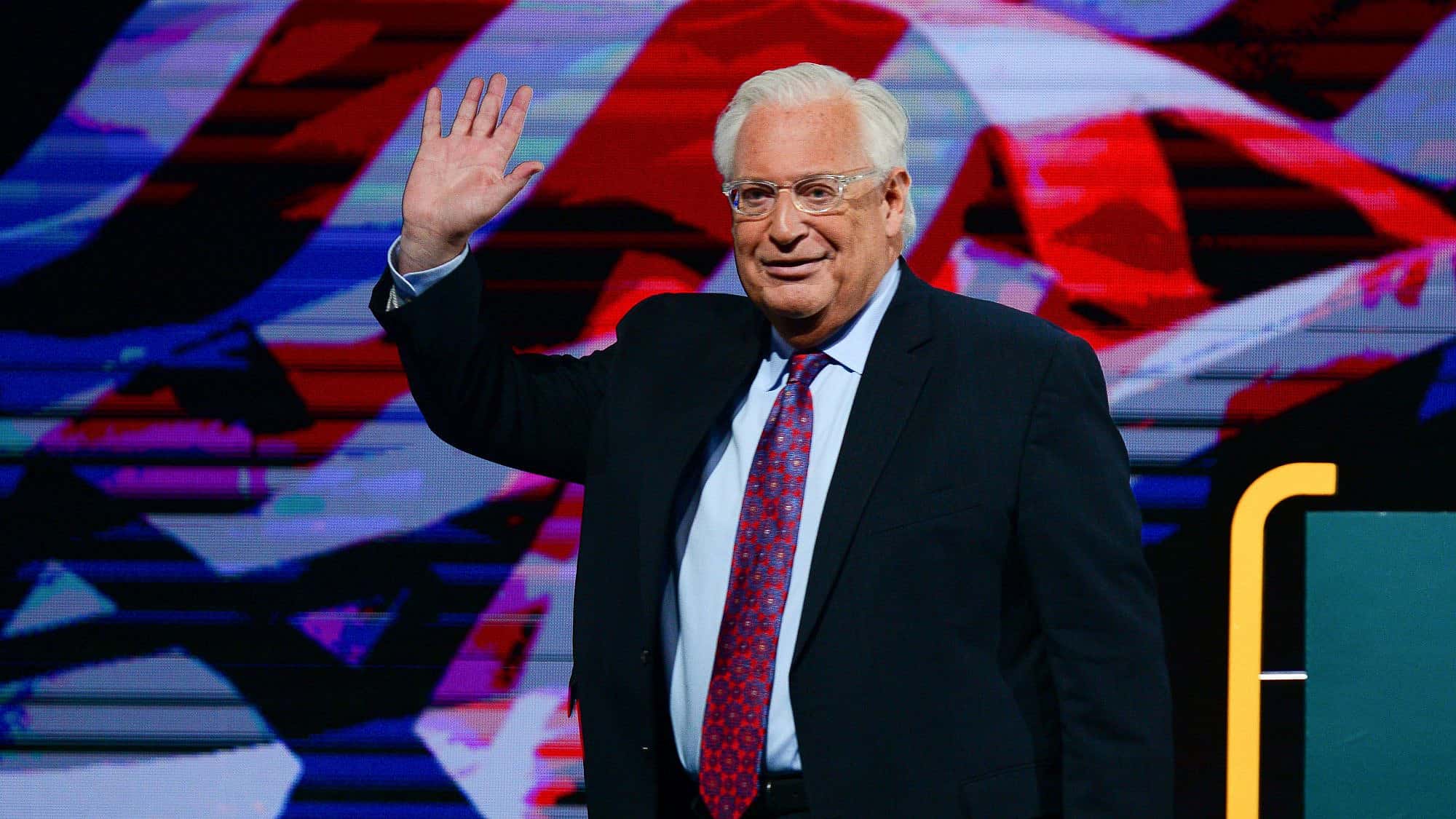
Former Ambassador David Friedman's proposal "protects Israel's security, respects biblical covenants and affords civil rights and human dignity to all."
By Alex Traiman
The protest organizers are doing irreparable harm to the state, its institutions and its economy, in a classic “cutting off your nose to spite your face” campaign.
By Alex Traiman
While the Israeli left has had no choice but to concede the government to a voter base shifting to the right, it is unprepared and unwilling to give up control of state institutions.
By Alex Traiman
In an interview with JNS, the former secretary of state chides Biden for policies on Israel, calls the FBI probe of Shireen Abu Akleh’s death “political” and says Netanyahu has the right to choose his cabinet ministers “full stop.”
By Alex Traiman
If the exit polls hold true, Netanyahu has a clear path to forming a right-wing government and returning to power. Yet, in previous election cycles, mandates shifted during the manual counting of Israel’s paper ballots.
By Alex Traiman
Speaking to JNS, the controversial right-wing Israeli politician said, “Our Tanach [Bible] teaches us that we are from here, we have come back to our land. I am not a racist, I do not hate Arabs, I hate terrorists.”
By Alex Traiman
Shapiro, whose remarks delved into the theological realm, explained that “the Torah demands that [mankind] act morally” and that “G-d lays out a choice for each individual between good and evil.” Peterson called Israel the “cardinal model of the nation state.”
By Alex Traiman
By officially calling for “an agreement with the Palestinians, based on two states for two peoples,” Prime Minister Yair Lapid has changed the election paradigm from “anybody but Netanyahu” back to the issue that has divided Israel’s left and right since Yitzhak Rabin signed the infamous Oslo Accords in 1993.

By Alex Traiman
He is gathering research for his next book on Israeli security threats, traveling along Israel’s often tense borders with Gaza, Syria and Lebanon. Details of his trip, including visits to the Temple Mount, the Al-Aqsa mosque compound and the Western Wall have made waves on social media.

By Alex Traiman
From the outset, it was clear that the coalition was destined to fail. Ultimately, the desire to keep Benjamin Netanyahu out of office wasn’t enough to keep a group that agreed on little else together.
By Alex Traiman
If it was not acceptable to the parliament for Netanyahu—the head of the nation’s largest political party with 30 seats—to lead a minority government, why is it acceptable for Bennett to do so with the backing of only five members of the 120-member parliament?

By Alex Traiman
With the many challenges facing Israel and its neighbors, including an unstable structure of once-reliable global superpowers and the growing likelihood of a rogue nuclear regime in Iran, this regional alliance is becoming more important by the day.
By Alex Traiman
Israel must depend on no foreign power, use savvy to navigate between world powers, and be both willing and able to use force when necessary to protect its sovereignty.
By Alex Traiman
The current battle for the land of Israel oftentimes is not fought with conventional weapons. Rather, Israelis and Palestinians are staking their claims to the land by planting trees.
By Alex Traiman
The government’s rush to become a climate champion is as much about global finance as about the environment, and Israeli technologies may become the primary beneficiaries.
By Alex Traiman
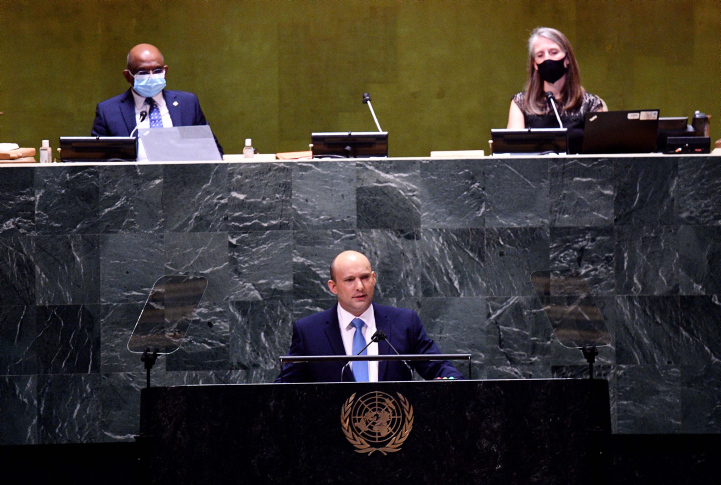
Israel’s foreign minister and prime minister-in-waiting has been free to operate without much attention or criticism. Yet, since taking office, he’s overseen some highly questionable diplomatic moves that harm critical Israeli national-security interests.
By Alex Traiman
“We are on the cusp of ending the Israeli-Arab conflict and changing the region for the next 100 years,” says former U.S. Ambassador to Israel David Friedman at the launch of his new documentary series on the historic agreements.

By Alex Traiman
A push to reopen a shuttered consulate to the Palestinian Authority in Jerusalem is a first major foreign-policy test for Israel’s fragile coalition. Former Mayor Nir Barkat warns that Israel’s prime minister “must not allow a move that will divide Jerusalem, the capital of Israel forever and ever.”
By Alex Traiman
"By putting a consulate in Jerusalem and signaling a separate mission and a separate capital to another country, you are essentially dividing Jerusalem," said Former U.S. Ambassador to Israel David Friedman
By Alex Traiman
If Israel had targeted those outlets for their open and intentional support of its enemies—not simply hit the Hamas building in which they were housed—it may have been justified on those grounds alone.
By Alex Traiman
Naftali Bennett had explicitly pledged that he would not sit in any government with Yair Lapid, “not with a rotation and not without a rotation,” because he “is right while Lapid is left.” It is now clear that he was negotiating the terms of a rotation the entire time.

By Alex Traiman
No single factor is to blame. A perfect storm of elements simultaneously came together, exposing a system filled with flaws—many of them cultural in nature

By Alex Traiman
Polls show that the election is Netanyahu’s to win or lose. If he cannot form a coalition, it’s unlikely that another candidate would fare any better, although one should always expect the unexpected in Israeli politics.
By Alex Traiman
Klein has served as Netanyahu’s strategic adviser since June after leading a successful election campaign in March 2020.
By Alex Traiman
“You can see nations all across the world coming to understand that the Palestinians have rejected reasonable offers to negotiate time and time again. And the leadership has simply failed its own people,” says U.S. Secretary of State Mike Pompeo.
By Alex Traiman
“We've done more for the cause of peace within this region than any administration in the history of the United States. And, I think those opposing us just are not seeing the situation clearly,” America’s envoy to the Jewish state tells JNS in a wide-ranging interview.

By Alex Traiman
While Israel’s prime minister clearly prefers working with a friendly Trump administration, he has demonstrated his ability to improve Israel’s diplomatic position regardless of which American political party is in power.
By Alex Traiman
A look at the simultaneous fronts Netanyahu is fighting both to remain prime minister and strengthen Israel against unforeseen challenges and known enemies.
By Alex Traiman
The Netanyahu government is working hand in hand with the Trump administration to recognize Israeli sovereignty over approximately 30 percent of Judea and Samaria. July 1 was by no means a deadline.
By Alex Traiman
Following two lackluster campaigns that failed to produce a clear electoral victory for Netanyahu, Klein was credited with dramatically increasing the number of Netanyahu’s campaign appearances across the country, in addition to doubling down on an aggressive social media communications strategy.
By Alex Traiman
That he remains in power despite the bitter campaign waged by the state prosecution, his political opposition and the media, speaks volumes about the public’s faith in their prime minister and lack of trust in the justice system.
By Alex Traiman
The court’s decision not to invalidate the Netanyahu-Gantz unity government was about self-preservation, not protecting democracy or upholding the will of the electorate.
By Alex Traiman
The announcement notes that “creating the Chair-elect role enhances the effectiveness of the transition.” Thus far, the transition from Stark to a new chairperson has been anything but smooth or effective.
By Alex Traiman
Israel’s longest-serving premier is now expected to add at least 18 months to his premiership, while guiding Israel through a critical period of security, economic and diplomatic uncertainty.
By Alex Traiman
Our reflection right now should bring us towards a spirit of unity. Unity between secular and religious. Unity between Israel and the Diaspora. Unity between Jews and our neighbors. Unity among our religious leaders, communal leaders and politicians.
By Alex Traiman
Israel’s longest-serving prime minister, who has shown no signs of slowing down during an extended campaign season and has battled coronavirus while under immense political pressure, remains in office over the next 18 months. Israel is much better off for it.
By Alex Traiman
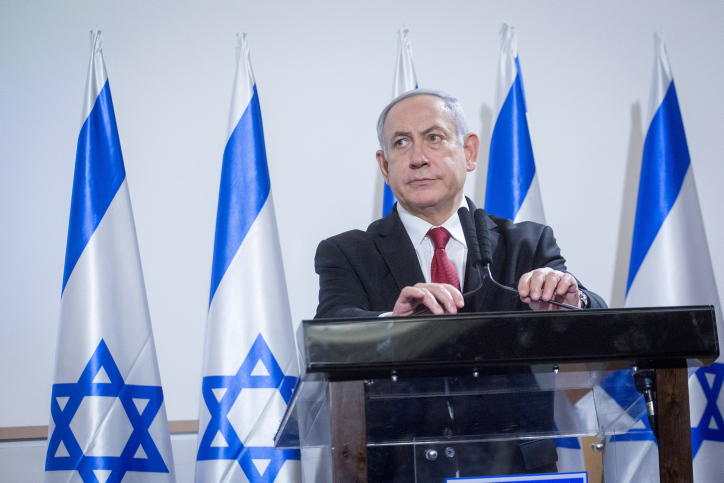
After a year-long political impasse and with the nation facing unprecedented challenges and opportunities, Israel’s elected MKs must recognize that this moment calls for national responsibility, and for the creation of a functioning, Zionist parliamentary majority

By Alex Traiman
Looking at the numbers emerging from Israel’s March 2 election, one has to wonder: How many votes does Netanyahu need to win by for the entire electorate to declare his victory?
By Alex Traiman
Once again, Israel’s overly vibrant hyper-democracy has proven through a definitive 20-mandate victory that after 11 years at the helm, only the voters still want Benjamin Netanyahu to lead the country.
By Alex Traiman
He has been demonstrating to his direct Likud supporters, as well as to members of his right-wing and religious party bloc, that after 11 years running he still wants the job more than ever.
By Alex Traiman
While opponents of Trump’s peace plan have accused Israel’s premier of making a diplomatic blunder with the U.S. and failing to deliver on annexation, the two administrations have never been closer and delaying annexation until after Israel’s elections may actually play to Netanyahu’s advantage.
By Alex Traiman
By embracing the release of the U.S. peace plan ahead of Israel’s March 2 elections, Netanyahu believes he can expose his political challengers while reaping large dividends for himself and the Jewish state.
By Alex Traiman
Law professor Avi Bell, a member of the legal team that submitted a brief in defense of the Israeli premier during pre-indictment hearings, talks about the potential danger the cases against Benjamin Netanyahu pose to Israel’s democracy.
By Alex Traiman
Without the relative stability of his natural partners, Benjamin Netanyahu currently has a bloc of 55 Knesset members supporting him to form a new government—six seats short of a majority.
By Alex Traiman
So says Mark Levin, author of “Unfreedom of the Press,” on the cusp of the second round of national elections in the Jewish state.
By Alex Traiman
By refusing Israel’s offer, Rep. Rashida Tlaib acknowledged that her goal was never simply to visit an aging family member, but rather to use that visit as a platform to attack the Jewish state.
By Alex Traiman
Israel’s democracy has proven time and again that it can withstand any criticism, whether from grassroots activists to nation-state leaders. Israel sent a strong message to Omar and Tlaib, and other BDS supporters: if you promote boycotts of Israel, then Israel boycotts you
By Alex Traiman
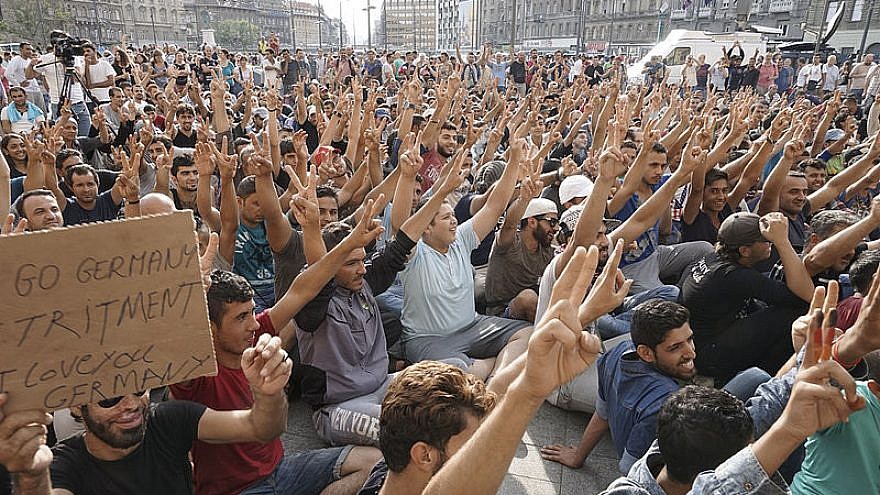
European diplomats gathered in Tel Aviv for a presentation by the Jerusalem Center for Public Affairs on its recent study on the legal, security and cultural implications of the European immigration crisis.
By Alex Traiman
They note the strategic nature of the areas in which Settlers live, as well as the existing economic and often unknown social collaboration between Jews and Arabs

By Alex Traiman
The continuing cycle of violence against Israeli civilians will not disappear until Israel’s political leaders are ready to take responsibility for each and every Jewish life, and to defend each one as if it were the entire nation.

By Alex Traiman
Now in its ninth year, the Hebrew Public network of 13 charter schools utilizes a blend of startup philanthropic funding and state funds to offer high-quality Hebrew language education to Jewish and non-Jewish students alike.

By Alex Traiman
Much of American Jewry’s primarily liberal communal leadership has taken vocal odds with policies of Israel’s conservative coalition government relating to key religious issues, the protection of minorities living in Israel and an inability to reach a peace agreement with Palestinians. And many Israelis have taken odds with the progressively divisive tone of American Jewish criticisms.

By Alex Traiman
Both the U.S. and Israeli laws to offset funds paid to out terrorists represent the first major steps in holding the P.A. accountable for nearly three decades of incitement and terror financing. The passage of both laws is a testament to the relentless pursuit of activists Sander Gerber and Stuart Force.
By Alex Traiman
The best case scenario is that the demolitions in Netiv Avot will have little to no effect on Israel moving forward. In the worst case scenario, the evacuations will drive peace further away.
By Alex Traiman
U.S. Ambassador to Israel David Friedman met with leaders of the White House Faith Counsel Initiative the day after the celebratory opening of the new American embassy in Jerusalem.

By Alex Traiman
The problem with the mantra about supporting Israel while simultaneously criticizing it is that the right to disparage often does more to damage the critic than it does to the receiving party.
By Alex Traiman
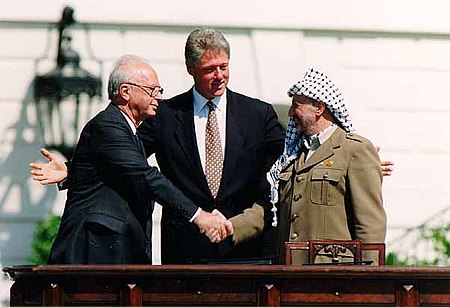
Former U.S. President Bill Clinton admitted his unsuccessful efforts to help Shimon Peres defeat Benjamin Netanyahu during Israel's 1996 general election.
By Alex Traiman
On Monday, the Zionist Organization of America responded to Jewish-organizational critics of the Netanyahu speech, calling out those organizations in a press release and saying, “The United States Congress is discussing the Iran situation now. Prime Minister Netanyahu must speak now….
By Alex Traiman
The leaking of information on an Israeli air strike in Syria and a growing divergence in approach to Iran sanctions have accentuated the Obama administration’s differences with the Israeli government.
By Alex Traiman
Twenty years after the signing of the fateful Oslo Accords between Palestine Liberation Organization chairman Yasir Arafat and Israeli prime minister Yitzhak Rabin, Knesset members are debating the merits of the peace process and the two-state solution paradigm.
By Alex Traiman
Secretary of State John Kerry has many in Israel wondering if the U.S. has its foreign policy priorities straight, particularly in the Middle East.
By Alex Traiman
The recent Israeli air strikes on Syria – which have neither been confirmed nor denied by Israeli officials – targeted weapons depots allegedly storing Iranian-made weapons intended for the Lebanese terrorist organization Hizbullah.


 October 16, 2026