יום שלישי, ב׳ חשוון תשפ״זTuesday, October 13, 2026



Follow Us


Read More
By BESA CENTER
The plan has some creative elements and some that may not prove realistic, but critics who say that Trump’s plan won’t win acceptance by Mahmoud Abbas are missing its main point, which is that the Palestinians need new leaders.
By BESA CENTER
PM Benjamin Netanyahu’s enthusiasm for the idea of applying Israeli sovereignty to parts of the West Bank can be explained by the desire to seize the historic opportunity created by President Trump’s uniquely favorable attitude to Israel. There is another element, however, that warrants close attention: Netanyahu’s reaction to the Obama administration’s relentless hostility.
By BESA CENTER
The Palestinian-Arab propaganda machine incessantly fuels aggressive anti-Israel campaigns. The PA’s public diplomacy is based on manipulation: it takes advantage of the ignorance and superficial historical knowledge of the rest of the world about the Israeli-Arab conflict to implant an invented history. The Jewish State may have committed a historic misjudgment by selecting the name “Israel,” as the choice has damaged the state’s strategic interests.
By BESA CENTER
Israel is proving to the Gulf States that it is a more reliable partner in some respects than big powers like the US, China, or Russia. But the limits of cooperation with Israel could come to the forefront at a time of economic crisis in which the Gulf States are likely to have to renegotiate longstanding social contracts.
By BESA CENTER
Although the “Floyd crisis” in the US contains the seeds of civil war, acknowledgment of the historical errors that gave rise to this crisis, taking responsibility, and making a commitment to rectify those errors could make this a shining moment for the American people and a milestone in the history of democracy.
By BESA CENTER
Societal change is occurring very rapidly as countries emerge from the height of the coronavirus crisis. In some locations, major protests are being mounted against government measures. If a second wave of the pandemic strikes, popular resistance to future measures could be great. In addition to protests, we are seeing the first of what could become a massive stream of court cases. The revival of the economy is a priority for every government, but mistakes can come at a heavy price.
By BESA CENTER
New York City is the largest urban area in the US. It has the biggest economy and is the nation’s financial and cultural center. It also contains the largest single Jewish population in the world outside Israel. All those things are about to change. The twin impacts of the economic collapse created by the coronavirus pandemic and the ongoing urban insurrections will intensify existing trends. People and power are moving out of New York at increasing rates. What are the implications for the US, the world order, and the global Jewish community?
By BESA CENTER
The conquest of southern Lebanon in Operation Peace for Galilee, and Israel’s long sojourn in the area, had political and military justification. But defects in the IDF’s deployment during the operation, and later in its protracted security activity, culminated in the May 2000 hurried withdrawal that continues to this day to negatively affect Israel’s national security.
By BESA CENTER
The coronavirus crisis has exposed Arab and Islamic notions of fraternity, mutual commitment, and solidarity as hollow rhetorical slogans. Each country in the region is focused entirely on its own efforts to survive economically, socially, and politically as the pandemic continues to wreak havoc.
By BESA CENTER
The coronavirus crisis has shaken many European Jewish communities to the core. As the EU member states try to return to normal in the aftermath of the most severe threat to the lives of their citizens since WWII, the continent’s Jewish communities struggle to come to terms with the devastating events of the past months.
By BESA CENTER
America and Israel face numerous shared challenges, including terrorism, weapons and nuclear proliferation, cyber warfare, and the spread of radical Islamist ideology. ..Israel also invests heavily in the American economy and is one of the top 20 suppliers of direct investment in the US.
By BESA CENTER
Israel’s May 2000 rushed evacuation of its security zone in south Lebanon and the desertion of its longstanding local allies there tarnished the Jewish State’s deterrent posture and helped spark a string of large-scale armed confrontations with Hezbollah (2006), the PLO (the so-called “al-Aqsa Intifada”), and Hamas (2008/9, 2012, 2014).
By BESA CENTER
The declared intention of the new Israeli government to pave the way for the implementation of sovereignty in certain parts of the West Bank, with the blessing of the Trump administration, is prompting vigorous debate. The dark prophecies by “liberal” Israelis as well as EU officials about the dire consequences that would result from annexation are exaggerated, and they obscure the vital strategic value of the Jordan Valley for Israel’s security.
By BESA CENTER
Zionist organizations and the Israeli government devote incalculable resources to the effort to contain the damage caused by news reports and opinion pieces that portray Israel inaccurately and unfairly. The conventional response is for Israeli diplomats and hasbara activists to bombard journalists with angry emails and reader comments. It would be much more productive to encourage journalists to learn both sides of the story, even compensating them financially to do so.
By BESA CENTER
The recent “backpacker deal,” the Crimean Peninsula annexation, and Russia’s Sochi Olympic Games are all examples of Vladimir Putin’s global “smart power” strategy, which combines soft and hard power. In winning Russian sovereignty over the Jerusalem complex near the Church of the Holy Sepulchre, he scored a significant soft power win.
By BESA CENTER
The many fabrications circulating around the world about coronavirus (COVID-19) are stoking fear and threatening public health. They vary from accusations of biological warfare to myths about the ways the virus spreads and what medications might be helpful to combat it.

By BESA CENTER
The coronavirus (COVID-19) pandemic is causing an online revolution—one that provides opportunities but also creates risks. Surveillance of infected and quarantined individuals through mobile applications is helping to slow the spread of the contagion, but contains an implicit threat to privacy. Cybersecurity is being tested as hackers look for ways to use the unprecedented situation to strike governments, companies and individuals.
By BESA CENTER
When President Donald Trump and other medical professionals touted the decades-old antimalarial drug hydroxychloroquine as a possible means of fighting the coronavirus pandemic, the Israeli generic drug giant Teva (the most popular big pharma stock on Wall Street) immediately announced that it will provide 10 million doses of its hydroxychloroquine drug to US hospitals free of charge. Rep. Rashida Tlaib and her fellow American detractors of Israel who claim that Israel does nothing but take from the US owe Israel an apology.
By BESA CENTER
The possibility of an Israeli minority government that relies on the Joint Arab List underscores the clear and present danger of accommodating political parties and movements that reject the existence of the Jewish state and propagate Israel’s transformation into a Palestinian Arab (Muslim) state.
By BESA CENTER
Ever since the 2006 war, Israel has preferred to contain Hezbollah rather than fight it directly. So determined was Israel to avoid going to war with the terrorist group that it tolerated its significant military buildup. Since 2012, however, the IAF has carried out hundreds of sorties inside Syria aimed at stopping the delivery of advanced weapons to Hezbollah. Israel can continue to delay the arming of Hezbollah, but it has already become quite strong, and a war could occur even if neither side wants it.
By BESA CENTER
In recent years, the People’s Republic of China has significantly increased its economic and diplomatic engagement with the Middle East. Most of Beijing’s investment in the region focuses on energy, infrastructure construction, nuclear power, new energy sources, agriculture, and finance. These investments serve not only China’s interests but also those of Middle Eastern countries hoping to boost their economies as a means of strengthening social stability.
By BESA CENTER
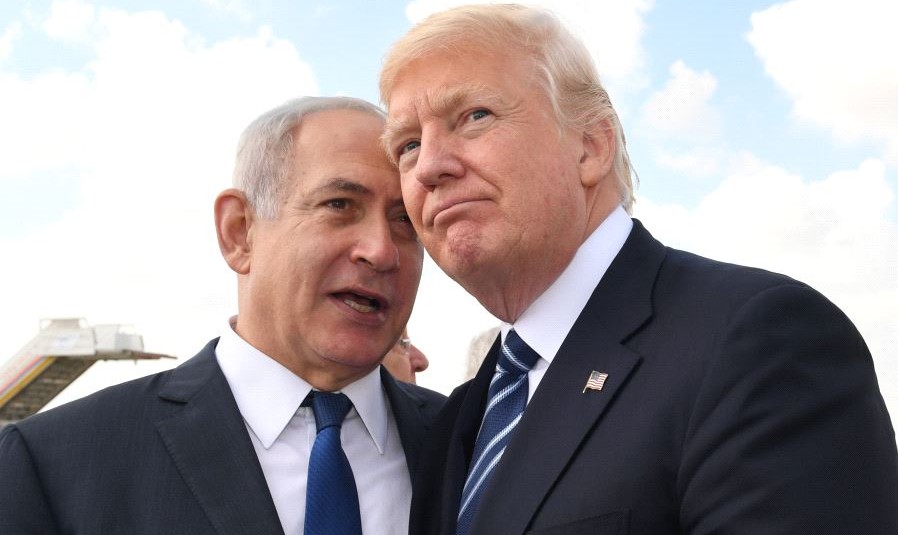
Donald Trump is a longtime admirer of Benjamin Netanyahu, in part because of the Israeli PM’s willingness to go toe-to-toe with Barack Obama. Obama’s approach to the Israeli-Palestinian conflict was to support the Palestinians at Israel’s expense; Trump’s is the exact opposite.
By BESA CENTER
The claim by the elected representatives of the Israeli Arab public that they are the original owners of the land while the Jewish citizens of Israel (and, by implication, the State of Israel itself) are “colonialist invaders” is a complete inversion of historical reality. US Secretary of State Mike Pompeo’s declaration about the legality of the West Bank’s Jewish communities, along with President Trump’s peace plan based on that principle, offers a unique opportunity to correct that mistaken notion by applying sovereignty to all Israeli West Bank communities.
By BESA CENTER
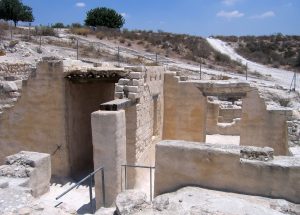
The U.S. plan’s suggestion that a group of communities disputed between Israel and Jordan following the 1948 war be part of a potential state of Palestine has drawn harsh criticism from all sides, and is based on a faulty reading of history.
By BESA CENTER
The blanket rejection by US Democratic candidates for president reflects non-zero sum conceptions in which there can be no winners or losers in the conflict, and reveals an instrumental view of Palestinians as stalking horses for other causes.
By BESA CENTER
On January 3, 2020, an American drone killed Iran’s roving fixer in the Middle East, Quds commander Qassem Soleimani, sparking intense, but largely partisan, reactions in the US. While Republicans lauded President Trump, many Democrats worried that the action might spark a war with Iran. But while it is easy to criticize Trump for stirring up conflict in the Middle East, Iran has helped to create the conditions of this current conflict.
By BESA CENTER
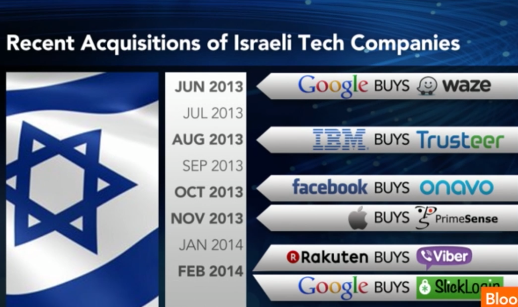
Israel possesses assets and innovations that can solve many of the problems that plague its Arab neighbors. If peace can possibly be achieved between Israel and the Arab world, the potential for mutually beneficial practical and economic relationships is astronomical.
By BESA CENTER
The vast Leviathan natural gas field off the Haifa coast could be a game-changer for Israel’s relations with the EU. Europe is currently dependent on Russian natural gas. A reliable and price-competitive natural gas alternative in the Mediterranean could diminish Moscow’s ability to use energy supplies as a political weapon against Europe.
By BESA CENTER
Soft power and coercive diplomacy tools have not worked for almost 20 years against “peaceful Iran” (as Obama used to call it), and America has opted instead to exercise hard power. Trump’s order to kill Qassem Soleimani exposes once again the vast gap between the US and Europe on the problem of Iran.
By BESA CENTER
Israel’s geographical position means it must stay agile and manage complex relations with its Muslim neighbors through quiet collaboration and smart use of its technological and economic advantages. Over the past two decades, Israel has discovered offshore gas, begun extensive seawater desalination, and dramatically expanded its navy’s platforms and missions. Ten years ago, Israel depended on Egypt’s natural gas; nowadays, Israel exports natural gas to Egypt and Jordan.
By BESA CENTER
The 2020 presidential and congressional elections will to a large extent determine whether the current trends of populism, polarization, and incitement coursing through American society, and of withdrawal from international leadership, will continue or come to an end; whether the phenomenon of “Trumpism” will persist or be remembered as an aberration;
By BESA CENTER
The British election returned a resounding mandate to the Conservative Party and decimated the antisemitism-wracked Labour Party. The lesson for the US Democratic Party is that punitive leftism and overt antisemitism are unacceptable, though divisions within the American Jewish community mute that message. For Israel, the lesson is to try to remain as bipartisan as possible, though that won’t be easy.
By BESA CENTER
A post-Brexit scenario requires long-term strategic thinking by the British establishment. The parallels between the situation of Israel in the Middle East and the eventual position of Britain vis-à-vis a federal European state offer lessons and suggest opportunities. If Britain acts on these lessons, it is more likely to flourish despite the economic and political pressure European leaders may try to exert on it in Brexit’s wake.
By BESA CENTER
Civil defense is a critical tactic that reduces civilian casualties during wartime. However, it is insufficient as a strategy with which to defeat an enemy. Israel has shifted in its use of civil defense from a protective tactic while the IDF achieves battlefield victory to a strategy of restraint that allows the enemy to launch attacks that cause few if any lethal casualties without fear of a devastating response. This is a dangerous development.
By BESA CENTER
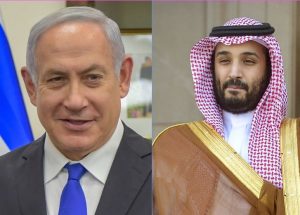
Extreme instability and mistrust are heightening tensions in the Persian Gulf, especially between Shiite Iran and Sunni Saudi Arabia. America’s appetite for military engagement has waned after nearly two decades of war and the region lacks any form of collective security framework, leaving a considerable security vacuum. The Gulf states’ overtures to Israel are part of an effort to salvage America’s security commitment to the area while shoring up a relationship that can mitigate Tehran’s rising influence.
By BESA CENTER
A recent study recounts the purportedly unknown story of Palestinian Arab volunteers fighting the Nazis during WWII. Haaretz used this finding as an opportunity to mock PM Benjamin Netanyahu, who has pointed out that the Mufti of Jerusalem was a close ally of Hitler. Yet the Mufti’s position as “the most important Arab Quisling” is indisputable, while most of the study’s conclusions are dubious and inconsistent with historical facts.
By BESA CENTER
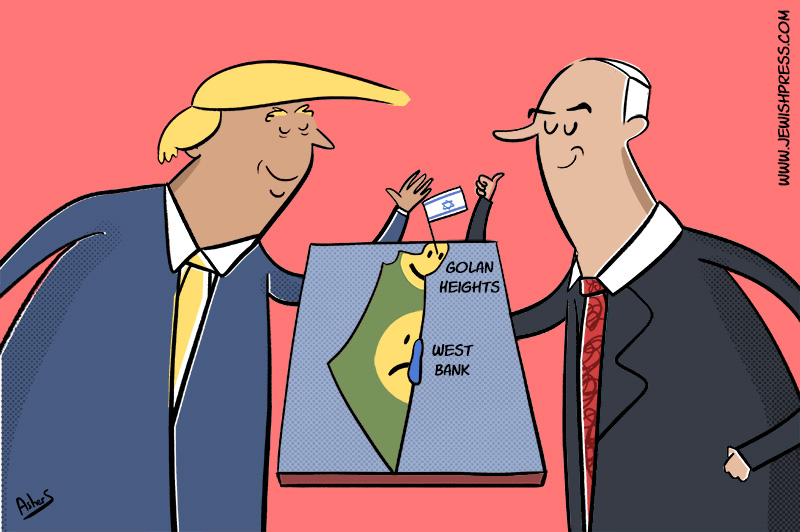
The Trump administration’s decision to repudiate an earlier approach that regarded Israeli communities across the “Green Line” as illegal has been praised and condemned. While there may be merit to seeing the move as an effort to help PM Benjamin Netanyahu or at least break Israel’s electoral logjam, there are deeper motives at play. Trump and his administration have made a hallmark of defying dysfunctional conventional wisdom and foreign policy inertia that elevate process over results. But while the predicted calamities of this policy have not materialized, the administration’s lack of any Grand Strategy makes the benefits difficult to aggregate.
By BESA CENTER
President Trump’s ill-advised decision to withdraw from Syria should be viewed in the context of two broader developments. In terms of foreign policy, both the Republicans and the Democrats are moving from international engagement to neo-isolationism; and strategically, the Pentagon is shifting from the war on terror to a renewed focus on Russia and China.

By BESA CENTER
Jerusalem and Beijing have cultivated a flourishing economic relationship in recent years, but that bond is limited by the tension it has engendered with a Washington wary of China’s growing footprint in Israeli strategic assets. In an effort to mitigate this tension, Israel’s security cabinet has decided to establish a mechanism to monitor foreign investment.
By BESA CENTER
UNRWA, the UN agency for Palestinian refugees, was created in 1949 via UN Resolution 302 (IV) with a short-term mandate. It flouted its original mission and perpetuated rather than alleviated the Palestinians’ status as refugees. It has long since become corrupt and functions essentially as a front group. The UN should close it down, and Palestinian refugees should be integrated into the economic systems of the countries that sheltered them.
By BESA CENTER
Three leading Democratic presidential candidates recently threatened to use US military aid to Israel as leverage to force changes in Israeli relations with the Palestinians. Their statements were hypocritical and ignored both the value of military aid to the US military and defense industries and the realities of the Palestinian-Israeli conflict. The threats should be seen in the wider context of growing antagonism within the Democratic party toward Israel. The next Israeli government will have to address this challenge.
By BESA CENTER
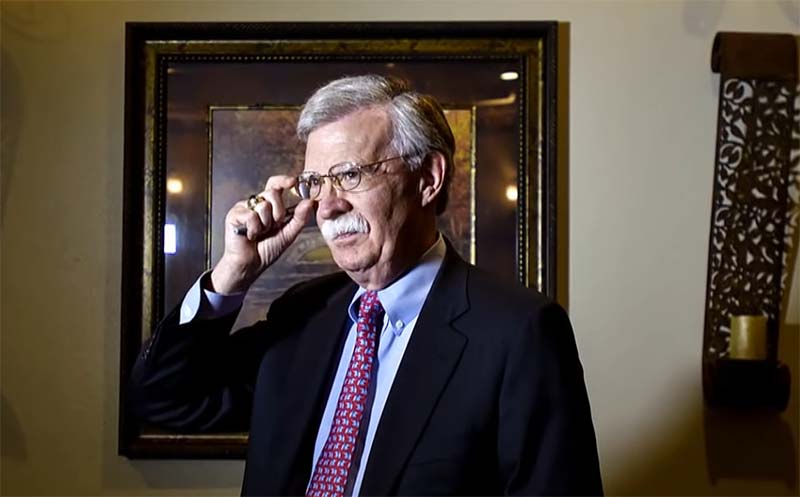
In Syria, President Trump, like Obama before him, seems oblivious to the reality that when the US withdraws, its enemies advance and fill the vacuum. Ousted NSA John Bolton has said that America is constraining its range of action through foolhardy entanglements with international institutions and naive bilateral agreements that promise too much to America’s enemies in exchange for too little. He maintains, correctly, that Americans support leaders who are not appeasers but defenders of American values, vital national interests, and human rights.
By BESA CENTER
Erdoğan appears to have miscalculated the fallout of what may prove to be a foolhardy intervention in Syria and neglected alternative options that could have strengthened Turkey’s position without sparking the ire of much of the international community.
By BESA CENTER
Saudi Crown Prince Muhammad bin Salman’s calls to invite Israeli Arabs to live and work in Saudi Arabia could be either a diplomatic breakthrough or a cynical ploy. If the former, it could indicate that at long last, the Arab world is awakening to the possibility that to fully enter the modern world, it must normalize relations with Israel.
By BESA CENTER
In the third year of Donald Trump’s presidency, the US continues to suffer from a negative global image. The world views Chinese and Russian leadership more favorably than that of the US. This seems to be a continuation of the instant, worldwide negative response – even panic – that followed Trump’s victory in 2016. The most negative attitudes were shown among the “Western democracies” while in non-democratic states the US scored much better.
By BESA CENTER
Harnessing the Eurasian lands has always been difficult. The Khazars, an obscure people from the steppes that converted to Judaism many centuries ago, stand out as an exceptional example of how geography, economy, and religion can be used to advance geopolitical interests.
By BESA CENTER
Russia is historically prone to internal collapse, as is shown by numerous examples from both the imperial and Soviet periods. The collapse usually takes place as Russia rests on the laurels of recent military victories while internal economic and social troubles grow. History teaches that the best way to deal with Russia is to keep intervention to a minimum and wait for its internal troubles to bring about its collapse.
By BESA CENTER
A controversial former security official and Abu Dhabi-based political operator, Muhammad Dahlan, has lurked for several years in the shadows of Palestinian politics. It is possible that he will emerge in an attempt to pave the way for US president Donald Trump’s much maligned “Deal of the Century” to resolve the Israeli-Palestinian conflict.
By BESA CENTER
In a recent landmark, Benjamin Netanyahu became Israel’s longest-serving prime minister, surpassing the tenure of David Ben-Gurion. A comparison of the two PMs’ leadership reveals points of both similarity and difference. Both leaders, even in the views of their opponents, left a major impact on the country and the society.
By BESA CENTER
Israeli PM Netanyahu was right to bar the entry of Muslim Congresswomen Rashida Tlaib and Ilhan Omar. Both are radical anti-Israelis and supporters of the BDS movement, whose end goal is Israel’s destruction. Their visit to the territories would have been an anti-Israel circus goaded on by the international media. Leaders of the Democratic Party understand that if their party moves toward the radical left, as exemplified by Tlaib and Omar, they will lose their chance to reclaim the White House next year.

By BESA CENTER
Though largely motivated by mutual concerns about surging Iranian imperialism, the strengthening of Israel’s relationship with the GCC monarchies could ultimately help reignite the stalled Israeli-Palestinian peace process.
By BESA CENTER
In favoring the political over the military approach, Benjamin Netanyahu is the direct successor of Ze’ev Jabotinsky, who espoused the political Zionism of forging an alliance with a world power. Netanyahu’s outlook is evident in his conflict management strategy vis-à-vis the PLO, Hamas, and Hezbollah while focusing on fighting Israel’s foremost enemy, Iran. Even there Netanyahu has preferred the path of political struggle, in cooperation with the US, and the use of sanctions over war.
By BESA CENTER
The Israeli decision to ban US RepsTlaib and Omar on the basis of their support for BDS has elicited a firestorm of comments from Israel’s detractors and supporters. The decision, warranted but unnecessary, illustrates the deep dysfunction that has come to characterize US-Israeli relations. The poisoning of American attitudes initiated by President Obama and the hysteria that accompanies everything associated with Trump set the stage for Tlaib and Omar to create a lose-lose situation for Israel. Their trip would have resulted in condemnations at the end, or worse. But the manner in which Israeli public diplomacy failed to make its case shows bad situational awareness and crisis management that was unable to overcome the Congresswomen’s bad faith or Trump’s unwanted intervention.

By BESA CENTER
An original analysis of the global distribution of BDS Internet searches revealed disproportionate interest in countries such as New Zealand, Ireland, and Sweden, as well as in coastal US states with large academic institutions. In the former regions there are few Jews and little contact with Israel, while in the latter, there are many Jews but proportionately fewer Christian supporters of Israel. A simple explanation for these patterns is that BDS interest correlates with post-Christian contexts in which Jews are relatively absent, or with “white” class anxiety emanating from academia. In the US, growing negativity about Israel in liberal Western communities is likely a class-based transfer of anxiety regarding ”white privilege” onto Israel and Jews.
By BESA CENTER
It is usually wiser to work for a solution to a conflict than try to achieve victory. But in some conflicts, the objectives of the two parties are so mutually exclusive that the conflict can only end when one defeats the other. Israel’s goal is survival; the Palestinian goal is the elimination of Israel. Peace requires that the Palestinians give up that goal, which they have had for nearly a century. They won’t do so until they understand that they have no chance of succeeding.
By BESA CENTER
The “Deal of the Century” and the Bahrain conference show that Saudi Arabia and the Gulf States, like other Islamic countries, have no real reason to oppose either normal relations with Israel or a settlement aimed at improving the lives of the Palestinians. The Palestinians, however, are not interested in a peace settlement but rather in maintaining the status quo of an ongoing struggle against the “Zionist enemy.”
By BESA CENTER
A massive concentration of forces is a disadvantage, not an advantage, in the modern era of asymmetric conflict. Active Protection Systems (APS), by contrast, provide small fighting units with protection and enable them to locate hostiles and discriminate them from the surrounding population. They thus reduce the army’s exposure while increasing its effectiveness.
By BESA CENTER
The continuing bombardment of the Syrian province of Idlib by Russia, Iran, and Syrian dictator Bashar Assad has been ignored for far too long by the international community. Attention must be paid – in particular by Donald Trump, who is showing himself worryingly prone to “Obama moments” of hesitation and lack of resolve.
By BESA CENTER
The Iranian regime’s worst fear is a foreign invasion. In order to bring the mullahs to the negotiating table, the US should eliminate the regime’s proxies in Iran’s Iraqi and Syrian “near-abroad” and bring that threat into full relief.
By BESA CENTER
“Peace to Prosperity” is certainly an ambitious title for the Bahrain Conference, which offers an “out of the box” plan to handle the Israeli-Palestinian conflict. The US vision essentially turns the “refugees” from liabilities into assets, thereby taking the refugee issue off the table. This concept has an historic precedent: the resettlement initiative presented by UN Secretary General Dag Hammarskjold on June 15, 1959. Both plans received the same response from Palestinians: angry dismissal.
By BESA CENTER
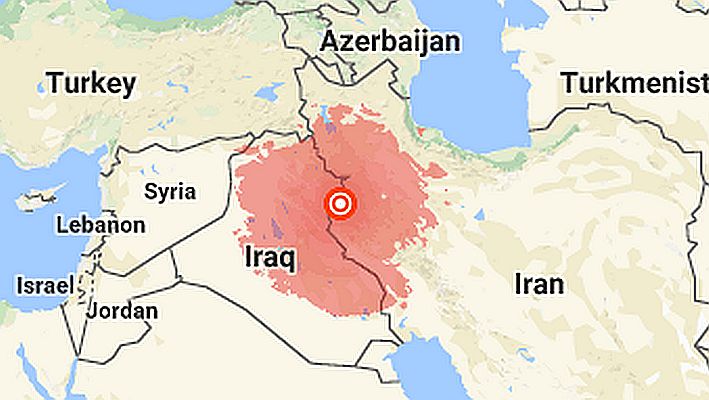
Mainstream analysis of the current crisis in US-Iran relations revolves around “maximum pressure” sanctions and potential American military contingencies. There is another move, however, involving a unique set of knights on the regional chessboard – and one that comes straight out of Tehran’s own playbook.
By BESA CENTER
With Israel set to host an unprecedented meeting of the national security advisors of the US, Russia, and Israel, this week’s efforts by German FM Heiko Maas and Japanese PM Shinzo Abe to mediate between the US and Iran could prove to be but a sideshow. The meeting of the national security advisors, against the backdrop of Syrian and Russian forces pummeling Idlib, the last major stronghold of Syrian rebels, takes on added significance with strains emerging in relations between Moscow and Tehran.
By BESA CENTER
The persistent affiliation of the American Jewish diaspora with the Democratic party – a party that is vocally and increasingly critical of Israel – raises concern over what will happen when the US eventually elects another Democratic president. When that happens, the gap between Israel and American Jewry, one of its most powerful and necessary diplomatic assets, will be even bigger than it is today.
By BESA CENTER
A recent annual survey of Arab youth provides insights that should inform autocrats’ quest for social and economic reform. The survey also suggests, as do the intermittent anti-government protests that continue to erupt in different parts of the Arab world, that Western and Middle Eastern interests would be better served by more nuanced US and European approaches toward the region’s regimes.

By BESA CENTER
Egypt’s withdrawal from the formation of an “Arab NATO” against Iran is a warning that both Israel and the US need to urgently rethink their strategy regarding the Middle East. Putting all its Arab World eggs in the Saudi basket could prove to be one of the more unsound decisions in the annals of American diplomatic history, and one that could profoundly affect Israel if it backfires.
By BESA CENTER
Ever since the unilateral disengagement from Gaza in the summer of 2005, Israel has engaged in “bargaining by the threat of violence” with Hamas. Within that framework, the IDF has conducted three large-scale operations in Gaza in addition to smaller rounds of hostilities. With no possibility in the offing of either serious political negotiations or a decisive war, the only alternative is to continue the “diplomacy of violence.”
By BESA CENTER
The €28.5 million Eurovision Song Contest, which draws 200 million viewers from 42 countries, might seem to be just a huge pop spectacle, but it is a good deal more. In addition to serving as an entertainment vehicle, it is a powerful mechanism of soft power – a tool that is critically important to the modern State of Israel and particularly to the city of Jerusalem. Europe’s refusal to allow the contest to be held in Jerusalem, in contravention of Eurovision’s own rules, constitutes a victory for the BDS movement.
By BESA CENTER
The Democratic Party has been overtaken by an antisemitism crisis, a process of ”Corbynization” akin to that of the British Labour Party. The process’s three principal proponents, Alexandria Ocasio-Cortez, Rashida Tlaib, and Ilhan Omar, personify three components – socialism, Palestinianism, and Islamism – given impunity by the concept of “intersectionality.” The trajectory of their red-green alliance is leading the Democratic Party towards socialism. For American Jews, this means their deep allegiance to the Democratic Party over many generations has been rewarded with abandonment and suspicion. For Israel, there is the prospect of a future Democratic administration that advocates its destruction. For the rest of the world, the party’s severe inward turn portends global retreat.
By BESA CENTER
The Warsaw Summit demonstrated that the popularity of the Palestinian cause continues to decline, suggesting that Palestinian nationalism has failed.
By BESA CENTER
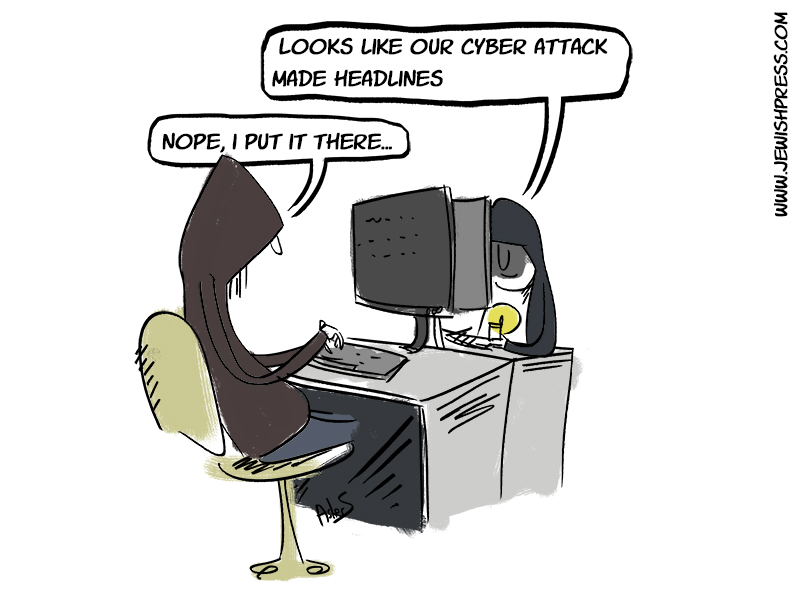
A number of senior security officials, including Shin Bet's chief have taken note recently of apparent attempts by several foreign countries to interfere in the upcoming Israeli elections via cyber and IW (Information Warfare) attacks. Below the radar, there is evidence that at least one country – Saudi Arabia – may be attempting to interfere via more traditional methods.
By BESA CENTER
The Israeli Left’s obsession with toppling PM Benjamin Netanyahu has driven it to embrace a military “dream team” bent on overthrowing a civilian ruling party. This echoes the all-too-common phenomenon of Third World military juntas seizing power to “save the nation” from “corrupt politicians.” Generals brought to power as “national saviors” in times of deep crisis have often been the harbingers of populism, authoritarianism, and fascism.
By BESA CENTER
For over a decade, Israel has avoided deciding whether its interests are better served by maintaining the current “two Palestinian states” status quo, or by seeing Gaza rejoin the Palestinian Authority. The result is an untenable, chronic-crisis situation that empowers Mahmoud Abbas and is a lose-lose for Israel.
By BESA CENTER
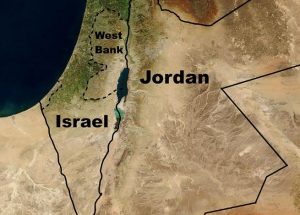
If and when the Palestinian Authority (PA) collapses, Jordan will bear the greatest brunt of the resulting humanitarian crisis. Such a collapse will almost certainly lead to a mass exodus of Palestinians from Areas A and B.

By BESA CENTER
Shifts in perceptions among European Jews on where they feel safest is not due entirely to demographic change. It also has to do with Eastern European leaders like the Czech Republic’s Miloš Zeman, who, in the tradition of the country’s founder, Tomáš Garrigue Masaryk, has become not just a strong voice for his people but a true friend of the Jews.
By BESA CENTER
By Dr. Mordechai Chaziza, November 5, 2018 EXECUTIVE SUMMARY: In a sign of the importance Beijing assigns to ties with Jerusalem, China’s powerful VP, Wang Qishan, made a visit to Israel last week. He is the highest-level Chinese official to visit since then-president Jiang Zemin visited in 2000. Wang is known as a “firefighter” and is a close ally of President Xi Jinping, the most powerful Chinese leader since Chairman Mao. Continue to full article ->
By BESA CENTER
The death of Saudi journalist Jamal Khashoggi on the premises of the Saudi consulate in Istanbul threatens to upend the fundaments of fault lines across the Middle East.
By BESA CENTER
EXECUTIVE SUMMARY: For the world to emancipate itself from anti-Semitism, religions and political movements will have to accept individual freedom of conscience and cultural pluralism, which are essential if universalism and particularism are to coexist. That universalism and particularism can, in fact, coexist and thrive together is demonstrated by 3,000 years of Jewish history. When the world finally understands the merits of embracing universal values without shedding ethnic identity, Jews and Judaism will be genuinely understood and accepted.

By BESA CENTER
Destroying the family home of terrorist Khalil Yussef Ali Jabarin despite the fact that his family tried to prevent his attack on Ari Fuld seems more an act of revenge than deterrence, and could generate serious blowback with major ramifications.
By BESA CENTER
Pres. Trump should demand that the Palestinians recognize Israel’s right to exist in peace and security as a Jewish state and insist that the US will not press Israel to negotiate with the Palestinians unless and until that happens.
By BESA CENTER
What should the strategy regarding Hamas be –make concessions or initiate a fourth round of fighting? It is best for Israel to prolong the negotiations as long as possible, concede as little as possible, and wait until the sanctions against Iran come into full force. Then Israel should prepare for the next big round – not to defeat Hamas, but to tame it and keep the Palestinians divided.
By BESA CENTER
Most of the articles and statements following the passing of veteran Israeli journalist and far-left political activist Uri Avnery were of a glorifying nature, praising his persistent support for a Palestinian state and the end of the Israeli “occupation.” However, his misconceived predictions and deeds undermining Israeli sovereign interests, including during wartime, were intentionally ignored.
By BESA CENTER
Perhaps the most important misperception about Oslo is that it is – or was – a peace process, a two-sided affair, a matter of give-and-take in which each side’s promises depended on fulfillment of the other’s promises. My view, as a witness to some of the relevant history, is that it was a kind of unilateral Israeli withdrawal.

By BESA CENTER
A possible ceasefire between Israel and Hamas may be about more than ending the ongoing, escalating violence that threatens to spark yet another Gaza war. It could also be an attempt to pave the way for the return of Muhammad Dahlan as successor to Abbas.

By BESA CENTER
The US administration is due to decide at the beginning of September whether to stop its funding for the United Nations Relief and Works Agency for Palestine Refugees in the Near East (UNRWA). Such a decision could be as significant as Harry Truman’s decision to recognize the State of Israel just 11 minutes after the Jewish State declared its independence in May 1948.
By BESA CENTER
Israel must prepare for the day when the leftist-socialist-progressive wing gains hegemony, first in the Democratic Party (which now seems almost certain) and then perhaps in the US Congress and the presidency.
By BESA CENTER
The protests in Israel against the new law are a red alert. They reflect an emerging tendency among liberal streams in Israeli Jewish society to undermine the long-accepted principle that Israel is the national home of the Jewish people.
By BESA CENTER
Just as Israel is a Jewish state of nearly 9 million citizens, where some 2 million non-Jews live in peace and security, there is no reason why a Palestinian Arab state should not host a sizable Jewish minority living in peace and security with the Arab majority.
By BESA CENTER
The simultaneous presence in Russia of the Saudi and Iranian teams for the 2018 World Cup is likely to shine a spotlight on the covert wars between Saudi Arabia, the United Arab Emirates, and Iran as well as on a related dispute over 2022 World Cup host Qatar, which did not qualify for this year’s tournament. Tensions will be present even if the kingdom and the Islamic Republic fail to meet face to face on the pitch.
By BESA CENTER
While the potential dangers and complications for Israel of a Palestinian state could be significant, Jordan would face threats to both its social stability and its foundation and its very existence.
By BESA CENTER
Pompeo’s speech was an important step in the realization of the Trump Doctrine. The 12-point speech outlined the administration’s nuclear nonproliferation strategy against Iran,
By BESA CENTER
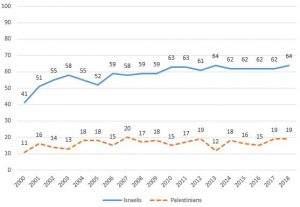
The Gallup Poll 2018 survey reveals record scores in favor of Israel, but also a few weaknesses.
By BESA CENTER
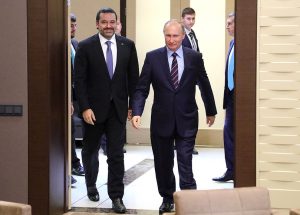
Russia has been gradually increasing its economic and military influence in Lebanon, it is unlikely that Moscow is prepared to irreparably compromise its relations with Israel.
By BESA CENTER
he multidimensional complexity with which national leaders must contend is a necessary condition for effective strategic decision-making. On many occasions, it requires that those leaders ignore, or even act in contravention of, the advice of the professional echelon.
By BESA CENTER
There are two Middle Eastern refugee crises currently vying for resources and attention: Syria but in fact extends from Libya to Afghanistan and the Palestinian and has supposedly been going on since 1948. The former is legitimate.
By BESA CENTER
The Eastern Mediterranean has entered a new period of high volatility, with Israel and Greece in the eye of the storm. Both countries are facing an upgraded strategic challenge from Turkey and Iran. This is not simply an interstate problem but a broader crisis that will influence the future geostrategic physiognomy of the Eastern Med.
By BESA CENTER
Israeli PM Benjamin Netanyahu’s state visit to India was predictably full of pomp and circumstance. More importantly, it underscored yet again the closeness that now characterizes the bilateral relationship.
By BESA CENTER
A creative solution to the Israeli-Palestinian conflict must start with appreciating the advantages of the hybrid spatial model that has emerged in the West Bank, notably the governmental powers granted to the Palestinian Authority as far back as January 1996 in Areas A and B, and discarding the stillborn paradigm of total separation.
By BESA CENTER
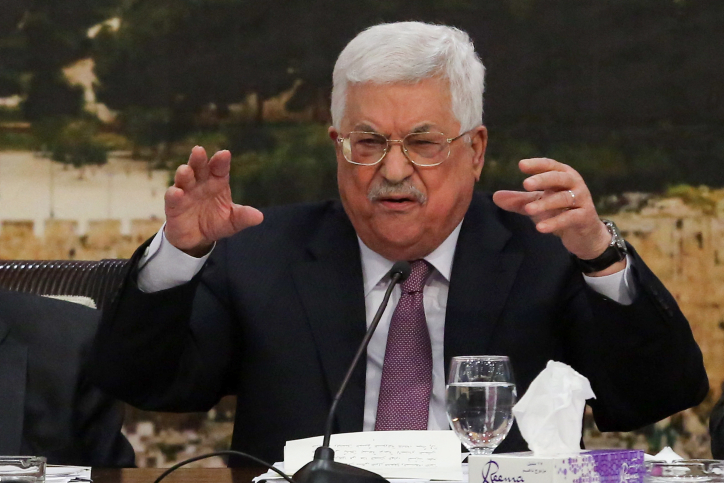
Abbas’s blatantly skewed account of the nature of Zionism and the history of the Palestinian-Israeli conflict should bring Israel’s policymakers and opinion shapers to enunciate anew the story they tell their own people and the world at large.
By BESA CENTER
While liberals see the Olympics as an opportunity for negotiation, conservatives see Pyongyang’s agreement to attend as a tactic to gain benefits and not a genuine expression of warming relations.

By BESA CENTER
Donald Trump’s Jerusalem Declaration should be examined from a point of view that goes beyond questions of cost and gain. Prevailing interpretations are trapped in a Western perception of the nature and logic of the strategic process.


 October 9, 2026