יום שני, א׳ חשוון תשפ״זMonday, October 12, 2026



Follow Us


Read More

By BESA CENTER
Hamas used gender-based violence as a deliberate strategy intended to cause severe harm to Israeli civilians, undermine Israelis’ sense of social security, and sow terror within Israeli society.

By BESA CENTER
Israel began the Iron Swords War on October 7, 2023, on a “Yom Kippur War” dynamic; Israel ended the war on January 17, 2025, on a “Six-Day War” dynamic

By BESA CENTER
Israeli-Greek relations were tested during the Israel-Hamas war. While Greece preferred to take a balanced stance at the UN level, it was eager to cement its strategic partnership with the Jewish State in difficult times.
By BESA CENTER
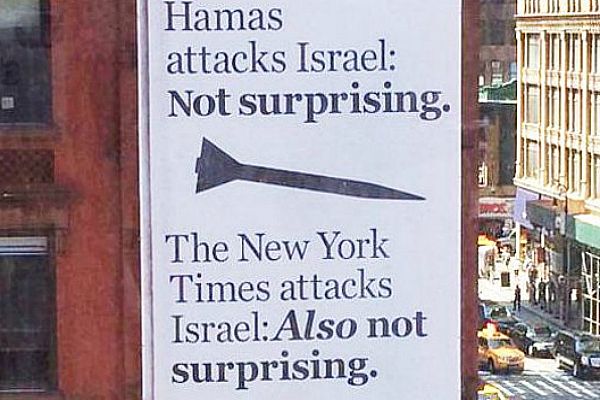
NY Times is considered the “newspaper of record” and a reliable source of information, and is read by leaders and elites around the world. The paper has nevertheless committed a series of repeated errors about the war, invariably at Israel’s expense, despite editorial promises to apply extra scrutiny.

By BESA CENTER
Years spent fighting the war on terror and the “war between the wars” have influenced Israeli strategic thinking. Hezbollah is a military force, but the war is still being conducted as a series of counter-terrorism operations.
By BESA CENTER
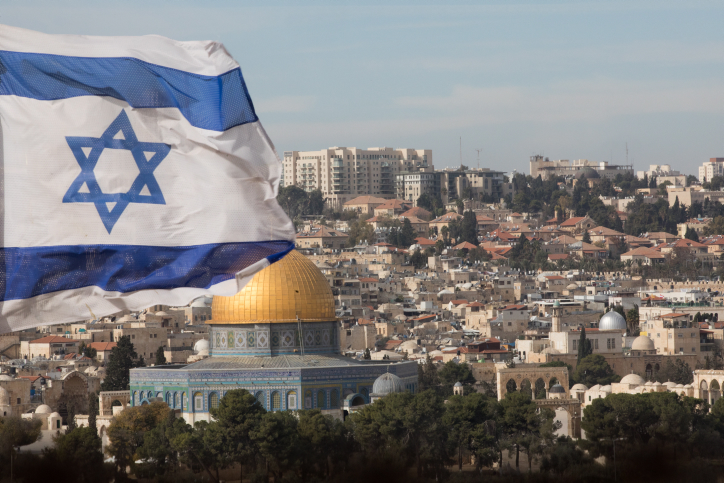
The Temple Mount, the Western Wall, the Church of the Holy Sepulcher – these are places of utmost importance to multiple religious groups, and they often give rise to bitter disputes and even acts of violence. The question of how to effectively govern and manage such sites is of paramount practical significance.
By BESA CENTER
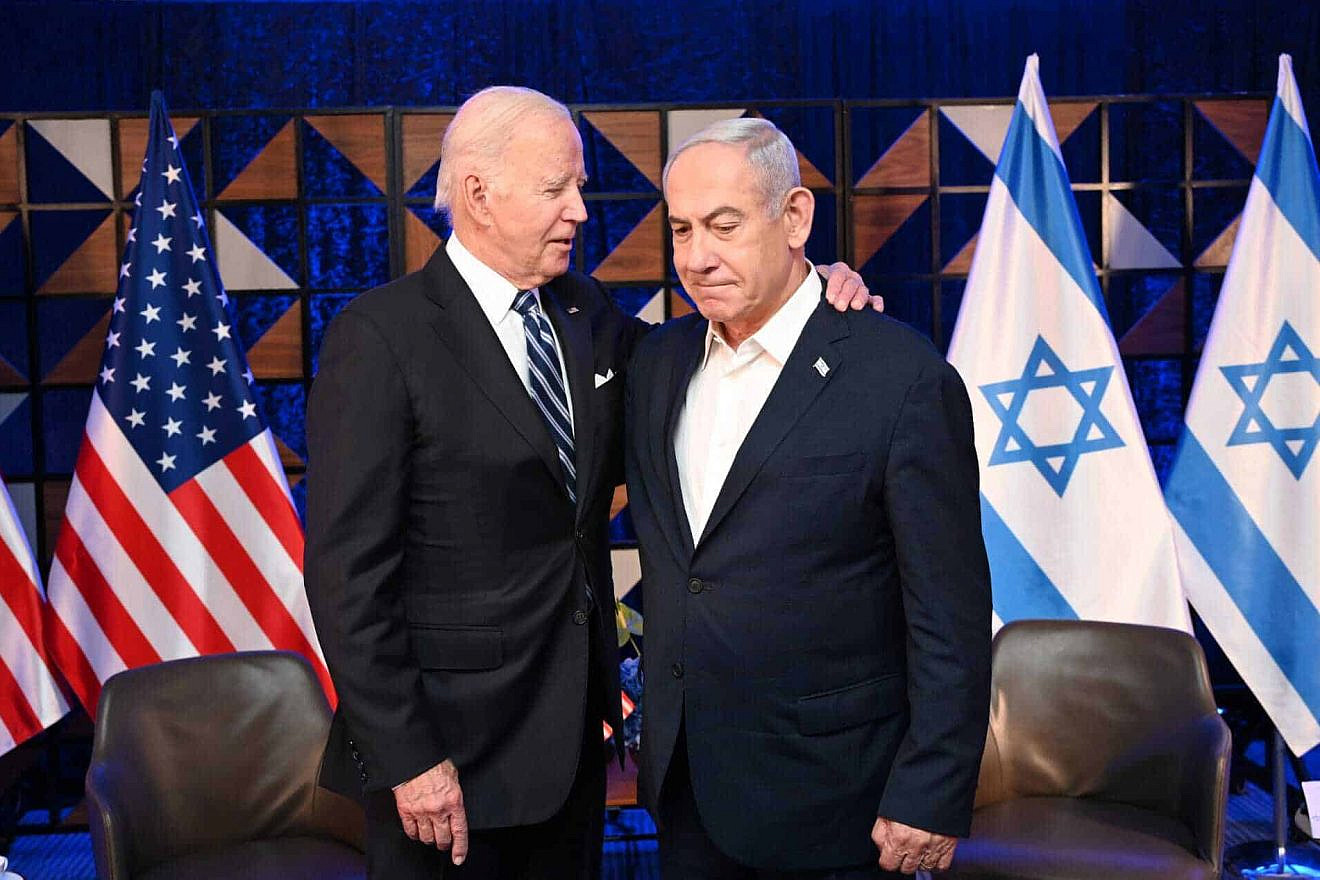
Israel is facing difficult years of a prolonged existential struggle. To this end, it is imperative for Israel to be led by a leadership that enjoys the broad trust of the public.
By BESA CENTER
To realize its achievements, Israel needs a pause of a few years during which the strategy and military power for an offensive will be formulated.
By BESA CENTER
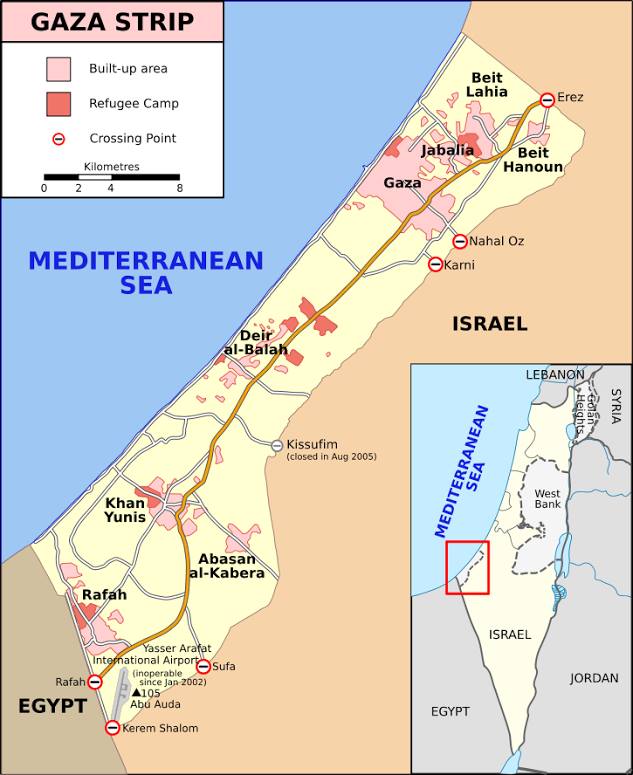
five alternatives for the future of Gaza. Israel’s long-term strategy to ensure its continued existence entails the accomplishment of these goals: destruction of Hamas’s military capabilities, abolition of Hamas control in Gaza, and the preservation of good relations with the United States.

By BESA CENTER
It is essential to conduct a far-reaching discussion on all these alternatives and to avoid attachment to any one of them

By BESA CENTER
What are the lessons for IDF force build-up following the Hamas attack on October 7 and the Iron Swords War?
By BESA CENTER
Israeli intelligence failures – particularly those leading to the failure to warn of a large-scale attack, as suffered by Israel in the Hamas attack of October 7, 2023 – are typically followed by the creation of investigative committees that scrutinize intelligence processes, highlight gaps and vulnerabilities, and recommend mechanisms to prevent future failures. But without a profound cultural shift within the intelligence organization and its personnel – specifically, the integration of humility into the organizational DNA – these mechanisms will not deliver the desired outcome.
By BESA CENTER
Negotiating with Hamas for the release of the hostages in Gaza through comprehensive, all-inclusive deals mediated by Qatar (“everyone for everyone”) would undermine Israel’s strategy in the Swords of Iron war. It’s time to make a fundamental change in Israel’s policy on this issue and readopt the Entebbe Doctrine, which can save the lives of the current hostages and prevent the taking of more in the future.
By BESA CENTER
Israel has spent 17 years trying to disengage from Gaza without success, and there has been round after round of fighting. besas
By BESA CENTER
As stated in its charter, Hamas has been committed since its inception to the genocidal destruction of the Jewish people. Beyond that goal, it shares with al-Qaeda and ISIS the objective of global Muslim conquest and views all Western countries as Crusader enemies, with the United States at the forefront.
By BESA CENTER
Unlike during previous conflicts, Israel is not constrained this time by a “political hourglass” and it would be wise to remove this concern from the table if a decisive outcome in the ground operation against Hamas is to be achieved.
By BESA CENTER
A decade ago, in 2013, I published an article with Professor Ephraim Inbar entitled “Mowing the Grass.” In it, we explained the Israeli rationale behind various rounds of conflict in Gaza. We discussed the lack of a better alternative to ground incursions into Gaza, despite the significant losses and harsh international criticism involved. There are […]
By BESA CENTER
The current crisis, in which the United States is aligning with Israel in full capacity, must be used to establish – at both the ground and the political levels – the principle of stopping political Islam from controlling any military capabilities. The campaign to defeat Hamas is a step in this direction.
By BESA CENTER
Hamas made a strategic mistake: It should have calculated that there was a possibility that the State of Israel would respond by acting to eliminate its physical existence. The most important thing in the coming weeks is to focus on achieving this goal.
By BESA CENTER
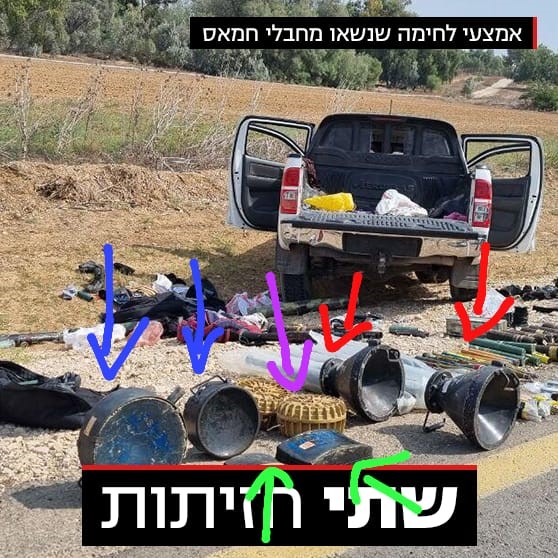
Hamas is still sending attack units into Israel, though these are being defeated.
By BESA CENTER
Israel must end the political crisis soon for multiple reasons
By BESA CENTER
The agreement between the Islamic Republic of Iran and the Kingdom of Saudi Arabia suggests that Saudi Arabia is steering away from its course of rapprochement with Israel and cuddling up to the ayatollahs, thereby eroding Israel’s geostrategic position in the Middle East. But the widespread assessment of this development as entirely bad for Israel is short-sighted.
By BESA CENTER
Hezbollah or Hamas will likely identify the current crisis in Israel over the new government’s proposed reform of Israel’s judiciary as an opportunity to act against it. They might be surprised, however, by Israel’s response.

By BESA CENTER
The Russian invasion of Ukraine has riled the energy markets of Europe and created opportunities for Israel’s energy sector that contain both risks and rewards
By BESA CENTER
The current debate in Israel on a semi – constitutional reform is being carried out, as is often the case with Israeli strategic decision-making, in an improvised manner and under pressure.
By BESA CENTER
Much like the Oslo illusion, which posited that territorial concessions to the PLO would bring about peace with the Palestinians, the hope that economic easing in the Gaza Strip will moderate Hamas terrorism is a mistaken attempt to apply a Western logic of conflict management to a Palestinian enemy whose definition of the end of the conflict with Israel is not in the West’s political-cultural lexicon.
By BESA CENTER
French sensitivity to Muslim public opinion has led to the creation of a double standard regarding Israel’s fight against terrorism. France’s own fight against Islamist terrorism is viewed as justified, but Israel is to be condemned for fighting Hamas and Islamic Jihad in the Gaza Strip.
By BESA CENTER
The Jerusalem Declaration on Antisemitism (JDA), presented in March 2021, was created to replace the International Holocaust Remembrance Alliance (IHRA) Working Definition of Antisemitism, which had been adopted by 35 countries by 2020. The writers of the JDA wished to “clarify” the IHRA, which they feel is insufficiently obsequious to the Palestinians. Their real object is to use the fight against antisemitism as another weapon with which to vilify Israel.
By BESA CENTER
Events in Afghanistan have come full circle, with the Taliban—whose government fell to US military advances in 2001 —regaining power and taking possession of large stores of US arms and ammunition. The culpability of the four successive US administrations that waged this fruitless 20-year war, culminating in an abject political and military capitulation, must be investigated and exposed.
By BESA CENTER
What the Palestinians need is not a new model of “armed struggle” but a reconciliation with the existence of Israel while striving for a sustainable peace settlement that will ensure security, prosperity, and respect for mutual rights.
By BESA CENTER
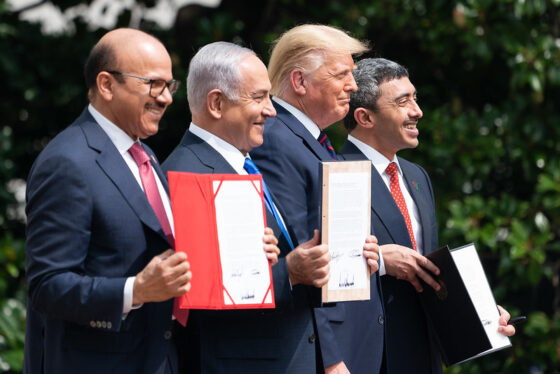
Unlike Israel’s earlier peace agreements with Egypt and Jordan, the Abraham Accords involved Arab countries that do not border Israel, have never fought it on the battlefield, and are relatively unburdened by the Palestinian question. Accordingly, they were able to implement a “people to people” peace that eluded their predecessors.
By BESA CENTER
US policy in Afghanistan was based on lies, ignorance, and irrational thinking. Many other aspects of American foreign policy, still doggedly pursued, look dangerously similar. For 30 years, US policy has amounted to the construction of a huge house of cards in all directions. Now that one card has fallen, the rest will inevitably follow.
By BESA CENTER
The waning of American influence in the Middle East not only indicates that the world superpower is in retreat, and perhaps even in its twilight—but that Israel’s fate is tied to that retreat.
By BESA CENTER
China may have no short-term interest in contributing to guaranteeing security in parts of a swath of land stretching from Central Asia to the East coast of Africa, but that does not prevent the People’s Republic from preparing for a time when it may wish to build on longstanding political and military relationships in various parts of the world to project power and maintain an economic advantage.
By BESA CENTER
Internal violence within the Israeli Arab community is not the result of socioeconomic deprivation. Quite the reverse, in fact.
By BESA CENTER
Even if Hezbollah is responsible for the latest rocket attack on the Galilee, Hamas is culpable for the security deterioration in southern Lebanon due to its efforts to expand its terrorist activities to the territory of neighboring Arab states. Israel must establish a new equation in which lack of peace in the north is met in kind in the Gaza Strip.
By BESA CENTER
More than 1 1/2 years after the outbreak of the COVID-19 pandemic its causative virus remains unclear. A series of exceptional coincidences in Wuhan, China prior to and during the onset of the pandemic strongly support the laboratory leak theory.
By BESA CENTER
In contrast to the Trump administration’s tough stance on Iran, President Joe Biden’s willingness to negotiate with and reach a weak agreement with Iran undermines the strategic rationale for the normalization agreements between Israel and the Gulf states.
By BESA CENTER
The people of the once great country are confused and disoriented. Once America’s feet of clay crumble, the colossus will never rise again.

By BESA CENTER
This gaslighting of Jews by other Jews on behalf of the Democratic Party and its progressive causes is in keeping with longstanding Obama-Biden-era practice.
By BESA CENTER
Veterans of the Jewish Resistance in France participated in the rescue of tens of thousands of Jews during WWII. They provided emissaries from the Land of Israel with vital infrastructure for clandestine Zionist activities in France, including money, manpower, forged documents, accommodation, and contacts among the French authorities. In July-August 1947, they were significantly involved in the dramatic story of the Exodus 1947, the ship full of Holocaust survivors turned back by the British. It is regrettable that their contribution to the creation of the State of Israel is almost entirely absent from the collective memory.
By BESA CENTER
The death and destruction caused is, of course, usually blamed on Israel. The question addressed here is how many Palestinians are likely to have been killed by these errant Palestinian rockets in May
By BESA CENTER
In an attempt to justify breaking his repeated promises not to form a government with the support of the United Arab List (Ra’am) because of its opposition to Israel’s existence and backing of Palestinian terror organizations, new PM Naftali Bennett is portraying Ra’am as a pragmatic Islamic party seeking to advance the interests of the Israeli Arab sector. But pragmatism must not be confused with moderation.

By BESA CENTER
The shrinking of the American presence in Eurasia will accelerate the creation of new spheres of influence. The US will still be a prominent player, but its power will be significantly curtailed and the global institutions it has built will decay—the inevitable result of illiberal states ganging up on the last remnants of the liberal order remaining in the heart of Eurasia.
By BESA CENTER
Those who advocate for Israel often take a defensive posture in response to endless attacks from advocates for the Palestinians. The debate focuses entirely on Israel’s perceived imperfections. Instead, pro-Israel advocates should take an offensive posture, shifting the focus of debate onto Palestinian behavior and holding Palestinian leaders accountable for their malfeasance.
By BESA CENTER
In the wake of the Israel-Gaza conflict in May, an American author was suspended by Twitter for comparing a Boston Globe cartoon to Nazi propaganda. NY Times writers who, in expressing their sorrow over the fact that “most of the children who died were Arabs,” are in fact admitting that they would be happier if most of the children who died were Israeli Jews.
By BESA CENTER
Anyone who identifies with Israel’s enemies at any time, let alone in wartime, should no longer be considered a citizen of the country and forfeit the right to benefit from its advantages.

By BESA CENTER
Operation Guardian of the Walls was supposed to achieve the political goal of “restoring quiet and security to Israel.” Despite the IDF’s spectacular exploits and extensive destruction of targets, it appears that control over the length of the quiet and the quality of Israel’s security will remain in Hamas’s hands, just as it was before the operation.
By BESA CENTER
Israel must replace its containment policy vis-à-vis Hamas with a decisive strategy aimed at routing the Islamist terror group.
By BESA CENTER
The explosion of anti-Jewish violence by many Israeli Arabs in identification with Hamas, at a time when the Islamist terror organization is raining hundreds of missiles on their country’s population centers, necessitates the abandonment of Israel’s policy of inclusion that has served it well in recent years and the redrawing of the boundaries of what is permitted—and particularly of what is forbidden—in its relations with its Arab citizens, and all the more so with Hamas and the Gaza population.
By BESA CENTER
The ongoing crisis in American culture has brought two seemingly unrelated trends to the forefront: advocacy of technocratic expertise aimed at solving global issues, and condemnation of America’s allegedly irredeemable racism. American diplomacy exemplifies these trends through the figures of Secretary of State Antony Blinken and UN Ambassador Linda Thomas-Greenfield. Both trends are founded in Puritanical moralism, according to which salvation is difficult if not impossible and “crisis” is a tool for accumulating power.
By BESA CENTER
Misguided political discourse on the question of the value of strategic ambiguity endangers Israel’s effort to craft its regional image as much as does the loss of such ambiguity.
By BESA CENTER
In the last decade and a half, Israel has enjoyed unprecedented security stability that has, in turn, enabled economic and technological prosperity that made it a world-class power. There are increasing signs of a change to this reality, and the recent rocket attack from the Gaza Strip is one of them.
By BESA CENTER
Khomeinism, the ideology of the Islamic Republic of Iran, encompasses the radical ideas of its founding father Ayatollah Khomeini. Antisemitism is a central tenet of this ideology and the regime has repeatedly threatened to exterminate the Jewish State. As recently as March 7, 2021, Iranian DM Amir Hatami claimed that Tehran has the capacity to “turn Tel Aviv and Haifa into ashes.”
By BESA CENTER
America is undergoing a rapid transformation founded in a moral panic over race that masks the exercise of class-based power in which technology companies and left-wing politics have united to wield unprecedented control. The outcome will likely be a union of Europeanized states where freedoms are severely curtailed and social cohesion is minimized in favor of dependency.
By BESA CENTER
Deep-rooted and persistent antisemitism is one of the central reasons for the Arab world’s lack of innovation and development relative to Israel and the Western world. The problem of antisemitism in the Arab world needs to be addressed before attempts are made to solve the Israeli-Palestinian problem, not postponed until after a solution is found.
By BESA CENTER
The willingness of the US federal government to share power with Big Tech is a recipe for unharnessed power and corruption. Democracy cannot survive in a country where a handful of technocrats and oligarchs can choose to deny access to information or platforms to political candidates.
By BESA CENTER
The Biden administration’s targeting of the US’s longstanding alliances with Israel and Saudi Arabia in order to placate Iran is not only immoral but disastrously counterproductive.
By BESA CENTER
The magnitude of the terrorist threat in the Middle East has grown steadily since the outset of the so-called “Arab Spring.” The need to modernize intelligence in the service of counterterrorism is a matter of particular concern to the Persian Gulf states, which share the common goal of impeding the spread of Iran’s transnational terrorist network and reducing the damage caused by Iran-affiliated Shiite militias. The newly formed intelligence cooperation between Israel and several Arab states has already thwarted Iranian attacks.

By BESA CENTER
The decision of the International Criminal Court to investigate alleged war crimes committed by Israel in Gaza, the West Bank, and East Jerusalem is baseless but still dangerous. The ICC is yet another highly politicized UN institution, not a real court of justice. The decision and the prosecutor’s conduct have both violated the Court’s own rules. The ICC is also trying to investigate the US for alleged war crimes in Afghanistan. Israel and the US should coordinate an intensive campaign to delegitimize the Court and ensure that the next prosecutor, who is scheduled to begin service this summer, is professional, ethical, and honest.

By BESA CENTER
The Biden administration’s foreign policy is rapidly coming into view. Despite rhetoric designed to mollify Middle Eastern allies, the trajectory of decisions clearly favors a return to the Obama policy of elevating Iran at the expense of Israel and Sunni states. More broadly, key moves weaken the US stance against China while ensuring domestic turmoil. American allies will have to adjust to a period of American weakness and possibly even betrayal.
By BESA CENTER
Rumors are circulating that an Israeli-Turkish rapprochement might occur soon. Jerusalem and other regional capitals should not fall yet again for Ankara’s deceptions.
By BESA CENTER
Our Common Destiny, the new Israeli project launched during Chanukah and to be headed by President Rivlin, aims to strengthen the national solidarity of the Jewish people as a whole and within Israel in particular. This project is praiseworthy on condition that it is based on the Jewish moral values of freedom and justice and not on those of European liberalism.
By BESA CENTER
The recent killing of Mohsen Fakrizadeh, the “father of Iran’s nuclear program,” is another in a long series of attempts to disrupt Tehran’s dogged drive for nuclear weapons. These strikes, which have ranged over decades, have included the killings of Iranian nuclear scientists, cyberattacks on the Iranian nuclear program, and mysterious explosions at the regime’s nuclear sites. Yet no one, including the US, has conventionally attacked Iran’s nuclear sites despite the clear and present danger posed by a nuclear Iran to American national interests and general international security. Why not?
By BESA CENTER
The incoming Biden administration has begun to appoint personnel and articulate policies, both directly and through the extended voice of the foreign policy establishment and the media. The return of second-tier Obama administration personnel and the marginalization of left-wing progressives portends a return to the process-laden policies of the past. International agreements and institutions, and a return to 20th century “rules” and “norms”, are unlikely to be adequate to confront rogue states like China and Iran.
By BESA CENTER
The return of a Democratic administration to the White House is considered a nightmare by both the Royal Court in Riyadh and the presidential palace in Cairo. The projected return of “politically correct” values to the center of US foreign policy, in addition to President-elect Joe Biden’s commitment to return to the JCPOA, should stimulate the leaderships of both Arab states to initiate an urgent dialogue with Biden to protect their critical interests in the region.
By BESA CENTER
President Trump is exceptionally unpopular among secular American Jews, despite his groundbreaking approach to Middle East peace and active efforts on Israel’s behalf. Many American Jews have simply stopped caring about both Israel and Judaism, a point that has not escaped the notice of the American elites. If Jews stop caring about themselves, nobody else will.
By BESA CENTER
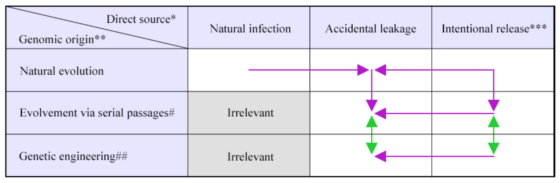
There has been a notable shift in thinking on the genomic origin and direct source of the virus that sparked the COVID-19 pandemic. While the possibility of a natural contagion has not been ruled out, the alternative of an unnatural if primarily accidental contagion has gathered momentum, and with good reason.
By BESA CENTER
The timing of the unanticipated provocation by the Polisario Front against Morocco could be related to the ongoing diplomatic initiative sponsored by the US for the establishment of full diplomatic relations between Morocco and Israel. Several foreign powers have an interest in disrupting the next stages of the Abraham Accords.

By BESA CENTER
The killing of Mohsen Fakhrizadeh, longtime mainstay of the Iranian military nuclear program, is a severe blow to that program and another massive intelligence failure by Iranian internal security. It is difficult at this stage to assess the implications of the operation on the Iranian nuclear program and the political situation, especially in light of the upcoming change of government in Washington.

By BESA CENTER
Barack Obama believes he has not yet said his last word in American politics. He may thus view Biden’s victory as an opportunity to revitalize his progressive agenda, on both the domestic and foreign policy fronts. This could have major implications for the Middle East region.
By BESA CENTER
The election of Joe Biden as the 46th president of the United States requires an examination of the significance for Israel of the transition of power. After four years of unprecedented breakthroughs for Israel during President Donald Trump’s administration, is Israel destined to return to the Obama era in the shape of his former deputy?
By BESA CENTER
The election of Donald Trump in 2016 posed a challenge to analysts and scholars. How could the election of so politically inexperienced a candidate, one with a highly controversial personality and a political orientation that differed from that of all his predecessors, possibly be explained?
By BESA CENTER
Biblical morality, which can also be called Abrahamic morality, was born in Mesopotamia and from there spread west. Until Europe freed itself of its yoke, it was the legacy of the West. Europe’s renunciation led to a series of horrendous calamities from which it was rescued by the US and Britain, which, unlike continental Europe, continued to uphold Abrahamic morality. The Abraham Accords were signed at a time when the US, patron of the Accords and leader of the West and the world, is likewise disavowing its moral values and being taken over by progressivism—another utopian European ideology that has broken from morality. The children of Abraham must make the most of the peace they have reached to reconnect the West with the moral roots that took form in the East.
By BESA CENTER
Rather than address state actors as big or small, international relations theory might more profitably think in terms of smart vs. foolish. Two smart states, the UAE and Israel, have the potential to strengthen the Middle East region through their signing of the Abraham Accords. Smart states might constitute an effective form of deterrence—not only with regard to IR revisionism but also to the volatility of this era.

By BESA CENTER
The Arab World is increasingly losing interest in the Arab-Israeli conflict. If that conflict is to be sustained, it will be almost entirely through the efforts of the Progressive movement. Members of that cult will not let the conflict disappear, as to do so would undermine one of their articles of faith. Progressivism is a return to old-school antisemitism.
By BESA CENTER
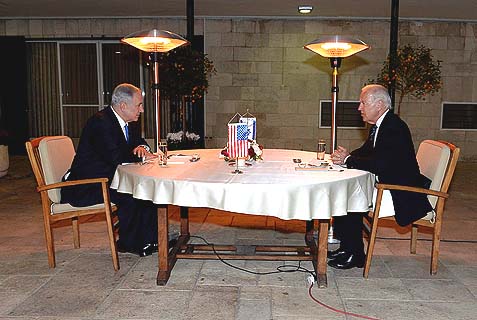
It is Washington’s strong support for Saudi Arabia’s security needs, clear stance against Iran’s pursuit of regional hegemony, support for Saudi actions in Yemen, and willingness to set aside its criticism of Riyadh’s domestic policies that have allowed for even the possibility of a formal shift in the kingdom’s stance on Israel. But Joe Biden has made clear that if elected, he intends to reverse all those policies. Such changes, along with his preemptive rejection of Israel’s extension of sovereignty to any new territory, would undermine any prospect that exists for normalization between Israel and Saudi Arabia.

By BESA CENTER
Polls and other social barometers are consistently forecasting that Joe Biden will win the US presidential election on November 3, but it’s too early to be sure. Relatively little attention is being paid to Trump’s track record in foreign affairs, though it might turn out to be a meaningful factor in the election. By taking that element into consideration, it is possible to make a “Devil’s Advocate” case for a Trump victory. The president’s multiple nominations for the 2021 Nobel Peace Prize could have an impact as well.

By BESA CENTER
Given the historical ties of Athens with Middle Eastern countries, Greece is an ideal candidate to play a pivotal role in a Mediterranean bloc to include Israel, Gulf States, and European countries with the object of repelling Turkey’s expansionist ambitions. The participation of Greece could help the region reach its economic and political potential amid the dispute over local energy reserves.

By BESA CENTER
Although Israeli PM Golda Meir lacked military knowledge, her questions during government discussions on the eve of the Yom Kippur War exposed the fact that deterrence and early warning, the two cornerstones of Israel’s security conception, had not been adequately addressed. If the IDF officers and the many bithonistim (officials with a security background) in her government had heeded her questions, the war could have gone very differently and perhaps even have been averted.

By BESA CENTER
The IDF’s difficulties at the outset of the 1973 Yom Kippur War stemmed from an inherent command flaw rather than an intelligence failure as is commonly believed. The roots of this flaw date back to 1957, when Chief of Staff Moshe Dayan decided on an early retirement age for IDF personnel so as to enable them to embark on a second career. Defense Minister David Ben-Gurion, who saw the dangers of the decision, opposed it but did not use his authority to revoke it.
By BESA CENTER
The official normalization of relations between Israel and the United Arab Emirates (UAE) is a rare victory for the United States’ overall political and military strategy in the Middle East and has significant global implications. Should Israel elect to accept a measure of risk by supporting the sale of F-35 fighters to the UAE, both parties could see immediate as well as longer-term benefits.
By BESA CENTER
In attempting to handle an elusive global pandemic that is rife with unknowns, experts must often make decisions based on the worst-case scenario. Israel’s upcoming three-week lockdown is a legitimate and necessary tool that can curtail the surging rate of infection, just as lockdowns did during the first wave in Israel and around the world. There is no escaping the impression that many critics of this measure, particularly those ascribing it to PM Netanyahu’s self-serving interests, are aiming at a general breakdown as a means of removing him from office.
By BESA CENTER
Israel is different from other democracies in two ways: it has moral political values that are set forth in its Basic Laws, and its values are derived from Jewish morality. This means that Israel is not just a democracy; it is a Jewish democracy. The fight against COVID-19 requires difficult decision-making, and those decisions should be based on the country’s moral values. Instead, Israel is acting in contravention of its own moral values. Because those values are contained in its laws, this means the law is being violated as well.
By BESA CENTER
The foreign policy of a progressive US administration could entail a fanatical pursuit of race-based “intersectionality” policies, similar to the proletarian internationalism of yesteryear. If US foreign policy were in fact composed of such policies, many countries would consider China the lesser of two evils. A world dominated by a progressive US on the one hand and communist China on the other could devolve into a new Dark Ages.

By BESA CENTER
The recent explosion at Beirut Port highlights both Turkey’s growing defense cooperation with Iran and its strategic interest in Lebanon, which facilitates Ankara’s provocative and worrisome agenda in the Eastern Mediterranean. However, Turkey’s unrestrained aggression in that region may be a diversionary tactic from its slow and patient pursuit of a complex strategy to surround Egypt with hostile forces on multiple fronts and undercut its powerful regional role.
By BESA CENTER
{Reposted from the BESA website} Turkey is protesting the UAE for establishing diplomatic relations with Israel—even though Ankara has had diplomatic relations with Israel for the past 71 years. If the UAE, as Ankara argues, has betrayed the “Palestinian cause” just by having diplomatic relations with Israel, then Turkey has been betraying the “Palestinian cause” […]
By BESA CENTER
There are signs that the current escalation between Armenia and Azerbaijan, far from being incidental to the Nagorno-Karabakh conflict, is driven by Russia’s and Iran’s economic warfare against a competing state and the need to return Europe to dependency on their oil and gas in light of US sanctions. Armenia benefits from the bellicose activity thanks to a sophisticated information warfare campaign in a heated US election year that has been unmatched thus far by Azerbaijan. But Baku can still turn its underdog position around by pursuing an assertive and affirmative policy against aggressors on military, political, media, and legal fronts.
By BESA CENTER
The peace agreement between Israel and the United Arab Emirates presents the Iranian regime with dilemmas on both the foreign and the domestic front. The regime fears the emergence of a new international alliance that will have greater power to contain its hegemonic regional aspirations, and there is a new urgency to the need to prove to the Iranian people that the government’s imperialist foreign policy works to their benefit.
By BESA CENTER
While normalization between the UAE and Israel is probably not the game-changer some believe it to be, it does firm up a changing regional environment. The deal will create a new dynamic on three levels: domestic, regional, and international. Expect more pieces to fall into place soon as other countries adjust.
By BESA CENTER
The Israel-UAE peace deal was an unpleasant surprise to the Moroccan diplomatic and intelligence community as it foiled the general expectation that Rabat would be the third regional power to hold the distinction of normalizing relations with Jerusalem. Reliance on past accomplishments in relationship-building, sentimental historical ties, and informal alliances with lobby groups are no longer sufficient if Morocco still wishes to play a leading role in this geopolitical chess game
By BESA CENTER
Israel will be caught on the horns of a dilemma as China projects itself commercially, politically, and militarily into the Middle East. The commercially driven new Cold War between the US and Beijing will force Israel to make difficult choices regarding its economic and strategic interests.
By BESA CENTER
The extent of the current military threat to Israel posed by Hezbollah is the outcome of the hasty Israeli withdrawal from the security zone in South Lebanon in May 2000. Then-PM Ehud Barak appears to have made this fundamental decision without consulting Israeli intelligence.
By BESA CENTER
The American Left is intensely frustrated by President Donald Trump’s ability to penetrate their monopoly on the news cycle. When the Left is frustrated, it acts out, up to and past the point of violence. A powerful weapon at its disposal is its ability to silence its perceived enemies. Much of the mainstream US media, cowed by the Left, reflexively capitulates to its demands to “cancel” individuals who express opinions that go against Leftist orthodoxy.

By BESA CENTER
Former close allies. Where does the relationship stand today-Friend or Foe?
By BESA CENTER
The questions of the true genomic origin as well as the direct source of the initial SARS-CoV-2 strain that infected Patient Zero in China, an event that ultimately unleashed COVID-19 on the world to devastating effect, are hotly debated and highly consequential. Both science and intelligence will contribute to uncovering the evidence needed to answer these questions conclusively.

By BESA CENTER
Most published Middle Eastern military net assessments are based primarily on lists of units and equipment. Unfortunately, history proved that such lists are all too often incorrect. Even when they were correct, the overall assessments generally ignored the quality of personnel and/or equipment, as well as the extent to which rival defense systems could turn available financial, human, and material resources into actual military power.
By BESA CENTER
Many are wondering: how have retired leading members of the Israeli defense establishment come to locate themselves on the political left, at times even on the radical left? Having devoted their professional lives to the task of defending the country and carrying out the orders of the political echelon, they are now spearheading various “anti” movements.
By BESA CENTER
The rise of Islamism as a postmodern ideology is inextricably tied to a congenital, and fundamentally antisemitic negation of the Jewish State. Israel’s survival depends on the defeat of Islamism and the development of liberal democracy in the Middle East.
By BESA CENTER
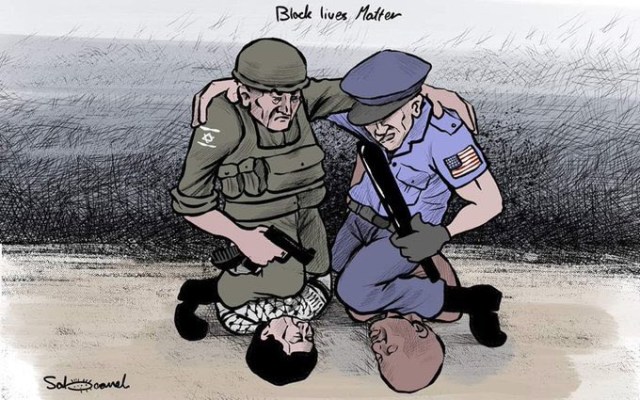
This new radical discourse demands that American Jews be neither liberal nor progressive. Those affiliations accept the existence of the Jewish State, yet are deemed unacceptable according to the “virtues” of a more drastic American dialogue.


 October 9, 2026