יום שני, א׳ חשוון תשפ״זMonday, October 12, 2026



Follow Us


Chaim Shapiro, M.Ed is a freelance writer, public speaker and social media consultant. He is currently working on a book about his collegiate experience. He welcomes comments and feedback at chaimshapiro@aol.com or on his website: http://chaimshapiro.com/
Read More

Just a few months ago, I was having a difficult time getting a refund for a missing product processed via the customer service call center at a major retailer. After spending hours on hold and having my request denied, I sent a Tweet to the company’s Twitter account.
I have a background in counseling, and I can say that the biggest mistake that I ever made was refusing psychological help after we lost the twins. I was trying to keep my tough-guy facade going, and convinced myself that I could deal with the pain.
We had suffered through an experience I wouldn't wish on my worst enemy. My wife had to go through labor and deliver our children to their deaths, and I was unable to save them or even give them a little warmth while they died.
Special Note: It is an unusual phenomenon that many bereaved parents share. We can almost see our age-adjusted children in our sukkah or running up to us during a family simcha. As quickly as they come, those visions seem to disappear as we go through the life cycle. They are hard moments made harder by the thoughts of not only what could have been, but what should have been.
I had to believe that things were going to be ok. They just had to be ok. We had gone through so much, had sacrificed so much and were doing everything the doctors told us to do. I remember speaking to a hesitant professor in my Ph.D. program about getting an incomplete in her class. The conversation stands out in my mind because, looking back, I can see how odd it must have seemed as I matter-of-factly told her I was too busy for coursework because my twins’ amniotic sack was bulging through my wife’s cervix.
On our first day in the antepartum unit, one of the nurses mentioned how critical every moment of pregnancy really was. “One minute in is worth two minutes out (in an incubator).” We weren’t really expecting a premature birth, but her comment put a fine point on the importance of the care my wife was receiving.
The best way to describe our emotions the morning of our major ultrasound was nervous excitement. We had survived a serious scare with a threatened miscarriage a few weeks prior. My wife was on bed rest at home, but we had no real reason to assume there would be any new problems.
It was only after we celebrated the great news that we were expecting twins that we saw the first sign of problems. First of all, my wife was losing, not gaining weight, even as the babies continued to grow normally. Soon after, routine blood work revealed that my wife was suffering from gestational diabetes.
The doctor had warned us that even if we did everything right and followed the protocol after the follicle was of the right size, there was no guarantee of success. Fertilization still had to occur, and just like couples do not necessarily become pregnant every month, we had no way to know if we were actually expecting for two full weeks.
Blood tests are rather innocuous. The pin prick is just slightly annoying, and the ordeal usually only takes a few moments. The clues that the collected blood contain and the impact they may have on your life are much more serious. Waiting on the vital information from blood tests is a regular occurrence in the medical world, and those results can mean so much.
While I certainly don’t speak for all infertile couples, I feel a brief introduction to some of the challenges that couples face would be worthwhile before I describe our treatment protocols.
As a child and a young adult, I always liked going to Shalom Zachors on Friday night. I loved the sense of joy and anticipation for what is the greatest gift imaginable. I was convinced that my real motivation was to gain a greater perspective on the thoughts and opinions of the members of the community, although there is no question that the good food was a major motivating factor.
I have been promising myself that I would write about the death of my twins when I was ready. Ever since that fateful day more than 11 years ago, I have tried to write, dozens of times, but my attempts have drawn many tears and very few words. I tried again very recently, but didn’t get very far. And then the school shooting in Newtown changed everything.

The first six sections of my story have focused on my struggles adapting to a strange college environment forced on me against my will. While that story is self-contained, I thought it would be worthwhile to at least partially answer the main question my book will address: What ended up happening to me? This is a fast-forwarded account that describes my watershed moment as a college student.

While things might have seemed very strange in this foreign college environment, especially because I was tossed in without any roadmap to help me navigate and understand the kinds of things I was seeing all around me, there was one area I was not worried about: academics. Northeastern Illinois has a rather derogatory nickname, “Northeasy," and it does not have a very good academic reputation. I didn’t think my classes would be very hard at all.

Although I was very aware that who I was and how I acted would seem out of place to the diverse student population at NEIU, I never really thought about how unusual their cultures would be for me.
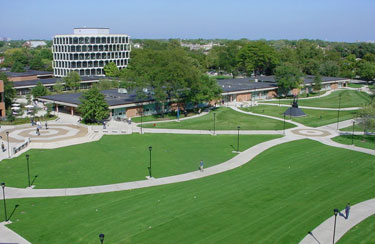
Realizing that there was no backing out of college at this point, I resigned myself to my fate. I was in college, like it or not, but I didn’t believe that I really belonged in college.

Within the span of just a few weeks, everything I knew about myself and all of my plans were destroyed. I was out of yeshiva, living at home and enrolled in classes at Northeastern Illinois University (NEIU).


 October 9, 2026