יום ראשון, ט׳ תשרי תשפ״זSunday, September 20, 2026



Follow Us


Dr. Yitzchok Levine served as a professor in the Department of Mathematical Sciences at Stevens Institute of Technology, Hoboken, New Jersey before retiring in 2008. He then taught as an adjunct at Stevens until 2014. Glimpses Into American Jewish History appears the first week of each month. Dr. Levine can be contacted at llevine@stevens.edu.
Read More
One of the most fascinating figures in American Jewish history is Haym Salomon (1740-1785).
I must take issue with all the congratulations Senator Simcha Felder is currently receiving in the Orthodox community.
Yeshiva Rabbi Jacob Joseph became the model on which other American yeshivas – such as Chaim Berlin and Torah Vodaath – based their curricula.
Ben Zion held the Malach in high regard and the feeling was reciprocated. “I never met a man whose views are closer to mine,” the Malach is reported to have said.
During this period, Rabbi Malin became especially close to the Brisker Rav, who took a special liking to him.
To celebrate this victory Hazzan Pinto wrote a special prayer that was read in Shearith Israel in October 1760.
Rabbi Klein delivered his sermons in such a high classical German that a group of his congregants had to repeatedly ask him to speak so he could be understood.
With his combination of yeshiva and secular education, he was the ideal person to articulate Orthodox Judaism to a generation of Upper West Side, American-born men and women eager to accommodate Judaism with American culture and values.
In his capacity as chief rabbi he was no longer associated with any particular shul and would speak each week on a rotating basis at a different shul in the community.
The faithfulness and integrity with which he performed the duties and various public trusts, won for him the confidence of his fellow citizens.
When the Turkish government issued a prohibition against selling property to Jews in Palestine, Hirschensohn’s financial situation deteriorated, and he left the country to secure a stable livelihood.
The addition of secular subjects was little more than a concession to the demands of the day.
The newly arrived immigrants as well as some of the native American Jews refused to send their children to secular schools permeated with Christian influences.
The development of the Jewish day school in the United States, before the beginning of the modern Jewish day school movement, was sporadic and uneven.
During World War II he served as a member of the draft board for the Lower East Side.
The mid-1760s marked changes in the direction of Myers’s personal life and business affairs.
In 1845 the first Jewish organization in Chicago was established under the name of the Jewish Burial Ground Society.
Virtually everything we know about Yeshiva Or HaChaim comes from the pamphlet “Torah Or,” published anonymously in 1895 in Hebrew.
He must understand that nothing is more valuable or useful in America than smooth talk and vulgarity.
He was absolutely convinced that, religiously, they were much better off in Eastern Europe and Russia than in America.
Early in his life Reb Shraga Feivel decided he would devote himself to strengthening Orthodoxy in the face of the onslaughts of those who would undermine Torah Judaism.
Frankfort-on-the-Main was the city of Rabbi Samson Raphael Hirsch, inspired and inspiring leader in Israel, man of God if ever there was one.
After Rav Breuer was nifter in 1980, Rav Schwab led the community until his passing in 1995.
The bolder women joined in the fight and for some time there was a lively hair pulling in the street.
Despite such opposition, the Yeshivah of Flatbush opened that year with 22 children, four teachers for two classes – a kindergarten and a first grade.
Today Brooklyn is fortunate to have a large number of yeshivas and Bais Yaakovs that span the spectrum from Modern Orthodox to haredi and chassidic.
Brandon was committed to making sure the doctrine of the separation of church and state was adhered to in California, and he utilized both the courts and the press in his efforts.
There were a few times he did not have a ready answer for me. He would then say, “Please call me back tomorrow.” When I did, there was always a ready and clear answer.
Needless to say, a cool, calm and wise Rabbi Schwab soothed things over, as he had done on so many other occasions.
To further improve his English, my father would listen carefully to President Roosevelt's speeches on the radio to pick up the nuances of well-spoken English pronunciation.
From his earliest youth Rav Schwab had a clear and unwavering desire to become a talmid chacham and serve as a rabbi.
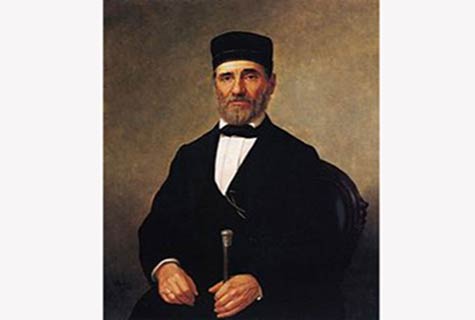
Rabbi Illowy did his utmost to increase the religious observance of his congregants.
He was a powerful and fascinating speaker and convincing preacher, and his ministrations were so successful that his synagogue on Sabbath and holidays was always crowded with worshipers...
The two Torah giants spent hours discussing a variety of Torah topics, some of which went well beyond subjects normally dealt with in Lithuanian yeshivas.
The student followers of the Malach stood in direct opposition to his philosophy and to the standards of the yeshiva.

The debate was picked up by a number of national publications, including Isaac Leeser’s Occident.
After his marriage he was successfully engaged in the lumber business.
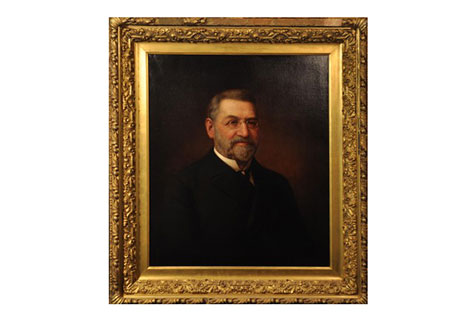
He wrote a strong defense of shechitah in which he maintained that the Jewish method of slaughter had a humanitarian influence on the Jewish people.
This was a most unusual step to take in those days, given the difficulties of travel to Europe. Nonetheless, on May 1, 1860 he sailed from New York on the steamship Hammonia.

The ship’s captain apparently respected the Friedenwalds’ strict adherence to halacha because he allowed them to use his cabin for davening and other religious observances.

I happen to believe that for a couple to spend a few years in kollel is a wonderful way to start a marriage.
Penn wrote the following to a friend in England: “I found them [the Indians of the eastern shore of North America] with like countenances with the Hebrew race; and their children of so lively a resemblance to them that a man would think himself in Duke’s place, or Barry street, in London, when he sees them.”
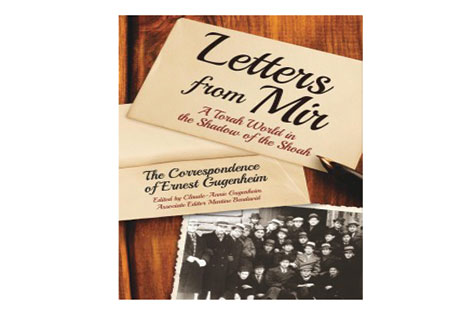
The special charm of these letters is their immediacy and authenticity of emotion and description.
There were many who believed that some North America Indians were descended from Jews.
One might think to attribute the crudeness of the calendar to the fact that it was produced by a frontier community unable to calculate a more precise table.
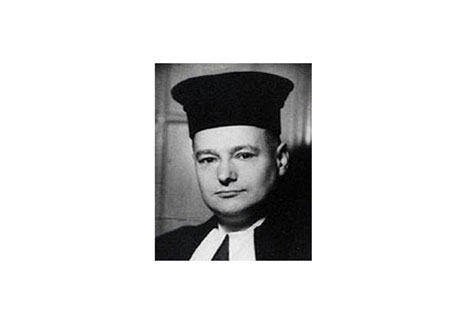
“Throughout his life, he observed Tisha B’Ab as the Nahalah (anniversary) for all of his relatives who were murdered, as this is the national Jewish day of mourning.
Practically to his last days the patriarchal founder was at his office almost daily and took an active interest in all matters connected with the business.
In 1787 Jonas wrote a letter to Congress asking that the federal Constitution guarantee religious liberty in the state of Pennsylvania.

Like many of his contemporaries, he went through some hard years, but eventually he earned the rewards of his perseverance and integrity.
These letters give us the privilege of knowing him in his old age when he is mellow, tempered in his judgments, and sagacious from long experience of dealing with people.
The British evacuated New York on November 25, 1783, and Congress demobilized the American army shortly thereafter.

“Simple, modest, altogether unassuming, Gershom spent his happiest hours with his ever-growing family who were never far from his thoughts.

“Attuned to the ideal of establishing a new Zion in free America, they named their new colony Palestine.
Last month’s column outlined some efforts during the first half of the nineteenth century to establish Jewish agricultural colonies in America. In only one case was a colony actually established.
There were very few Jewish farmers in Europe during the seventeenth, eighteenth and nineteenth centuries. Indeed, in many parts of Europe Jews were forbidden to own land. Despite this there were some Jews who always felt they should return to the agrarian way of life their forefathers had pursued in ancient times, and that America was an ideal place to establish Jewish agricultural colonies.
The President having signed the Treaty of the Geneva Conference and the Senate having, on the 16th instant, ratified the President's actions, the American Association of the Red Cross, organized under provisions of said treaty, purposes to send its agents at once among the sufferers by the recent floods, with a view to the ameliorating of their condition so far as can be done by human aid and the means at hand will permit. Contributions are urgently solicited.
Last month’s column sketched the myriad of social programs in which the Orthodox American communal worker and leader Adolphus S. Solomons (1826-1910) was involved. Adolphus married Rachel Seixas Phillips (1828-1881), a descendant of colonial patriot families and together they had eight daughters and a son.
There are many observant Jews who contributed much to secular and Jewish life in America and yet have, unfortunately, been essentially forgotten. One such man is Adolphus Simson Solomons (1826-1910).
Cholera was officially recognized to be of epidemic proportions in New York City on June 26, 1832. The epidemic was at its peak in July and 3,515 out of a population of about 250,000 died. (The equivalent death toll in today’s city of eight million would exceed 100,000.) Sadly, in 1832 there were no effective treatments available for those who contracted this disease.
As this is our third column on the Reverend Dr. Henry Pereira Mendes, we’ll begin with a summary of his life.
In last month’s column we traced the early career of Reverend Dr. Henry (Chaim) Pereira Mendes and described his extraordinary service to Congregation Shearith Israel in New York where he served as hazan (chazzan) and minister from 1877 to 1923 and then as minister emeritus from 1924 until his passing in 1937.
Beginning around 1840 the Reform movement began asserting itself as a major force in American Judaism. Indeed, with the rising tide of Reform during the nineteenth century it looked as if Orthodox Judaism might disappear. Many synagogues that had been founded by observant Jews and had remained for years true to halacha found their memberships increasingly calling for the institution of reforms and the abandonment of commitment to authentic Judaism.
Last month we sketched the life of Manuel Josephson (1729-1796), who immigrated to New York in the 1740s. Manuel was one of the few learned Jews residing in America in the 18th century. His talents were recognized by Congregation Shearith Israel, and he served on the synagogue’s bet din for several years and as its parnas (president) in 1762. He earned his living as a merchant.
The overwhelming majority of Jews who came to America before the Revolutionary War did not have an extensive Jewish education. One exception was Manuel Josephson (1729-1796), who was born and educated in Germany. His extensive knowledge of Judaism qualified him to serve on the beis din of Congregation Shearith Israel in New York.
Last month we sketched the life of Reverend Dr. Sabato Morais and discussed his spiritual leadership of Congregation Mikveh Israel in Philadelphia as well as his involvement in a wide range of communal activities. Here we outline some of his many other accomplishments and describe his huge funeral.
“Sabato Morais was born on April 13, 1823 to Samuel and Bonina Morais in the northern Italian city of Leghorn (Livorno), in the grand duchy of Tuscany. Morais was the third of nine children, seven daughters and the older of the two sons. The Morais family descended from Portuguese Marranos. Morais’ mother, Bonina Wolf, was of German-Ashkenazic descent.”

In February 1861, Abraham Kohn, one of the founders of Chicago’s Congregation Kehilath Anshe Maariv and at the time the city clerk in the administration of Mayor John Wentworth, presented Abraham Lincoln with a unique American flag.
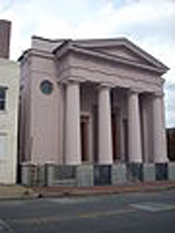
Last month we dealt with the building of the Lloyd Street Synagogue, the first synagogue to be built in Maryland. This month we look at how the building became a church, then again an Orthodox Synagogue, and finally a historic site.
While it is not known precisely when Jews first settled in Baltimore, we do know that five Jewish men and their families settled there during the 1770s. However, it was not until the autumn of 1829 that Baltimore Hebrew Congregation, whose Hebrew name was Nidchei Yisroel (Dispersed of Israel), was founded. This was the only Jewish congregation in the state of Maryland at the time, and it was referred to by many as the “Stadt Shul.”
Early American Jewish history is unfortunately replete with examples of observant families who came to America and, within a relatively short period of time, not only abandoned much of their commitment to religious observance but even had the sad experience of having some of their children intermarrying and assimilating. One family that did not follow this trend was the Hays family.
For centuries Jews have believed America to be a land of freedom and financial opportunity. One such Jew was Moses Raphael Levy, who achieved tremendous financial success as an American colonial merchant.

Last month’s column sketched the life of Reverend Myer Isaacs, concentrating primarily on his efforts to preserve and foster Orthodoxy in New York City, where he served as the spiritual leader of Congregation Shaaray Tefila from its founding in 1845 to his passing in 1879. Reverend Isaacs’s sphere of influence was not limited to New York. His efforts encompassed a broad range of activities throughout America designed to strengthen Orthodoxy in its battle against the Reform movement.
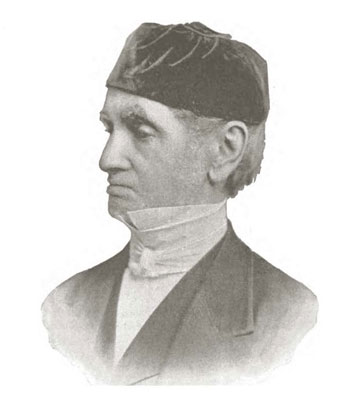
Unless otherwise noted, all quotations are from “The Forerunners – Dutch Jewry in the North America Diaspora” by Robert P. Swierenga, Wayne State University Press, Detroit, 1994. The nineteenth century witnessed a decline in religious observance by most of American Jewry. Changes were instituted in Orthodox synagogues that led many of them to affiliate with […]

Unless otherwise indicated, all quotes are from “Necrology: Henry S. Hendricks (1892-1959)” by David de Sola Pool, Publications of the American Jewish Historical Society (1893 -1961); Sep 1959-Jun 1960; 49, 1-4 AJHS Journal, available online at http://www.ajhs.org/scholarship/adaje.cfm The sad fact is that within a few generations virtually all the descendants of the Jews who came […]
The Jewish population of the United States in 1860 was somewhere between 150,000-200,000. Approximately 3,000 Jews fought on the Confederate side in the Civil War while 7,000 were found on the Union side.
Usually Jewish history books deal with those who have made their mark by doing extraordinary things. While such people obviously are important, there are those who may not have enjoyed much fame yet whose efforts and accomplishments were crucial to maintaining Yahadus in their community. Two such men are Henry S. Hartogensis and his son, Benjamin H. Hartogensis, who devoted their lives to the Jewish community of Baltimore.
Washington, D.C. was created in 1790 as a result of a political compromise. “Washington was a Federal city. It did not have a ‘State’ government. It was under the direct control of Congress for even the simplest of things; schools, streets, courts and land use by private individuals and corporations. Accordingly, Congress dutifully passed on the last day of the first session of the 28th Congress, June 17, 1844, ‘A Bill, concerning conveyances or devices of places of public worship in the District of Columbia.’

In 1519 Alonso Álvarez de Pineda, Spanish explorer and cartographer, led an expedition into Texas with the goal of finding a passage between the Gulf of Mexico and Asia. He and his men were probably the first Europeans to see the land that became known as Texas.

Last month’s column outlined the struggle that took place at the beginning of the Civil War to get Congress to allow the appointment of Jewish army chaplains. Originally only Christian clergymen could serve as chaplains, and it was only as a result of pressure from the American Jewish community that in 1861 Congress passed a new law allowing ordained clergy of other religions to serve as chaplains. The Reverend Arnold (Adolph) Fischel (1830-1894) played a key role in this effort.
“The American tradition of the military chaplaincy is as old as the United States itself. Clergymen served with the armies of the individual colonies almost from the first battle of the Revolution, and provisions for the payment of chaplains were enacted by the Continental Congress as early as 1775.


 September 18, 2026


