יום חמישי, כ״ז תשרי תשפ״זThursday, October 8, 2026



Follow Us


Louis René Beres (Ph.D., Princeton, 1971) is Emeritus Professor of International Law at Purdue and the author of twelve books and several hundred articles on nuclear strategy and nuclear war. He was Chair of Project Daniel, which submitted its special report on Israel’s Strategic Future to former Israeli Prime Minister Ariel Sharon, on January 16, 2003.
Read More

It is the obligation of every state to enforce the law of nations. This means there is a universal legal responsibility to support Israel’s ongoing counter-terrorism operations in the Middle East.
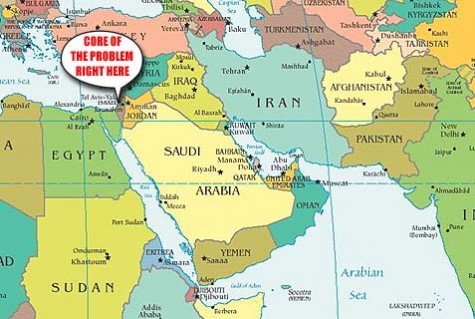
Israel will need to find the best way of communicating a credible threat of limited nuclear war such that Iran and its proxies are deterred from continuing to escalate their aggression.
Israel must be cautious about projecting conventional human rationality upon Hamas, Palestinian Islamic Jihad, Hezbollah, and others of their ilk if it is to combat them effectively.
EXECUTIVE SUMMARY: North Korea’s nuclearization has implications for Israel’s nuclear deterrence posture. There are several plausible means by which a nuclear conflict could arise in the Middle East. It may be time to consider a phase-out of Israel’s “deliberate nuclear ambiguity” and to focus Israeli planning around evaluations of enemy rationality.
For all nation-states, but especially the most powerful or influential, success must be measured along two separate dimensions: present and future. Although Israeli leaders may correctly calculate that their country is doing reasonably well under classic geopolitical criteria of realpolitik, that judgment is likely to collapse in the longer term. There is a great need for a new world politics of cooperation and acknowledged interdependence.
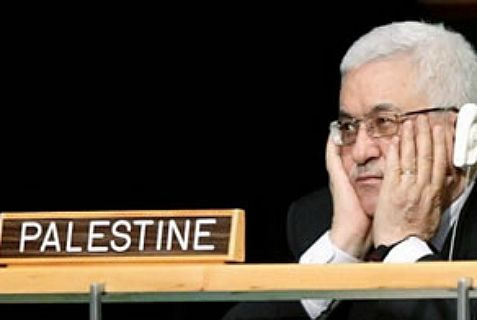
Palestinian statehood could meaningfully enlarge the prospects of both mega-terror attacks and regional nuclear war.
Although Israel continues to face multiple and often intersecting security threats, including terror, its core operational focus should remain on existential perils, especially nuclear attack and nuclear war.
Under international law, which also happens to be part of the law of the United States, ALL Palestinian terrorists are hostes humani generis: "Common enemies of humankind."
A "Palestine” could become another Lebanon, with many different factions battling for control.
President Obama’s core argument on a Middle East peace process is still founded on incorrect assumptions.
Once upon a time in America, every adult could recite at least some Spenglerian theory of decline.
President Obama’s core argument is still founded on incorrect assumptions.
Specific strategic lessons from the Bar Kokhba rebellion.
Still facing an effectively unhindered nuclear threat from Iran, Israel will soon need to choose between two strategic options.
For states, as for individuals, fear and reality go together naturally.
So much of the struggle between Israel and the Arabs continues to concern space.
An undifferentiated or across-the-board commitment to nuclear ambiguity could prove harmful to Israel's's overall security.
It is, after all, difficult for any civilized people to acknowledge self-defense imperatives that could allow killing as remediation.
A core element of international law is the basic rule of nullum crimen sine poena, or "no crime without a punishment."
In law, one man's terrorist can never be another man's freedom fighter.
Within Israel's decisional boundaries, diplomatic processes that are premised on assumptions of reason and rationality may soon need to be reconsidered.
There are many specific and readily identifiable reasons for the failure of “Oslo,” a term that – though originally signifying the accords signed twenty years ago between Israel and the Palestinians – has become a commonplace shorthand for the Middle East peace process.
As I noted here last week, “the situation of survival is the central situation of power. Yet, as the ‘Middle East peace process’ makes Israel's survival more and more problematic, this enterprise now effectively deprives Israel of its power. Left to proceed, the process will eventually permit Israel's enemies to enjoy a triumph that still remains cleverly concealed, the conspicuous triumph experienced by certain still-living persons, when confronted by the powerless one who is dying.”
Believing, naively, in a universal international obligation to preserve life, Jerusalem fails to understand that death is identified by its enemies as a zero-sum event.
In the most truly critical issues of mega-survival, we humans may now be living far more absurdly than ever before.
Again and again, we hear the nearly visceral incantations from Hamas, Islamic Jihad, and Fatah: "We love death."
Easily misrepresented or abused, international law can generally be manipulated to serve virtually any preferred geo-political strategy.
Now more than ever it is apparent – incontestable, in fact – that the Arab/Islamic world has long been preparing to destroy itself.
My parents arrived as Austrian Jewish refugees in Switzerland almost exactly sixty years ago.
What, exactly, can we expect from 'Palestine'?
Back in 2009, the now infamous Goldstone Report was first released by the UN’s Human Rights Council.
Many readers have probably seen the film “Sarah’s Key,” a powerful 2010 movie that reminds its viewers of overwhelming French collaboration with the Nazis. Even today it seems widely believed that France carried on more or less heroically under the German occupation, and that the 1942 roundups of Jews in occupied France must have been carried out by the SS or Gestapo directly. In fact, however, as “Sarah’s Key” instructs in understated yet utterly hideous detail, these roundups were executed, more or less enthusiastically, by the regular French police.
Following the Boston Marathon bombing, one crucial point will likely remain overlooked. The most loathsome aspect of this or any other terror bombing attack on civilians will always lie in the inexpressibility of physical pain. While all decent people will abhor the idea of bombs expressly directed at the innocent, whether here or in other countries, none will ever be able to process the very deepest horrors of what has been inflicted.
Everyone who reads newspapers should know at least one thing. Threats to annihilate Israel have always been unremarkable. Almost never, it seems, have Israel’s existential enemies sought any reason for concealment.
In the face of seemingly irrational threats from North Korea, at least one American conclusion should be obvious and prompt: Nuclear strategy is a "game" that sane world leaders must play, whether they like it, or not. President Obama can choose to play this complex game purposefully or inattentively. But, one way or another, he will have to play.
A fundamental inequality is evident in all expressions of the Middle East peace process.
One must presume that President Obama’s most recent calls for Israeli cooperation in the Middle East peace process are balanced, fair, and well-intentioned. Why not? At the same time, unsurprisingly, these all-too-familiar calls are manifestly thin, in the sense that they lack any genuine intellectual content.
Needed changes in Israel's decision making process have simply not kept up with the growing complexities and synergies of Israel's always-hostile external environment.
Israel must continue to base its policies toward both Iran and 'Palestine' upon an utterly candid and unvarnished awareness of threats to Jewish life.
Under all relevant criteria of international law, Iran's ongoing stance toward Israel remains unequivocally genocidal.
There have been no recognized examples of anticipatory self-defense as a specifically preventative anti-genocide measure under international law.
Every year Iranian President Mahmoud Ahmadinejad instructs the UN General Assembly that Israel is a defiling historical error, a hideous mistake bound to be rectified. Sometimes he goes cheerfully beyond such a narrowly predictive denunciation and proceeds to offer an alleged rationale for Israel's "disappearance."
On January 16, 2003, the private Project Daniel Group first advised then-Israeli Prime Minister Ariel Sharon on the threat of Iranian nuclear weapons.
In the Middle East and North Africa, at least among large swaths of enthusiastic Islamists, true redemption still requires Muslims to present tangible proof of 'membership.'
As this is being written, Chuck Hagel has yet to be confirmed as secretary of defense. Whatever the outcome of the Senate vote over his nomination, the views Hagel would have brought (or will in fact bring) to this post are extremely problematic.
Palestinian terror seeks national self-determination but shouts endlessly to the world that even after statehood violence will continue against 'The Jews.'
For the Palestinians and for the Arab/Islamic world as a whole, the "Zionist Problem" is merely a surface manifestation of the "Jewish Problem."
If Israel acquiesced to Palestinian statehood, this could encourage regional players to wage conventional war against Israel.
Israeli leaders be thinking about doctrinal continuity in all of the seemingly discrete Palestinian factions.
When terrorists represent populations that enthusiastically support their attacks, responsibility for ensuing counter-terrorist harm must lie with the criminals.
Now that the dust has settled in Gaza following Israel’s Pillar of Defense operation, it is easy yet again to feel sorry for the Palestinians. After all, as anyone already knows who clings desperately to The New York Times, the still-lingering images are so evidently palpable and painful. And the Arab suffering – the grievous suffering. Wasn't it disturbingly "one-sided" and “disproportionate”?
Sometimes, pragmatism handily trumps belief. Back in the earliest days of Arab terrorism against Israel – going back to May 1948 and even earlier – many disparate groups were able to cooperate in a presumptively common war against the Jewish state.
Mr. President, some foreign policies need to be carefully thought through a second time.
Terrorism is always a crime under international law.

Sometimes, in complex military calculations, truth is counter-intuitive. In essence, the persuasiveness of Israel's nuclear deterrent vis-à-vis Iran will require prospective enemy perceptions of retaliatory destructiveness at both the low and high ends of the nuclear yield spectrum. Ending nuclear ambiguity at the optimal time could best allow Israel to foster precisely such needed perceptions. This point is very important and possibly overriding.
Steadily, Israel is strengthening its plans for ballistic missile defense, most visibly on the Arrow system and also on Iron Dome, a lower-altitude interceptor that is designed to guard against shorter-range rocket attacks from Lebanon and Gaza.
Israel's final decision concerning what to do about a nuclear Iran will depend on answers to certain core psychological questions. Is the Iranian adversary rational, valuing national survival more highly than any other preference, or combination of preferences? Or, on even a single occasion, is this enemy more apt to prove itself irrational, thereby choosing to value certain preferences more highly than the country's indispensable physical security?

For the most part, we Jews have always accepted the obligation to ward off disaster as best we can. For the most part, we generally understand that all humans have free will. Saadia Gaon included freedom of will among the most central teachings of Judaism, and Maimonides affirmed that all human beings must stand alone in the world “to know what is good and what is evil, with none to prevent him from either doing good or evil.”

Israel, with an understandable desperation, still seeks to discover some discernible correctness and reassuring clarity in the theatre of world politics. However, the polite diplomatic meanings with which it is pressed to "make peace" remain squalid and elusive. Ominously, these meanings continue to seethe menacingly.

All things move in the midst of death, even nations and civilizations. From 1948 to the present day, certain of Israel's prime ministers, facing war, terrorism, or even genocide, have been deeply reluctant to admit core national vulnerabilities. Indeed, rather than acknowledge the plainly exterminatory intent and (increasingly) the corollary destructive capacity of determined enemies, these leaders have sometimes opted for (1) so-called terrorist exchanges; 2) utterly inexcusable deals of land for nothing; and (3) endlessly assorted surrenders of power.

Nuclear weapons and nuclear war. This is not a new subject for my column in The Jewish Press. What is new is the urgent need to confront, head on, an expanding international movement to eviscerate Israel's nuclear posture – and at precisely the precarious moment when this critical posture should actually be made more visible, and hence, more compelling.
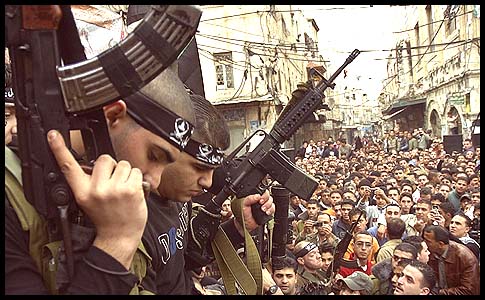
Whenever an insurgent group resorts to openly unjust means, its actions become incontestably terroristic. Even if the ritualistic Palestinian claim of a hostile Israeli "occupation" were somehow reasonable rather than invented, the corresponding right of entitlement to oppose Israel "by any means necessary" would be false.

President Obama and Governor Romney strongly disagree on many issues but the daylight between them is especially great in the imminent matter of Palestinian statehood. For his part, the president still believes in a two-state solution, and in a corollary willingness of the Palestinian side to negotiate fairly. His opponent is unambiguous in a fully contrary insistence that the Palestinians are not interested in peace.
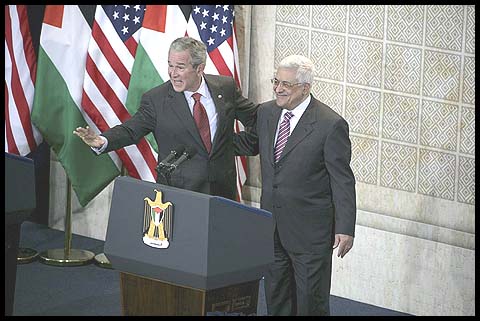
Today, conventional wisdom maintains that the George W. Bush administration had been a good friend to Israel and, unlike the Obama administration, had fought mightily against the creation of a Palestinian state. With this “wisdom” in mind, I ask readers to consider the following column of mine that originally appeared in The Jewish Press in August 2007.

Historically, viewed against the background of extensive and unapologetic terrorist perfidy in both Gaza and Lebanon, Israel has been innocent of any alleged disproportionality. All combatants, including all insurgents in Gaza and Lebanon, are bound to comply with the law of war of international law.

For the moment, at least, a state of Palestine does not exist. Historically, of course, such a country has never existed. Nonetheless, current supporters of Palestinian statehood (sometimes Jews as well as Arabs) have discovered substantial practical benefit in persistently referring to Israel and "Palestine" as if there were some existing legal equivalence between them. Indeed, repeated again and again, ritualistically, as if it were an incantation, such propagandistic usage is already transforming "Palestine" into a jurisprudential fait accompli.

At this point in Israel’s problematic diplomatic agenda, there is really only one overriding policy question: Can any form of negotiation with the Palestinians, Fatah and/or Hamas, ever prove reasonable and productive? From the very beginning, even before formal statehood in 1948, Israel has sought courageously and reasonably to negotiate with its many unreasonable enemies. […]

We wonder about the endlessly volatile markets and also (not often enough) about plainly unequal distributions of national wealth, but are the nation’s official policy responses based on correct views of classical economic theory? In particular, what about Adam Smith and his oft-quoted arguments for “free market capitalism”? More than any other classical theorist, Smith has been embraced by conservatives.

The primary point of Israel's nuclear forces must be deterrence ex ante, not preemption or reprisal ex post. If, however, nuclear weapons should ever be introduced into a conflict between Israel and one or more of the several states that still wish to destroy it, some form of nuclear war fighting could ensue.

For Israel, and also its cross-pressured U.S. ally, there would be very difficult problems to solve if an enemy state such as Iran were permitted to go fully nuclear. These problems could lethally undermine the conceptually neat, but probably unrealistic, notion of balanced nuclear deterrence in the region.

Finally, after many years of effective disregard, a core irony in the matter of Iranian nuclearization can be acknowledged: For President Ahmadinejad, and also his clerical superiors, any prospect of hastening the Shiite apocalypse – a decidedly “sacred” prospect linked to war with Israel and/or the United States – could be welcomed. Naturally, this religion-driven view of a "terrible beauty" would contrast starkly with senior leadership attitudes in both Jerusalem and Washington. In these plainly more secular circles, of course, any thought of a conscious encouragement for Final Battle must always be rejected.

The Genocide Convention criminalizes not only various acts of genocide, but also (Article III) conspiracy to commit genocide and direct and public incitement to commit genocide. Articles II, III and IV of the Genocide Convention are fully applicable in all cases of direct and public incitement to commit genocide. For the Convention to be invoked, it is sufficient that any one of the state parties call for a meeting, through the United Nations, of all the state parties (Article VIII).

Genocide has always been prohibited by international law. In the words of the Genocide Convention, a binding multilateral treaty that codified post-Nuremberg norms and that entered into force in 1951, the sorts of murderous acts long advocated by Arab/Iranian leaders and jihadist terror groups qualify very precisely as criminal. The “moderate” Fatah organization’s June 2009 congress even called openly for the eradication of Israel.

Over the past several months President Obama has generally focused his attention away from the Middle East “peace process.” It is fair to ask, therefore, whether his core preferences for a settlement – carving a Palestinian state out of the still-living body of Israel and “a world free of nuclear weapons” (a world in which Israel would no longer be able to deter certain existential attacks) – still remain a matter of reasonable concern.

Sculptor Alberto Giacometti's “Man Pointing” gesticulates ominously. Emaciated, skeletal, and tormented, the iconic sculpture is an artistic expression of humankind's stalwart march toward suffering and recurring annihilation. Resembling the Swiss creator’s gaunt and unnaturally elongated figure, each of us has now become both a potential observer and a prospective casualty.

With the ongoing about Syrian regime atrocities, regional and global attention has seemingly shifted from more usual concerns about Palestinian statehood. Nonetheless, the two issues are closely related, especially in their common reflection of irremediable fragmentations in the Arab world and in their resultant propensities for escalating violence and cruelty.

“The blood-dimmed tide is loosed,” wrote the poet W.B. Yeats, “and everywhere the ceremony of innocence is drowned.” Now, assembled in almost two hundred armed tribal camps politely called nation-states, all peoples – not only the people of Israel – coexist insecurely on a plainly anarchic planet. The core origins of this anarchy lie in the Peace of Westphalia (1648), which put a codified end to the Thirty Years War.

In the past few years, on these pages of The Jewish Press, I have written several times about critical strategic implications of “chaos” and also of “irrationality” and “madness.” Still, I have never written about the fusion or juxtaposition of these seemingly distinct issues. However, because there are increasingly obvious and important potential interactions between them (military strategists would call such interactions “synergies,” or sometimes “force-multipliers”), I shall now examine these utterly core security matters with a view toward acknowledging their possible ways of coming together.

What, then, might be most important to Israel's prospectively irrational enemies, potentially even more important than their own physical survival as a state? One possible answer is the avoidance of certain forms of shame and humiliation. Another would be avoidance of the potentially unendurable charge that they had somehow defiled their most sacred religious obligations. Still another would be leaders' preferred avoidance of their own violent deaths, deaths that could be attributable to Israeli strategies of targeted killing and/or regime-targeting.

A "bolt-from-the-blue" CBN (chemical, biological or even nuclear) attack on Israel launched with the expectation of city-busting reprisals might not necessarily exhibit irrationality or madness. Within such an attacking state's particular ordering of preferences, any presumed religious obligation to annihilate the "Zionist Entity" could represent the overriding value.

Over the years, in several of my columns in The Jewish Press, I have examined the critical bases of Israeli nuclear deterrence. Recently, in consequence of the growing threat of Iranian nuclearization, increasing attention has been directed toward pertinent issues of enemy rationality. With this in mind, the following three-part column will seek to explain the impact of "irrationality" on Israel's deterrence posture, and also the vital differences between prospective Iranian irrationality and "madness."
It is time to look behind the news. Operation Iraqi Freedom is officially concluded; U.S. operations in Afghanistan are reportedly moving in a similar direction. More generically, however, debate about combat operations, strategy and tactics remains ongoing.

In strategy and law, war, terrorism and genocide are not mutually exclusive. Now, following the “Arab Spring,” even as the usual suspects maintain their explicitly genocidal threats against Israel, certain “progressive” Jews proudly lead various rallies and publications for "peace” and “democracy” in the Middle East. Such “progress,” we might learn from Roman Polanski’s film “The Pianist,” could only be fashioned upon yet another generation of Jewish corpses.
On the surface, “The Pianist” is “merely” the true tale of a talented Jewish musician, Wladyslaw Szpilman, caught up in the unfathomable depths of Nazi occupation and terror. More profoundly, of course, it is a disturbing visual microcosm of the generic human struggle between good and evil, a titanic contest that is sometimes utterly clear but at other times distressingly “gray."

President Obama continues to favor the creation of a "nuclear weapons-free world." This explicit preference is more than naive; it is also undesirable in principle. For Israel, in particular, Obama's solution could likely open the doors to unendurable enemy aggressions. However unintended, therefore, it could become an utterly Final Solution.

It would be unreasonable for Israel to draw any comfort from an argument that Iranian intentions are effectively harmless. Rather, such intentions could impact capabilities decisively over time. Backed by appropriate nuclear weapons, preemption options must somehow remain open and viable to Israel, augmented, of course, by appropriate and complementary plans for cyber-defense and cyber-warfare.

For forty years I have studied the stunningly complex problem of enemy rationality, especially in certain earlier published writings concerning the particular nuclear threat from Iran.

As only a distinctly last resort, Israel needs nuclear weapons for nuclear war fighting.

US President Barack Obama's sentiments notwithstanding, nuclear arms are not per se destabilizing or "warmongering." They are not necessarily anti-peace. Rather, in certain identifiably volatile circumstances, nuclear weapons can actually be indispensable to the avoidance of catastrophic war.

In the strict Islamic view, not merely in the more narrowly Jihadi or Islamist perspectives, Israel must be seen as the individual Jew in macrocosm. The Jewish state must be despised on account of this relationship – that is, because of the allegedly “innate evil” of each individual Jew.

International law is not a suicide pact. Indisputably, Israel has a peremptory right to remain alive. It was entirely proper for Netanyahu to have previously opposed a Palestinian state in any form. Both Fatah and Hamas still see all of Israel as part of "Palestine."

Jorge Luis Borges, the very special Argentine writer and philosopher, sometimes identified himself as a Jew. Although lacking any apparent basis in halacha, he clearly felt himself to be a kindred spirit: “Many a time I think of myself as a Jew,” he is quoted in Willis Barnstone’s, Borges at Eighty: Conversations (1982), “but I wonder whether I have the right to think so. It may be wishful thinking.”

“Everything in this world exudes crime,” says Baudelaire, “the newspapers, the walls, and the face of man.” But this “face” does not belong solely to what classic seventeenth-century international law scholar Hugo Grotius called “men of deplorable wickedness.”

Everyone who has taught international law, or written about it, knows that the idea of crisis in actually inherent in the subject. More than anything else, this crisis, this continuing or protracted dilemma, is one of efficacy, of effectiveness.

The following article by Professor Beres and Colonel (Israel Defense Forces) Yoash Tsiddon-Chatto was originally published in the April 18, 2007 issue of The Jewish Press. Its warnings and predictions concerning a nuclear Iran have been proven unassailable.

According to ancient Jewish tradition, one that certain Talmudists trace back to the time of Isaiah, the world rests upon thirty-six just men, the Lamed-Vav tzaddikim.


 October 2, 2026