יום שני, ט״ו חשוון תשפ״זMonday, October 26, 2026



Follow Us


Rabbi Michoel Gros is the author of “Homeward Bound: Inspiring Stories of Return” (Feldheim Distribution), a collection of dramatic and touching stories of Jews returning to their roots and uncovering hidden strengths.
Read More
I always go far into things. I’ve always been a seeker. I was looking for tranquility, peacefulness, and accomplishment.
Even though her dreams for a perfect wedding had been shattered by her brothers’ boycott, she never resented them or their decision.
When the Stern children wondered why marrying Jewish was so important, their parents struggled to answer.
It didn't take long to understand the depths of the Torah lifestyle.
“I liked Israel, and felt good being Jewish for the first time in my life.”
Here I am with everything. All of my facilities. Youth. Strength. Looks. Money. Degree of talent. Family. Health. And after all of that and more, I think I'm miserable? It can't be. Something's got to change.
The four Stern children reported that the religious observances felt like just that: observances of a culture with little relevance to their modern lives.
Our rav also advised me that given the circumstances, I should not rely on an ordinary Kohen, but should specifically find one with a proven lineage to avoid having to do a third pidyon haben in the future.

Throughout his month in Israel, Kalman realized he had found his home, in the beis medrash and in Eretz Yisrael.
They built the community there. Some of their children hung around, but all of their grandchildren disappeared. They were lost to Judaism. You can’t hand down secular Judaism, bagels-and-lox Judaism, Ken said.
Fast forward to 1977. Larry had already begun to become observant while in graduate school. When his PhD research flopped that year, Larry decided to pack his bags and headed to Eretz Yisrael to work on a kibbutz.
At many points in his life, he intended to go in one direction, until Hashem pushed him back on the road to return.
With the warm reception they had received in Manchester, and with both Aaron and Rivka preferring quieter areas and smaller communities to the hustle and bustle of London, they decided to move there.
Was their recent commitment strong enough to prevail against this dramatic test?

Throughout the war, Akiva had several brief furloughs home, and each time exchanged whichever mishnayos volume he had finished for the next in the series.
Shlomo Veingrad has traveled further for his speaking engagements than even during his days in the NFL, crisscrossing America and speaking around the world.
In 1992 the Dallas Cowboys won Super Bowl XXVII. Among the members of the team was a young Jewish man named Alan Veingrad. Alan, now Shlomo, became frum several years later and found a much more significant calling: as an in-demand speaker he captivates Jewish and non-Jewish audiences around the world with lessons from his football days and from his teshuva journey.
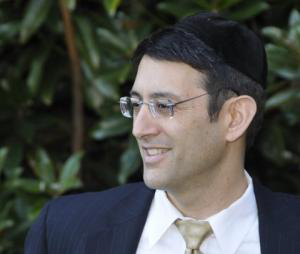
Twenty-five years ago, when kiruv was still a relatively new concept, a group of four young rabbis left Ner Yisrael with families in tow to head down south to Atlanta, Georgia. Rabbi David Silverman was one of those pioneers who founded the Atlanta Scholars Kollel. He is a powerhouse of kiruv – his charisma, sincerity and broad knowledge have helped him inspire thousands of Jews, including this writer.

Pesach is the time of redemption and salvation, which can often come from the most unexpected sources. Such is the story of a boxing title fight in Yankee Stadium that launched a young boy from Russia on a journey to discover his Jewish heritage in Israel.

Jonathan, who once wondered how he would ever get his son close to Hashem, now knows he wasn’t the only one who wanted it. Hashem had an interest in it as well, and made it all come together.


 October 23, 2026