יום חמישי, כ׳ תשרי תשפ״זThursday, October 1, 2026



Follow Us


Rabbi Meir Orlian is a faculty member of the Business Halacha Institute, headed by HaRav Chaim Kohn, a noted dayan. To receive BHI’s free newsletter, Business Weekly, send an e-mail to subscribe@businesshalacha.com. For questions regarding business halacha issues, or to bring a BHI lecturer to your business or shul, call the confidential hotline at 877-845-8455 or e-mail ask@businesshalacha.com.
Read More
The Gemara (Kesubos 34b) presents two opinions on whether a guardian becomes liable for the entrusted item only from when the loss occurs, or retroactively from when the item was entrusted, Rabbi Dayan replied.
Shulchan Aruch, following Rashi and Rif, rules that the creditor cannot collect at all from sold property based on the invalid document, but he can still collect based on it from the debtor, who is not believed to contradict it.
The simplest calculation is a 1/6 variance from the fair market value, whether underpayment or overpayment, replied Rabbi Dayan. Thus, for an item worth $60, a sales price of $50 or $70 – a variance of $10 – is considered 1/6 onaah and warrants adding the $10 underpayment or returning the $10 overcharge (C.M. 227:2).
If you would explicitly arrange not to accept liability for the money, but rather to invest Shimon’s money in a CD and give him at the end of the year whatever you receive back from the bank, replied Rabbi Dayan, you would not need a heter iska.

I know that there is ona’ah regarding sales, replied Ari, but I never heard about ona’ah regarding rental. Anyway, I didn’t overcharge you; you offered $40 on your own! Besides, you should have asked around yesterday. You can’t come today and claim ona’ah.
The primary means of hashavas aveidah, returning lost items, is through simanim, identifying features, replied Rabbi Dayan.

Even if the property was initially intended for renting out, either partner can demand to dissolve the partnership through gode o agod – i.e., he offers the other partner the option to either buy (gode) or sell (agod) the respective half of the property (C.M. 171:8).

Usually, a kinyan must be made for a transaction to be binding, whereas retracting from a verbal agreement carries only the stigma of mechusar amana – lacking trustworthiness, replied Rabbi Dayan. Nonetheless, stating ‘mazel u’bracha’ is considered a binding obligation in diamond commerce, according to many poskim.
There is a mitzvah to pay wages that day, and a prohibition – bal talin – to withhold wages, even if requires effort, replied Mr. Klein. But you offered Mrs. Adler alternate forms of payment. I’m not sure whether that’s sufficient.
Although the renter is not liable for oness, such as natural death, whereas the borrower is, Rabi Yosei rules that the borrower pays the value of cow to the owner, not to the renter/lender, since he should not profit from the other person’s cow (C.M. 307:5).
Mr. Green checked the contract. Our contract doesn't specify anything about subletting, he said. It doesn’t explicitly allow it, but doesn’t rule it out. I don’t see, though, how we can avoid telling the landlord about it.
The Mishna (B.B. 83b) teaches that when the seller provides the buyer a different item than he ordered, the transaction is null and void, so that either party can retract, even if discovered much later, replied Rabbi Dayan.
although Mr. Gross offered rental options for all of Pesach or per night; when Mr. Klein opted for the nightly rate and began the rental accordingly, that rate is binding. Thus, he owes $800 for the stay through Friday.
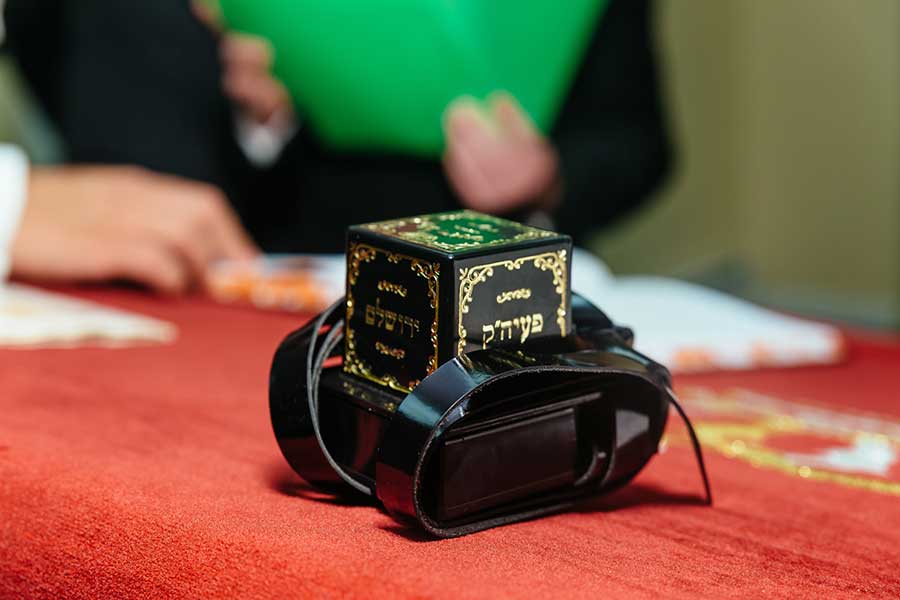
The Gemara (Gittin 29a; B.M. 29b) teaches that a person who borrows something may not lend it to others without the owner's permission, replied Rabbi Dayan. This applies even to a sefer Torah, despite the mitzvah involved (C.M. 342:1).

If a shadchan from one place went and made a shidduch elsewhere, his default fee is according to the place where he made the shidduch.

The book is worth more with M.F.'s autograph, insisted David. I got it autographed, so I should be able to keep the autographed copy! If you insist on getting your book back, at least pay me the added value of the book!

When you buy a raffle for another, even with your own money, you acquire it for him as his agent, replied Rabbi Dayan. All the more so if he asked you to lend him the money (C.M. 183:4; Divrei Chaim C.M. 2:21).

A Jew may not borrow money from another Jew at interest in order to lend it to a non-Jew at interest, replied Rabbi Dayan. If Shimon (the middleman) bears responsibility to Reuven, there is a lender-borrower relationship between them, so that ribbis is prohibited.

There is a coin on the bimah, presumably from one of the tzedakah boxes, said Chaim. It's likely from the box for the shul, since it was near it, but I can't say for sure. What should I do with the coin?

When the lender instructs the borrower to return his item or money through someone else, replied Rabbi Dayan, the Rishonim derive from the Mishna (B.M. 98b) that the borrower is exempt if the messenger loses it.

A thief is required to return the stolen item when it is intact. However, if it got ruined or changed significantly, the Mishna (B.K. 93b) teaches that the thief is required to pay the full value of the item, and he is left with the ruined item.
Most of the drivers drove carefully and obeyed traffic laws, honoring the traffic lights and giving right-of-way to pedestrians. However, he did see his fair share of poor driving and near-accidents, whether between cars or with pedestrians. He also witnessed several accidents.

If the store allows returns, I don’t see the problem, replied Eli. If you want, you can ask Rabbi Dayan. I normally wouldn’t bother just to save $2, but I am interested in knowing the halacha, said Shimmy.
The Gemara (Makkot 3a) teaches that once a witness testified, he is not believed to retract and say that he testified falsely as an eid zomem (conspiring witness), replied Rabbi Dayan. His testimony remains valid (C.M. 38:1).

Jonathan knew which trees were orlah, so the leniency of questionable orlah outside of Israel was not applicable, but his partner would not forgo these fruits!
Indeed, if we were to view the two cases as one and view your supposed work for Reuven as payment of his loan, you could then demand an oath of Reuven; since he is unsure, he could not swear and collect.

When someone is niftar and leaves debts or liabilities, what is the halachic liability of the heirs or next of kin to cover them from various assets of the estate – real estate, movable items, forthcoming loans, bank accounts, life insurance proceeds, etc.?

Rashba (1:1028) maintains that the estate is liable for the duration of the rental term, unless the lease allows early termination, because a rental is like a sale for that period.

But why should we need a heter iska? asked Yaakov. I’m just covering what you pay to the bank.
But I’m in possession of the money, Mr. Simon insisted, and your document doesn’t indicate anything.
I don’t think it’s a problem, said the secretary. Each person is probably happy to eat what he or she is used to. If I order everything kosher, it will come out $100 to $200 more.
Even if I said then that it would be okay, that was to placate you, so long as it didn’t make a difference, but it doesn’t grant you rights beyond the contract when I need you at 9.
During the night, there was a thunderstorm. Strong winds broke a large branch off a tree nearby. The branch fell on Ari’s car, damaging it significantly and breaking a car seat.
Even though you told me to repay Moshe, argued Mr. Stern, essentially, I owe you. Giving to your son is in lieu of giving to you. If you're willing to forgo, why do we need to involve Moshe?
When settling with the sister so that she should not claim her share, presumably the full burden should be on the bechor, because she could claim only the additional share of the bechor.
Mishneh L’melech understands that also regarding a purchase from a non-Jew, both parties can retract until the document is written because there isn’t full intent for purchase without the document.
If you can withdraw other money from an ATM, even if it will take time to go there, you are required to give the loan, like other mitzvos of chesed that are required even if they take some time (see C.M. 265:1; 272:6; Ahavas Chesed 1:12).
When someone damages other people’s property while trying to save lives, is he liable for the financial damage to the property?
Some explain this mitzvah as rooted in the need to spare the animal suffering; others explain it as rooted in the need to help a fellow Jew in distress.
Mr. Blum arranged the wire transfer. When he checked the bank statement a few days later, though, he noticed that no fee had been charged. He notified Mr. Leiner.
I remember now that one of the beams broke last year, Mr. Baum replied. Our sukkos were placed next to each other; one of my boys must have mistakenly taken a beam of yours.
To avoid potential violation, when a person commits to give ma’aser kesafim or designates money for tzedaka, poskim recommend that he stipulate to distribute it slowly or that the money not be considered tzedaka until he is ready to give it.
When someone buys something for a price stated in the local currency but pays later in a different currency, replied Rabbi Dayan, the exchange rate is determined by the time of payment.
It was nice of your neighbor to allow you use of the alley, responded Mr. Stein, but did you ever buy the rights to that strip of property?
If the seller knew the buyer's intent to move, the seller is responsible for returning the merchandise. If not, the buyer is responsible for returning defective merchandise when he could have checked before distancing it, but seemingly not for mistaken merchandise.
The mitzvos associated with prompt payment apply to a Jewish employee, although a non-Jewish employee should also be paid according to his contractual terms.
He turned around and saw a huge wave heading quickly towards him. Before he knew it, the wave hit the beach and crashed against the shore, spreading up the sand sixty feet. It saturated the towel and unfurled it, sopping the phones with seawater.
A transaction made initially in error is void, replied Rabbi Dayan. However, this does not apply here, since when Mr. Joseph gave the tickets, the concert was still planned as scheduled.
Shlomo looked at his watch. It was already late afternoon; he wouldn't have time to go to the garage and get back to shul for Mincha. On the other hand, he knew that there was a mitzvah to pay wages promptly, on that day, and a prohibition – bal talin – to delay payment.
If the Singers share a single account, Mr. Cooper could certainly offset his obligation to Mrs. Singer with Mr. Singer's debt to him. It is pointless to pay $600 to the joint account, and then withdraw $600 from it.
Even if she earns more than the required amount, the husband is entitled to the extra earnings in lieu of the additional money that he provides her for personal expenses, beyond her basic sustenance of food, shelter, and clothing (E.H. 70:3).
Suddenly, a ferocious-looking dog ran towards him, barking menacingly. Yitzi dodged as the dog grabbed one of the balls and ran off.
I wanted to tell you, though, that I misread the price list. $28 was the line above, but this sefer is actually $31, so you owe another $3, said Yehuda. You can't change the price now, objected Shlomo. I already gave my cousin the sefer!
But you lent me the money, and, in the end, it was never returned to you, insisted Levi. I don't want you to be out the money. But it's also not fair to make you pay double, replied Menachem. I took the risk, so it's my loss.
Mr. Berger is considered a shomer chinam since he has no gain, even incidental, from guarding the calculator.
At the time of Megillas Rus, the Yovel – Jubilee year – was in force, replied Rabbi Dayan. If a person sold a field that was his sedei achuza – ancestral heritage from when the Land of Israel was first divided – it would return to him in Yovel.
Mr. Eisner arranged to meet with Rabbi Dayan. He showed him the terms-of-use agreement and asked: Are these terms acceptable and binding according to halacha? Do the borrowers need to sign?
If I had my way, I'd redeem it tomorrow! responded Shimon. I'm simply not interested in being a partner in the bond!
Last year, when you made the bonfire, the smoke wafted heavily toward us, said Mr. Wasser. I found it quite intolerable!
I placed the printer in the apartment with intention that it should be Shimon's, said Reuven. He may have already acquired it! We are learning now in yeshiva about kinyan chatzer, acquisition through one's property.
If we have seats, and charge someone for using them for Shabbos, answered Sol, perhaps it's like we're charging rent for the seats for the Shabbos games!
If the Jew accepts responsibility for the chametz – that of shomer sachar or, according to some, even that of a shomer chinam – he violates bal yimatzei (O.C. 440:1).
In any case, added Chaim, I assume that if you have a share in the chametz, you can include it in mechiras chametz. I don’t think I can simply sell my stocks the way I sell the liquor that I own, objected Mr. Krumbein.
The whole Jewish nation set their calendars and holidays based on the words of the witnesses. It was even permissible to come on Shabbos from afar to testify.
Netanel tried to straighten the hat as best he could since it was Shabbos, but the damage was done. The hat had a clear crease in it and would need to be either reshaped or replaced.
Shmuel the Amora rules that although most people buy oxen for work, not meat, we do not follow the majority likelihood in monetary issues.
Is it acceptable for the meshulach to take a percentage of the donation? Is this counted as part of my tzedakah?
On this day, as you become bar mitzvah, we wish you the privilege to see the rebuilding of the Beis HaMikdash. Your half-shekel will join with the half-shekel of another Jew – with the half-shekels of all the Jews around the world – to purchase the korbanos.
What happens when there is a difference in time zones? Mr. Samson asked his chavrusa. For example, I use call centers in India. When it's Friday in America, it's already Shabbos in India. Is that a violation of amira l'nochri?
The normal use of ‘company’ or ‘workplace’ indicates an office, not one's home, even if the employee typically works remotely.
If the parshiyos are pasul, that should be the sofer's problem! Mr. Rosenblum exclaimed. He wrote them. Please let me speak with him.
Since the signature of witnesses on a loan document becomes void upon repayment, no inherent testimony remains about the second loan, whereas when the borrower resubmits an IOU to the lender, he obligates himself again, as if signing anew.
To be honest, acknowledged Rabbi Kadosh, I am not sure how much the kesubah is worth in dollars. I see Rabbi Dayan over there, though. Maybe he knows.
The borrower carries the greatest liability, even if the borrowed item died or broke due to uncontrollable circumstances, oness.
I may have to sell them as 'used in new condition.' I'll accept the books back, but expect you to cover the depreciation due to the stickers.
Here, the pennies were not lent as monetary value, but rather as objects to be used and returned themselves – hashalah, so that there is no violation of ribbis.
In English, the words 'borrow' and 'lend' apply to both money and items, but there is a significant halachic difference between them, replied Rabbi Dayan.
The workers cannot insist that they agreed to continue only with the intention that the employer should add, since he can claim that he intended to improve work conditions with extra food or the like.
The Gemara (B.K. 30a; B.M. 118b) teaches that even during seasons when it is permissible to place trash out in public areas, the owner remains responsible for it, and is liable if it caused injury.
The dates are agreed and well documented, said Rabbi Dayan. It's clear to me that Mr. Plaut made a common mathematical error, subtracting three from 12.
Half a year later, Mr. Green called Mrs. Hauser. We're planning to come at the end of November, he said. If your unit is available, we're happy to stay with you. Yes, it's available then, said Mr. Hauser. We'll be happy to host you in the unit. At the end of their trip, Mr. Green thanked Mr. Hauser for the pleasant accommodations. I'm glad you enjoyed the unit, said Mr. Hauser. We charge $700 for the week.
I cannot promise that the hall will be available then, said the gabbai. People use it for all kinds of functions, including lectures in the morning. You'll have to pay for the hall, regardless.
Mr. Feiner picked up the bag and headed home. As he walked, he wondered whether he was obligated to return the bag that had washed ashore.
I'd rather spend my money on things that people need, like worthy tzedakah causes, tuition for the children, or sefarim for the shul library.
There are two primary ways to allow payment for esrogim of the Shemittah year on a wide scale. The most prevalent option is through otzar beis din.
I expected you to remember, replied Mr. Feldman. In any case, I won't eat these bagels for supper tonight, nor will they last till after Yom Kippur.
What about the bank account for the kids, which is in my name? asked Mrs. Guttyor. My pension also is in my name. What if it were a Jewish-owned bank?
Toward the end of the month, Mr. Morgen looked on his desk for the paper on which he had recorded his hours, but couldn't find it. He tried reconstructing based on his email message history, but it didn't help.
As the article did not distinguish between a Jewish-owned store and one owned by a gentile, a reader posed the question: How can hefker beis din apply when the ring is bought from a gentile?
If we draft two loan documents, suggested Mr. Goldstein, we could send one to each brother simultaneously. That will save time!
Benzion turned around, charging again. Zvi swirled the jacket and snapped it so hard that it tore. He hugged Benzion, and the dancing resumed.
I noticed that he paused when Yehuda said that he bought the ring with his credit card, and then carried on. Why did Rabbi Reiss pause?
If we had given Mr. Rodriguez a paycheck, and he never cashed it, added Mr. Sender, would you say there, also, that we have to make out a new check to him, even if he didn't ask?
Once you gave notice that you are terminating the rental early, argued Mr. Tanenbaum, you gave up whatever rights you have in the apartment. I disagree, said Mr. Mandel. Until we return the property to you, we retain the usage rights!
Every fall and spring, several times each season, Mr. Brown would clean his property of the leaves and flowers that Mr. Green's tree shed.
When word got out to the congregants about the proposed plan, Mr. Ackerman, who sat by the break, objected to the plan.
In the morning, Asher approached Yehuda. I saw that your bike was unlocked, and thought I'd take a spin, he said. Unfortunately, I rode over a nail on the road, and the inner tube got punctured.
In the case of a rescuer or an advocate, though, the employer knows from the beginning that the outcome is uncertain, and he hires the rescuer or advocate with this understanding.
Tur, however, cites from Ramah that the minimal obligation of Tanach is for someone who is unable to educate more, but one who can, is obligated (chayav) to teach his son Mishnah, Gemara, halachos and aggados.
The Rav is not considered a shomer aveidah on the boxes, since the owner should arrange to take them. Furthermore, although he was a guardian for the two months, he is no longer so, since he previously told the owner to take the boxes


 October 2, 2026