יום שבת, ט״ו תשרי תשפ״זSaturday, September 26, 2026



Follow Us


Raphael Grunfeld is a partner in the Wall Street law firm of Carter Ledyard & Milburn LLP. He received semicha in Yoreh Yoreh from Mesivtha Tifereth Jerusalem of America and in Yadin Yadin from Rav Dovid Feinstein, and attended his weekly parsha shiur for twenty years.
Read More
Moreover, even if the perpetrator of the capital offense is never actually executed, such as when the fatal act was unintentional, Kam Lei applies and the judge cannot award damages.
One of the purposes of the ketubah money is to make it difficult for a husband to capriciously divorce his wife.
A more difficult situation arises when there is no evidence placing the missing husband at the site of the death.
The court cannot solely rely on death certificates issued by non-Jewish institutions without conducting its own investigation into the facts of the case.
When the inability cannot be clearly attributed to either spouse, the halacha is the subject of debate among the Rishonim.
The child of a Jewish mother from a union with a non-Jewish father is not a mamzer.
Although the conversion ceremony involves more than circumcision and immersion, these are the two essential requirements, without which the conversion is ineffective.
If a man dies childless, the Torah commands the deceased’s brother to marry his brother’s widow in a ceremony known as yibum, or to perform a special form of divorce ceremony with her known as chalitzah.
What if, at the moment of the late brother’s death, the surviving brother cannot effect yibum because the widow is a niddah?
The Torah lists twenty-one close relatives a man may not marry.
In the same way as a married woman is precluded from marrying another man without a get, so too is this widow prohibited from marrying another man without chalitzah.
Should we sit in the sukkah on a day that may be the eighth day when we are not commanded to sit in the sukkah at all?
We are told that after returning home from Ne’ilah and breaking our fast, the first activity we should engage in is building a sukkah.
In addition to Yom Kippur, there is at least one other instance when a person may fast on Shabbat – the case of a ta’anit chalom, in which a person wishes to fast to prevent an ominous dream from becoming reality.
We must eat, sleep, work, and care for our dependants. How much time is left over after all that?
If mourning is incompatible with Yom Tov, why is it not incompatible with Shabbat?
Why does Yom Tov cut short shiva and shloshim?
On Chol HaMoed some work is prohibited and some is permitted. According to some opinions, the work prohibition is biblical; according to others, it’s rabbinical.
Based on the opinion of the Ramban, the Territorial School believes that leaving any territory of the Land of Israel in the possession of non-Jews is a violation of a biblical mandate.
To properly fulfill the mitzvah of listening to the megillah, each word must be heard.
If the only person available to perform the milah on the eighth day is a person who is not an observant Jew, the milah should be postponed until a devout mohel is available.
The kohen gadol may not enter the Temple unless his hair is cut every seven days.
A commonly employed and permissible device regarding the prohibition of wearing fresh clothes during the Nine Days is to don them for a moment or two before the Nine Days.
The prayer of Mashiv haruach u’morid hageshem mentions God’s rainmaking powers but it is not an immediate request for rain.
According to the Bach, Rosh Hashanah is referred to as moed, festival, the same term the Torah uses to describe Pesach, Shavuot and Sukkot.
If the survival of Judaism is dependent on the next generation, there is no doubt that the most important person in the synagogue is the Candy Man.
From this decree on, the two days of Rosh Hashanah, unlike the two days of Pesach, Shavuot and Sukkot, were no longer celebrated out of doubt but out of certainty.
Because the Torah requires one to count “seven complete weeks” one should count at the beginning of the day, which in Jewish law begins on the preceding night.
A few background principles regarding the prohibitions of chametz mixtures on Pesach may provide some shopping guidance.
The prohibition of chametz on Pesach means that chametz may not be eaten or enjoyed, may not be owned or possessed, and must be removed from one's premises.
Whether a month is chaser or maleh makes a crucial difference to our Jewish lives. If, for example, one mistakenly believed the month of Elul was maleh when in fact it was chaser, one might find oneself eating on Yom Kippur and fasting on a weekday. If one mistakenly believed the month of Adar was maleh when in fact it was chaser, one might find oneself eating bread on Pesach.
The lulav symbolizes the backbone, the etrog, the heart, the hadas the eyes, and the arava the lips moving in the service of God.
Although the Torah only commands us to pick up the arba minim, the rabbis require that we wave them in all four directions of the compass as well as upward and downward.
Is a shomer aveidah considered a shomer chinam or a shomer sachar?
The equivalent of the “OU” kashrut certification in England is that of the London Beit Din. There is also a competing kashrut certification called Kedassia. Those who eat Kedassia do not eat Beit Din.
When we are on the move in life, exiled from place to place, we turn to God, our Partner, for the protection of His cloud. When we are given the luxury of settling down, God turns to us, His partner, for the protection of our walls.
If karet is premature death at the hand of God, until what age can it strike and at what age can one celebrate emerging from the danger zone?
The two sons of Aaron, Nadav and Avihu, who, according to some commentators, ventured past the outer altar in a state of intoxication, paid for it with their lives.
A sick person who is told by a doctor (or feels on his own) that refraining from eating and drinking on Yom Kippur will or may aggravate the sickness to the point of danger, is required by halacha to eat and drink on Yom Kippur.
He must be a very important person to get such an important mitzvah, I heard them say, as Mr. Loewenstein, the local assemblyman, stepped up to recite the Torah blessing before the reading of the Ten Commandments. And Mr. Kleppish was too embarrassed to tell his wife that he only got third galilah on Shabbat Rosh Chodesh Chanukah. Meanwhile, in the neighborhood shtiebel, Maftir was sold for $500 and petichah for $20.
If they would invent a Mah Nishtanah for Shabbat/Yom Kippur, it would go like this: “Why is this Friday night different from all others? On all other Friday nights we enjoy a festive Shabbat meal. Tonight? No dinner!” The question is a good one. According to many opinions, it is a Torah obligation to celebrate Shabbat with three festive meals and it is a Torah violation to fast on Shabbat. Why then, do we not postpone Yom Kippur to Sunday like we do with all other fasts
As I headed to work on the subway one morning, two men boarded the train carrying on their shoulders crates of sandwiches and toiletries. They put the crates down and invited anyone who might be hungry or had not slept in their own bed that night to help themselves from the crates. Everybody hid behind his or her newspaper.
At about 4 a.m. on cold and damp autumn mornings in London, Dad would try to wake us in time for Selichot, the pre-Jewish New Year dawn prayers. As we heard Dad’s footsteps mounting the stairs, my brother and I would hide under our covers and mutter our displeasure at being disturbed.
Even Moshe Rabbeinu, who spoke with God one on One, was not allowed to see Him during his lifetime. “You cannot see my face, for no man shall see me and live.” Ultimately, we shall all see God one on One and face not just Him but also ourselves and the lives we led.
You’ve been too busy to open your mail. When you finally do, it is overflowing with bills and letters. Solicitation letters from the Jewish hospital, a gemach (interest-free loan fund), the yeshiva and the synagogue.
Continuing with our examination of Pesachim as per the Daf Yomi cycle, the Seder commences with Kiddush recited over the first cup of wine. Whereas Kiddush may be recited before nightfall on Shabbat, it must be recited after nightfall on Seder night. Unlike Shabbat and Yom Tov, on Seder night there is a requirement that each participant drink from his own cup.
There are lots of back seat drivers at the Seder. Your kezayit (portion) of matzah is not big enough, they chide. Red wine only; shmurah matzot or nothing; don’t start the Seder before nightfall; must finish the meal before midnight; don’t drink wine between the four cups; the Seder plate set in the wrong order. This article is intended as a defensible guide for the brave volunteer who leads the Seder (the ba’al haseder).
It’s 12:30 on a Yom Tov, Monday morning. You are about to leave the synagogue for the third day in a row. As you look around, you notice, even as you try to ignore it, a certain wilting of the spirit. A belabored pace. How good you felt on Friday night, with the onset of Shabbat. An effortless serenity set in then.
Prayer is always an avenue to God. But in the month of Elul, the last month of the Jewish year, and during the ten days between Rosh Hashanah and Yom Kippur, God lends a particularly sympathetic ear.
Taste is everything. If the taste of chametz has been absorbed into a cooking vessel, such a vessel may not be used on Pesach unless it undergoes koshering, the halachically prescribed way of expelling the flavor of forbidden food such as non-kosher foods, meat and milk mixtures or chametz on Pesach from utensils and restoring them for use.
We popularly refer to the eight-day period, from the fifteenth through the twenty second of Nissan, as the festival of Pesach. The Torah, however, calls this period Chag HaMatzot, during which time we eat matzot and abstain from eating chametz.
On Shabbat one should eat three meals. The Friday night and the Shabbat morning meals require Kiddush with wine and two challot, lechem mishneh, and the third meal, the seudah shlishit, requires lechem mishneh. The correct time for seudah shlishit is the afternoon. But what if it’s Shabbat Erev Pesach, when no chametz may be eaten after the fourth halachic hour of the day? No problem, some might think. Let’s use matzah for seudah shlishit. But that cannot be done either, because one may not eat kasher l’Pesach matzah on Erev Pesach and though it is Shabbat, it is also Erev Pesach. So if you cannot use challot or matzah for seudah shlishit, what should you do?
As we start Pesachim in the study of Daf Yomi, we see that the Torah commands us to remove leavened bread, chametz, on Erev Pesach, in order to ensure that chametz will be neither seen nor found on our premises during the Yom Tov. The removal of chametz is achieved either by renouncing one’s ownership over it, bitul, or by physically destroying it, biyur. The rabbis established a procedure that combines both bitul and biyur.
According to biblical law, once an area has been converted in to a reshut hayachid by enclosing it with a halachically acceptable eruv, one may carry inside the enclosed area. But according to rabbinical law, it is simply not enough to enclose an area in which one wants to carry with an eruv. This alone will not permit carrying from the home into the street or vice versa. Neither will it alone permit carrying from a condominium apartment into the lobby or other common areas.
One of the thirty-nine prohibited melachot on Shabbat is carrying an object from a private domain, reshut hayachid, to a public domain, reshut harabim, or carrying an object a distance of four amot, six to eight feet, in a reshut harabim. The Torah does permit, however, carrying within the reshut hayachid itself. The definition of a reshut hayachid and a reshut harabim is crucial, therefore, to the laws of carrying on Shabbat.
In order to carry from one's home into the street (even when the area is enclosed by a properly constructed eruv), the eruvin ceremony must be performed. This ceremony involves the placing of food in one designated home on behalf of all Sabbath observers in the enclosed area. In order for the eruvin ceremony to be valid, however, it must be performed on behalf of all owners of streets and homes in the enclosed area.
The purpose of the eruv is to enclose on all sides the area in which one wants to carry, so that it becomes a private domain, a reshut hayachid. If the area in question is a karmelit, a space that qualifies neither as a public domain nor as a private domain, gaps in the eruv structure may be bridged by means of a constructive or symbolic doorway called tzurat hapetach. A tzurat hapetach is made up of two posts, each called a lechi, and a crossbeam or overhead wire called a korah.
“On Shabbat, every person must remain in his residence,” said Moshe to the people, forbidding them to walk more than a certain distance beyond their desert encampment. This distance, which measures two thousand amot – about two thirds of a mile – is known as techum Shabbat. It is the same distance that stretched from the perimeters of the Levite cities to their outlying suburbs.
In the movie “The Paper Chase,” a Harvard student rips out a page of the law report so that his fellow student will be unable to read it and will come to the lecture unprepared. About 2,000 years earlier a student lay feverishly ill in the academy of Rabbi Akiva in Bnei Brak. So caught up were the other students in the competitiveness of their learning that they found no time to visit him or take care of him. As the student lay dying, Rabbi Akiva himself entered the sick room, fed him, made him comfortable and swept the dust from the floor. The sick student survived. His peers did not.
Football’s 49ers rarely drop the ball. But how many of us make it through 49 nights from the second night of Pesach all the way to Shavuot without losing count? Sometimes we never even make it to the first yard line. We are so busy preparing for second night Seder that we miss evening prayers in shul and forget to count Day One.
What is chametz? What are the various categories of chametz? Does the prohibition of chametz on Pesach apply also to non‑food products? Can medication containing chametz be taken on Pesach? Can vitamins produced with no Pesach supervision be used? What about liquid medicine such as cough mixture? Can non- supervised body soap or liquid detergent be used? What about toothpaste? May one use rubbing alcohol? May one eat egg matzah?
Taste is everything – ta’am ke’ikar. The taste of forbidden food is treated in halacha as the forbidden food itself and is equally forbidden. If the taste of forbidden food has been absorbed into a cooking vessel, such a vessel may not be used on Pesach unless it undergoes a process known as hechsher or hagalat keilim - popularly referred to as kashering.
“You must sanctify yourselves and be holy,” the Torah tells us, “for I, the Lord your God, am holy.” The service of God in our lives should simulate the service of God in the Temple. Just as the kohen, the priest, was required to enter God’s Temple in a state of taharah, spiritual cleanliness, we are required to enter God’s world in a state of taharah.
Visiting the sick, bikur cholim, is one of the mitzvot listed in the prayer “Eilu devarim she’ein lahem shiur” – “These are the things that have no measure.” According to our sages, the Torah itself stresses the importance of bikur cholim in several places.
If you took a bus to synagogue on a rainy Shabbat or Yom Tov day, with umbrella in hand, would that be OK? There is no melachah involved because you are not driving. There is no amira le’nochri (asking a non‑Jew to perform a melachah on your behalf) involved because you are not asking the non‑Jew to drive for you. He is driving of his own accord for other non‑Jews. There is no violation of techum Shabbat (the prohibition not to travel on Shabbat or Yom Tov more than 2,000 amot beyond one's residence), because the bus travels only in the city.
If you eat mayonnaise with everything, or you attended Breuers, or you wash your hands before Kiddush, you are probably of German Jewish descent. The first two inferences are understandable. Where does the third one come from?
Just because God has given us a weekly lifetime subscription to paradise, we should not take Shabbat for granted. No gift should go unacknowledged and no giver should go forgotten.
If you yourself may not perform a melachah, you may not ask a non-Jew to perform it for you. This is true both for biblically prohibited acts, melachot de’oreita, and rabinically prohibited acts, melachot de’rabbanan. This applies even if the non-Jew was instructed before Shabbat to perform the melachah on Shabbat.
There is also an additional category of muktzah, applicable mainly to food on Yom Tov, known as muktzah mechamat hachana, which means muktzah because one had no intention on Erev Yom Tov to eat such food on Yom Tov.
Sunday. Many of us do not go to work. There is, however, so much to do at home. How many of us have the self-control to make Sunday a voluntary day of rest and refrain from balancing our checkbooks, paying our bills, clearing out the attic, or mowing the lawn?
Whereas a person may not cook food on Shabbat, there is no biblical prohibition against food cooking itself on Shabbat. Therefore a person may place raw meat in a pot on Friday afternoon Erev Shabbat before sunset and allow it to cook through until the following day for the Shabbat lunch meal.
One may not bathe in, wash or shower with water heated on Shabbat. Whether one may perform these activities with water heated before Shabbat is debated by Rav, who maintains that one may wash one’s entire body, limb by limb, in such water, and Shmuel, who maintains one may only wash one’s face, hands and feet in such water.
Using one’s creative powers seven days a week may lead one to believe in oneself as a Creator. This danger is averted in Judaism by the institution of Shabbat, during which one refrains from melachot. Melachot are defined by my father, Dayan Grunfeld, zt”l, in his book on the Sabbath, as acts that demonstrate one’s mastery of the world by means of the constructive exercise of one’s intelligence and skill. For just one day a week, we are asked to lay aside our skills and acknowledge the real Creator.
Certain activities – such as building, tying, weaving, writing, dyeing and sewing – are not prohibited on Shabbat unless they are made to last. For example, one may tie a knot that is not tied in a professional manner and will be untied within seven days, such as shoelaces or the ribbon around the Torah scroll, on Shabbat afternoon. So too a safety pin may be used on Shabbat since it is not a form of permanent sewing.
You arrive home after shul on Friday night. All the dishes washed before Shabbat are locked in the dishwasher. You have no other eating utensils and you want to retrieve them for the Friday night meal. In order to take them out you have to unlock the door by turning the lever lock to the left. The action of the lever to unlock the door automatically turns off the panel indicator lights that advise you the dishwashing cycle is complete. So you cannot open the door without turning off the lights. What do you do?
The link between the laws of Shabbat and the Mishkan not only defines the 39 Melachot but also determines the conditions for liability. One of these conditions is intent. The other is purpose.
The juxtaposition in the Torah of the laws of Shabbat and the Mishkan, the Sanctuary, not only serves to identify the 39 melachot prohibited on Shabbat but also determines the conditions that must exist before one can be held liable for performing a melachah. One of these conditions is intent.
When Rabbi Yehuda HaNasi, the redactor of the Mishnah known as “Rebbi,” lay dying, he made his sons promise him that after his death they would set the Shabbat table and light the candles for him every Friday night.
Shabbat candles must be lit by (and preferably 18 minutes before) sunset. Once it is twilight, the time between sunset and nightfall known as bein hashmashot, it is too late to light. Bein hashmashot begins when the sun sets below the horizon and is no longer visible.
Even Moses, who spoke with God one on One, was not allowed to see Him during his lifetime. “You cannot see my face, for no man shall see me and live.”
Why is Rosh Hashanah, the Jewish New Year, so different from other Jewish holidays? On the face of it, it does not seem to follow any pattern. It is celebrated for two days, not only in the Diaspora but also in Israel. Yet the Sages refer to the two days of Rosh Hashanah as one long day – yoma arichta.
However remote the prospect of acquittal, a Jew must never give up. God commands us to challenge indictment with prayer. And the rabbis urge us to confront sentencing with hunger strikes. And so, the Midrash tells us, when Moses stood before God, at a loss for words with which to defend the sin of the golden calf, God Himself donned a tallit, took to the prayer stand, and showed Moses how to pray and what to say:
Prayer is always an avenue to God. But in the month of Elul, the last month of the Jewish year, and during the ten days between Rosh Hashanah and Yom Kippur, God lends a particularly sympathetic ear.
There is a fundamental difference between the times set for reciting the Shema and all other prayers. Whereas our sages linked the times for prayers to the times of the Temple sacrifices, the time for reciting Shema is fixed by the Torah itself – “beshochbechah uvekumechah” – when you lie down and when you get up.
Five tragedies occurred on Tisha B’Av. It was decreed that those who left Egypt would not enter the land of Israel, the first and second Temples were destroyed, the city of Betar was captured with thousands massacred, and Turnus Rufus plowed the site of the razed Temple. Consequently, Tisha B’Av was declared a day of national mourning and a fast day.
One does not have to be superstitious to recognize facts. It is a historical fact that the period between the Seventeenth of Tammuz and the Tenth of Av was plagued by recurring tragedies.
The korban tamid was offered up every morning and every afternoon, including Shabbat. The korbanot tamid served as the bookends for all the other korbanot that were brought during the day. No other offering could be brought before the korban tamid of the morning or after the korban tamid of the afternoon.
At about 4 a.m. on cold and damp autumn mornings in London, Dad would try to wake us in time for Selichot, the pre-Jewish New Year dawn prayers. As we heard Dad’s footsteps mounting the stairs, my brother and I would hide under our covers and mutter our displeasure at being disturbed.
In addition to karet, there is another type of premature death at the hand of God known as “mita bedei shamayim.”
Each morning at about 7:10 a.m. my mother, still in her housecoat and slippers, would wake me for school. One wintry Monday morning I opened my eyes to see her leaning over my bed. She was in hat and coat and her hands were cold from the weather outside.
It's 1 p.m. on Friday, Erev Pesach. The rabbi had already sold the chametz at 10 a.m. But I forgot to sell mine. Now the synagogue office is closed and I can't get hold of the form the rabbi uses to sell the chametz. The Torah requires me to remove all chametz from my house on Pesach. But I just cannot bring myself to throw out that Glenfiddich. Is there a way the whisky can remain in my house during Pesach, and would I be able to drink it after Pesach?
If you pay only $5 or if you creep back, retrieve your $10 bill and make off with the money and the flowers. Doing that would be a breach of trust.
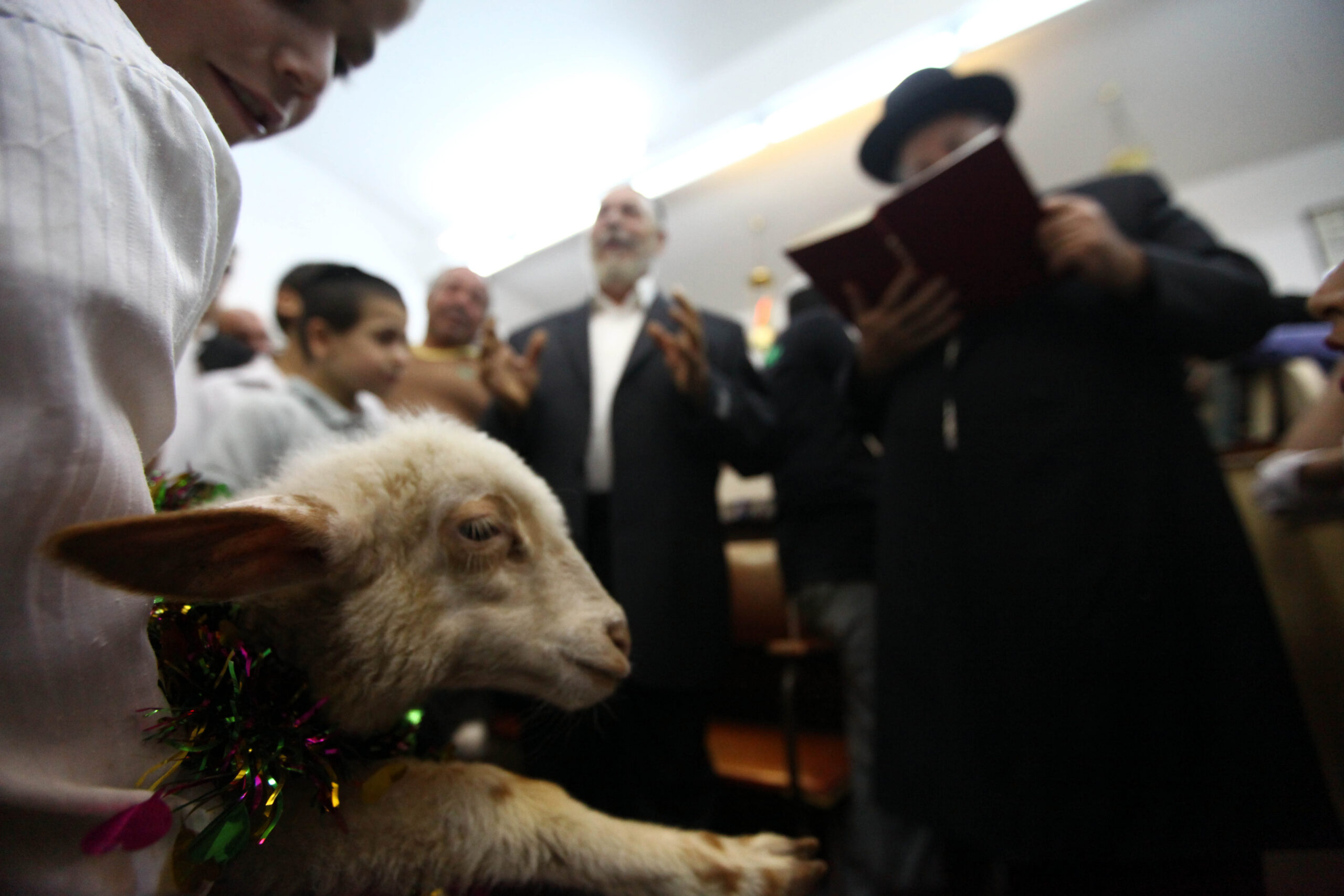
The act of temurah, consecrating another animal in place of an already consecrated animal, incurs the punishment of malkot - lashes. This is somewhat surprising. There is a halachic rule that a prohibition that does not involve an overt act does not incur the punishment of malkot – “lav she’einbBo ma’aseh, ein lokin alav.” Why then does a person incur malkot?
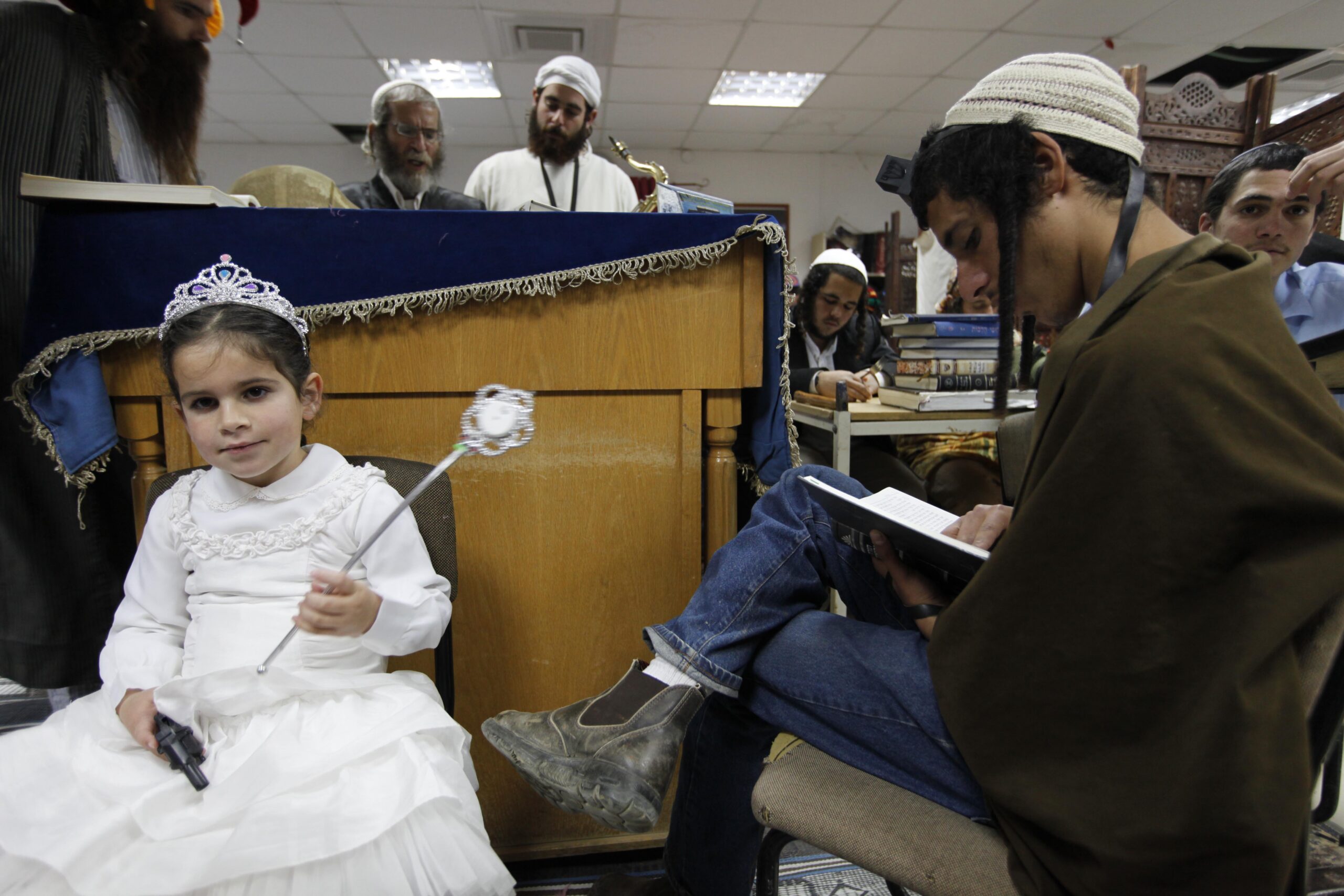
To properly fulfill the mitzvah of listening to the megillah, each word must be heard. If a word is missed, the listener should read it quietly to himself from the text in his hand. The principal purpose of reciting the megillah is to publicize the miracle of Purim. Accordingly, many poskim permit the megillah to be read in English if the reader does not understand Hebrew.
Batei arei chomah are structures (of at least six to eight square feet) in towns consisting of at least three courtyards with two buildings each, with a predominantly Jewish population – provided that such towns were surrounded by a wall in the time of Joshua even though they may no longer be surrounded by a wall at the time of the sale or buyback.
After its conquest by Joshua, the land of Israel was divided into twelve equal parts in accordance with the number of the tribes of Israel. Each male member of each tribe that actually left Egypt was entitled to a piece of land equal in size to the total size allocated to his whole tribe divided by the number of men of twenty or over in his tribe that left Egypt.
A person’s reputation precedes him. A bad reputation prejudices any chance of a successful encounter. Damaging a person’s reputation is tantamount to booby-trapping human relations before they can blossom into happy relationships.
There are two different types of vows, nedarim, mentioned in the Torah. The first, which is the subject of Tractate Nedarim, is the prohibitive vow, nidrei issur, pursuant to which a person utters a vow not to do an action, which but for the vow would have been permitted.
Pidyon ha’ben, like brit milah, is primarily the responsibility of the father. A brit milah must be performed on the eighth day of the child’s birth, unless it would endanger the life of the child. Pidyon ha’ben must be performed on the 31st day of the child’s birth. Neither ceremony may be delayed beyond its prescribed time unless there is some halachic justification to do so.
A son who is not himself a kohen or a Levi, firstborn to a Jewish mother who is not the daughter of a kohen or a Levi, has the status of a bechor and must be redeemed through a ceremony known as pidyon ha’ben. The performance of the pidyon ha’ben ceremony, which should take place […]


 September 25, 2026