יום רביעי, י״ט תשרי תשפ״זWednesday, September 30, 2026



Follow Us


An acclaimed educator and social skills specialist, Mrs. Rifka Schonfeld has served the Jewish community for close to thirty years. She founded and directs the widely acclaimed educational program, SOS, servicing all grade levels in secular as well as Hebrew studies. A kriah and reading specialist, she has given dynamic workshops and has set up reading labs in many schools. In addition, she offers evaluations G.E.D. preparation, social skills training and shidduch coaching, focusing on building self-esteem and self-awareness. She can be reached at 718-382-5437 or at rifkaschonfeld@gmail.com.
Read More
One of the basic tenets of Judaism is to create self-reliant children, after all fathers are required to teach their children how to swim. As parents we are responsible for giving our children the skills they need to survive in this world.
The National Institute of Health defines dyslexia as characterized by difficulties with accurate or fluent word recognition, and by poor spelling and decoding abilities. Dyslexia is a learning disability that is neurological in origin and often runs in the family. Children with dyslexia experience trouble reading when taught through traditional instruction.
Fifth-grader Yitzi cannot speak in front of the classroom. In fact, it is a wrestling act just to get him into the classroom to begin with. He refuses to get together with friends after school and spends much of his time at home alone in his bedroom. When his parents try to speak with him to try to figure out what is wrong, he cannot answer. Instead, he turns red and starts to sweat.
“Your job is to give information,” I said, “but there are a lot of reasons why children don’t pay attention. It isn’t always about whether they ‘want’ to. Maybe they are afraid of failure, maybe they have learning disorders. As a teacher, you can motivate and inspire them to achieve.”
Picture this: A child is jumping around the room, arms flailing, and interrupting the teacher. Was the child you pictured male or female? Chances are, you imagined a boy.
We all know that kids love tattling on one another, letting you know when a sibling or classmate did something wrong. While this type of peer pressure can discourage children from misbehaving, it also creates a negative environment in the classroom and home. Children often feel like their siblings or classmates are “out to get” them.
“Mrs. Schapiro. Hi, this is Mrs. Rosenfeld from XYZ Yeshiva. I am calling you because I noticed that your son’s birthday is September 28. We have recently pushed the cutoff date at our school from January 1 to September 1. Because of that, I am afraid Yaacov won’t be able to apply to kindergarten until next year.”
Gershon got up from the chessboard and walked away slowly, pouting as he headed to the bathroom. His father watched him go and once again wondered if he had made a mistake in playing competitively against his son. Gershon hated to lose, but how could he improve if his father always let him win?
Your son has a big vocabulary test this morning. He’s really anxious and studied with you last night for over an hour. Now, at breakfast, he is talking about how nervous he feels and how he hopes he doesn’t fail. You are trying to think about what is best for him. He has ten minutes before he needs to leave for school. Should you go over the words with him one last time? Should you encourage him to take deep breaths and realize that he knows the material? Or, should you get him to take a run around the living room, ending with jumping jacks and push-ups in the kitchen?
Your mother just knitted a beautiful pink hat for your seven-year-old daughter. The hat, unfortunately, is also extremely itchy. To be honest, you wouldn’t even want to wear it yourself. But you tell your daughter, “Say thank you. Tell your grandmother how much you like the hat.”
I was recently approached by a mother whose daughter had been diagnosed by an audiologist, two years before with auditory processing disorder (APD). Her daughter, let’s call her Basya, had been making progress in her academic environment. Her grades had been rising and her teachers had noticed a significant improvement in her listening skills.
Dena was the star of her nursery class. All the kids loved her and the teachers gushed to her mother, “Dena is so kind. She shares with everyone and is so inclusive. When we have circle time, she sits attentively and she is always ready with a detailed and fun answer.”
In her book Quiet: The Power of Introverts in a World That Can’t Stop Talking, Susan Cain relays the story of Rosa Park and the Montgomery Bus Strike during the Civil Rights Movement.
In American culture, there is a large emphasis put on optimism. We are told that we need to think positively and that things will work out. For a lot of people, this type of outlook is beneficial and healthy. However, optimism is not a one-size-fits-all affair. Positive thinking works for some, but not for all. For people who have anxiety, optimism can be very difficult and unproductive. Instead, anxious people can harness that anxiety and use it in order to ensure that they do succeed.
When interviewed about the subject, Carrie Goldman, the author of the book, Bullied: What Every Parent, Teacher and Kid Needs to Know About Ending the Cycle of Fear, explains that bullying comes about pretty equally between the genders, but it happens in different ways.
Karen’s fourth child, a daughter named Abbie, was bright and highly verbal. Abbie learned phonics and loved drawing. But, even at eight or nine years old, Abbie could barely make it through an easy reader. Her mother was at a loss. She had taken her to three different doctors to check her vision.
“I could never let someone else raise my children. I don’t think I would have had kids if I had to work.” “I would go crazy if I had to spend all day with my kids. I don’t know how you do it.” “I wish I could eat like you, Mindy. But, I just can’t.” “If you made more time for exercise, you’d be happier with yourself. I’m just trying to help.” “I wish I didn’t care about what I wore all the time, just like you. I always feel like I have to put on make up.” “If only I had your time in the morning to get dressed.”
As children grow, the things that they scare them change, but most children regardless of their age, have rational fears that can be addressed. Just think about yourself – there are things that you still fear even though you are an adult. Of course, there is a difference between rational and irrational fears. So, what fears should you expect from diverse age groups?
Do you ever wonder if your child has social skills challenges? Read through the statements below and check those that apply to your child.
“Mommy, did you sign my spelling test?” “Mommy, do you remember how you told me last week that you would be able to have my blue shirt washed for school today? I really need it for the play.”
The boys were all in the schoolyard during recess. A few were playing handball, some chasing each other for tag, and one or two involved in reading a book. Binny was one of the boys playing tag and he accidentally stepped on Chaim’s toe.
Eric McGehearty, a nationally acclaimed artist with advanced graduate degrees, is also an inspirational speaker who shares his struggles and successes as a dyslexic. His artwork reflects his difficulties reading and helps audiences see into the world of reading disabilities. He explains a breakthrough moment in his life as fundamental to his understanding of his ability to succeed:
When was the last time you grabbed a cup of coffee with a friend? When did you last make a new friend? Chances are, that if you are a mother, the answer is “a long time ago.” Research shows that women with children spend an average of five hours per week with friends, whereas before having children women spend an average of fourteen hours with friends. This would not be an issue if friendships were not so vital to our health and happiness.
For children, summer means outdoor sports, picnics, and of course, no school! Teachers and students work hard all year long – and everyone deserves a break from education over the summer. However, this two-month break can often have some pretty devastating consequences.
Be thankful that you don’t already have everything you desire, If you did, what would there be to look forward to?
While days off from school can be daunting for all parents with young children, for parents of children with ADHD, they can be thoroughly frightening. Children who have ADHD have trouble sitting still, focusing on one thing at one time, and attending to details. While their attention seems unfocused, it is actually multi-focused. Their mind takes in multiple stimuli at once, making it hard to engage in one activity for long periods of time. Therefore, entertaining children with ADHD all day can often feel like an exercise in frustration with children “bouncing off of the walls.”
Shel Silverstein’s 1974 poem “Where The Sidewalk Ends” is intended to paint a magical picture of a world of peace and serenity far away from the “black and dark streets.” At the time, perhaps the end of the sidewalk was a place that was “measured and slow.” Today, however, for many parents, where the sidewalk ends can feel like a scary place.
There is always a lot of confusion surrounding sensory processing disorder – mainly because there are many different diagnoses that fall under the catch-all phrase sensory processing disorder (SPD). Among them are three specific subcategories:
Parents often come to my office worrying about phonics instruction – occasionally because teachers do not completely explain the mechanics and at times because of myths that permeate the world of education.
I am Ethan. You may not understand me, or the way I feel today. You may not understand my reasoning for things I do or say. The reasons why I'm so loud and say things over and over again, Why I run so differently or lose my homework every now and then. I write my […]
In our culture of conspicuous consumption, it is not unusual for children to ask for everything they set their eyes on. And, if we are fortunate enough to have the funds to buy them all that their hearts desire, we tend to think, “I can do it, why not?” There are, however, importance values that our children can learn when we set limits.
With the constant pressures placed on us in our fast paced lives, sometimes we all feel like we need a vacation. Everyone needs a break now and then – to relax their bodies and their minds. Research has shown that too much stress can cause:
Several years ago, during the height of the balanced literacy controversy in New York City, I wrote about the different approaches to reading. With some more years of research and hands-on experience, I would like to revisit this integral topic: How do children learn to read?
“Mommy, can you read me the book, again?” Shmuel asked his mother, holding up The Little Engine That Could. “Of course, Shmuel. Let’s do that,” Chevy smiled. She was tired from a long day, but with her four kids huddled around, she was happy to sit and read in the living room. “Chug, chug, chug. Puff, puff, puff. Ding-dong, ding-dong. The little train rumbled over the track,” Chevy began.
Today, more children than ever are diagnosed with ADHD and the disorder is widely researched and accommodated in schools. However, a lot of children do not necessarily understand ADHD – whether they or their friend is the one suffering from the disorder. To that end, I wrote a children’s book about ADHD, My Friend, The Troublemaker, to help children better comprehend what is going on in the classroom with themselves or their classmates.
I often write about Oppositional Defiant Disorder (ODD) because it is a pervasive and problematic issue in our community today. Recent surveys suggest that ODD affects between two and sixteen percent of children. Children with ODD are often classified as “explosive” because of their severe and sudden outbreaks.
Four-year-old Naomi stayed in the block corner every day during playtime, building an intricate tower. She rarely spoke except when spoken to during circle time. In the yard, Naomi enjoyed swinging calmly and watching the other children jump rope or kick the ball.
“But, I can’t reach the light!” Yoni yelled after his father asked him to turn on the hallway light. “Yoni, you can reach the switch. You have done it hundreds of times before. You just need to go brush your teeth and in order to get to the bathroom, you need to go through the hallway,” his father, Noam, sighed.
Q: My daughter’s teachers have been telling me that she has trouble with her executive functions. I know she is not organized and often forgets to finish her homework, but I am not sure exactly what they mean. Can you clarify the term?
“So, Mrs. Cohen, we spoke on the phone about why Baruch is coming in today, but Baruch, why don’t you tell me why you think you are here?” “I’m bad at school,” Baruch said, barely glancing in my direction.“ Do you mean that you don’t get the grades you would like?” “No, I’m just not good at school. My teachers don’t like me, my tests are horrible, and my friends think I’m dumb.”
“You miss 100% of the shots you don't take” – Wayne Gretzky, Hall of Fame Hockey Player “I can’t seem to focus.” “For as long as I can remember, I have been struggling with organization.” “I’m really bad at sitting still.” “I just can’t lose weight.” “I will never make it to the dinner on […]
Chaya had a knack for numbers from when she was young. While baking with her mother as a four year old, Chaya would double recipes easily.
Yossi’s mother was at her wit’s end. Yossi’s grey pants were wet again. It was the second time that week.
In his best selling book, The Power of Habit: Why We Do What We Do In Life and Business, Charles Duhigg argues that most of the choices we make may feel like products of well-considered decision making. In reality, they are not.
In the 1950’s, bestselling author Rudolf Flesch offered to give a friend’s son, who was a struggling reader, some help with reading. He soon discovered that the problem did not lie in the boy’s intelligence, but rather in the way that reading was taught to him in school. To set out his reading principles, Flesch wrote a now famous book entitled, Why Johnny Can’t Read – and What You Can Do About It. In it, Flesch outlined the basic approach of phonics, an effective and important manner of teaching reading.
Avital walked into the test feeling great. She had studied the night before and she was sure to ace her grammar test. But, suddenly, when her teacher passed out the test paper, Avital found her palms sweating and her heart racing.
Meet Noam, a ninth grader I worked with several years ago. Noam came to my office because he was struggling with his biology curriculum. Though Noam was extremely smart, he had ADHD, which made it hard for him to focus on all of the material presented during class. Before we even looked at the material together, I asked Noam how he learned best. His face was blank as he responded, “Um, Mrs. Schonfeld, I really am not sure.”
Conversations in my head always there but never to be said, Can't escape my childish dreams, my fantasies, the unreal realities, Talking to myself again no one seems to be around, I hide myself inside myself, never thinking I'll be found… -Jamie Sue Reinhart

In a recent New York Times article, Robert Lipsyte, a sports author, posed the following question: “Boys and Reading: Is There Any Hope?” For years, I have been dealing with this question in my office. In fact, the U.S. Department of Education’s reading tests for the last thirty years show boys scoring worse than girls in every age group, every year.
I have often been talking about parenting the “explosive child” or a child who struggles with Oppositional Defiant Disorder (ODD). In that context, I often mention Dr. Ross Greene’s groundbreaking work on using “Plan B.” However, recently, another approach has been gaining popularity. It is from Daniel J. Siegel, MD and is often used to promote “the whole-brain child.”
I watched them tear a building down; A gang of men in a busy town. With a mighty heave and a lusty yell, They swung a boom and a side wall fell. I said to the foreman, "Are these men skilled As the men you'd hire if you had to build?" He gave me a […]
Parents often bring children into my office when they are already failing several subjects in school. These students are dejected, frustrated, and often depressed. They believe that because of their past performance, they will never succeed in school. It is not strange that constant effort and subsequent failure have taught them to believe that failure is the only option.

Shifi and Shana were neighbors and their mothers had been getting together before they could even roll over. Now that the girls were in second grade, they did their homework together.
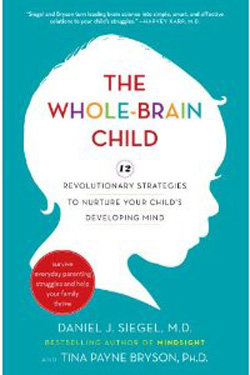
I have often talked about parenting the “explosive child” or a child who struggles with Oppositional Defiant Disorder (ODD). In that context, I often mention Dr. Ross Greene’s groundbreaking work on using “Plan B.” Both in my office and in my columns, I have great responses to my work with explosive children using Dr. Greene’s techniques. However, recently, another approach has been gaining popularity, both in my office and in parenting circles. This approach is from Daniel J. Siegel, MD and is often used to promote “the whole-brain child.”
“But, I want it NOW!” Yankel screamed as his mother lifted his baby sister, Leah, out of her car seat. “Yankel, we can’t get ice cream now. I told you we could have it for dessert. We have to get inside to feed the baby.” “No! I will not go inside! I’m going to sit in the car until you give me ice cream.”
Just a few days ago, I bumped into a former student in the supermarket. When she saw me, she stepped away from her shopping cart full of fruits and vegetables and warmly hugged me. “Mrs. Schonfeld, I wanted to tell you something that you said to me a few years ago that has stayed with me until today.” We had worked together on social skills to help her feel more comfortable when meeting new people. I tried to jog my memory and remember something specific I had said to bolster her confidence, but nothing particularly stood out. Instead, I smiled and said, “Yes, Sarah, what was it that I said?”
Parents often bring children into my office when they are already failing several subjects in school. These students are dejected, frustrated and often depressed. They believe that because of their past performance, they will never succeed in school. It is not strange that constant effort and subsequent failure have taught these students to believe that failure is their only option.

The alarm clock rings and Chaim pulls his pillow over his head to stifle the screeching noise. Mornings are Chaim’s least favorite part of the day; they always end in someone yelling. In truth, mornings are difficult for most of us, but particularly so for those who struggle with basic skills that are labeled “executive function” skills.
In all my years of teaching kriyah and English reading, I have encountered more boys than girls who struggle with the skill. We are even subconsciously programmed to think of reading as a female endeavor. Picture a reader in a comfy chair, thinking, “Wow, what a great book! I can’t wait to share this with my friends.” Was the reader you imagined male or female? Chances are, you envisioned a female reader. The idea that the majority of readers are female is consistent with reading scores around the nation.
11-year old Avi was just awarded a trip to visit his cousins in Detroit – because he didn’t get into trouble in school or fight with his siblings for one week. The prize his parents originally had in mind was a new speed bike, but when that failed to motivate him sufficiently, they searched for a more appealing incentive.

It was Yehudah’s third birthday party. Instead of calmly interacting with his guests, he either ignored them or bossed them around with his limited vocabulary of ten words. He ran around nonstop and elbowed every person in his path. Then, his mother, Shoshana, decided he needed some time to himself so she asked him to play quietly in the den for a few minutes.
Asperger’s Syndrome was first described in the 1940s by Austrian pediatrician Hans Asperger, who noticed that he had many patients who were deficient in social and communicative skills even though they had normal language development and cognitive abilities. Professionals still debate as to whether Asperger’s Syndrome is “high-functioning autism” or whether it is its own disorder completely. Regardless, in 1994, Asperger’s Syndrome was added to The American Psychiatric Association's Diagnostic and Statistical Manual of Mental Disorders (DSM-IV) as a separate disorder from autism.
“Oh. I was just thinking about you. How was your day?” Ruti’s mother asked her the minute she walked through the door. “Fine, Mommy.”

In the previous two columns, we focused on phonics, sight-reading, comprehension and fluency. While phonics and sight-reading are different approaches to reading instruction, comprehension and fluency measure the level at which a student reads.

Like most first grade classrooms, the one I was observing had students with multiple reading levels. Accordingly, the head teacher had divided the students into different groups so that they could practice skills that were relevant to all members of the small group.

Peeking her head into her daughter’s preschool classroom, Shayna heard Morah Esther singing a melodic song while the children clapped their hands and stomped their feet.


 September 25, 2026