יום חמישי, כ׳ תשרי תשפ״זThursday, October 1, 2026



Follow Us


Yaakov Lappin is an Israel-based military affairs correspondent and analyst. He is the in-house analyst at the Miryam Institute; a research associate at the Alma Research and Education Center; and a research associate at the Begin-Sadat Center for Strategic Studies at Bar-Ilan University. He is a frequent guest commentator on international television news networks, including Sky News and i24 News. Lappin is the author of Virtual Caliphate: Exposing the Islamist State on the Internet. Follow him at: www.patreon.com/yaakovlappin.
Read More
“We came back a little prouder of what we do. It sharpened something in our sense of mission,” say Israeli officers who visited American Jewish communities.
Israel’s shadow war in Syria is based on the strategic objective of convincing the Islamic Republic that its investment in a war machine is going to waste. Iran has so far chosen to weather the strikes and shift tactics without abandoning its Syria project.
Gazan terror organizations are looking into armed drones and sea-based commando cells, while concentrating fire at Israel’s Iron Dome to overwhelm it.
The recent rise in military tensions in the Persian Gulf between the US and Iran introduces a heightened possibility that Iran will activate proxies against Israel. In the event of further escalation, Jerusalem must assume that Tehran’s plans will include possible proxy attacks on Israeli territory and overseas Israeli targets.
The close cooperation between the IDF and defense industries, and Israeli willingness to allow clients to produce Israeli technology, are part of the success.
The Defense Ministry describes Memorial Day as “designed for the whole of Israeli society and not exclusively for bereaved families.”

While Cairo is exerting its influence in Gaza to avoid a new conflict and mediate a period of calm, Iran sees Gaza as one more base from which to grow and control a proxy terrorist army.
Russia holds the cards in Syria. Jerusalem and Tehran must spell out their desires for the Syrian arena to Moscow, who in turn must find a way to leave each side with “half its desires.”
Hamas is struggling to manage Gaza economically, it refuses to divert funds from its military wing to civilian needs, and the Strip’s infrastructure is eroding at an alarming rate. Only brinksmanship with Israel can extricate Hamas from the disarray it has created.
In recent years, most of the counter-terrorism arrests by the Shin Bet, the Israel Defense Forces and the counter-terrorism unit of the Israel Police have targeted Hamas, not Fatah-Tanzim members, who have been dormant.

So far, Israel’s objectives in armed conflicts with Hamas have been limited so as to avoid the need to reoccupy Gaza or to send it down the “Somalia model” path of chaos. But there might be a third option.

The “War Between Wars” is an ongoing Israeli military and intelligence effort to disrupt the force build-up of the Iranian-Shiite axis throughout the Middle East. This campaign, which has evolved into an entire force activation doctrine, has seen the Israeli defense establishment employ an approach that differentiates between Syria and Lebanon.
While Hamas’s sovereignty in Gaza is unrivaled—largely through a reign of terror and internal repression—actual popular support for the terror group could be decreasing.

Whatever was hit in Syria by Israel may have belonged to a category known as “time-critical targets.” That could mean that imminent plans were in place to move the target to a place where it would be harder to strike.
The Israeli military’s state of readiness has dramatically improved, but it has a lot more catching up to do. It has spent years neglecting the ground forces – and those forces will be essential if enemies like Hezbollah are to be decisively defeated.
Hamas wants to extend its control beyond Gaza's borders into the West Bank. To do this, it needs to undermine the Fatah-dominated PA. Destabilizing the area through acts of armed violence against Israelis promotes this goal by drawing in Israeli security operations, increasing tensions and unrest and weakening the PA's image.
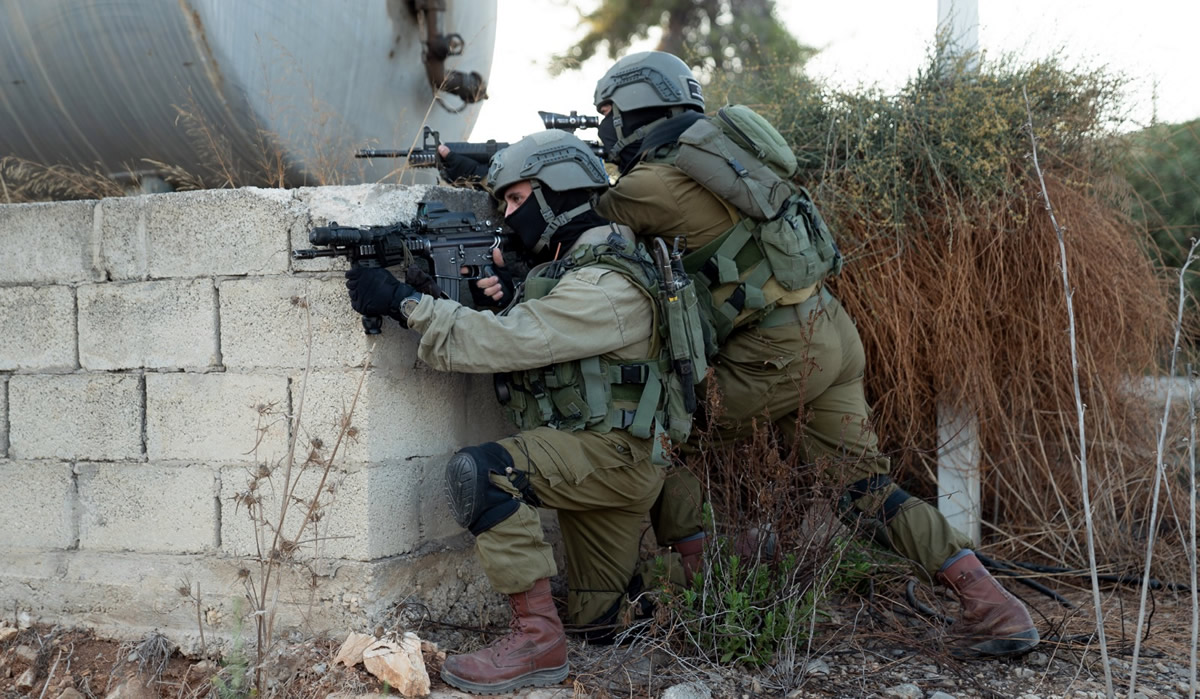
Terrorism threatens both Israeli and Palestinian civilians. The coming weeks will see whether Israel and the Palestinian Authority will be able to contain an escalating situation and roll back the violence, or whether the region will slide into a new and dangerous phase.
Israeli and Russian interests in Syria are colliding. Russia’s new posture is challenging Israel’s defensive campaign against Iran, and Moscow and Jerusalem have so far been unable to defuse the crisis.
Hamas thinks that by playing a game of dangerous brinkmanship and ramping up the pressure on Israel, Jerusalem will be more likely to enter into an arrangement that lifts security restrictions on Gaza. It is a gamble that could blow up in Hamas’s face.
All the economic benefits being offered to Gaza as part of a package deal – an improvement in water and electricity supplies, the construction of a seaport, the cancellation of debts owed by the Hamas government, a relaxation of the Israeli security blockade – hinge on Hamas accepting conditions it is categorically unwilling to countenance.
The terrorist threat Israel faces is an unusual one: the terrorist organizations seeking to destroy it control their own territory, making them a kind of semi-state.
While it appears reluctant to mobilize Hezbollah against Israel right now and risk a full-scale regional war, Iran is continuing to work on securing a military position in Syria to use for future aggression.
Hamas is not the only entity trying to set things on fire. Iran and its proxies, such as Palestinian Islamic Jihad and Hezbollah, have sought to infiltrate into Judea & Samaria and create armed cells there.

It launched a large-scale mortar-shell attack two days after losing three of its armed members to an Israeli airstrike in response to a gun attack on an IDF unit patrolling the Gazan border. Is Palestinian Islamic Jihad responding to the killing of its operatives or acting under Iranian instructions?

Radical sub-state actors are able to exercise full control of the territories they govern yet make themselves almost invisible when they choose to do so. As recent events in Gaza showed, this ability serves them not only on the military front but also in the arenas of diplomacy and public influence.
The Kerem Shalom crossing was attacked by mobs three times this past month acting under instructions by Hamas.
The Eitan vehicle carries infantry soldiers rapidly from base to battle zone, and ‘will increase our independence,’ army officer.
Nevertheless, the nations and parties in the midst of possible escalation have nothing to gain from an all-out war.
Nevertheless, the nations and parties in the midst of possible escalation have nothing to gain from an all-out war.
While the purpose was to target Syria’s chemical-weapons capabilities, in actuality, the strikes are more of an indication of Russia’s successful ability to cause Western powers to limit their action.
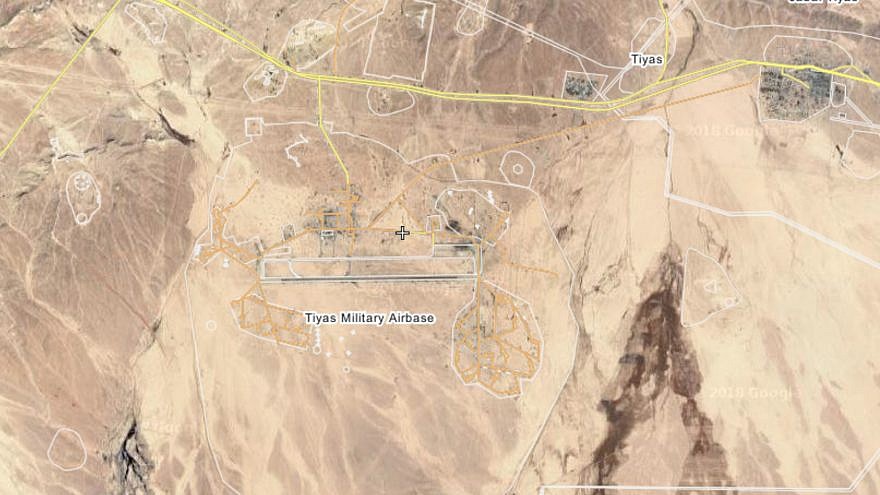
Amid fallout from chemical weapons attack, Israel enforces its own red lines in Syria, while sending a message to Iran and Hezbollah.
Many plots have been broken up, but tensions tend to rise this time of year, coupled with the Trump administration’s proposed moving of the U.S. Embassy from Tel Aviv to Jerusalem in May.
Military drills simulate what the Israel Defense Forces will face in a new kind of ground combat in Gaza – a kind that will inevitably involve civilians amid general chaos.
According to Israeli military assessments, the LAF is increasingly coming under the sway of the Iranian-backed terror organization Hezbollah, which dominates Lebanon politically and militarily.
The committed partnership of both countries is key to enabling the U.S. base to function smoothly in an Israeli military facility
Any future armed clash with Gaza’s Islamist rulers will be guided by a new Israeli objective: that of achieving a crystal clear victory over the enemy.
Islamists in Gaza, Jordan, east Jerusalem, and within the Israeli Arab community, had the upper hand in their ability to push their interpretation of events claiming Israel intended to destroy the mosque to make way for a third Temple
Ultimately, the dispute between PIJ and Hamas is one over tactics, not strategy. In light of its acute isolation, Hamas is seeking to rebrand itself somewhat, without any intention of giving up its long-term goal of destroying Israel.
Hamas recently stated publicly that a new explosion of violence against Israel is imminent.
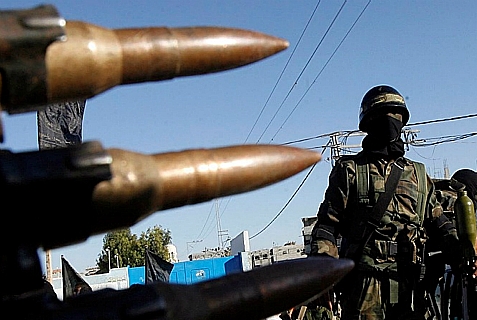
There are also 4,000 or so members of smaller well-armed Gazan terror groups, not just Hamas and Islamic Jihad.
One out of every ten homes in Lebanon now has a rocket launcher or Hezbollah weapons stored in it, according to Gilad Erdan, Israel's Home Front Defense Minister.
Iran might well conclude that the sanctions could disappear in the course of endless rounds of diplomacy.
Jihad will spread outwards to the region, then threaten global security -- possibly with biological and chemical weapons.
Near the Sinai peninsula, the Israeli Defense Forces continue on high alert, watching every suspicious movement in the sands near the Egyptian border for signs of the next attack.
As thousands of radical jihadis have moved into Syria and the Sinai, Israel is perfecting its ability to neutralize these targets.
Israel, which is more threatened by Iran's nuclear program than is the U.S., has less time to make its up mind on how and when to proceed to avert a threat to its existence.
The Russian Yakhont missiles already delivered to Syria threaten Israel Navy ships carrying out vital missions in the Mediterranean.
With Israel's military is at its strongest, the country is capable of dealing with its highly chaotic and dangerous environment.
Israel, because of its more limited strike capabilities, cannot wait much longer before it loses the ability to act.
Once it becomes operational, the Arrow 3 will form another layer of defense over millions of Israelis.
Whatever happens next, last Wednesday's air strikes sends an unmistakable message: That strategic weapons proliferation will not be tolerated, whatever the price.
Lapid's election success is a reflection of the widespread view among Israelis that external threats do not mean that the country's house should not be put in better order.
The Syrian civil war is drawing in the world's most dangerous elements to a land that hosts the world's largest stockpile of VX nerve agents, Sarin and mustard gas.
Israel is redefining its concept of military victory in a Middle East dominated by terrorist organizations turned quasi-state actors. Once, decisive, unmistakable victories, accompanied by conquests of territory that had been used to stage attacks against Israel, provided all parties concerned with a "knockout" image. Victory was seen by the Israel Defense Forces as a […]
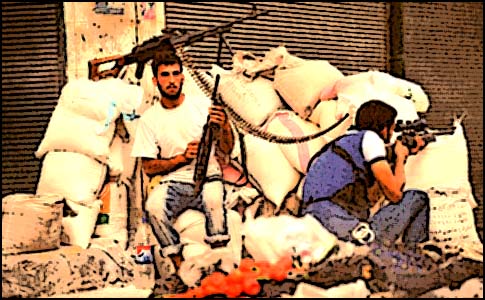
Although the wider regional implications of Assad's pending collapse remain unknown, the fall of the Alawite regime will undoubtedly strike a major blow to Iran.

As Egyptian President Mohamed Morsi looked on smilingly, the cleric told the crowds that, "We can see how the dream of the Islamic Caliphate is being realized, Allah willing, by Dr. Muhammad Morsi and his brothers, his supporters, and his political party. We can see how the great dream, shared by us all -- that of the United States of Arabs …shall, Allah willing, be restored. The United States of Arabs will be restored by this man and his supporters."
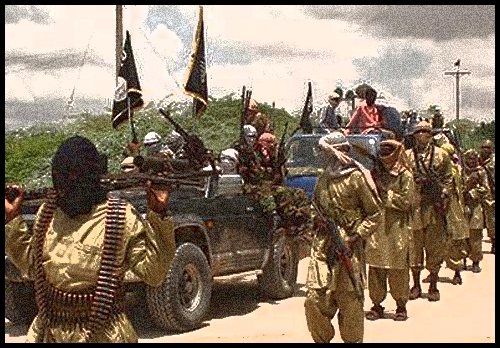
As Israel's military watches Syrian sovereignty crumble and scores of militant groups form in the resulting vacuum, it is on alert for jihadi terrorist attacks from Syria. The working assumption in Israeli defense circles is that sooner or later, Assad will fall, and Israel will have to deal with whatever will replace him. The working assumption in Israeli defense circles is that sooner or later, Assad will fall, and Israel will have to deal with whatever will replace him.

Ironically, the less credible the threat of military force is, the more likely it is that military force will eventually have to be used.
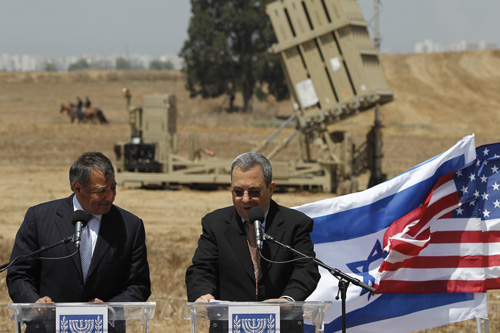
Reason #1. Iran's regime is outspokenly dedicated to the goal of destroying the State of Israel. Iranian political, religious, and military leaders have expressed their desire to annihilate Israel at every opportunity they have received....
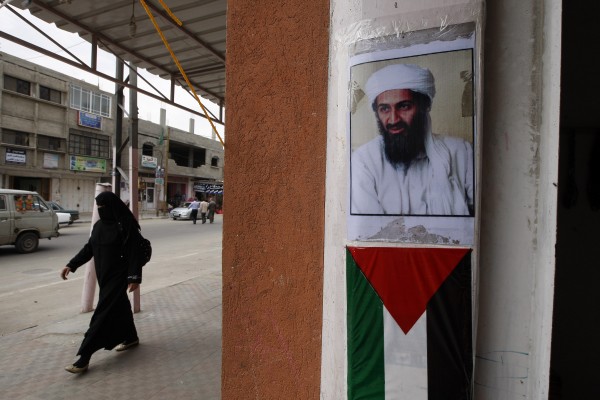
The past decade has shown that the al-Qaeda network thrives in failed states, setting down roots in areas where central governments no longer exercise a clear monopoly of arms or jurisdiction. From Pakistan to Iraq to Mali, adherents of the global jihadi movement are seeking a safe haven to set up training camps, plot terror attacks, and spread their fundamentalist ideology.


 October 2, 2026