 October 9, 2026
 Categories: Featured / Parsha / Torah
Back to the Chometz
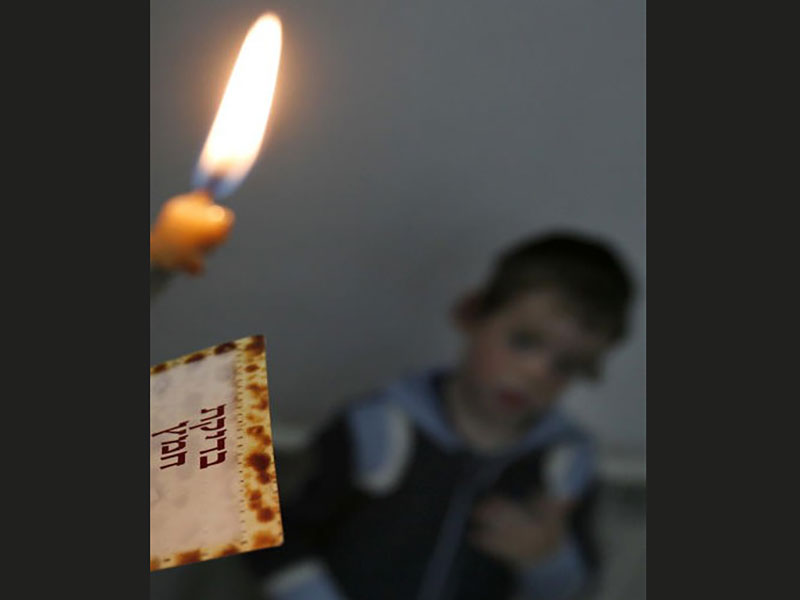


Wow! It’s hard to believe: Purim has come and gone. Now we are facing a job that doesn’t pass so quickly: Purifying our homes for the Pesach season from all vestiges of the forbidden chometz. That this is an important pursuit is emphasized by the famous Ariza”l. He teaches us that any home completely freed of even a minuscule amount of leaven will be free from sin during the coming year. It behooves us, however, to understand why there is such a grave necessity in this seasonal purging.
In our bentching, bread is referred to as tuvo, the goodness of our life. Further, whenever we have a festival, we make sure to celebrate it by washing for, and blessing, bread. So how come all of a sudden bread becomes Public Enemy Number One, threatening us with kareis, spiritual death, if we pop merely an olive-size bit into our mouths? Moreover, how did it become so dangerous an element that we are not only banned from eating it during Pesach; we can’t even possess it!
One of the important lessons of the chometz/matzah phenomena stems from the immediacy and urgency of our exit from Egypt. We are taught that, after being in Egypt for two hundred and ten years, we sank to the forty-ninth level of depravity and contamination. We were but seconds away from being lost in the spiritual quicksand of Egyptian society. Indeed, the pasuk testifies, “B’chatzos halaila,” meaning exactly at midnight, we had to be freed. If even a moment more had passed, we would have been trapped in Egypt forever. In our Seder right after the Ma Nishtana, we testify to this in the Haggadah, saying that if Hashem hadn’t taken us out, we, our children, and our children’s children, would have been subjugated to an Arabic, slave-like existence.
Thus, the matzah carried on our backs did not have time to leaven in the less-than-eighteen minutes of our exit. This signifies that our escape, all 3,000,000 of us, was in the very nick of time. It follows consequently that the total absence of any leaven whatsoever represents escaping this deadline which would have brought about our spiritual oblivion. This is one reason why, on Pesach, chometz represents the negation of everything Torahdik and spiritual in our lives.
There are other lessons to learn from our temporary diet of matzah, such as the stature placed on modesty among our people. The lowly matzah sees the bloated challah and says figuratively, “What are you so puffed-up about? We have the same ingredients.” So too, on our national birthday, we remember our greatest leader, Moshe Rabbeinu, who was the humblest of all men, and we try to teach our children – with the vehicle of the matzah – to emulate his ways of humility and tolerance of all men.
We know that on Pesach we are judged concerning the t’vuah, produce of the field. Thus, we fulfill a unique mitzvah with produce so that through it, Hashem should bless our produce with prosperity.
Yet another aspect of matzah is its important lesson of doing the mitzvos with alacrity. When the Torah teaches us, “Ush’martem es hamatzos – To guard the matzos,” the Gemara teaches us, “Al tikrei es hamatzos, ela es hamitzvos.” In other words, the same alacrity we reserve for the matzahs, baking them rapidly to ensure that they don’t ferment, so too we should apply this same attitude to all our mitzvos, and attend to them with the urgency reserved for something of tremendous importance, not procrastinating or relegating them to the “when-I’ll-have-time-later-on” pile.
In this vein, Torah study itself should not be saved for our retirement days. Let’s run to learn while we still have all our faculties. So too, exploring and unraveling the meanings of the more difficult parts of our prayers should not be relegated until we have time later on lounging on a beach chair. That’s the last thing we’ll want to do then! Likewise, spending time with our children should be seized before they cease being children, and the thrill of spousal attention should be recaptured before intense dullness sets into the relationship.
So, pay attention! The Gemara says that the yeast in the dough symbolizes the yetzer hara, the evil inclination. Just as yeast agitates the dough, so too the yetzer hara agitates us to sin. Our temporary diet of matzah reminds us not to fall prey to the wiles of the yetzer hara which tries to erode our religiosity with its mighty spirit of procrastination.
Happy hunting for the chometz, and in the merit of our embracing all the lessons of matzah, may we see the geulah shleima, the complete redemption, speedily in our days, and may Hashem bless us with long life, good health, and everything wonderful!
Transcribed and edited by Shelley Zeitlin.