 October 9, 2026
 Bigger Isn’t Always Better
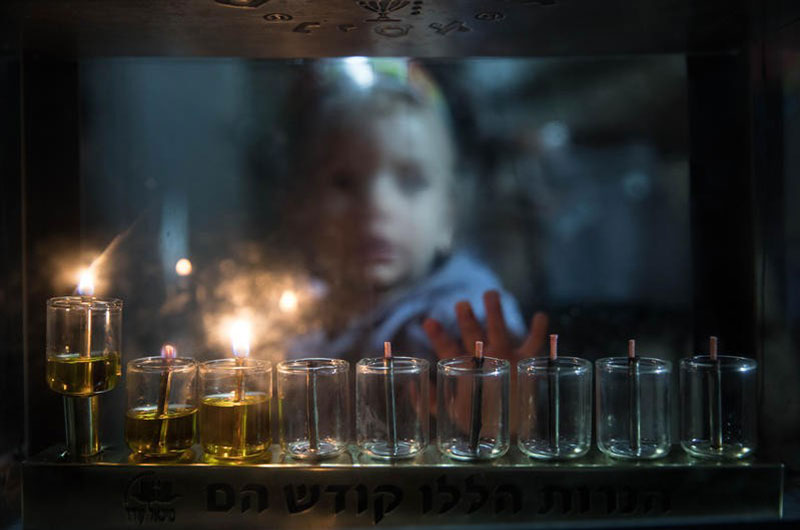


At this time of the year, many American homes are lit up in a sea of brilliantly colored lights. When our children pass by these homes they are likely to comment enchantingly, “How pretty they are!” A precocious child might even dare to challenge us by asking, “Isn’t this so much more attractive than our small Chanukah lights?” There are even many families who, in an attempt to keep a balance, buy large Happy Chanukah streamers with electric lights and even put up shining ‘Maccabee Men’ instead of a glowing reindeer. While this is sure proof of Rambam’s rule that one is always influenced by the environment, such behavior might cause us to miss a wonderful opportunity of teaching our children a fundamental lesson.
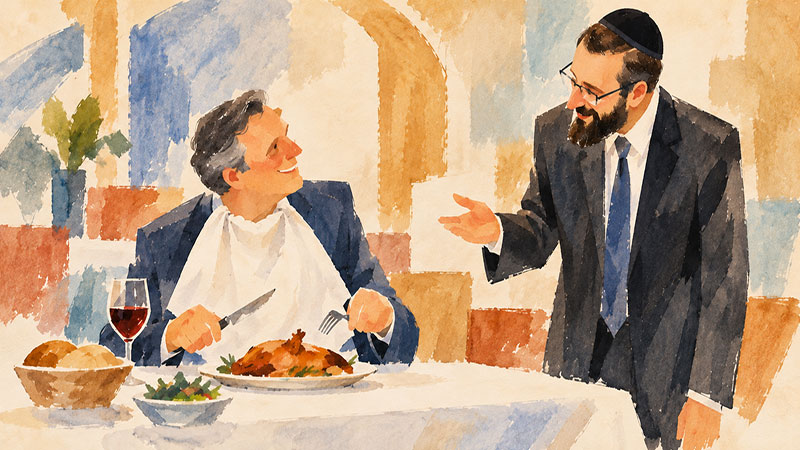
In America, there is a strong tendency to feel that bigger and brighter is always better. Upon deeper reflection, many times this is not the case, however. How many parents fritter away a life savings on an opulent wedding for their child, yet are so busy with the myriad of planning details that they neglect to spend any real quality time with their daughter, the bride? How many people build mansions for themselves, only to find, to their chagrin, that the house is so big and the family gets so scattered that there is no real cozy family-time anymore? To our sad dismay, we also know that a caftan, an impressive top hat, and even a long beard do not always ensure we’re dealing with an honest man. Neither does an impressive structure with beautiful architecture and design, perfect acoustics and seating, ensure we’re in a pious place of worship. The bottom line is, as the Tanna teaches us, “Al tistakeil b’kankan, ela b’ma sh’yeish bah – don’t look at the container, but rather at what it contains.”
The great Vilna Gaon, zt”l, zy”a, made a profound forecast. He said that for the generation of the ikvasa d’Mishicha, the time before the coming of Mashiach, the challenge that will confront us will be shitchios, which means superficiality, and indeed our generation is very impressed by the superficial. How sad it is that many of our young boys and girls find themselves in poorly matched marriages because they made their decisions based on the superficial – whether it was tall, dark, and handsome, a charming nose and cheekbone, the Lexus he drove, or the jewelry she wore.
Just as the Talmud advises us, “Rachmana liba bau’i,” meaning that Hashem primarily wants from us our hearts, and that the superficial trappings of shokkeling during prayer, having a pretty esrog, and wearing a nice Shabbos suit, are not the essence of these mitzvahs. Rather, it is our inner musings to Hashem during prayer, the workings to perfect our hearts as represented by the esrog, and the strengthening of our belief that Hashem created the world and rested on the Shabbos. These are the main fulfillments of these mitzvahs.
So too, our small Chanukah lights are powerful – not because they are big and bright and tower fifty feet high. Rather, it is because of the thousands of years of meaning that are behind them and the inspiration they represent for the thinking person. So let us use the contrast between Chanukah and the secular holiday season as a springboard not to judge a book by its cover but to look deeply into the real value underneath the surface and, in general, not to be complacent with merely competing with the Joneses for bigger and better, flashier and brighter, more expensive and more opulent. Instead, let us remember that the way of Torah places much more importance and emphasis on what is in our minds and hearts than what is on the surface.
The most important thing at a wedding is not the smorgasbord, not the flowers, not the photographers, not the gowns, not the music, nor even which important rabbi got the blessings. It is the commitment of love and devotion made between chosson and kallah and the opportunity of relatives and friends to cement their bonds and share in the joy of the family. A bar mitzvah or bat mitzvah is not the time to be different, to impress, and certainly not a time to come up with a secular theme. Rather, these occasions provide us with opportunities to impress upon our youth the need to make a strong start, a proper embarkation in a career of Torah, mitzvos, tznius, and kindness. Anything else is a sham and not a true seudas mitzvah.
May Hashem bless us with the wisdom to see beneath the surface and beyond the superficial, and in that merit may we always make the right decisions, take the right paths, and be blessed with good health, happiness, and everything wonderful.
Transcribed and edited by Shelley Zeitlin.