 October 9, 2026
 Categories: Halacha & Hashkafa / Torah
Challah Dough Dilemma
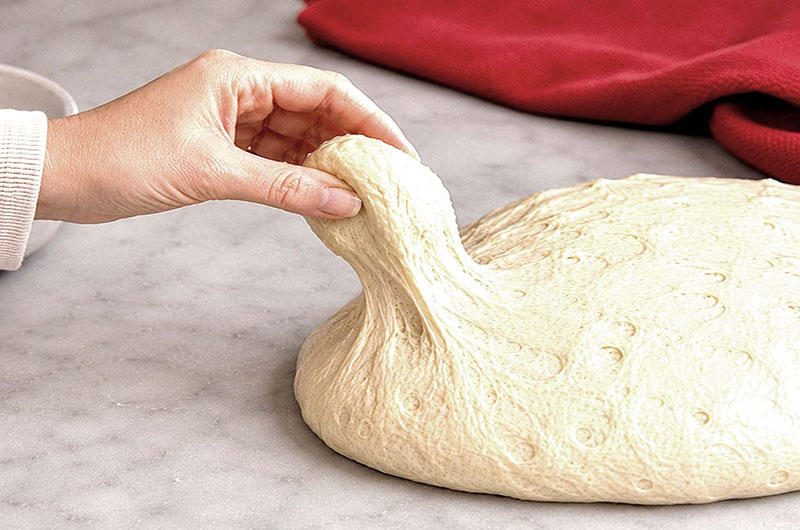


Sarah loved baking sourdough challah.
Recently married to Eli, Sarah took special pride in preparing her own challahs for Shabbos. She especially looked forward to the weekly mitzvah of hafrashas challah.
Sarah’s sister Shoshana happened to be visiting one erev Shabbos.
“I can’t believe you still make sourdough challah yourself,” Shoshana remarked as Sarah kneaded the dough.
Sarah smiled. “And I can’t believe you buy your challah from the bakery!”
After mixing and kneading, Sarah set the dough aside to rise. “Eli and I need to run out for some short errands,” she said.
Unfortunately, the errands extended much longer than expected. “We’re heading home,” Sarah finally updated Shoshana. “How is the dough doing?”
“It rose beautifully!” she replied.
“Perfect!” exclaimed Sarah. “I’ll braid them and put them in the oven when I get back.”
Shoshana decided to separate challah while waiting for Sarah, so that the dough would be ready to go.
When Sarah returned, she immediately noticed the separated piece of dough.
“You already took challah?!” Sarah gasped.
“I did,” Shoshana replied cheerfully. “Since you were delayed, I wanted to save you time!”
Sarah was crestfallen, though. “I look forward all week to doing the hafrasha and making the beracha!” she said.
“I’m sorry,” Shoshana apologized. “I was just trying to help…”
“I know,” Sarah consoled her. “Thank you for trying.”
Sarah turned to Eli. “Is there any way I can still take challah?” she asked hopefully.
Eli smiled sympathetically. “Normally, you can’t take challah twice,” he said. “But I remember learning in kollel a famous Ketzos about someone who separated challah without the owner’s authorization. I don’t know what we rule in practice, though.”
Eli called Rabbi Dayan and asked:
“Was Shoshana’s hafrasha valid? Can Sarah still take challah?”
“Separating challah is a form of terumah (tithes),” replied Rabbi Dayan. “The Mishna (Terumos 1:1) lists ‘one who tithes that which is not his amongst those whose tithing is not valid.”
“Although agency (shelichus) applies also to separation of terumah and challah, the Gemara (B.M. 22a) teaches that just as a person tithes with intent, his agent must also tithe with the owner’s intent. If someone tithed without the owner’s intent and authorization, that person is not considered the owner’s agent (Y.D. 328:3).
Even if the owner later came and was pleased that the person had tithed, most poskim understand from the Gemara (ibid.; Chulin 12a) that the tithing was not valid, since when the person tithed, there was no indication that the owner wanted him to; thus, the tithing must be redone. However, Rambam (Hil. Terumos 4:3) maintains that the tithing is valid, so that it is questionable whether to make a beracha (see Shach Y.D. 328:5; Mishpetai Eretz, Challah 4:11[30]).
If the other person occasionally tithes on behalf of the owner, though, several poskim rule that it suffices if afterwards the owner expresses approval (Aruch HaShulchan Y.D. 228:6).
Nonetheless, if someone uses his own produce to serve as the tithe from the produce of another, the separation is usually valid based on zachin l’adam shelo b’fanav, since the other person thereby benefits financially (Y.D. 331:30).
Furthermore, in situations where it is clearly beneficial for the owner that the other person separates challah, such as if the dough needs to be baked before the owner returns and will otherwise be ruined, Rema (ibid.) rules that the hafrasha is valid based on zachin. Although challah can be taken after baking, the primary mitzvah is from the dough (Chazon Ish, Zeraim, Likutim 6:1).
Ketzos (243:8) disagrees and maintains that even if the dough will be ruined, another person cannot take challah without authorization. But most poskim concur with Rema.
All this if the owner does not object. However, nowadays many women are particular to bake challah so that they can do hafrashas challah with a beracha, especially on erev Shabbos. Therefore, others may not take challah without authorization. Some maintain that this is true even if the dough will be ruined if not baked now; it is better to let the owner take challah after baking (see Be’er Heitev Y.D. 328:3; Aruch HaShulchan 328:6-7; Mishpetei Eretz 4:12[32], 4:17[44]).
“Thus, since Sarah wanted to take challah herself, Shoshana’s unauthorized hafrasha was not valid,” concluded Rabbi Dayan. “Sarah must still take challah, continuing the tradition of Sarah Imeinu, and should even make a beracha!”
Verdict: If someone took challah from another woman’s dough without authorization, the hafrasha needs to be redone, especially if the owner was particular and wanted to take challah and make the beracha herself.