 September 18, 2026
 Categories: Headline / Halacha & Hashkafa / Torah
Chips Up for Grabs?
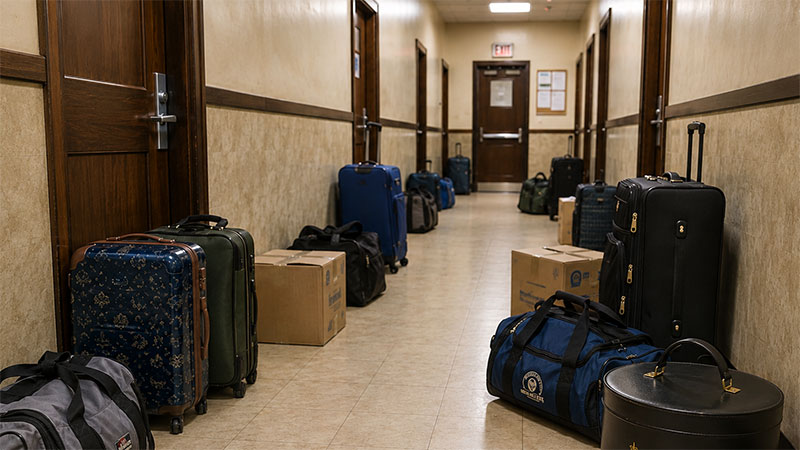


The yeshiva dormitory bustled as talmidim returned for the new zman. Suitcases and bags filled the hallways as boys carried their belongings to their rooms.
Chaim headed toward his room. He spotted a small, unopened bag of potato chips near his doorway.
“Whose chips are these?” he wondered. “They probably fell out of someone’s bag.”
Chaim entered his room and put down his suitcase. He was greeted by his roommate, Eliezer.
“There’s an unopened bag of potato chips outside our room,” he said. “Do you think I can take it?”
Eliezer shook his head. “You should ask around or put up a sign asking if anyone lost a bag of chips,” he said. “Maybe someone is looking for it.”
“But there’s no siman [identifying sign],” Chaim argued. “It’s just an ordinary, unopened bag of chips. How could anyone identify it? Without a siman, the owner presumably has yei’ush [gives up hope on retrieving it].”
“That’s not clear here,” Eliezer replied. “Everyone is still unpacking – the person who lost it might not even realize yet that it’s missing.”
Chaim considered this.
“But how long am I supposed to wait?” he asked. “I can’t possibly know when the owner realizes his chips are gone.”
“Exactly,” said Eliezer. “So maybe you shouldn’t take it for yourself.”
“Since there are no simanim, though, the owner will eventually have yei’ush,” Chaim reasoned. “So, what's the point of leaving it there in the meantime?”
“That’s a complicated issue,” Eliezer responded.
Chaim decided to leave the chips where they were until he had an answer. But even though he had brought plenty of his own snacks, he was intrigued by the halachic question at hand. He went to the beis medrash and approached Rabbi Dayan:
“Can I take the bag of potato chips for myself?”
“When a person loses an item with no identifying simanim or in a place where most passersby are gentile, we presume yei’ush – despair of recovering the item – so the finder is allowed to keep the item,” replied Rabbi Dayan (C.M. 259:3, 262:3).
“However,” Rabbi Dayan continued, “we rule that yei’ush shelo mida’as – when the owner is not yet aware of his loss – is not considered yei’ush (B.M. 21b-22b). Therefore, if you took the item before the owner was aware of his loss and had yei’ush, you cannot keep it even after he subsequently became aware and had yei’ush (ibid.).”
“Why is that?” asked Chaim.
“Ketzos (259:1), based on Ramban (Milchemes Hashem, B.M 26b), explains that when you pick up the item before yei’ush with intent to return it to its owner, you automatically become a guardian (shomer) on his behalf by virtue of the mitzvah of hashavas aveidah,” explained Rabbi Dayan. “Once the item is secure in your hands, the owner’s subsequent yei’ush is not applicable, since yei’ush is not valid for something held in the owner’s or guardian’s hands or located on the owner’s or guardian’s property.”
“However, Acharonim point out that Tosfos (B.K. 66a; B.M. 26b) seemingly dispute this rationale, and maintain that yei’ush can apply even to items sitting on the owner’s property. Rather, according to Tosfos, the reason you may not keep the item after the owner’s yei’ush is that you took it when it was still prohibited to take for yourself, so a monetary obligation toward the owner remains (Terumas Hak’ri 262:5; Minchas Pittim 259:1). Accordingly, in a case where there is no obligation of hashavas aveidah and you took the item without intent to yet acquire it for yourself, so that you did not incur any monetary obligation, and subsequently the owner had yei'ush – in such a case, you are free to acquire it.
“To avoid this situation of uncertainty, poskim advise that when you encounter an item for which there is no requirement of hashavas aveidah (i.e., with no simanim or in a place where most passersby are gentile), but it is unclear whether the owner was already aware of the loss and had yei’ush, you should pick it up conditionally, intending neither to acquire it before the owner has yei’ush nor to return it unless you find the owner. Then, after enough time passes that you can safely presume the owner has become aware of the loss and had yei’ush, you can keep the item (Pischei Choshen, Aveidah 2:12[23]; Hashavas Aveidah K’halacha 5:4[19]).
“Regardless,” concluded Rabbi Dayan, “even when there already was yei’ush, if you can ascertain the owner, it is proper – lifnim mishuras hadin – to return the item (C.M. 259:5; Shulchan Aruch HaRav, Hilchos Metziah #18).”
Verdict: A person who took a lost item before the owner had yei'ush may not keep it even after the owner had yei'ush. in a case where there is no obligation of hashavas aveidah, but it is unclear whether the owner was aware of his loss, you should pick it up conditionally, intending neither to acquire until the owner has yei'ush nor to return unless you find the owner.
To receive BHI’s free newsletter, Business Weekly, send an e-mail to subscribe@businesshalacha.com.
This article is intended for learning purposes and cannot be used for final halachic decision. There are also issues of dina d’malchusa to consider in actual cases.