September 11, 2026
 Categories: Business/Finance / Money Matters
Elul and Your Portfolio
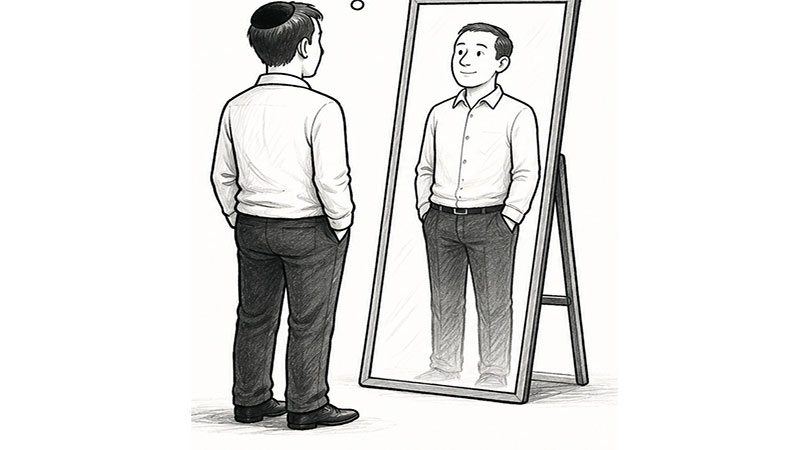


Elul arrives quietly. There is no dramatic mitzvah that announces its start, no single ritual that defines it in the way the shofar defines Rosh Hashanah or the fast defines Yom Kippur. Many families are still in summer mode, weeks away from the deadlines and busyness of the fall season.
Elul asks something subtler of us: introspection, to notice where we have drifted and begin walking back before the Day of Judgment. That approach, honest review followed by patient correction, is also some of the best advice any financial planner could give a client. Cheshbon hanefesh, the accounting of the soul, and cheshbon hakesef, the accounting of one's finances, run on nearly identical logic.
An Honest Accounting: The Rambam describes the work of this season as a genuine audit of habits, patterns, and blind spots, not a ceremonial gesture. A person is meant to look clearly at who they have become over the year, neither flattering themselves nor being unnecessarily harsh.
This same clarity is missing from most people's relationship with their money. Few of us ever ask whether our investment allocation still matches our goals, whether our spending reflects what we say we value, or whether fear and impulse have been driving decisions we would never defend out loud. A portfolio review conducted with the same honesty we bring to a spiritual review during Elul can be eye opening. It is not about self-flagellation. It is about seeing clearly, which the mussar tradition treats as a prerequisite for real change.
Small Corrections, Not Dramatic Overhauls: One lesson of Elul is that transformation rarely comes from a single dramatic gesture. It comes from daily, incremental effort: a few extra minutes of selichos, a short moment of reflection repeated night after night.
This same principle governs sound investing far more than most people realize. Raising a retirement contribution by a single percentage point, updating outdated beneficiary designations, rebalancing a drifted portfolio, or automating monthly savings all feel almost too small to matter. Yet compounded over years, these modest adjustments tend to outperform the dramatic, headline-chasing moves that most investors mistake for meaningful action.
Every year I check in with my clients to determine if any changes are needed to their strategy. These changes are almost never drastic. They tend to look like the small modifications noted above, saving a bit more each month or adjusting stock exposure modestly. Consistency beats intensity in the long run. It’s true during Elul, and any actuary or financial advisor would tell you the same thing about a retirement account.
Preparing Before the Deadline: Judaism does not expect anyone to arrive at Rosh Hashanah unprepared. That is precisely why Elul exists, a buffer of preparation before the moment when preparation is no longer possible.
This logic translates directly into risk management. Emergency savings need to exist before a job is lost. Life insurance needs to be in place before an illness is diagnosed. Estate documents need to be signed before a family is thrust into crisis. Diversification needs to happen before markets turn volatile. In nearly every case, preparation costs far less than the emergency it is meant to soften.
This kind of preparation matters most when life throws an unexpected curveball. In the age of artificial intelligence, I have been seeing more clients in their fifties and sixties lose their jobs before they are ready to retire. The clients who fare best are the ones who spent years building a nest egg. They have cash reserves to carry them until they find new work, even at a lower salary, without upending their broader financial plans. Elul's entire premise is that foresight is a form of wisdom, and the financial world rewards that same foresight with real, measurable outcomes.
Controlling the Controllable: During Elul we are not asked to predict what the coming year will hold. We are asked to work on ourselves regardless of what the future brings. That distinction matters for investors, who often waste energy forecasting interest rates, elections, or the next market swing, all things entirely outside their control.
What remains within an investor's control is more modest and more powerful: how much they save, how their assets are allocated, how efficiently they manage taxes and costs, and whether they stay emotionally disciplined when markets turn frightening. Long-term success has more to do with mastering these controllable variables than with any gift for prediction.
In a world of round-the-clock news, much of it designed to drive fear and clicks, stepping back to understand what is in your control is essential. The latest nerve-racking headlines will fade, but sound long-term decisions about your money will have a lasting impact regardless of what dominates the news cycle. We are not judged, in life or finances, on whether we correctly guessed the year ahead, but on whether we did the work in front of us.
Measuring Yourself Against Yourself: Elul calls each person to examine their own life, not measure themselves against a neighbor. This is one of the more demanding aspects of the month. Comparison is a constant temptation, especially within the frum community, but can be corrosive spiritually and financially.
A financial plan built around a neighbor's vacations, a friend's home renovation, or a colleague's investment returns has the wrong foundation. Comparison tends to push people toward overspending and speculative decisions they would never make if they simply asked what their own life requires. A sound plan reflects one's own goals, family obligations, risk tolerance, and values.
Teshuvah as a Course Correction: Teshuvah is often misunderstood as an exercise in guilt. It is, in fact, a structured process with clear steps: recognizing the problem, stopping the harmful behavior, building a plan, and committing to a better path.
This is essentially the same process behind sound behavioral finance. Overspending, chronic under saving, or speculative trading are not stopped through willpower alone. It requires a concrete plan, backed by automation, accountability, and the guidance of a trusted advisor.
Teshuvah is not a single emotional moment. It is a method, and it happens to be an excellent one for fixing a financial life that has gone off course.
Wealth as a Tool for Relationship: A central theme of Elul is repairing relationships with Hashem and with the people around us. Money, properly understood, is meant to serve that same purpose.
Conversations about inheritance plans, honest discussions with a spouse about shared financial goals, teaching children responsible money habits, and intentional charitable giving are not administrative tasks to check off a list. They are relationship building in financial form. The Talmudic instruction to divide one's assets into separate portions is often cited as the earliest articulation of diversification, but it also reflects a broader Jewish view of money as stewardship rather than pure ownership. Wealth exists to strengthen a family and a community, not to serve as a private scoreboard.
In my own home at this time of year, my wife and I set aside time to discuss where our remaining philanthropic dollars will go before year-end. That conversation is about far more than money. It is a yearly check-in on which causes we want to support and whether they still align with our values.
A Closing Thought: Perhaps the deepest lesson of Elul, one that comes up often in my writing, is that success rarely comes from a single dramatic moment, but from years of consistent habits, honest reflection, and behavior that stays aligned with one's values even when no one is watching.
Elul can serve as a natural yearly checkpoint, not only to ask how one has grown spiritually, but also whether the resources Hashem has entrusted to us are managed in a way that reflects our priorities, protects our families, and allows us to do more good in the world. That question, asked honestly every year, may be one of the truest forms of stewardship there is.