 October 16, 2026
 Categories: Featured / Parsha / Torah
Exile, Comfort, and Its Impact Upon Religion



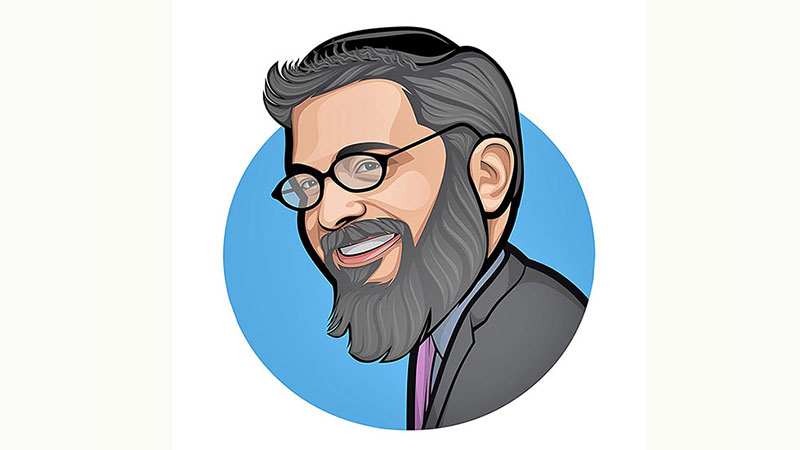
Rabbi Meir Simcha of Dvinsk was a leading rabbinic figure of the late nineteenth and early twentieth centuries. He served as the rabbi of Dvinsk, and among his major works are Ohr Sameach, a halachic commentary on the Rambam, and Meshech Chochmah, his commentary on the Torah.
The former blends insightful halachic analysis with broader interpretation and reflection. The Meshech Chochmah also contains expansive thoughts on human history, redemption, and hashgachah. He was among the more integrative rabbinic thinkers of his generation, and he was acutely sensitive to the fragility of Jewish life in exile.
By far his most well-known comments about Jewish exile appear in his remarks on Bechukotai, one of our two parshiyot this week, where he sharply critiques those who imagine that “Berlin can become a new Jerusalem” and warns that storms will inevitably overturn Jewish life. That ominous passage has become widely known, almost prophetic.
His broader essay on exile looks more generally at the experience of galut, contrasting it with the fullness of life in a sovereign Jewish setting and tracing the tensions that shape Jewish existence outside its natural home.
Cultural Insularity
His primary concern is Jews growing too comfortable in foreign lands. Exile can feel stable, even successful, but it is neither ideal nor enduring. Yaakov Avinu, the first to descend into galut, already recognized this risk and guarded against it by establishing patterns that would preserve Jewish distinctiveness. First, he ensured that his family remained set apart, settling in Goshen, maintaining their own forms of dress and language, and resisting full integration into Egyptian society. By cultivating cultural separation, he protected them from dissolving into the broader society. His plan worked…at least in Egypt. Chazal note that by the time of Yetziat Mitzrayim, we had lost much of the theological legacy of the Avot and had slipped into the pagan world of Egypt. Yet despite that religious erosion, certain markers held. We retained our language, our dress, and our names. That shared identity endured, and it became the platform upon which Hashem restored religious consciousness at Sinai.An Israel Anchor
Yaakov’s second strategy was to anchor us to a different land, outside of Egypt – our homeland in Israel. Even as we lived in Egypt, he wanted to ensure that we never mistook it for home. That is why he insisted on being buried in Eretz Yisrael. Quietly aware that their roots lay elsewhere, with parents and grandparents resting in another land, Bnei Yisrael would never grow fully comfortable in Egypt. That awareness helped resist the pull of exile. Yaakov’s plan has met with uneven success across the generations. At times we held tightly to our identity, preserving our language, our dress, and a quiet awareness that even as we lived and prospered across the world, we belonged elsewhere. Alongside that cultural distinctiveness, Torah bestowed a clear inner identity and protected us from being absorbed into our surroundings. At other moments, however, we grew too comfortable. We loosened those cultural boundaries and even began to detach ourselves from Eretz Yisrael. At those points, history intervened. Periods of ease gave way to upheaval, and complacency was shaken by forces that pushed us into new exiles. As our lives became less stable, we became more conscious of who we were. From Western Europe in the wake of the Black Death, to Spain before the expulsion, to Poland after the Chmielnicki massacres, to the Pale of Settlement in nineteenth-century Russia, the pattern was similar. Each time settled life was overturned, persecution followed, and we were pushed into a new exile. New exiles heightened Jewish identity.European Seduction
It is within this pattern that Rav Meir Simcha issued his warning to his generation. Western European Jewry had begun to feel at home. Emancipation opened doors, granted rights, and encouraged integration. Many set aside the markers that had once set them apart and, more deeply, began to loosen their bond to Yerushalayim. There is a difference between living with comfort in exile and redefining exile as home. To mistake any city for Yerushalayim is not just an error; it distorts our place in history. The phrase “Berlin is Yerushalayim” is not only a geographical mistake. It reflects the belief that Jewish destiny can unfold along the boulevards and promenades of Europe. Yet Jewish destiny cannot be completed there. It belongs in Eretz Yisrael, centered upon Yerushalayim. This is not merely replacing one city with another; it is stepping away from the direction of Jewish history. Ominously, he warned that, as in earlier periods, a storm would come to unsettle that sense of security. Tragically, that storm arrived in the form of the Holocaust, overturning what had seemed so firmly established.Comfort Distorts Torah…Eventually
But there is a second, more nuanced layer. The Meshech Chochmah also traces how Torah itself is shaped by these alternating periods of serenity and persecution in exile. Too much comfort does not only dull historical awareness; it begins to affect the transmission and texture of Torah, until disruption arrives and forces a reset. He describes a three-stage process of Torah study in exile. The first stage is that of immigrants, those uprooted from their homes. Their masorah has been shaken by exile. Torah is most naturally transmitted through stable families and intact communities, and when homes are broken and communities scattered, that continuity becomes harder to sustain. Under the strain of relocation and the pressures of rebuilding life, it is difficult to reach high levels of Torah achievement. In the second phase, communities begin to rebuild and Torah study is reestablished. Torah and religious life slowly regain their footing and begin to grow. He does not explain explicitly why this happens, but the logic is clear. Torah is not bound to any one place. It is the word of Hashem, given in a desert beyond time and geography, and it can take root wherever people open their minds and hearts to it. After a period of adjustment, often a generation or two, Torah begins to flourish in its new setting. He does not, nor does he need to, provide examples of this renewal. It has repeated itself across Jewish history. Once the initial pressures ease, once life stabilizes and communities regain their footing, people are able to turn their energy back toward Torah, and a new period of growth begins.Stagnating Creativity
At this point, however, in the third phase, a different danger begins to emerge. Every person, and every era, carries a drive to create. Creativity is natural to the human condition. When we create, we reflect our Creator. That impulse is not marginal; it rises from a deep place within the human spirit. Under ideal conditions in Eretz Yisrael, that creativity is channeled into Torah. We possess the proper mechanisms that allow Torah to grow and respond to changing realities. For example, an active beit din can, in certain circumstances, revisit earlier rulings. Nevuah helps guide and steady this creative process. Even in the absence of prophecy, during the period of the second Mikdash, there remained a form of divine inspiration. Under these conditions, through the interpretive tools of Torah sheba’al peh, Torah continued to develop. The great expansion of Torah sheba’al peh emerged in that period – not through prophecy, but through divinely guided human effort. In that setting, human creativity and the word of Hashem worked together, allowing Torah to advance in a healthy and grounded way. In exile, the creative process of Torah meets its limits. The structures that enable forward movement are no longer fully in place, and the guiding presence of nevuah is diminished. Yet the human need to create does not disappear. When it cannot find expression within Torah, it begins to seek other outlets. At times, that creative energy is directed toward pursuits that do not align with Torah, and the result is distortion. Creativity remains, but it lacks a proper channel. When that pressure builds and Torah faces the prospect of distortion, new exiles emerge, necessary to prevent further deviation. The cycle starts anew: masorah is disrupted, Torah is slowly rebuilt, it flourishes, and over time the same pressure begins to build. For the Meshech Chochmah, exile does more than preserve Jewish identity from assimilation. It also protects Torah itself, preventing it from being altered by human creativity in a setting that can no longer support its healthy development. This second role of exile as a corrective to Torah distortion reflects the condition of Europe in the centuries before the Holocaust. Jewish communities were firmly established, and Torah life had regained strength. There was stability, structure, and serious learning. Yet for many, that inner drive to create could not find full expression within Torah, and it began to flow elsewhere. A new exile was necessary to prevent further distortion. To be honest (and Rav Meir Simcha does not address this), much of that redirected Jewish creativity contributed to the broader development of Western civilization. Jewish talent shaped fields such as science, medicine, psychology, and commerce. But alongside that contribution, there was a heavy cost. For many Jews, the inability to channel creativity within Torah led to distortions in how Torah was understood and applied, and in many cases, to a gradual move away from a Torah life. His profile raises a haunting question: Will this pattern emerge in our own context? Baruch Hashem, we have built strong Torah communities in exile, and religious life within the Orthodox world is flourishing in ways few could have imagined. Will it eventually encounter the limits he describes? We hope not. Yet his words remain a quiet caution.Torah Creativity in Israel
Even more intriguing, in light of this, is his distinction between Torah study in exile and Torah study in Eretz Yisrael, especially when viewed against current trends. Life in Israel has sparked a noticeable shift in Torah learning. There has been a return to intensive Tanach study, while areas once seen as more esoteric, such as Chassidut and Kabbalah, have entered the broader conversation, shaped in part by figures like Rav Kook and Rav Steinsaltz. It is not only the range of topics that has expanded, but also the way traditional texts are being approached and reconsidered. For those raised in exile, these developments can sometimes feel unfamiliar, even unsettling. However, there may be something about life in Israel – even without a Mikdash and without explicit divine inspiration – that allows for this kind of healthy Torah growth. Having returned to Israel, even without a Mikdash, a beit din, or that earlier clarity of divine spirit, are we experiencing a creative surge in Torah that can break the cycle he describes in galut, where stagnation leads to distortion? This well-known essay of the Meshech Chochmah reverberates more than a century after it was written and helps us reflect upon the trajectory of Torah – both in Israel and in galut.