October 2, 2026
 Categories: Collecting / Arts
Hanna Rovina and the Habima Theatre
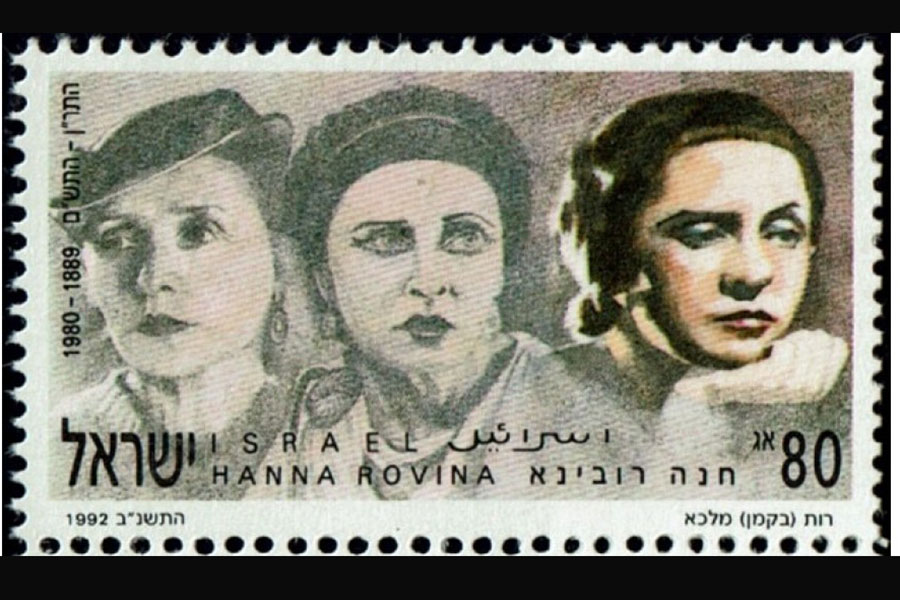


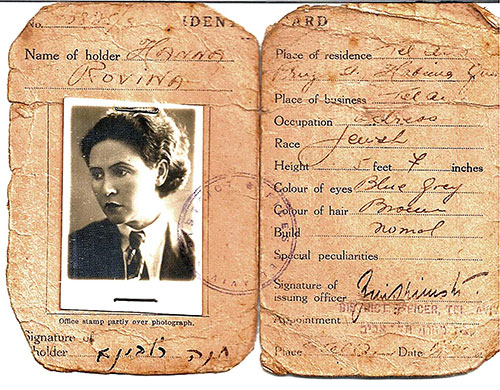
Born in the small town of Byerazino, near Minsk within the Pale of Settlement of the Russian Empire, the family of Chana (Hanna) Rovina (1888-1980), like most Jewish households in the region, lived within the structured rhythms of traditional Jewish life, balancing modest economic circumstances with a deeply ingrained sense of religious obligation and communal responsibility. Her father, engaged in a skilled trade, provided financial stability sufficient to support education and the upkeep of a home that was culturally and morally serious rather than materially ambitious, and her mother managed the household with careful devotion to Jewish ritual and practice, shaping daily life through observance, ethical discipline, and an atmosphere of reverence rather than dogma.
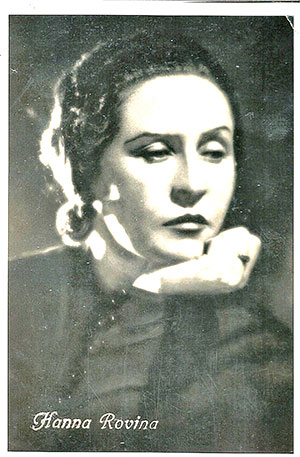
From an early age, Rovina’s experience of Judaism was holistic and immersive. Prayer, study, ritual observance, and social responsibility were not separate domains, but were interdependent elements of daily existence. Shabbat was observed with care and consistency and the Jewish calendar punctuated the year with intensity and meaning: Passover seders rooted the family in narratives of liberation and continuity; Rosh Hashanah and Yom Kippur imposed cycles of reflection, judgment, and moral repair; and festivals and fasts reinforced the recurring rhythms of collective memory. Dietary laws were observed not as empty formality but as lived expressions of identity and self-discipline, while lifecycle rituals connected individual experience to ancestral lineage and communal belonging. These rhythms instilled in Rovina an internalized sense of order, ethical seriousness, and emotional restraint that would later find expression in her stage work.
The family’s heritage reinforced these patterns. On her father’s side, Rovina inherited a lineage associated with learning, moral authority, and communal engagement beginning with her grandfather, recognized for his mastery of sacred texts and ethical judgment and who was often consulted on communal matters and revered for his wisdom. On her mother’s side, family members were similarly active in charitable initiatives, ritual oversight, and educational support, and this dual inheritance conveyed a powerful lesson that spiritual devotion and civic responsibility were inseparable obligations. Rovina’s earliest memories were suffused with the sounds and structures of Jewish life, including prayer melodies, textual recitation, and storytelling drawn from biblical and rabbinic sources, elements that shaped her instinctive grasp of rhythm, cadence, and narrative long before she encountered the theater and forming a sensibility attuned to the expressive possibilities of language and silence alike.
Rovina’s early education took place primarily in Jewish schools, where instruction emphasized Hebrew texts, Jewish history, and ethical reflection, and these institutions fostered literacy in both Hebrew and Yiddish, grounding students in textual study and moral reasoning. From a young age, she engaged with the Torah, Mishnah, and traditional commentaries, developing not only familiarity with their content, but also an emotional responsiveness to their narrative and ethical tensions. Storytelling and parables drawn from Midrash and Talmud formed a central component of her formative years, cultivating a sense of continuity with past generations, and, although this curriculum did not include theatrical training, it provided linguistic precision, sensitivity to poetic and rhetorical structure, and an intimacy with Jewish narrative forms that would later become foundational to her acting.
The Byerazino of Rovina’s youth, though small and tightly knit, was not culturally passive. Jewish residents engaged with broader intellectual currents, including the Haskalah, early Zionist thought, and debates about cultural modernization. Within her household and local synagogue, she was exposed to discussions about Jewish national revival and the potential of Hebrew as a living cultural language rather than solely a sacred or scholarly medium. These ideas remained peripheral during her childhood, but they planted seeds of awareness that tradition could be renewed without being abandoned, and her early familiarity with Hebrew texts thus came to encompass not only ritual and ethical meaning, but also expressive and imaginative possibility.
Rovina’s adolescence coincided with a period of social and political upheaval in the late Russian Empire and restrictive legislation, pervasive antisemitism, and the threat of violence formed the background of daily life, instilling both vulnerability and communal cohesion. The tension between the stability of ritual life and the hostility of the external environment sharpened her sensitivity to suffering, endurance, and moral struggle and these experiences, deeply embedded in her personal history, would later resonate in her portrayals of characters confronting loss, spiritual crisis, and ethical conflict. Her upbringing thus combined the grounding of ritual, the discipline of textual study, and the emotional intensity of minority existence, forming the core of her artistic sensibility.
In her late teens, Rovina worked briefly as a kindergarten teacher in Vilna, a role that reflected both her educational upbringing and her inclination toward empathy and pedagogy. Teaching young children demanded patience, imagination, and emotional intelligence, qualities she would later channel into theatrical expression, and Vilna also exposed her to a vibrant Jewish cultural milieu, including literary salons, Zionist circles, and early experiments in Hebrew cultural revival. Here she encountered debates about Jewish identity, language renewal, and national consciousness, encounters that broadened her intellectual horizons and reinforced her interest in fusing traditional Jewish literacy with modern cultural expression.
It was in this context that Rovina encountered the Habima theatrical project. Founded in Moscow in 1917 by Nahum Zemach and developed under the artistic guidance of Evgeny Vakhtangov, Habima sought to establish Hebrew as a living dramatic language capable of conveying psychological nuance and emotional depth, a project that represented a radical departure from Hebrew’s traditional role as a language of prayer and scholarship, envisioning it instead as a medium for modern theater. Rovina’s intimate familiarity with Hebrew rhythm, structure, and emotional register uniquely prepared her for this undertaking.
Her decision to join Habima was both artistic and ideological. The theater’s mission aligned with her emerging understanding of Jewish cultural responsibility – preservation through renewal rather than nostalgia. Habima’s training emphasized vocal control, movement, ensemble discipline, and psychological realism while insisting on emotional authenticity and textual seriousness, and Rovina thrived in this demanding environment, bringing to her work a reflective temperament, rigorous discipline, and a deep reservoir of cultural memory.
Rovina’s defining breakthrough came in 1922 with her casting as Leah’le in S. Ansky’s The Dybbuk, a role that became both Habima’s signature achievement and the central axis of her artistic identity. Rooted in Jewish mysticism, folklore, and ethical tradition, the play dramatizes the fate of a young bride possessed by the spirit of her deceased beloved. Rovina approached Leah’le not as a supernatural spectacle but as a profound human and spiritual crisis shaped by love, obligation, memory, and transgression. Her preparation was notable for its sustained meticulousness, as she immersed herself in the folkloric, ritual, and ethical sources underlying Ansky’s drama, internalizing its spiritual logic so that performance emerged organically from within the play’s world rather than being imposed upon it.
Chaim Nachman Bialik, who translated The Dybbuk into Hebrew, recalled the atmosphere at rehearsal: "Habima's acting overwhelmed everyone who came within its orbit... perhaps it was the ecstasy stemming from some spring of invisible fire....” Rovina’s portrayal of Leah’le was marked by an extraordinary balance of restraint and intensity. She employed stillness as deliberately as movement, allowing silence, posture, and breath to convey inner rupture, and her vocal delivery drew on the cadences of prayer and lamentation, echoing synagogue intonation without descending into imitation. As the possession deepened, she modulated her physicality and voice with meticulous control, signaling transformation through subtle shifts rather than theatrical excess, resulting in a performance that felt ritualistic, yet psychologically modern, mystical yet recognizably human.
Contemporary response was immediate and sustained. Jewish critics described Rovina’s Leah’le as an embodiment of collective memory, a figure through whom the spiritual anxieties of Eastern European Jewish life found expression, and non-Jewish reviewers, while sometimes distant from the play’s cultural sources, nevertheless recognized the universality of the emotional conflict she conveyed. Through Rovina’s interpretation, The Dybbuk became a modern tragedy rather than a folkloric curiosity, demonstrating that Hebrew theater could engage contemporary aesthetics while remaining faithful to its origins.
Yet, the authority of The Dybbuk proved geographically uneven. Outside Jewish and Hebrew-speaking contexts, the play gradually lost its centrality, its dense ritual language and symbolic universe increasingly remote from audiences unfamiliar with its spiritual grammar. In Eretz Yisrael, by contrast, the play retained and deepened its authority; performed in the land where Hebrew was becoming a living national language, The Dybbuk resonated as cultural testimony as much as drama, as its themes of exile, longing, disrupted continuity, and spiritual return aligned powerfully with the collective experience of the Yishuv. Rovina’s characterization of Leah’le, in this setting, became a vessel of historical memory, embodying unresolved tensions between past and present, and the play endured in Israel because it spoke the emotional language of national becoming, while elsewhere it remained bound to a vanished world.
The success of The Dybbuk also exposed Rovina and her colleagues to the realities of antisemitism and political constraint in post-revolutionary Russia, as Habima faced bureaucratic scrutiny, censorship, and suspicion, particularly because of its commitment to Hebrew and Jewish national expression. Rovina encountered both structural limitations and social prejudice, experiences that sharpened her conviction that theater was not entertainment alone but also served the goals of cultural affirmation and resistance.
Under the guidance of Evgeny Vakhtangov, she absorbed avant-garde Russian theatrical techniques while remaining anchored in Jewish content. This fusion of innovation and specificity became a hallmark of her style and a defining feature of Hebrew theater, and her work demonstrated that cultural depth and modern experimentation were not opposing values, but actually mutually reinforcing ones.
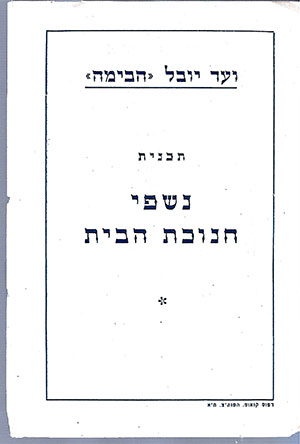
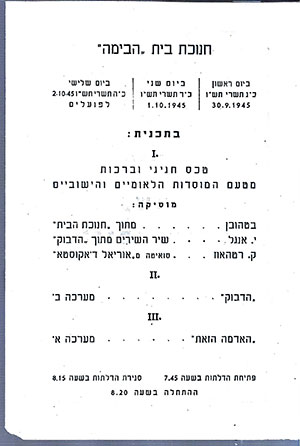
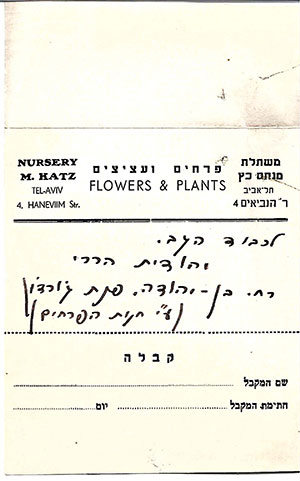
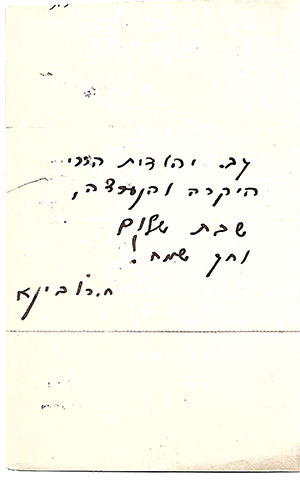
Political conditions eventually made continued work in Russia untenable, and Habima’s relocation to Eretz Yisrael in 1928 marked a decisive transition and represented the convergence of artistic vocation and historical destiny. Exhibited here is the program for the dedication of the Habima Theatre in Tel Aviv, which was celebrated in a series of three openings, one of which was dedicated to the workers of Eretz Yisrael. The first part of the evening was dedicated to blessings on behalf of the national and local institutions, a speech delivered by Rovina, and the cutting of the ribbon connecting the stage by the mayor of Tel Aviv at the time, Israel Rokach. The Palestine Philharmonic Orchestra played the works Consecration of the House by Beethoven; The Song of Songs from The Dybbuk composed by Yoel Engel; and the Uriel D’Acosta Suite by Carol Rathau. Next, the second act of The Dybbuk was presented, followed by the first act of This Land. The event, which became a grand holiday for the Yishuv, was broadcast live on Voice of Jerusalem for those unable to attend the historic ceremony.
Arriving in a society where Hebrew was rapidly becoming the language of daily life, Rovina now addressed audiences shaped by immigration, ideological diversity, and the realities of nation-building, and her performances bridged ritual familiarity and modern expression, resonating across social divides. Her relationship to Judaism during these years reflected continuity rather than strict observance, as she maintained selective ritual practices – fasting on Yom Kippur, participating in Passover seders, occasionally lighting Shabbat candles – not as legal obligation but as expressions of reverence and identity. Her home reflected these values, filled with Jewish books and an atmosphere of ethical seriousness and cultural engagement.
In 1934, Rovina gave birth to her daughter Ilana, whose father was the poet Alexander Penn and, though she and Pen never married, she raised her daughter within a Hebrew cultural framework, emphasizing Jewish history, language, and ethical awareness. Ilana later recalled that her mother’s Jewishness was experienced as an atmosphere rather than instruction, shaping identity through example and presence.
As Habima consolidated its role as Israel’s national theater, Rovina remained its defining presence. She reprised Leah’le for audiences in Jerusalem, Tel Aviv, and other cultural centers, where the play acquired renewed resonance in its ancestral setting, and she expanded her repertoire to include biblical, historical, and folkloric roles, consistently conveying moral complexity and spiritual tension with restraint and authority.
Today, Habima retains institutional and symbolic prominence as Israel’s official national theatre and it is widely treated as a foundational institution in modern Hebrew theatre. Its buildings, ensembles, and archives continue to function as central nodes of Israeli theatrical life and professional training. That said, however, Israeli theatre has diversified enormously, with many new companies, avant-garde ensembles, municipal theaters, and independent venues, so while Habima remains iconic and institutionally central, the contemporary theatrical ecology in Israel is pluralistic and lively.
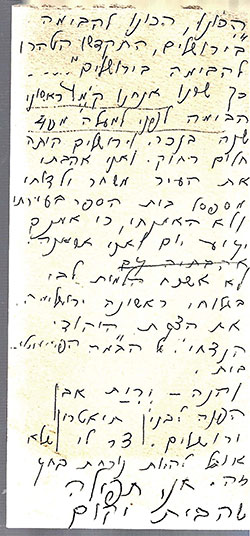
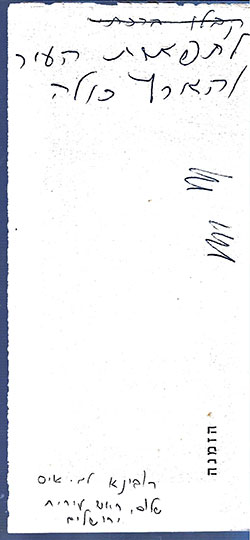
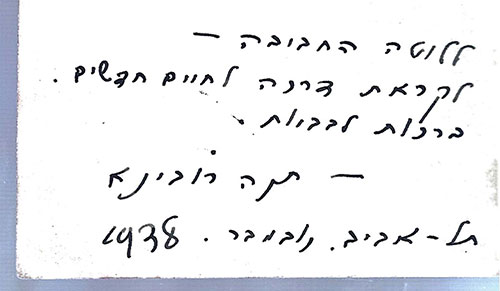
Exhibited here is a historic 1964 correspondence that Rovina wrote to Jerusalem mayor Mordechai Ish-Shalom on the verso of an invitation to the cornerstone-laying ceremony of the Jerusalem Theater. A revealing expression of Rovina’s cultural worldview, the letter, brief yet dense with meaning, recalls her astonishment at first encountering Jerusalem and her early performances on primitive stages, when the idea of a permanent theatrical home in the city seemed unimaginable. She urges preparation, purification, and sanctification for the theater’s arrival, drawing deliberately on biblical and liturgical language.
“Prepare, prepare for the Habima in Jerusalem, become holy and pure for the Habima in Jerusalem” ...Yes, we sang, we were the first few on the stage over 40 years ago in a foreign country. And Jerusalem was a remote dream. And I loved the city from the dawn of my childhood, from the school bench in my city, I never believed that a day would come when I would be saved. I will not forget the dreams of my heart in my first exile in Jerusalem, the eternal Jewish fire to the primal stage of the house.And here it is – the laying of the cornerstone for the Jerusalem Theater building. I am distressed that I will not be able to attend this holiday. MY PRAYER IS THAT THE BUILDING WILL RISE FOR THE GLORY OF THE CITY AND THE ENTIRE LAND.
The Jerusalem Theatre, often called the Jerusalem Center for the Performing Arts, is a municipal cultural complex in the Talbiya neighborhood of Jerusalem, near the President’s Residence and other civic institutions. The cornerstone was laid in October 1964 – the ceremony referred to on Rovina’s letter – but construction proceeded slowly due to budgetary and planning disputes. The first hall, the 950-seast Sherover Theatre, and the main complex were not dedicated and opened until October 1971, with additional halls being added later. Today, the Theatre is a performing-arts center featuring plays, dance, concerts, orchestral programming, exhibitions, festivals and ceremonies, and the complex includes a symphony hall, home to the Jerusalem Symphony Orchestra, and multiple drama/dance stages, which are also used for a wide range of performing-arts events. Habima has performed frequently at the Theatre since the complex opened, but its permanent home is in Tel Aviv at Habima Square.
In her later career, Rovina functioned as both performer and mentor. She demanded rigor, textual seriousness, and ethical awareness from younger actors, shaping the performance culture of Israeli theater, and her influence extended internationally through tours that connected diaspora audiences to Hebrew cultural revival, where she was widely perceived as a symbol of Jewish resilience and artistic dignity.
When she died in 1980, Rovina was mourned as both artist and cultural custodian. Her legacy endures in Israeli theater through the standards she established for authenticity, emotional depth, and historical consciousness, and her life demonstrates that cultural renewal rooted in tradition need not resist modernity, but can shape it with authority, restraint, and enduring moral seriousness.
Rovina’s repeated returns to The Dybbuk across decades further deepened its authority. Unlike productions that fossilize through repetition, her Leah’le evolved subtly in response to changing historical circumstances. Where her early performances bore the imprint of exile and rupture, later renditions, staged after the establishment of the state, carried a quieter gravity, as if possession were no longer merely tragic but testimonial. Without altering the text, Rovina allowed time and history to register in her body and voice, a remarkable capacity that let the role age without theatrical distortion and contributed decisively to the play’s continued relevance in Israel.
Rovina’s touring work abroad underscores the contrast. When Habima performed The Dybbuk in Europe and the United States, audiences responded with admiration, but often framed the production as ethnographic or elegiac; while critics praised atmosphere and intensity, the reception increasingly emphasized loss rather than continuity. Hebrew, outside its revived national environment, sounded archaic rather than emergent and Rovina, intuitively understanding this discrepancy, did not alter her performance to court accessibility, trusting instead that cultural authority cannot be manufactured through simplification. The result was integrity without universality, a choice that preserved the play’s power at home even as it limited its reach elsewhere.
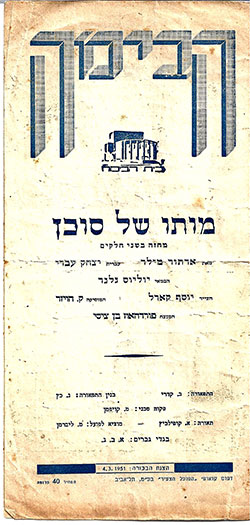
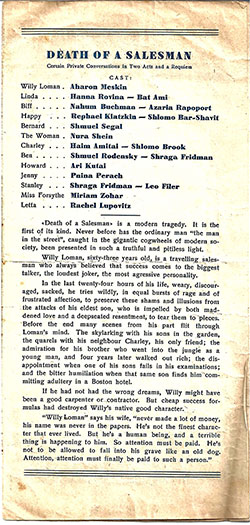
Though best known for her role in The Dybbuk, Rovina played many striking roles, including the young Jewess in Gutzkow’s Uriel D’Acosta Suite; Mrs. Elving in Ibsen’s Ghosts; the mother in Yigal Mossensohn’s Be-Arvot ha-Negev (“In the Negev Desert”); Tzrua in Nissim Aloni’s Most Cruel – the King; the mother of the Messiah in Pinsky’s The Eternal Jew; the title role of Brecht’s Mother Courage; Jocasta in Sophocles’ Oedipus the King; and Linda in Arthur Miller’s Death of a Salesman.
Beyond Leah’le, Rovina’s repertory reinforced her standing as a moral presence onstage, and her portrayals of biblical and historical women were marked by the same economy and seriousness, resisting sentimentality while insisting on ethical weight. Meaning, she insisted, must reside in action, breath, and timing; this approach, derived as much from Jewish textual discipline as from Vakhtangov’s training, shaped the pedagogical ethos of Habima and, by extension, Israeli acting more broadly.
Rovina’s influence was also institutional. As Habima matured into Israel’s national theater, she became a stabilizing force amid ideological shifts and aesthetic experimentation and, while open to innovation, she resisted theatrical fashions that privileged irony or spectacle over moral intelligibility. Her objections, always principled, were never reactionary, and she maintained that a role must remain answerable to history and language.
Our Jerusalem letter gains additional resonance in this light; written late in her career, it does not lament change, but frames permanence as obligation rather than achievement. The insistence on preparation and sanctification reflects a lifetime of experience in which artistic institutions proved fragile unless sustained by ethical seriousness. For Rovina, the theater’s physical establishment in Jerusalem was meaningful only insofar as it upheld standards forged under far less secure conditions. The letter thus reads not as nostalgia but as vigilance.
When she died in 1980, Rovina left behind a legacy that is inseparable from the evolution of Hebrew theater, the revival of Jewish cultural life in Israel, and the broader history of modern Jewish artistic expression. She was buried with Jewish honors, reflecting both her personal connection to Jewish ritual and the communal recognition of her contributions, and obituaries and tributes in the Jewish press consistently highlighted her dual role as artist and cultural custodian, a figure whose performances preserved memory, transmitted ethical and spiritual values, and contributed to the cultural infrastructure of the nation. Her death was mourned not only by audiences and colleagues but also by a broader public that recognized her as a symbol of continuity, resilience, and artistic devotion.
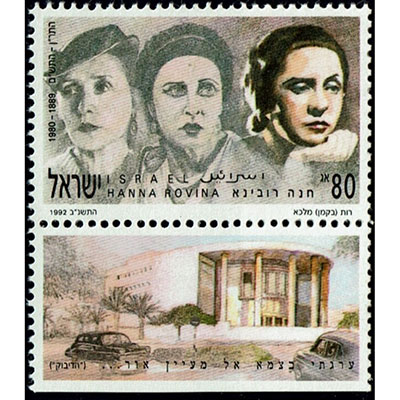
In April 1956, when Rovina was awarded the Israel Prize for Theater Arts, the judges’ comments stressed the central role she had played in the history of Hebrew theater:
In her life as an actor, Hanna Rovina embodied the development of Hebrew theater. She was a mixture of rare gifts as a woman artist, from Leah in The Dybbuk, the heroic symbol of the birth of Hebrew theater as well as the birth of the Hebrew actress, to Medea, her last role (directed by Peter Frye, premiered in November 1955)... Her path was that of an oath of loyalty to the vision of Hebrew theater.
Rovina’s influence persists today in Israeli theater and cultural memory. Her approaches to rehearsal, performance, and mentorship established standards for authenticity, ethical engagement, and emotional resonance in acting. Actors trained in Habima and beyond continue to draw upon her techniques, understanding the interplay between text, ritual, and character as she modeled it. Her embodiment of Jewish identity through selective observance, ritual reverence, ethical orientation, and historical consciousness serves as a model for integrating cultural heritage into artistic practice, and her example demonstrates that the survival and flourishing of Jewish culture require both artistic excellence and a deep engagement with ethical and historical memory.
The combination of Rovina’s artistic mastery, Jewish cultural sensibility, and commitment to mentorship ensures that her legacy extends far beyond her individual performances. She exemplifies the transformative potential of art that is deeply rooted in tradition while responsive to modernity, and she remains a central figure in the narrative of Hebrew theater and Israeli cultural identity. Her life and work illustrate the possibilities of cultural renewal, the power of ethical and historical consciousness in artistic practice, and the enduring relevance of Jewish heritage in shaping national and artistic expression.