

Otto Von Bismarck and the Jews
Although he did not court the approval of Jewish newspapers, he was acutely aware of their influence in liberal circles, writing privately that “Approval or disapproval in the Jewish press is of minor concern, provided that the law stands and the state remains firm.”
The Siddur Behind the Iron Curtain
Particularly poignant was a copy I once owned that contained an inserted typed letter signed by Rabbi Shlomo Shleifer himself.

The Antisemitism and Anti-Zionism of H.G. Wells
Wells exemplifies a strain of liberal thought that underestimated the resilience of antisemitism and overestimated the protective power of universal ideals.

A Mohel’s Ledger Is Window Into European Jewish Life Over a Century Ago
What survives here is not merely a mohel’s register, but an extraordinary ethnographic document of Jewish life in transition...

Six Famous Toys And Their Jewish Inventors
This week I continue with a discussion of six additional popular toys that were created by Jewish inventors.

Is Barbie Jewish?
One of the most enduring controversies surrounding Barbie concerns the question of originality; critics argued that Ruth had appropriated the idea from the Bild Lilli doll and that full credit should therefore not accrue to her.
The Letters of Rav Chaim Ephraim Zaitchik
Rabbi Chaim Ephraim Zaitchik (1905–1989) stood as a distinguished spiritual mentor and prolific author within the Mussar movement, the Jewish tradition devoted to ethical refinement and introspective growth.
Mordechai Maklef and David Ben Gurion
He was certainly not a charismatic hero in the mold of Moshe Dayan, nor a political visionary like Ben Gurion. Rather, he represented the disciplined, professional officer whose contributions were essential to the survival and consolidation of the State of Israel.

A Book to Resist the Nazis in 1936
The Nazis sought to make a people vanish not only from the streets, but from memory. This book was an answer to that effort.
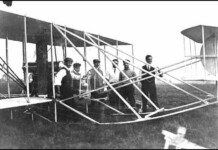
The First Jewish Aviator
As exhibitions grew more competitive, pilots from other schools pushed for higher speeds, steeper dives, and more dangerous stunts. Wilbur and Orville Wright were steadfast in resisting this trend, emphasizing control and structural integrity, an ethos passionately embraced by Welsh.

A Sefer Plucked from the Fire
Remarkably, it retains its original leather binding, a rarity for Zhitomir printings of this period.
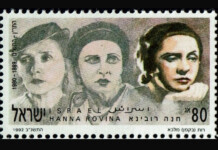
Hanna Rovina and the Habima Theatre
Today, Habima retains institutional and symbolic prominence as Israel’s official national theatre and it is widely treated as a foundational institution in modern Hebrew theatre.

Rav Hirsch’s Commentary on the Chumash
For Hirsch, Hebrew is not a convenient tool for communication; it is itself a revelation.
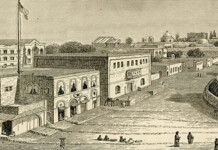
The Incredible Tale of Warder Cresson, AKA Michael Boaz Israel
Once he became Michael Boaz Israel, Cresson’s energies turned with intensity toward the welfare of the Jewish people – spiritually, materially, and politically – and he embraced a life of public Jewish responsibility.
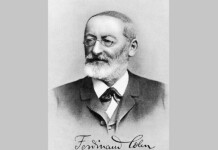
The Judaism of Ferdinand Cohn
The most explicit discussion of Cohn’s Jewish background may be found in the collection Ferdinand Cohn – Blätter der Erinnerung (“Leaves of Memory,” Breslau 1901) assembled and published by his wife, Pauline.

The Trieste Haggadah of 1863
Even the title page announces that this is no ordinary production. Figures such as Moses, Aaron, David, and Solomon are framed within an ornate Gothic design – a bold stylistic departure that signals the publisher’s intention to produce something entirely new.

Mary Cassatt, The Impressionists, and the Dreyfus Affair
Cassatt’s expression of high regard for Degas is entirely consistent with her long-standing view and she never wavered in her assessment of his artistic greatness, even after their personal relationship deteriorated over the Dreyfus Affair.
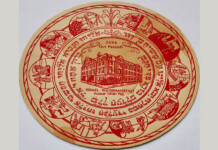
Pedigreed Pesach Paraphernalia
Beginning in 1947, the JRSO searched out heirless Jewish assets and unclaimed property in the American-occupied zone of Germany and distributed them to Jewish institutions and organizations, primarily in the USA and Israel.
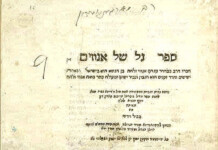
A 16th Century Sefer
Her press was conceived not as a commercial enterprise, but as a charitable institution dedicated to the proliferation of knowledge and literacy.

The Nazi Denaturalization of Albert Einstein
In the wake of Lessing’s killing, newspapers across Europe announced that a bounty had been placed on Einstein’s head, with some accounts reporting the sum as £1,000, a substantial figure for 1933, and another reporting that the price was as high as $5,000.
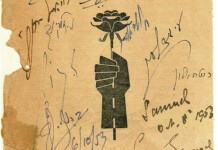
The ‘Conquest of the Desert’ Exhibition – Israel’s 1953 World’s Fair
The 1953 exhibition remains a landmark that is still remembered as Israel’s first internationally sanctioned specialized expo and a milestone in the country’s early public diplomacy.

The Philosemitism and Zionism of Jean-Jacques Rousseau
In assessing Rousseau’s relationship to Judaism, it is crucial to recognize how distinctive his position was within the intellectual milieu of his day.

Rav Elchonon Wasserman in the 1930s
Written contemporaneously with his more widely recognized Ikveta DeMeshicha, Da’as Torah has, inexplicably, remained eclipsed.

The Cultural Judaism of Lise Meitner
After the war, Meitner moved to Cambridge, England, where she spent the last decades of her life and remained active as a lecturer and mentor, especially encouraging young women to pursue careers in science.

A Chinese Torah Case & An Admor’s Torah Crown: Sotheby’s Judaica Auction Highlights
I always enjoy getting up close to a Kaufmann painting because the depth of detail in his works is so realistic and lifelike. Kaufmann was known for his portraits of religious Jews.

Von Hindenburg and the Jews
Hindenburg never visited Eretz Yisrael, nor did he express particular interest in Zionism.... At the same time, there is also no evidence that he was hostile to Zionist aspirations; it simply lay far outside his field of concern, as his worldview was shaped by Germany’s past, not by the national movements of other peoples.

1630 Tanach Printed by Menasseh ben Israel
Rav Menasseh is perhaps most remembered for his diplomatic mission to England, where he petitioned Oliver Cromwell to formally readmit the Jews, who had been expelled since 1290.

The Strange Case of Menachem Begin’s Last Correspondence & Betar’s Tagar Institute of Education
He rarely left the apartment; his only outings were to visit his wife’s gravesite and recite the traditional Kaddish on the anniversary of her death.
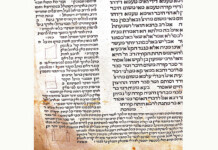
Rashi’s Diagrams in Eruvin & the Bomberg Talmud
Eruvin is not merely a legal tractate; it is a cartographic one. Its sugyot are saturated with geometry, spatial reasoning, and the precise delineation of Shabbat domains.

How William Friedman, the Jewish Dean of Modern Cryptology, Enabled the Allies Victory in...
When the United States entered World War I, the Army lacked an official cryptographic service, and Riverbank’s Department of Codes and Ciphers, where the Friedmans worked, became the de facto center for American codebreaking.