יום חמישי, י״א חשוון תשפ״זThursday, October 22, 2026



Follow Us


Tsadik Kaplan is a collector, certified appraiser, and speaker/lecturer on the topic of Judaica. He is the author of the book “Jewish Antiques: From Menorahs to Seltzer Bottles” (Schiffer Publishing). For questions or comments – or to send pictures of your Judaica for future columns – email tsadik613@gmail.com.
Read More
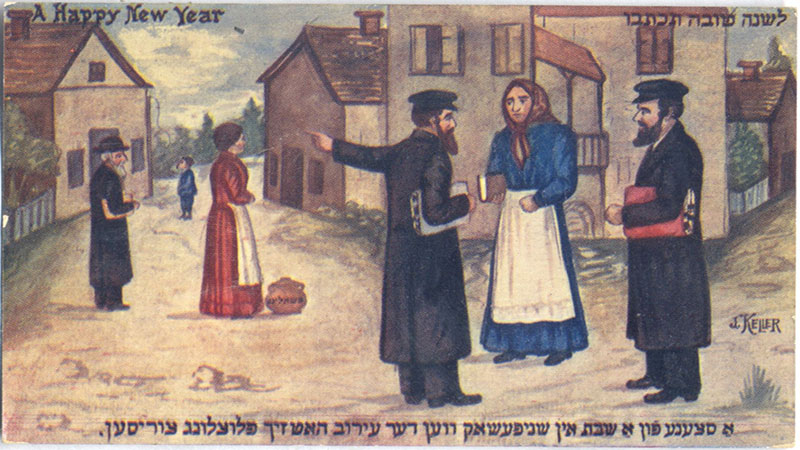
An early mention of cholent can be traced back to the 13th century, where it is found in the writings of Rabbi Issac ben Moses of Vienna, better known as the Riaz.
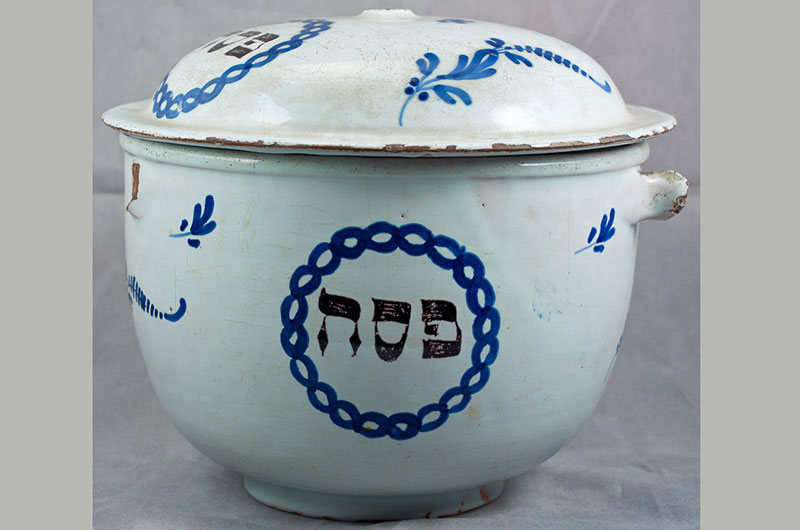
I was fortunate enough to be the high bidder of the item, and thought little of it over the years.
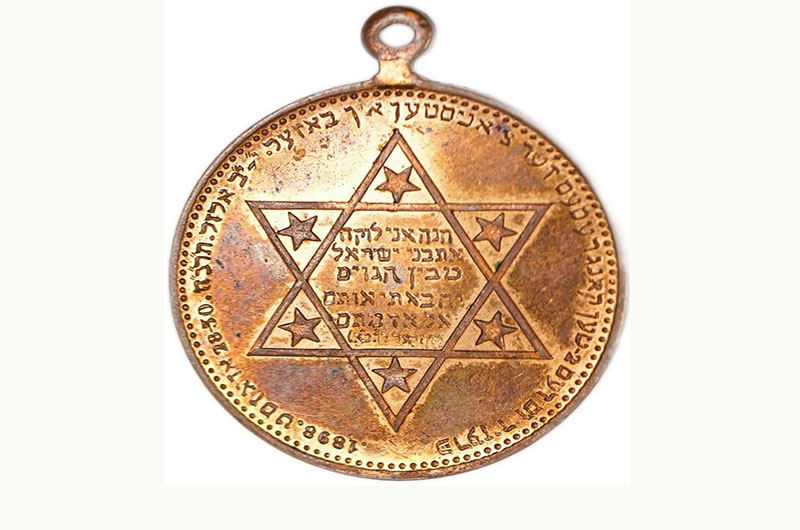
Seventy-eight years ago this week, on May 14, 1948, the State of Israel was established. To celebrate this monumental event in Jewish history, here are some related medals from my personal collection.

Beginning in 1947, the JRSO searched out heirless Jewish assets and unclaimed property in the American-occupied zone of Germany and distributed them to Jewish institutions and organizations, primarily in the USA and Israel.
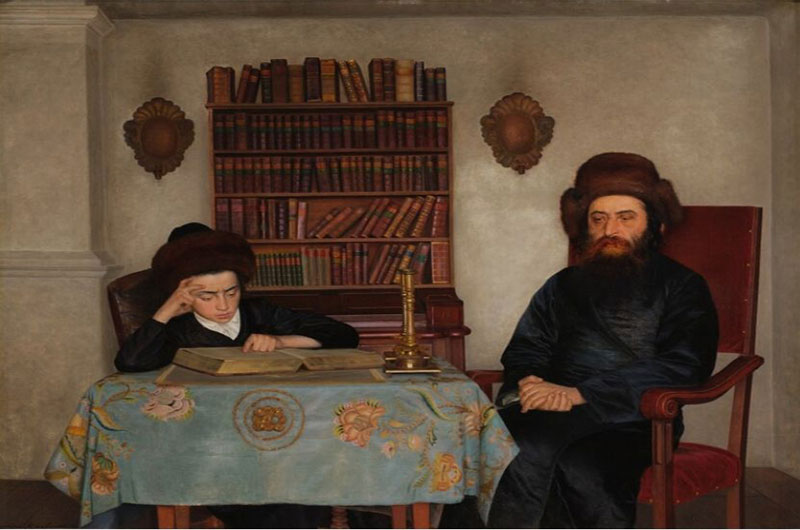
I always enjoy getting up close to a Kaufmann painting because the depth of detail in his works is so realistic and lifelike. Kaufmann was known for his portraits of religious Jews.


You have, without question, a rare Mizrach of significance and beauty made by your great-grandfather, who, until this very moment, was an unknown, unrecognized but highly skilled papercut artist living in Minneapolis.
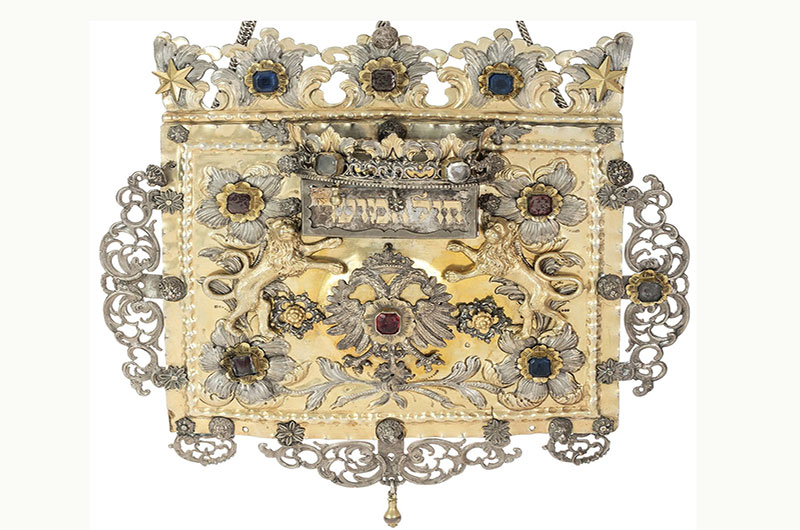
The showstopper of the sale was a truly rare silver piece: a hanging Sabbath lamp from England, dating to the year 1726, as indicated by the numerous British silver hallmarks found on the lamp.
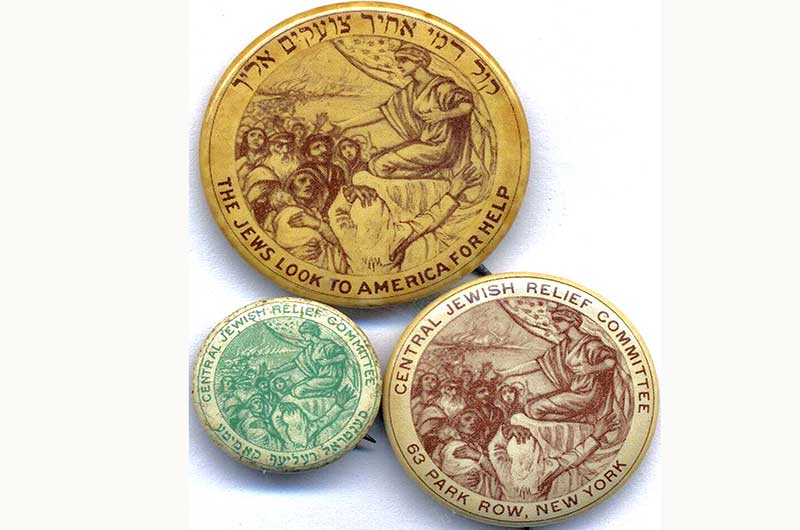
It is somewhat puzzling that the article states that 100,000 banks will be issued, as aside from my example, I am aware of only one other in private hands; this item is quite scarce.
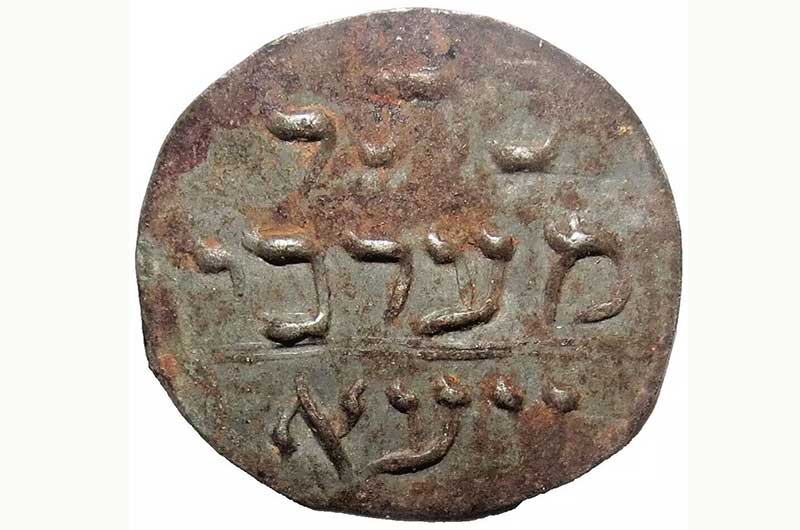
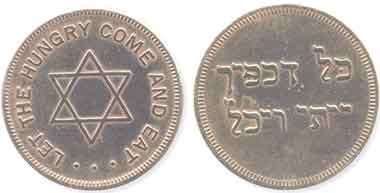
Coin-like pieces such as this are classified as tokens. A token is not an official government-issued coin but privately made, and is used as a substitute for money or for other purposes like advertising.

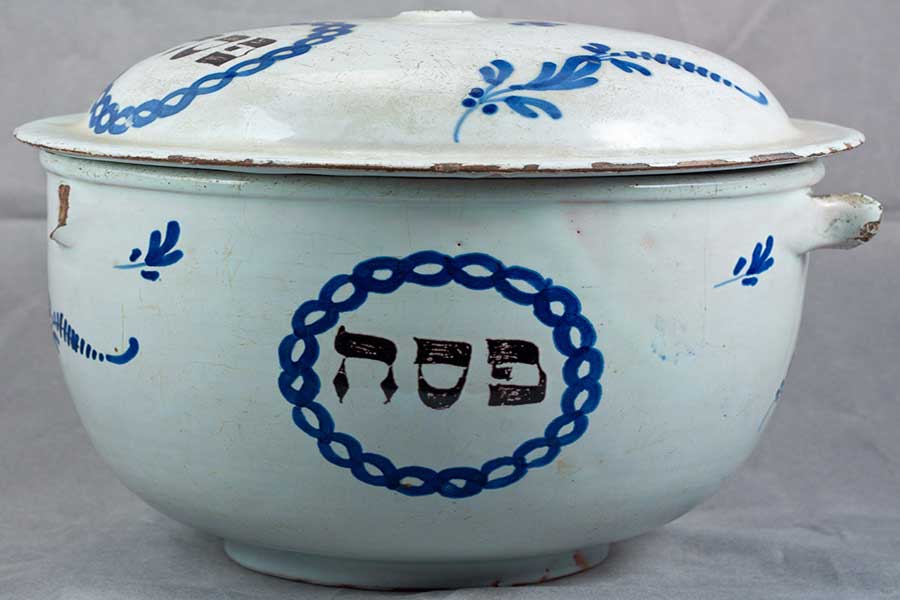
Even with the heavy wear to this piece, I had some competition in the live bidding, but I eventually prevailed and was the piece’s new owner. Now my task was to research the age and origin of this Passover soup tureen, and see how many other examples were known.
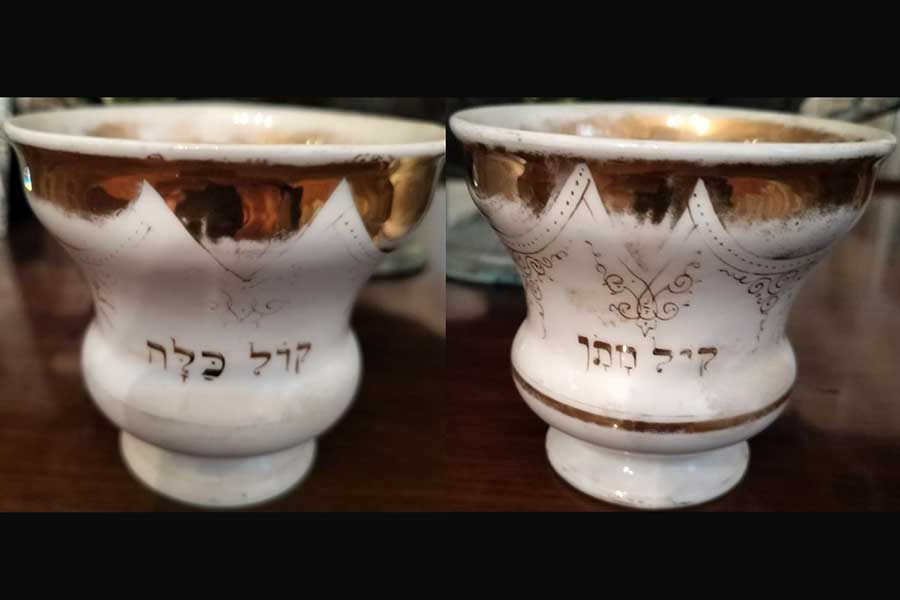
A somewhat peculiar fact is that while glass and porcelain Judaica generally achieve disappointing results in the United States, they do remarkably better in the salerooms of Europe.
Indeed, most of the 47 metal detector-find dreidels on display are of this design – but not all. I have come across six and eight-sided dreidels(!) as well, which I will expand upon.
In the world of antique Judaica, it appears that containers made specifically for the purpose of holding an etrog is a rather late development, as the oldest verified etrog boxes... date no earlier than the 18th century.
The star attraction of the auction was The David Moss Haggadah, which is a masterful work of modern manuscript-making by the artist David Moss.
These rings appear from time to time in small auction houses that specialize in selling the entire contents of estates, and typically sell in the range of between $150 and $350.

This collection, originally gathered by Solomon Schloss (1815-1911), had one of the most remarkable provenances a collector or institution could hope for – namely, that all the items had a highly detailed, provable pre-war provenance.

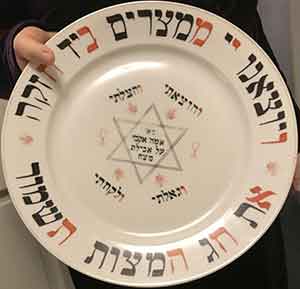
For this column, I thought I would share two Pesach Seder plates hailing from Germany that are in my personal collection.

For this column, I thought I would share some interesting items relating to Purim that are in a museum or are from my personal collection.

On December 14, 2023, Sotheby’s in New York City held a sale comprising the third and final part of the Abraham Halpern (1936-2017) collection of Judaica... The sale results of this recent offering were a more modest affair. Here are the highlights.
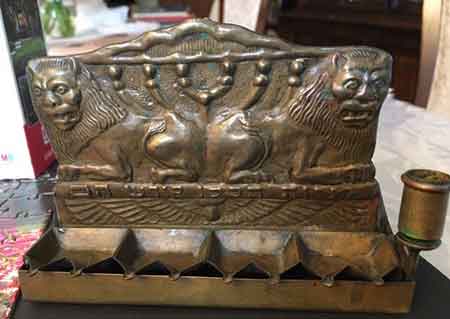
What an interesting chanukiah you have! It is apparent that it was completely fashioned by hand using a variety of tools, and there is a great deal of soldering work I can see from putting pieces together.
If you want to see some remarkable, museum-worthy pieces of antique Judaica (some dating as early as the 17th century!) or some modern-made, opulent, dazzling creations made by skilled artisans in Israel, I highly recommend you make the time to stop by.
Typically, when a museum discovers that they have a fake of any sort in their collection, it is handled quietly, with the object being removed from display, never to be seen again.
My introduction to this era was the purchase of a small celluloid pinback button which had a paper insert dated 1916 on the reverse.
A word of caution to collectors of Bezalel: Beware of forgeries. Since prices for some Bezalel items began reaching five figures at auctions starting in the late 1990s, an entire industry of counterfeit Bezalel items has been created by the unscrupulous...
For this column, I thought I would share some interesting items relating to Pesach that have appeared at auction, are in a museum, or are from my personal collection.
They were made in huge numbers – many tens of thousands – and as such, are easily found in the marketplace. Whether Russian or Latvian in origin, the value is the same: $150-$200 per cup.
While most of the items offered sold within the estimates set by Sotheby’s, quite a few far surpassed them.

Your little box was one of a number of pieces that made up an olivewood lap desk set, which included an ink blotter, ink well, and more, that was marketed to tourists visiting Jerusalem.
In the four years that I’ve had this column in The Jewish Press, my answer to your question will be, by far, the most helpful to readers of this column of any question I’ve ever been asked up until this point.
The highest price realized for an item in the sale was on an 18th-century silver Torah crown from Italy. Assigned an estimate of $200,000-$300,000, it realized $478,000.
Indeed, your Esther scroll with case dates to 1953. It is unclear if Barton’s Chocolate Company kept re-releasing this Esther scroll every Purim throughout the 1950s and 60s...
Although well-made, with little red paste stones and a carnelian in the center, all in a tightly spun silver filigree setting, the way the Hebrew letters of “Bezalel” are formed and that the mark is rather lightly struck is not how a proper Bezalel hallmark appears.
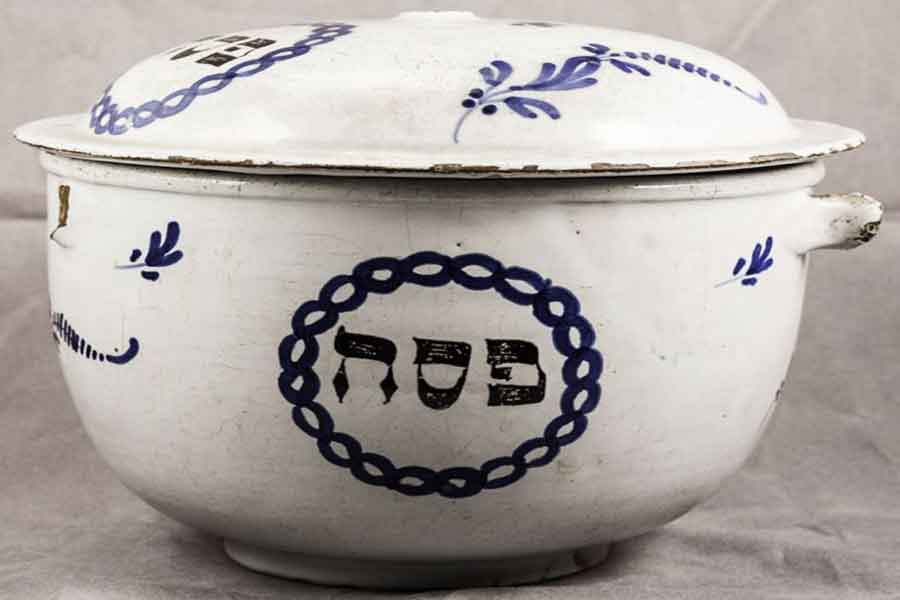
For this column, I thought I would share some interesting items relating to Pesach that are in a local museum or from my personal collection.
Dear Tsadik, I have two candlesticks given to us by an aunt years ago that she claimed belonged to her parents, pre-Holocaust. Can you tell me anything about them? Thank you. Harold Furst Boca Raton, FL Dear Harold, I normally do not appraise objects that are secular in nature that have been adapted for […]
On November 23 in Jerusalem, Kedem held a sale composed of more than 100 lots of Hebrew books and manuscripts and two objects: a Chanukah menorah and a spice tower.

Your Mizrach is indeed beautiful, with depictions of Moshe and Aharon, symbols of The Twelve Tribes, and more.
It seems that a significant portion of European Jewry of the 19th and early 20th centuries desired Judaica resembling what their grandparents and great-grandparents used.
Your tray is of quite a large size, and you may have substantially more silver content than 40-45 troy ounces.

The most wide-ranging selections of Jewish postcards in early 20th century America were issued by the Hebrew Publishing Company, which was located on the Lower East Side of New York.

It makes perfect sense that your uncle in Denmark gave you the spice tower, as the hallmark on the base of “830” is a standard of silver that is most common with objects made in Scandinavia.

Going into a bit more detail about this specific pogrom, it is sickening to learn that rioting Polish soldiers claimed that their officers allowed them 48 hours to pillage Jewish quarters as a reward for capturing the city from the Ukrainians.
My expertise lies primarily in antique Jewish ceremonial objects (i.e., Judaica). When it comes to paintings and related works, my knowledge is limited to those made before 1940.
I did some extensive research on where other examples of your Chanukah menorah may be found, and lo and behold, I located two other examples.
We all remember as children waiting to spin our gragger or stomp our feet when the name of Haman was mentioned during the megillah reading.
If not for the attention-grabbing Torah shields, I think the star of this sale would have been the most magnificent Esther scroll case for Purim I have ever seen.
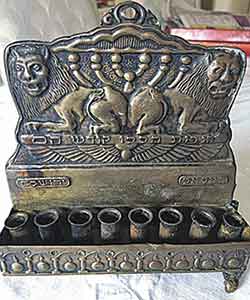
Indeed your chanukiah has been in your husband’s family a long time – quite likely well over 100 years.
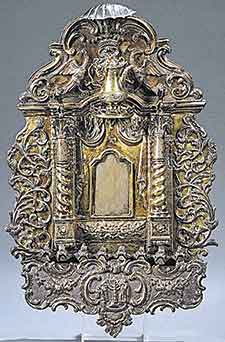
I thought I would detail some of the most expensive and interesting antique chanukiot that have appeared at auction in the last decade, concluding with a chanukiah formerly owned by one of the most famous personalities of the 20th century.
If it can be determined that your chanukiah is an authentic original, the value would be $2,500 -$3,500.

On September 13th, J. Greenstein & Co., located in Brooklyn, offered a wide array of Jewish ceremonial objects, both antique and modern.
There really is no market for this type of ware among collectors of Jewish items, except perhaps to be purchased on a whim if seen at a flea market.
I am familiar with the pieces in your set because I have seen them repeatedly over the years, usually offered for sale individually.
For questions or comments – or to send pictures of your Judaica for future columns – email tsadik613@gmail.com.
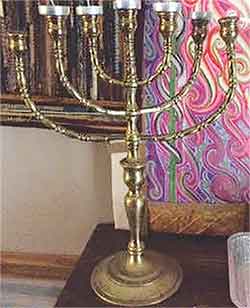
I am not familiar with European examples of this menorah, but I guess it is possible for there to be some.
What had this soldier experienced? What horrors might he have seen? His future, and the future not just of the Jews, but of the entire planet was at stake.
Although you have used it as a piece of Judaica, it cannot be defined as such in the strictest terms, as it was made for the public at large, both Jewish and gentile.
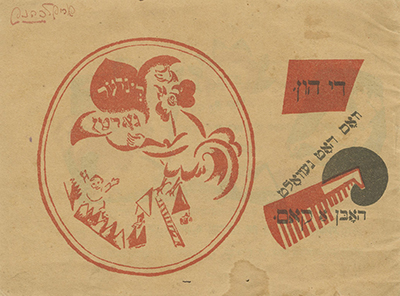
This very menorah previously sold for $19,550 during the “The Personal Property of Marilyn Monroe” sale at Christie’s auction house in 1999.
The sale results were a mixed bag, with half of the lots offered going unsold.
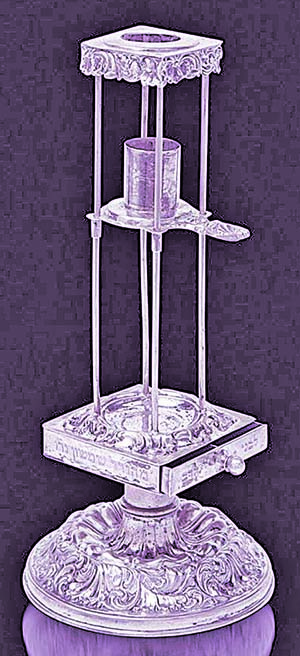
During the month of June in New York, two Judaica auctions were held; each offered ceremonial objects, paintings, and printed material that were of significant interest to collectors, dealers, and museums worldwide. Beginning with Sotheby's: An exceedingly rare pair of silver Torah rimonim (finials that adorn the tops of a sefer Torah) from Hamburg, Germany […]
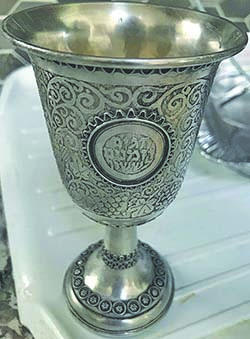
It was customary to hang decorations such as yours on the synagogue wall at the start of the month of Adar, and for them to be taken down once the Purim holiday concluded.

If I were to walk into a retail store, I doubt I could purchase your chanukiah for anything less than $5,000.

The constant upheaval, violent persecution and expulsion of various Jewish communities in Europe has had an acute effect on extant Jewish ritual objects.
Editor’s note: Antique Judaica Roadshow will appear monthly. We encourage readers to email pictures of their Judaica to Tsadik Kaplan at tsadik613@gmail.com. He may choose to assess your antiques in his future columns. Perhaps the most ubiquitous piece of Jewish ritual art in our society is the menorah. The Chanukah menorah as we know […]


 October 23, 2026