 October 23, 2026
 Categories: Collecting / Arts
Otto Von Bismarck and the Jews
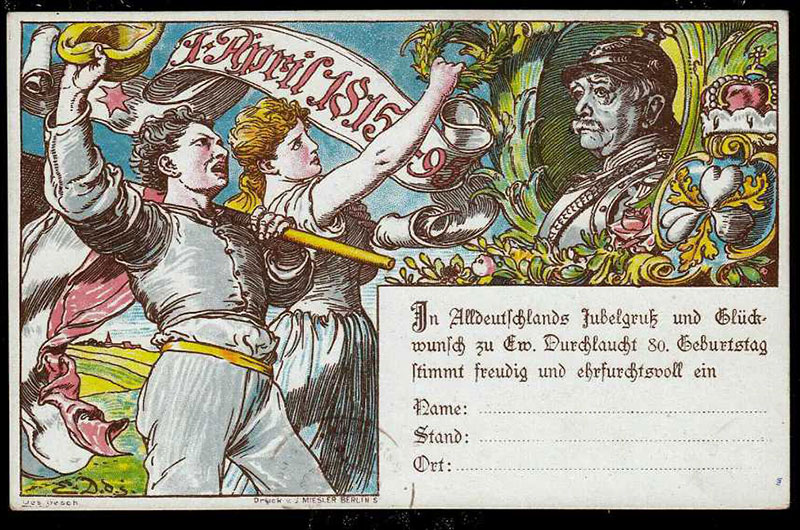


Otto Eduard Leopold von Bismarck (1815-1898) was born in Schönhausen, a small estate in the Prussian province of Saxony, the eldest son of a Junker family, a class of landed aristocracy that dominated Prussian politics, military, and society. From a young age, he was immersed in the hierarchical values of this social stratum, learning the importance of loyalty to monarchy, obedience to authority, and the centrality of landownership as a source of both social and political influence. His father, Karl Wilhelm Ferdinand von Bismarck, was a stern man who insisted on strict discipline and adherence to traditional Prussian codes of conduct, while his mother, Wilhelmine Luise Mencken, instilled in him a sense of intellectual curiosity and an appreciation for literature and history.
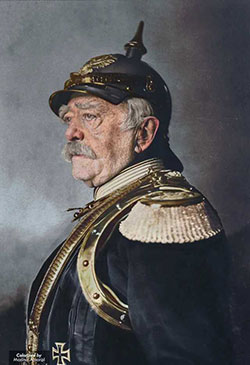
Bismarck’s education reflected his aristocratic background, beginning with local tutors and a preparatory school before entering the University of Göttingen in 1832, where he studied law, although the intellectual climate of the university – a mix of Enlightenment thinking, legal reform debates, and student fraternities – exposed him to ideas that would later inform his practical political philosophy. He completed his studies with a brief period in Berlin, where he continued legal training and observed firsthand the workings of Prussian bureaucracy and court politics. After completing his education, Bismarck returned to his family estate, assuming responsibility for Schönhausen, and the experience of managing land, tenant relations, and the expectations of a Junker landlord provided him with early insight into the economic and social dynamics of rural Prussia.
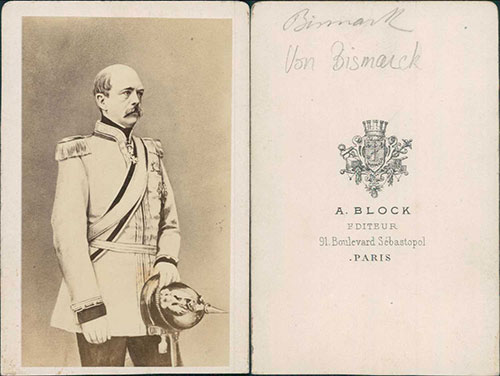
Entering politics in 1847, Bismarck was elected to the Prussian Diet – the historic representative assembly and parliament of the region – where he quickly distinguished himself as a forceful conservative voice. His speeches in the Diet revealed his commitment to preserving monarchical authority, defending the Junker class, and opposing liberal constitutional reforms that he believed would destabilize the state. In one of his most cited early speeches, on June 15, 1847, he displayed both rhetorical skill and an emerging capacity for Realpolitik, combining moralistic phrasing with pragmatic recognition of political realities – an approach that would become his signature style – in delivering an address on “Prussia as a Christian State,” in which he emphasized that “the liberties we grant must never undermine the sacred hierarchy upon which the state depends.”
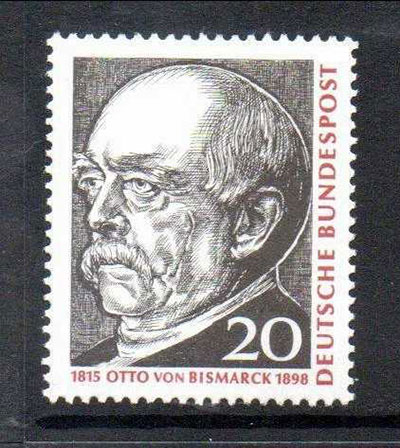
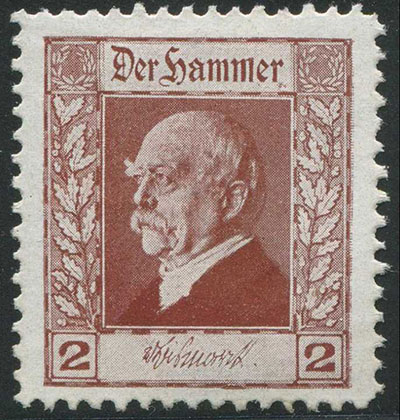
The revolutionary upheavals of 1848 presented Bismarck with his first major test in national politics. Across Europe, liberal and nationalist movements were challenging established monarchies, demanding constitutions, representative assemblies, and broader civil rights, and his response was characteristically cautious, yet decisive: he rejected revolutionary change while seeking to demonstrate that the monarchy could adapt selectively to reform pressures without surrendering control. In a letter to his father in 1848, he wrote, “Revolution is a contagion; it must be managed, not embraced. The king’s crown is the anchor, and I will see that it remains secure even as the tides of reform rise.” During these years, he also began cultivating his reputation as a skilled diplomat and parliamentary operator, negotiating behind the scenes to limit liberal influence while maintaining the appearance of engagement.
In the 1850s, Bismarck served in various diplomatic posts, including envoy to the German Confederation in Frankfurt and as Prussian representative in Saint Petersburg and Paris, assignments allowed him to observe European power politics firsthand, deepening his understanding of alliance-building, statecraft, and the balance of military and economic strength. His letters from this period reflect a growing conviction that national objectives could only be achieved through pragmatic, sometimes ruthless, manipulation of circumstances rather than adherence to abstract ideals. In one letter to Prince Albrecht, he observed, “Diplomacy is the art of the possible; to act otherwise is to court disaster.” He developed a sophisticated sense of the interplay between domestic and international politics, recognizing that the stability of Prussia depended not only on internal cohesion, but also on careful management of external threats and alliances.
Bismarck’s ascent to the office of Prussian Minister President in 1862 marked the beginning of his most consequential period of political activity. Appointed by King Wilhelm I during a constitutional crisis over military budgets, he faced a hostile liberal parliament that refused to approve funding for army reforms. In response, he adopted a defiant stance, asserting that “the great questions of the day will not be decided by speeches and majority votes, but by iron and blood.” This phrase, later paraphrased as the “Blood and Iron” speech, encapsulated his belief that the authority of the state and the execution of policy depended on decisive action rather than purely legislative debate.
The wars that followed, the Danish War of 1864, the Austro-Prussian War of 1866, and the Franco-Prussian War of 1870-71, were central to Bismarck’s strategy of unifying the German states under Prussian leadership. He demonstrated remarkable skill in manipulating alliances, exploiting rivalries, and presenting conflicts in ways that justified military action while limiting domestic opposition. The resulting North German Confederation and eventual proclamation of the German Empire in 1871 represented the culmination of his strategy: a unified Germany under Prussian dominance, with constitutional and legal structures carefully designed to consolidate power while maintaining elite control.
Throughout this period, Bismarck’s style combined personal authority, careful manipulation of parliamentary structures, and strategic alliances with individuals across social and political divides, as he cultivated networks of financiers, diplomats, and civil servants, emphasizing loyalty and competence. His letters reveal both his exacting standards and his recognition of practical necessity; in correspondence with his Jewish banker Gerson von Bleichröder, he wrote, “Where intelligence and discretion are found, I care little for the origin of the man. The state benefits from diligence and loyalty wherever it appears.” This statement foreshadowed his later interactions with Jewish leaders and financiers, in which pragmatic considerations often outweighed social prejudice; indeed, as he later wrote to Bleichröder, “The law protects them [the Jews]; this protection is essential to maintain confidence in our institutions, not a concession of sentiment.”
Bismarck’s correspondence with Bleichröder also reveals a personal dimension, showing mutual respect that transcended formal political interaction. In a letter dated 1866, he remarked, “The counsel and discretion of Herr von Bleichröder have spared the state needless embarrassment and have guided our operations with prudence unmatched by any other adviser.” Similarly, Bleichröder praised Bismarck’s strategic vision, writing in one note that “The Chancellor understands the subtle interplay of finance, law, and power in ways few statesmen can comprehend.” This exchange illustrates a collaborative relationship in which trust, competence, and political utility outweighed social prejudice.
Bismarck’s engagement with Jewish communities and issues of emancipation began in his early years in the Prussian Diet, reflecting both the cultural prejudices of his Junker upbringing and the pragmatic considerations of governance. During debates on the legal status of Jews in Prussia, he delivered a speech on June 15, 1847 before the Vereinigter Landtag in which he sought to define the role of Jews in a “Christian state,” and he openly acknowledged his biases, stating, “I admit that I am full of prejudices; I have sucked them in, so to speak, with the mother’s milk, and I cannot succeed in talking them away.” Yet, he simultaneously emphasized a degree of personal moderation, noting, “I am no enemy of the Jews; if they become my enemies I will forgive them. Under certain circumstances I love them; I am ready to grant them all rights but that of holding the magisterial office in a Christian State.” This duality of personal prejudice tempered by cautious tolerance would characterize much of his later interaction with the Jewish community.
However, in private correspondence with friends and colleagues, Bismarck often reiterated his discomfort with Jewish participation in high office. For example, in a letter dated 1847, he remarked that “if I should imagine having before me, as a representative of the King’s sacred Majesty, a Jew whom I would have to obey, I must confess that I would feel deeply depressed and humiliated.” Yet, the same letters reveal a pragmatism when confronted with the realities of administration: he recognized the necessity of engaging competent individuals, regardless of their religious origin. As he wrote to a close advisor, “where intelligence and diligence serve the state, I am willing to set aside minor objections of culture or faith, provided loyalty is maintained.”
During the 1850s and early 1860s, Bismarck’s practical dealings with Jews expanded significantly through his relationship with financial and political figures. Most notable among these was the aforementioned von Bleichröder, a Jewish banker of exceptional skill, whose support enabled Prussia to pursue military reforms and fund initiatives independent of parliamentary approval. In correspondence, Bismarck expressed high regard for Bleichröder, noting, “Herr von Bleichröder has the acumen and discretion that few men of any faith possess. His loyalty to the state is beyond question.” In another letter, he emphasized the instrumental value of their collaboration, noting that Bleichröder’s advice had “enabled the Prussian army and administration to act unencumbered by parliamentary obstruction, an achievement without which the state could not have functioned efficiently.” The chancellor’s reliance on Bleichröder exemplifies a recurring pattern: personal merit and utility often outweighed cultural prejudice when state interests were at stake. In a subsequent letter to Prince Albrecht in 1866, Bismarck credited Bleichröder with facilitating Prussia’s financial autonomy, observing that “without such counsel, our operations would be subject to parliamentary obstruction, and the state would suffer.” These statements illustrate a clear awareness of the practical advantages of Jewish cooperation and a willingness to set aside social bias when political objectives required it.
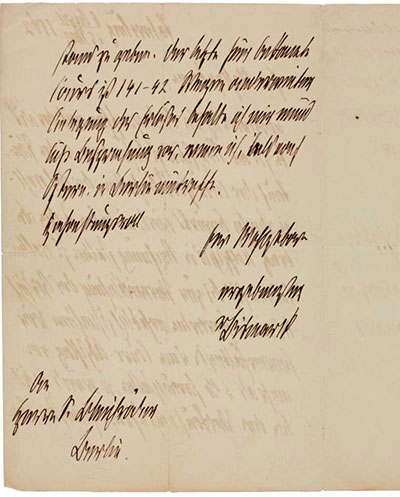
In the April 1862 correspondence exhibited here, Von Bismarck writes to Bleichröder in Berlin:
Dear Herr von Bleichröder,I request that you forward an appropriate note to the House of Rothschild, instructing them to sell approximately nine thousand shares at the current market price of 141-142.
Should, however, a serious deterioration in stock-exchange conditions occur and prices fall by more than five percent below the present level, I ask that execution of this order be suspended for the time being.
I expect to be in Berlin shortly after Easter, at which time I hope to discuss the question of reinvestment with you in person.
With the highest consideration,
Yours faithfully,
Bismarck often consulted with the Rothschilds in Frankfurt for financial advice and contacts, but his working banker in Berlin was Bleichröder, indeed often described as “Bismarck’s banker.” As to the Rothschilds, Bismarck dealt primarily with the Frankfurt branch of the Jewish banking family, particularly Mayer Carl von Rothschild, and the relationship centered on state finance, particularly Prussia’s need to fund wars and manage debt. He respected their usefulness, if not their worldview; the Rothschilds played a role, sometimes overstated but very real, in financing Prussia during the Austro-Prussian War (1866) and the Franco-Prussian War (1870-1871). At critical moments, when Prussia needed large, rapid, international credit, the Rothschild network was uniquely capable of moving capital across borders quickly. The Frankfurt Rothschilds helped to place Prussian bonds and stabilize borrowing when political risk was high.
Bismarck tolerated the Rothschilds while disliking much about them because he was ruthlessly practical: “States are not run on sentiment. They are run on power, credit, and timing.” There was no romance here, no conspiracy, but only coldly rational Realpolitik. Bismarck, seeking to establish financial sovereignty and always unhappy with Germany’s exposure to foreign-controlled credit networks, waited until after the establishment of the German Empire in 1871 to deliberately weaken dependence on international private bankers, including the Rothschilds, by strengthening state-backed banking institutions and supporting the rise of German “universal banks” (e.g., Deutsche Bank, founded 1870).
This relationship with the Rothschilds attracted – and continues to attract – conspiracy theories, especially claims that the Rothschilds “controlled” Bismarck, that German unification was a Rothschild project, and that Bismarck was a “puppet” of Jewish finance when, in fact, Bismarck paradoxically used the Rothschilds to facilitate German unification and then worked to sideline them.
Bismarck was acutely aware of the social tensions that accompanied rapid integration and economic activity, and, although he cultivated alliances with select Jewish leaders, he simultaneously maintained a cautious distance from broader Jewish emancipation movements. In a private letter from 1862, he complained of what he termed “the Ostjuden,” referring to Jews from Eastern Europe who had migrated westward: “Their habits and disposition are foreign to our German way of life, and their sudden appearance in towns unsettles local customs.” Yet, he added a qualification indicative of his Realpolitik: “Nevertheless, when intelligence and application are evident, the state has no cause to complain; utility trumps custom in these matters.”
Bismarck’s public pronouncements on Jewish questions also reveal a pragmatic balance. In speeches responding to the rise of antisemitic rhetoric in the late 1870s, he refused to endorse antisemitic movements while at the same time refraining from moral advocacy. In the Reichstag, he stated, “If the populace wishes to claim that I am aligned with antisemitic causes, let them. I have refrained from joining such movements, and I expect others to restrain their incitement of hatred.” This demonstrates his priority – preservation of legal order and state authority over the adoption of ethical or moral positions regarding prejudice – and his approach allowed him to quell popular agitation without fundamentally challenging the underlying cultural biases of his constituents.
The legal reforms of 1869 for the North German Confederation, and their reaffirmation in the 1871 constitution of the German Empire, were pivotal in defining Jewish rights in the newly unified state. Bismarck’s correspondence indicates that he saw these reforms not as a triumph of liberal principle, but as a necessity for consolidating state authority. In a letter to his adviser Albrecht von Roon, he wrote, “If the laws must bind all men equally, then we may as well secure the allegiance of those who were formerly excluded. Their participation strengthens the state.” Here, Bismarck frames emancipation as a tool of statecraft, ensuring loyalty and stability rather than achieving social justice; nonetheless, the practical impact of these reforms was significant, granting Jews full civil rights, access to professions, and the ability to participate in public life in ways previously denied to them.
Bismarck’s network extended beyond finance into the realm of politics, where Jewish deputies played critical roles in legislative negotiations. His engagement with parliamentary Jewish figures extended to Ludwig Bamberger and Eduard Lasker, influential members of the liberal faction, and he valued their expertise and political acumen. In one letter, he noted that “Lasker’s insight into parliamentary strategy is invaluable, and Bamberger’s counsel cannot be ignored when consolidating legislation.” Bamberger, a liberal parliamentarian and experienced banker, became an essential intermediary in discussions concerning fiscal and economic policy, and Bismarck’s correspondence demonstrates respect for his counsel, as when he wrote to a confidant: “Bamberger’s counsel cannot be ignored when consolidating legislation.” Similarly, Lasker, a prominent Jewish jurist, frequently advised Bismarck on legal matters, particularly in the drafting of civil codes and parliamentary procedures. In letters to colleagues, Bismarck noted that “Lasker’s insight into parliamentary strategy is invaluable” and that Lasker’s recommendations “prevented unnecessary opposition and facilitated the passage of laws critical to the cohesion of the North German Confederation.”
Other Jewish figures who also benefited from Bismarck’s pragmatic approach include Ferdinand Lassalle, a Jewish labor leader and intellectual, who corresponded with the chancellor regarding issues of labor policy and social reform. In letters that survive in archival collections, he thanked Bismarck for intervening in administrative matters to protect labor activists from punitive measures, noting that “your actions have prevented unnecessary bloodshed and have allowed reason to prevail over strict procedural rigidity.”
These interactions underscore Bismarck’s practical philosophy: collaboration with Jewish leaders was not a concession to equality or principle, but a calculated strategy to achieve policy goals. These relationships were not merely transactional; rather, they reflected a recognition that Jewish deputies could serve as intermediaries in achieving legislative objectives, particularly in an era of fragile coalitions and partisan rivalry. Yet, Bamberger and Lasker often expressed frustration with Bismarck’s conservative alliances and occasional tolerance of antisemitic agitation, highlighting the delicate negotiations required of Jewish leaders within his political framework.
Despite these pragmatic alliances, Bismarck retained personal and cultural prejudices, a duality evident in his correspondence. In a private letter from 1880, he distinguished between “moneyed Jewry, whose interests are intertwined with the maintenance of our state,” and “property-less Jewry which attaches itself to all political opposition and must be restrained.” While the phrase “must be restrained” has been interpreted by historians as indicative of potential harsh measures, it is important to note that Bismarck’s concern was primarily political rather than racial or religious; he was wary of groups whose interests threatened state stability, and he consistently differentiated between individuals of ability and loyalty, who were welcomed into his networks, and those perceived as disruptive.
By the late 1870s, antisemitism was becoming increasingly visible in German politics, notably through figures such as Heinrich von Treitschke and Adolf Stoecker. Treitschke’s notorious assertion, Die Juden sind unser Unglück [“the Jews are our misfortune”] exemplified the intellectual antisemitism circulating in academic and public discourse, and Stoecker, the court chaplain and later founder of the Christian Social Party, mobilized antisemitic sentiment among lower-middle-class and working-class populations, linking Jewish economic activity to social grievances.
In this charged atmosphere, Bismarck faced the challenge of maintaining state authority and cohesion while navigating the increasingly publicized prejudices of both elites and the masses. His response to this environment was both strategic and cautious and, in letters to his ministers, he expressed concern that unbridled antisemitic agitation could threaten state stability. For example, he wrote to Robert von Puttkamer, his Minister of the Interior, that “The agitation against Jews is not merely an affront to the law; it threatens the quiet and order upon which the state depends. One must curb passions before they endanger the edifice of governance.” Again, this emphasis on social order, rather than moral principle, underscores his consistent Realpolitik approach.
Even in the face of mounting antisemitic agitation, Bismarck’s strategy maintained a measure of protection for Jewish citizens. In letters discussing street demonstrations and political mobilization against Jews, he emphasized restraint: “We cannot allow popular agitation to dictate policy. The law protects all citizens, and that protection must be enforced. Disorder must not be permitted to become precedent.” By framing his defense of Jewish rights in terms of state necessity, he preserved the legal and civic position of Jews, reinforcing their status within the empire even while avoiding public moral declarations.
The Jewish press of the era, which closely observed Bismarck’s actions and rhetoric during this period, often reflected Bismarck’s ambivalence. Newspapers lauded the legal reforms of 1869 and 1871, which granted Jews full civil rights, access to professions, and participation in public life while, at the same time, they criticized his tolerance of antisemitic rhetoric and the lack of public denunciation of figures like Treitschke and Stoecker. One editorial remarked, “Bismarck defends our legal standing, yet allows the voices of our detractors a stage in the halls of power. The law is secure, but society’s prejudice is left unchecked.” Another noted that while Bismarck did not actively promote antisemitic legislation, his political expediency sometimes left Jewish citizens vulnerable to social and cultural attacks. These critiques underscore the ambivalence Jewish communities felt toward a chancellor whose policies guaranteed legal equality but whose public posture rarely addressed social prejudice directly.
Bismarck’s pragmatism extended to the management of public opinion and the Jewish press. Although he did not court the approval of Jewish newspapers, he was acutely aware of their influence in liberal circles, writing privately that “Approval or disapproval in the Jewish press is of minor concern, provided that the law stands and the state remains firm.” He claimed that he allowed conservative and antisemitic voices only limited expression to weaken liberal parliamentary coalitions while ensuring that their actions did not translate into official policy; as he remarked in correspondence with his advisors, “It is sometimes useful to permit the voices of dissent to be heard, so that they may expend energy in rhetoric rather than in action against the state.” This calculated tolerance enabled him to navigate a volatile political environment, safeguard Jewish legal rights, and maintain the overall stability of the German Empire.
Bismarck’s interactions with Jewish leaders thus reveal a consistent pattern: he valued competence, loyalty, and utility over cultural or religious origin; exhibited personal prejudice tempered by pragmatism, legal equality enforced for the sake of state stability; formed strategic alliances with individuals of talent and loyalty and cultivated personal relationships that enhanced the effectiveness of his administration; and deployed legal and social protections as instruments of statecraft. At the same time, he did not abandon the cultural biases of his upbringing, maintaining private remarks about discomfort with certain groups while strategically managing their political influence. This duality, prejudice constrained by pragmatism, defines his legacy in relation to Jewish political and social life in the German Empire.
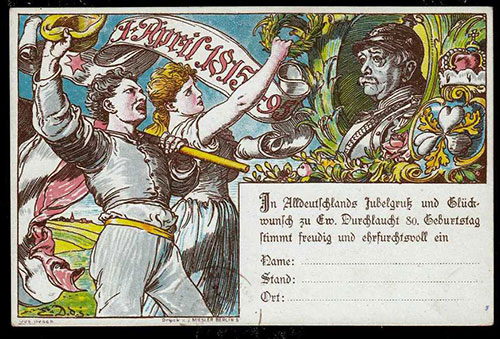
Historiographically, Bismarck’s legacy has been interpreted through multiple lenses. Contemporaries and later historians alike have alternately praised his strategic genius, critiqued his authoritarian tendencies, and debated the ethical dimensions of his policies. He is widely credited with the unification of Germany, the creation of the modern welfare state, and the establishment of a diplomatic architecture that maintained relative peace in Europe during his tenure. Conversely, scholars have examined his use of manipulation, censorship, and the Kulturkampf against the Catholic Church as evidence of the authoritarian strains embedded in his governance. Modern assessments often balance admiration for his political skill with acknowledgment of the moral and social costs of his methods. Importantly, his enduring influence is evident not only in German history but also in the broader study of statecraft, diplomacy, and social policy, providing lessons in both the possibilities and limitations of centralized power.
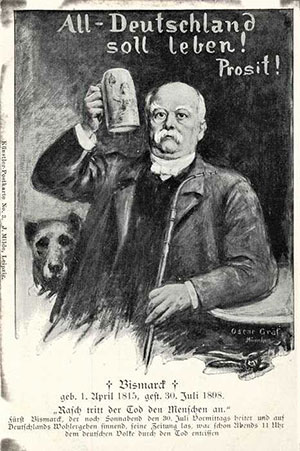
Bismarck’s impact on Jewish life and German politics can be seen as both practical and symbolic. He facilitated the integration of Jews into the economic and administrative life of the Empire while simultaneously maintaining a vision of a cohesive national identity, and his policies exemplified a form of conditional inclusion, emphasizing loyalty and service to the state while circumscribing political expression. In the broader context, his career illuminates the complexities of minority-state relations, the challenges of modernization, and the intersections between pragmatism and principle in political leadership. By the time of his death in 1898, he had secured a place in history not merely as the “Iron Chancellor” but as an architect of modern Germany, whose ideas, successes, and controversies continue to provoke debate and reflection. His life demonstrates that the exercise of power is inseparable from the tensions of ethics, identity, and historical circumstance, a lesson as relevant today as it was in the tumultuous decades of nineteenth-century Europe.
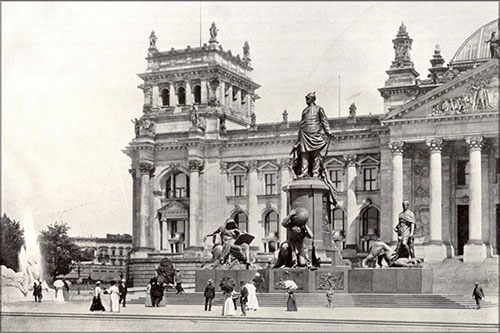
After Bismark’s death, postcards, paintings, and propaganda materials pairing him with Hitler were meant to convey historical continuity but were actually political mythmaking that erase the profound ideological and strategic differences between the two men and instead construct a simplified nationalist narrative. Historically speaking, pairing the two German leaders is deeply ironic. Bismarck was a conservative monarchist, a defender of dynastic legitimacy, a stabilizer of Europe, a cautious strategist, and relatively moderate toward the Jews. Hitler was a revolutionary ideologue, a racial utopian, a destroyer of European stability, a gambler who provoked catastrophic war, and the man who launched the Holocaust. Historians have little doubt that Bismarck would have viewed Hitler as, at the very least, reckless and dangerous.
The intended message was the legitimization of Hitler; Bismarck unified Germany in 1871, and the Fuhrer is completing or restoring that national mission. Hitler thus presents himself as the beloved Bismark’s protégé and portrays the Third Reich as the natural culmination of the Second Reich.
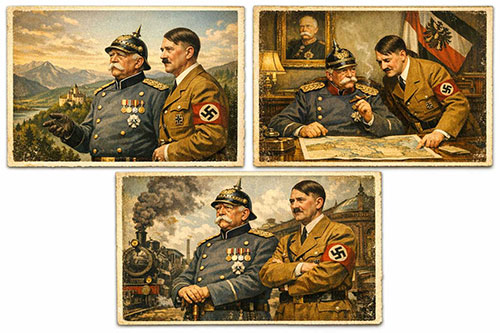
Hitler admired Bismarck deeply, but selectively. In Mein Kampf and later speeches, Hitler praised him for unifying Germany through “blood and iron,” prioritizing national strength over parliamentary politics, and understanding power politics. However, he also criticized Bismarck for stopping short of Germany’s “true destiny” and being too cautious after 1871, including voiding expansion after unification, seeking European stability, avoiding colonial overreach, and maintaining balance-of-power diplomacy.
Hitler does not appear to have focused heavily on Bismarck’s Jewish policy in major public writings, and there is no significant evidence that he criticized Bismarck for emancipating Jews. Instead, Nazi propaganda generally avoided highlighting any aspect of Bismarck that conflicted with Nazi racial ideology, almost certainly for propaganda reasons and to facilitate Hitler’s ability to portray himself as Bismark’s rightly ordained successor.
That tension between Hitler and the conservative “Bismarckian” tradition is one of the most revealing fault lines in German politics in 1933-34. It is important to remember that many of the elites who initially enabled Hitler, including aristocrats, industrialists, army officers, senior civil servants, did not think they were ushering in a revolutionary regime; rather, they believed that they were harnessing a popular nationalist movement to restore order and overturn Versailles. In their minds, they were acting in the tradition of Bismarck: hard-headed nationalism, authoritarian governance, but disciplined and state-centered. Sadly, as history proved, they were actually endorsing something very different.