 October 9, 2026
 Categories: Features On The Jewish World
The Siddur Behind the Iron Curtain
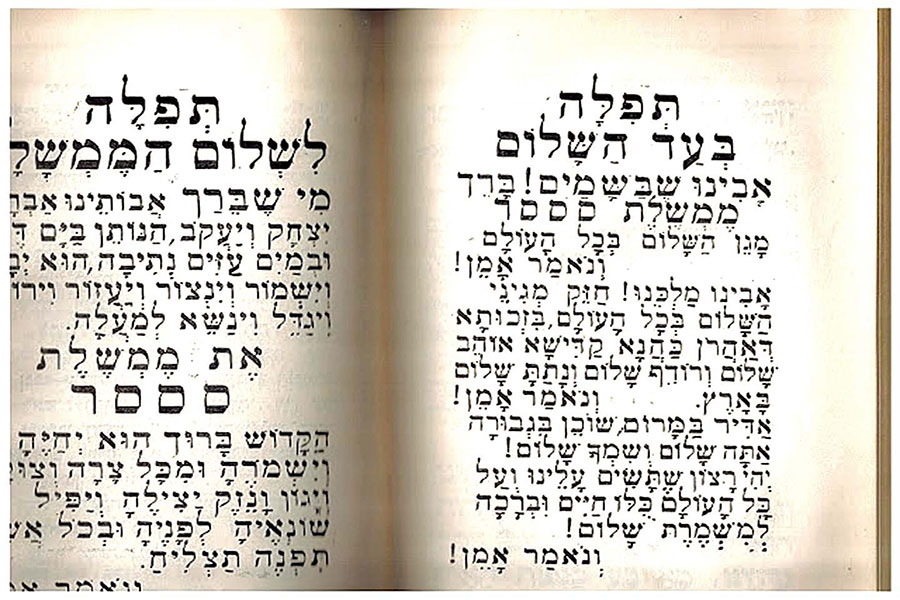


Among the many rare and historically revealing Hebrew books produced under oppressive regimes, few are as fascinating as Siddur Hashalom, the first Jewish prayer book published in the Soviet Union after the Second World War. Issued in Moscow in 1956 under the supervision of Rabbi Shlomo Shleifer, the volume served not merely as a siddur, but as a carefully orchestrated instrument of Soviet propaganda.

The Cold War period was a particularly dark era for Soviet Jewry. Throughout the USSR, Jewish religious life was systematically dismantled; synagogues were shuttered, Torah study was suppressed, and the open practice of Judaism could lead to imprisonment, exile, or worse. Simultaneously, however, the Soviet regime sought to portray itself to the outside world, particularly to critics in the United States, as an enlightened society that permitted freedom of religion. Siddur Hashalom became one of the regime’s crowning showcases in this effort.
The siddur itself contains numerous ideological alterations and examples of calculated censorship. Most strikingly, within the Sabbath morning prayers appear two special prayers praising the Soviet Union as the “defender of peace” in the world and invoking blessings upon the success of the Soviet government.
Elsewhere, subtle but revealing changes were introduced into the traditional liturgy. In the Al Hanissim prayer recited on Chanukah, the words Ve’al Hamilchamot (“and for the wars”), commemorating the Maccabean revolt, were deliberately omitted, presumably to avoid inspiring Soviet Jews with thoughts of rebellion against tyranny.
Similarly, in Birkot Hashachar, the traditional blessing Shelo Asani Goy (“Who has not made me a gentile”) was altered to the far milder Shelo Asani Oved Kochavim (“Who has not made me a pagan idol worshipper”). In Aleinu Leshabeach, the well-known phrase Shehem Mishtachavim Lehevel Varik was omitted entirely, undoubtedly to avoid language that Soviet authorities might construe as religious intolerance.


Equally telling was what the siddur did not contain. The volume was printed entirely without Russian translation or instructions. While this may initially appear unusual, the omission was intentional: Soviet authorities feared that younger generations, unfamiliar with Hebrew, might thereby learn how to pray and reconnect with Jewish religious life.
Particularly poignant was a copy I once owned that contained an inserted typed letter signed by Rabbi Shlomo Shleifer himself. In the remarkable note, the rabbi alludes apologetically to the omissions and alterations forced upon him by Soviet censors and pleads that readers not judge him harshly for the compromises embodied within the work.
Today, Siddur Hashalom stands not merely as a prayer book, but as a haunting testament to the spiritual suffocation endured by Soviet Jewry – and to the painful balancing act faced by those struggling to preserve even the faintest embers of Jewish life behind the Iron Curtain.