 October 9, 2026
 Categories: Features On The Jewish World
The Letters of Rav Chaim Ephraim Zaitchik
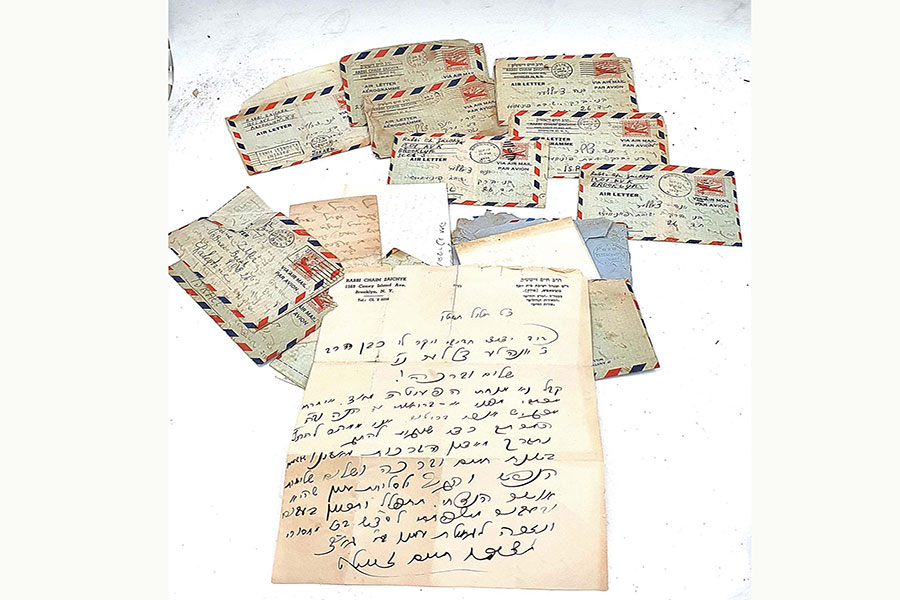


This week I had the singular privilege of acquiring a remarkable cache of twenty letters penned by Rabbi Chaim Ephraim Zaitchik to his devoted disciple, R. Yonah Zahler. The circumstances of their lives forged an unusually intense and enduring bond between these two towering figures, and the correspondence is suffused with the paternal warmth and spiritual solicitude that Rav Zaitchik consistently extended to his talmid.
Rabbi Chaim Ephraim Zaitchik (1905–1989) stood as a distinguished spiritual mentor and prolific author within the Mussar movement, the Jewish tradition devoted to ethical refinement and introspective growth. A foremost disciple of the Novardok school, he became renowned for his profound articulation of Gadlus HaAdam, the inherent greatness of the human being, and for his uncompromising emphasis on the transformative power of disciplined character development. Novardok itself represented perhaps the most radical and exacting branch of the 19th-century Mussar movement. Founded by Rabbi Yosef Yoizel Horowitz, the Alter of Novardok, it was characterized by an uncompromising trust in Divine providence and a relentless program aimed at dismantling the ego and subduing natural inclinations. The Novardok ethos demanded the abandonment of conventional worldly calculations in favor of absolute reliance upon G-d; indeed, the Alter famously signed his name “B.B.” – Ba’al Bitachon, Master of Trust.

Born in 1905, Rav Zaitchik immersed himself in the Novardok yeshiva network, absorbing both its rigor and its expansive vision. In the spirit of his mentor, who established a far-reaching constellation of satellite academies, Rav Zaitchik went on to found and lead Yeshivat Beit Yosef Novardok in Buchach. There, in a region otherwise steeped in chassidic influence, he cultivated a vital stronghold of mussar, dedicated to the painstaking work of tikkun middot, the refinement of character.
The Buchach period cemented Rav Zaitchik’s reputation as a consummate “builder of people.” This formative chapter, however, was brutally curtailed by the outbreak of World War II, which ultimately led to his deportation to Siberia. Paradoxically, this exile preserved his life, even as it severed him from his community. Many of the teachings he would later publish trace their origins to the discourses he developed for his Buchach students. In the introduction to Hamada VeHachaim (1952), he reflects on those harrowing years, describing an atmosphere of intensified spiritual awareness and fervent study under conditions of extreme deprivation. As Nazi forces advanced from the west and Soviet authorities imposed sweeping prohibitions from the east, closing the yeshiva and outlawing religious life, the students persisted clandestinely, studying in shadowed attics and subsisting on meager provisions. Ultimately, Rav Zaitchik was arrested and sent to Siberia, while the entire Jewish community of Buchach was annihilated when the Nazis took over the town. Of that close-knit circle of students, he records that only one survived: Yonah Zahler, who, by the time of the publication of Hamada VeHachaim, was studying in Ponovezh Yeshiva in Bnei Brak.
Rav Zaitchik had left behind a pregnant wife in Buchach; tragically, she did not survive the war. Though he remarried in its aftermath, he was not blessed with children. Within these letters, he refers to Yonah as his son, expressing both profound emotional attachment and a sustained commitment to his welfare, including financial and spiritual support. The correspondence begins in the immediate postwar years and extends through 1960, shortly before Rav Zaitchik’s relocation from New York, where he had settled after the war, to Eretz Yisrael. There, he spent the remainder of his life transmitting the Novardok legacy, shaping students in accordance with its demanding and exalted ideals. Yonah Zahler led an influential life as well, being a leading figure in the Ruzhin and Skulen chassidic dynasties and a noted figure in recording their traditions.