 October 16, 2026
 Categories: Features / Money Matters
How To Maintain Financial Peace of Mind in Retirement
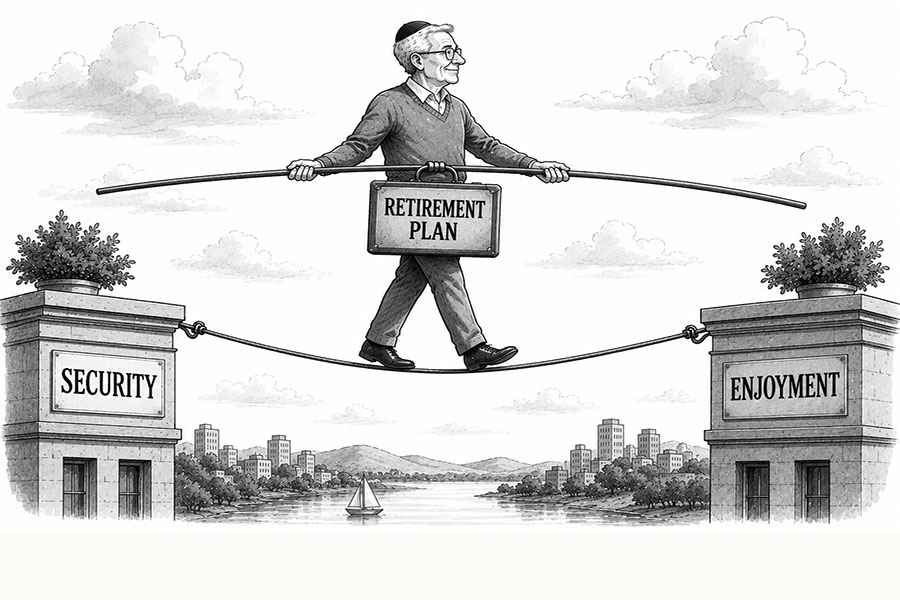


There is plenty of guidance on how to save for retirement, but far less clarity once retirement actually begins. The shift from building wealth to spending seems to introduce many financial and psychological challenges, and I am struggling with how to navigate this phase of life. I’d like to balance enjoyment/leisure activities, family support, tzedakah, and long‑term security. As a 62‑year‑old preparing to begin withdrawals in the next few years, I find myself constantly asking a simple question: how can I use my money while still ensuring that I do not run out?
You’re right! This phase of retirement planning, known as decumulation, is more complex than the accumulation years that came prior. It requires coordination across income planning, taxes, investment strategy, and lifestyle decisions. When approached thoughtfully, it allows retirees to maintain their standard of living and move forward with confidence rather than anxiety.
Bring Order to Your Financial Life: A successful retirement begins with organization. Over time, many investors accumulate a patchwork of accounts, including old retirement plans, brokerage accounts, and multiple banking relationships. What once made sense can eventually become difficult to manage. In one extreme case, I worked with a couple who had 22 accounts across 16 financial institutions, along with physical stock certificates stored in a drawer at home. While unusual in magnitude, the broader issue is common. Disconnected accounts make it harder to understand your full financial picture and easier to overlook important details.
Consolidation brings clarity. Keeping investment accounts at one primary institution, or two if necessary, and maintaining a separate bank for checking, simplifies oversight. It becomes easier to track performance, rebalance portfolios, and execute withdrawals efficiently. Organization is not just administrative. It is foundational for making better financial decisions.
Make a Thoughtful Social Security Claiming Decision: When to claim Social Security is one of the most consequential income decisions retirees make. Benefits can begin at age 62, but doing so permanently reduces monthly payments. Waiting until Full Retirement Age avoids that reduction, and delaying further increases benefits meaningfully. Payouts rise by roughly 8 percent for each year that benefits are delayed beyond Full Retirement Age, until age 70. This functions like a guaranteed return, which is difficult to replicate elsewhere.
The right strategy for when to claim benefits depends on health, marital status, other income sources, and long-term goals. For retirees in good health who do not need immediate income, delaying Social Security can be an effective way to hedge longevity risk and partially offset inflation. Benefits also include cost of living adjustments, which provide incremental increases over time. The key is choosing the approach that best fits your circumstances. Treating this decision as part of a broader plan rather than an isolated choice can significantly improve outcomes.
Design a Sustainable Withdrawal Strategy: At the center of retirement planning is a simple question: how much can you spend each year without jeopardizing your future? The widely cited 4% rule offers a starting point to answer that question. That framework purports that withdrawing 4% of a portfolio annually, adjusted for inflation, may allow assets to last for decades. In practice, the right number depends on age, health, market expectations, and spending patterns.
Once a safe withdrawal rate is established, converting withdrawals into a steady monthly income can reduce anxiety and help retirees maintain discipline. Other income sources, such as pensions, rental income, annuities, and part time work, reduce the burden on investment accounts and increase flexibility. When combined thoughtfully, they create a more resilient income structure. With a well-defined withdrawal strategy, retirees can spend with intention and enjoy supporting family, giving to charity, and traveling while staying within sustainable limits.
Optimize Your Retirement Income Sources: How you withdraw money matters almost as much as how much you withdraw. Different account types are taxed differently, and poor sequencing can lead to unnecessary tax costs. Pretax accounts such as traditional IRAs are taxed as ordinary income. Roth accounts allow for tax-free withdrawals under the right conditions. Taxable brokerage accounts may generate capital gains or losses.
A thoughtful withdrawal strategy takes advantage of these differences. In higher income years, drawing from Roth accounts can help avoid moving into higher tax brackets. In lower income years, withdrawing from pretax accounts can efficiently fill lower brackets. Health Savings Accounts can be reserved for medical expenses, and taxable accounts can be used strategically when losses are available to offset gains. The goal is to smooth income over time, reduce tax drag, and preserve more of your wealth.
Protect Your Portfolio from Early Market Downturns: Market volatility becomes more dangerous in retirement, especially in the early years of withdrawals. A downturn at the wrong time can significantly reduce how long a portfolio lasts. This is known as sequence of returns risk. When retirees are forced to sell investments during a market decline, they lock in losses and limit the portfolio’s ability to recover.
One effective way to manage this risk is to maintain a buffer of cash or short-term bonds. Keeping one to three years’ worth of expenses in safer assets allows retirees to avoid selling equities during downturns. This strategy does not eliminate risk, but it creates flexibility and provides peace of mind during periods of market stress.
Plan for Healthcare and Medicare Costs: Healthcare is one of the largest and least predictable expenses in retirement. While Medicare provides a foundation, it does not cover everything. One key factor is the Income Related Monthly Adjustment Amount, or IRMAA, which increases Medicare premiums based on income. These surcharges are triggered once income crosses certain thresholds, and even a small excess can result in higher costs.
Managing taxable income becomes essential. Spreading out withdrawals, avoiding large one-time gains, and using charitable distributions can help keep income within targeted ranges. Timing is also critical, as Medicare premiums are based on income from two years prior. Careful planning in this area can prevent unnecessary expenses and improve long-term cash flow.
Make Smart Housing Decisions for This Stage of Life: Housing decisions influence both financial stability and quality of life. A home can be a source of comfort, but it can also become a burden if costs are too high or maintenance becomes difficult. Retirees should evaluate whether their current home aligns with their income, lifestyle, and future needs. Property taxes, upkeep, accessibility, and location all matter. In some cases, downsizing or relocating can improve both financial flexibility and day-to-day living. Equally important is proximity to family and community. Being close to loved ones provides emotional support and practical assistance as needs change.
Prepare for the Reality of Long-Term Care: Long-term care is a reality many retirees will face. It includes assistance with daily activities such as bathing, dressing, and mobility, and it is not typically covered by Medicare. The cost can be substantial whether care is provided at home, in assisted living, or in a nursing facility. Without a plan, these expenses can quickly erode savings.
Preparing for this risk requires early and honest planning. Options include long-term care insurance, hybrid life insurance policies with care benefits, setting aside dedicated assets, or coordinating family support. For some, Medicaid planning may also play a role. The objective is not only financial protection but also preserving dignity, independence, and peace of mind.
Be Intentional About Your Giving Strategy: For many retirees, giving is a core priority. Whether supporting family members, contributing to local communities, or funding charitable causes, philanthropy provides purpose and fulfillment. A structured approach makes giving more effective. While tax‑efficient vehicles such as donor advised funds and charitable trusts are valuable, the most important step is defining priorities.
Intentional giving is more meaningful and impactful. Some retirees choose to prioritize helping family members in need, followed by local community support, then broader charitable causes. Writing down your priorities of where to give ensures consistency and alignment with personal values. It also helps prevent giving to causes that are not important to you or feeling pressured to contribute to too many campaigns that may strain your resources.
Give Yourself Permission to Spend and Enjoy Life: The hardest part of retirement is often not financial. It is psychological. After decades of saving and discipline, many retirees struggle to shift into spending mode. Even those with more than enough resources can feel uneasy using their money.
In many situations, I have worked with retirees who hesitate to go away for Pesach or Sukkot or to renovate their kitchen, even when they can comfortably afford it. Their challenge is undoing the mindset of continuously growing their nest egg. A structured plan can help bridge that gap. A Spending Policy Statement provides a framework for how to use assets responsibly. It outlines goals, boundaries, and priorities, focusing on spending rather than accumulation. This type of plan can include discretionary spending targets, charitable goals, and family support, along with guidelines that reinforce sustainable habits. More importantly, it builds confidence. Retirement is not only about preserving wealth. It is about using it to live well and enjoy meaningful experiences with the people who matter most.
Build the Right Team to Support Your Plan: The transition from accumulation to decumulation requires planning, coordination, and ongoing adjustments. For many retirees, working with a team of professionals can make a significant difference. A financial advisor, tax professional, and estate planning attorney each bring a different perspective, helping to address the full range of decisions involved. Thoughtful coordination reduces the risk of costly mistakes and ensures that all parts of a financial plan work together. Done well, it allows retirees to move through this stage of life with clarity, confidence, and lasting peace of mind.