 October 16, 2026
 Categories: Headline / Perspectives / Op-Eds
Israel – the Unbroken Democracy


For three-quarters of a century, the enemies of Israel have waged a war they rarely admit to fighting. It hasn’t been aimed at the Israeli army. It has been aimed at the Israeli living room, at the school bus and the city bus, the café and the restaurant, the wedding hall, the Passover table, and the beachfront where teenagers waited in line to dance.
From the land mines and border infiltrations of the 1950s, to the suicide bombings of the 2000s, to the slaughter of October 7, 2023, Palestinian Arab terrorism has made a deliberate science of murdering civilians. Farmers in their fields. Children in their classrooms. Shoppers, worshippers, and families asleep in their beds. This was never collateral damage. The civilians were the target.
The human toll is staggering. According to figures compiled by Israel’s Foreign Ministry and the National Insurance Institute (Bituach Leumi), roughly 5,000 to 5,300 Israeli civilians have been killed in Palestinian terrorist attacks since 1949 – more than a thousand of them on a single October morning.
The number of wounded is higher still. Between 15,000 and 20,000, many left with shattered bodies, chronic pain, or wounds that never show. These are the victims of shootings, bombings, stabbings, car-rammings, rockets, and mines. They do not include soldiers who fell in conventional war. They are, quite simply, the toll of a deliberate, decades-long effort to terrorize a civilian population into surrender.
The story unfolds in waves.
In the years after the War of Independence, Arab infiltrators – the fedayeen – crossed Israel’s porous borders by the thousands. Some came to steal; many came to kill. They laid mines on farm roads, ambushed travelers, and shot at Israelis working the fields of the frontier settlements. The dead were not soldiers locked in battle but individuals going about their lives – a farmer on his tractor, a family on the highway, a watchman at the edge of a kibbutz. Hundreds were murdered this way before the young state had finished catching its breath.
After the Six-Day War of 1967, the Palestine Liberation Organization and its allied factions carried the terrorist war to the world – and to Israel’s children. They hijacked airliners and bombed markets. They murdered 11 Israeli athletes at the Munich Olympics in 1972, in front of a watching planet. And then they turned to the schools.
In May 1974, three terrorists of the Democratic Front for the Liberation of Palestine crossed from Lebanon and seized the Netiv Meir school in Ma’alot, where more than 100 teenagers were sleeping over on an Independence Day field trip. The gunmen wired the classroom with explosives, and when Israeli soldiers stormed the building, they turned their weapons and grenades on the children. Twenty-two students were murdered.
In March 1978, Fatah gunmen landed by sea north of Tel Aviv, hijacked a bus on the coastal highway, and drove it down the road in an orgy of shooting before it exploded in flames. Thirty-eight civilians died, 13 of them children. The PLO never pretended these were accidents. The children were the point.
During the first intifada, at the end of the 1980s, the violence moved into the streets of the towns and cities – stabbings, shootings, firebombs hurled at cars and buses. Roughly 200 Israelis were killed, many of them civilians going to work or to market. No single atrocity defined the period. Its weapon was dread: the knowledge that no commute, no shopping trip, no ordinary errand was entirely safe.
Then came the worst of it. When the Oslo negotiations collapsed in 2000, the suicide bomber became the signature weapon of Palestinian terror, and the years that followed turned daily Israeli life into a gauntlet.
On a Friday night in June 2001, a bomber packed with nails and ball bearings blew himself up among teenagers waiting outside the Dolphinarium disco on the Tel Aviv beachfront; 21 died, most of them girls from immigrant families.
Weeks later, in August, a terrorist carried a bomb hidden in a guitar case into the Sbarro pizzeria at a crowded Jerusalem crossroads and detonated it at the lunchtime rush, killing 15 – seven of them children – and wounding 130.
In March 2002, a bomber walked into the Park Hotel in Netanya as some 250 guests sat down to their Passover seder and murdered 30 of them at the table. The next day, a Palestinian terrorist infiltrated Elon Moreh in Samaria, broke into a home and killed four members of the same family.
The bombers struck buses, shopping malls, cafes, restaurants, and a university cafeteria – wherever ordinary Israelis gathered. More than 1,000 Israelis were killed across those five years, the overwhelming majority of them civilians.
The tactics kept mutating. From Hamas-ruled Gaza came the rockets – thousands of them, fired at the towns and kibbutzim of the south until a generation of children grew up measuring the distance to the nearest shelter in seconds.
In Jerusalem and across Judea and Samaria came the waves of stabbings and car-rammings: a knife at a bus stop, a car plowed into a crowd waiting for a train.
Hundreds more civilians were killed and thousands wounded through the 2010s. The threat was no longer confined to the border. It was everywhere.
And then, on the morning of October 7, 2023, it reached its horrifying climax. Hamas, an Islamist group officially designated a Foreign Terrorist Organization by the United States government, smashed through the Gaza border and poured into southern Israel – not to fight soldiers, but to hunt and butcher civilians. The terrorists went house to house through the kibbutzim of Be’eri, Kfar Aza, and Nir Oz, burning people alive in their safe rooms and executing them in front of their children.
At the Nova music festival, where young people had gathered to dance in the desert, the gunmen encircled the crowd and killed some 360 of them as they tried to flee.
More than 1,000 Israeli civilians were murdered that day, out of roughly 1,200 dead in all, and some 240 were dragged into captivity in Gaza.
It was the largest single-day slaughter of Jews since the Holocaust.
Now perform an exercise that ought to be uncomfortable for every American who reads it. Israel is a nation of about 10 million people. The United States numbers about 340 million – 34 Americans for every Israeli. Translate Israel’s civilian dead into American terms at that ratio, and the numbers stop being abstract. Five thousand murdered Israeli civilians become 170,000 murdered Americans. Fifty-three hundred become 180,000.
Over 75 years, the U.S. would have buried the equivalent of a mid-sized American city, one bombing and one stabbing at a time. And October 7, scaled to the American population, would not be a massacre of 1,000 civilians. It would be a single day in which more than 34,000 Americans were murdered – more than 10 September 11ths, from sunrise to nightfall.
Modern American history has no precedent for such a thing. The attacks of September 11, the deadliest terrorism this country has ever suffered, killed some 3,000 people. Add Oklahoma City and every other act of terror on American soil, and the U.S. has not lost 10,000 civilians to terrorism in the entire period since 1949.
Ask honestly what this republic would have done under Israel’s burden – 180,000 civilian dead, mass-casualty attacks arriving in waves, the neighborhood itself turned into a front line. It’s hard to imagine the answer being restraint. Far likelier would have been sweeping surveillance and emergency powers, preventive detention, and a long, grinding erosion of the very liberties Americans take for granted.
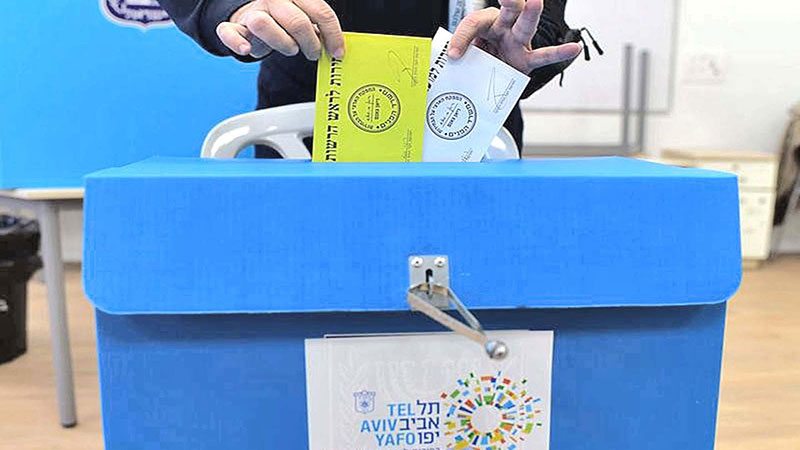
Yet throughout that long campaign of terror, Israel never abandoned competitive elections. Governments rose and fell. Prime ministers were voted out of office. Opposition parties campaigned freely. Instead of concluding that democracy was a luxury they could no longer afford, Israelis returned, again and again, to the ballot box.
Israel endured the mines, the hijackings, the school massacres, the suicide bombers, the rockets, the stabbings, the car-rammings, and finally October 7 without suspending elections, silencing a free press, subordinating an independent judiciary, or retreating into permanent emergency rule.
None of this is offered as a brief for any particular Israeli policy. It is offered as context – the missing half of almost every conversation about Israel. Before judging how a democracy responds to decades of relentless terrorism, it’s worth remembering what that democracy has endured: approximately 5,000 civilians murdered, as many as 20,000 wounded, and a single morning that alone claimed more than 1,000 civilian lives.
So let the deeper question be asked: If the U.S. had absorbed a blow of this magnitude year after year, generation after generation, how long would its democracy have held? We cannot know the answer. We do know Israel’s. It remained a democracy.