 September 25, 2026
 Categories: Headline / Halacha & Hashkafa / Torah
Lessons for Life – and Politics – from the Mortally Wounded
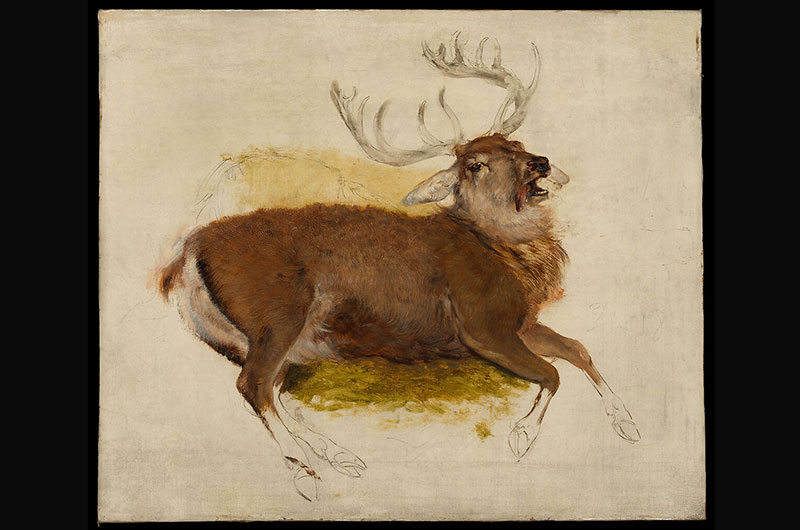


There are very current lessons to be derived from a discussion of Daf 43 in the Gemara Chullin. Although treifah has come to mean generally non-kosher, the halachic definition is a kosher animal that has a mortal wound or specific fatal physical defect. The Gemara states that Moshe Rabbeinu specified eight categories of problems with animals that will render them treifah, the perforation of an organ is only one of them – the most famous, dating back to Joseph and his brothers and the reason for the coat of many colors to turn more red than when first created (Genesis 37:33 – “A savage beast devoured him! Joseph has surely been torn to bits” – torof taraf Yosef) – but there are seven other categories, including organs broken or missing. The Gemara, per Chiya bar Abba, then proceeds to subdivide the category of perforations into eight organs – not just the heart or the lungs, and according to one opinion, citing a Mishna, a ninth, the gall bladder.
Without having the gall to pit one Talmudic rabbi against the other, the friends of Rabbi Yossi, son of Rabbi Yehuda, took note of a reference to the gall bladder in the Bible specifically in the book of Job. Job said: “He spills my gall to the ground” (Job 16:13), and nevertheless Job still lived. So evidently a person with a perforated gallbladder can live. Rabbi Yosi said to them: Job was kept alive by a miracle, and miracles cannot be relied on as proof for a general ruling. As support, Rabbi Yosi then quotes the other phrase in the verse: “He sliced open my kidneys,” which would seem to be problematic, to say the least. Does a person with sliced-open kidneys survive? Clearly, a miracle is different, as it is written that G-d said to Satan with regard to Job (2:6): “but preserve his soul [from death]” (also translated as “only spare his life”). Under natural circumstances, Job should have died from his injuries, but in this case he was kept alive by a miracle. So in this case, also, with regard to the gallbladder, one must say that a miracle is different, and one cannot bring proof from it.
In our days, we have witnessed miracles in every war fought by Israel since 1948, and continue to do so in the case of the war with Iran, bli ayin hara. While we hope and pray for continued miracles, we of course have to do all in our power to make miracles unnecessary, and one way is to do a better job explaining to the world which people are interested in genocide and which people are interested in preventing it.
In a previous cycle of the daf yomi, Rabbi Shalom Rosner cited Rav Chaim Shmuelevitz, the late rosh yeshiva of Mir, as having said in this context that in the case of Job, Satan was required to spare Job’s life, as indicated above, and had permission to devastate Job’s possessions and relatives, but not his friends, because a person can’t live a complete life without his or her friends. On a national level, Israel and the United States are feeling this, too, at this time more than ever, with their “allies” not even behaving like allies, let alone friends. We pray that they will start doing so soon, however belatedly.
The Rambam discusses the classic source for treifas, which is in Mishpatim (Exodus 22:30): “You shall not eat flesh of an animal that was torn in the field, [but] you shall throw it to the dog[s]." Rav Rosner cites the Baalei Tosfos, in the Daas Zekaynim commentary, as pointing out that the dogs didn’t bark when the Jews left Egypt. So the descendants of those dogs are rewarded in this way. Together with shepherds, dogs guard sheep, and protect them. Occasionally, a dog fails to protect a sheep adequately, and the sheep gets “torn.” How dogs can be trained to protect sheep remains one of the mysteries of our own ancestor shepherds and their peers, but that is for another time. The lesson we are to learn is to consider the situation in perspective, to appreciate our dogs – or by extension, kal v'chomer, on an incalculably higher level, our employees – even if they may fall short on occasion.
This discussion was extended to the first human being and how he handled the crisis the first time somebody ever fell short in life. After Eve became responsible for causing death to the world resulting in punishment to all her descendants, Adam had a right to be upset, but instead of berating her for her one indiscretion that is enumerated in the Bible, he focused on her positive traits and declared that she would be referred to for all time as Chava, aim kol chai – mother of all people (Genesis 3:20) (or as the woke are now insisting in New York and elsewhere, “gestating parent” per Senate bill S9316 and Assembly Bill A8382A that recently passed).
In response (to Adam, not to the NY legislature), G-d “saw” that Adam was acting with discretion on the highest level, and promptly rewarded him and Chava with kosnos ohr, with coats of skin, and clothed them (Genesis 3:21).
In the area that is uppermost in the minds of all Jews, the Israelis were working very well with the United States throughout the war with Iran – both wars, the 12-Day War, and the current War (whose duration is a major issue, of course); however, although the priorities of both countries overlap, they aren’t 100% the same, and recently one leader made known his displeasure with the other leader regarding the very deadly mini-war in Lebanon. We still don’t know – and may never know – how much of this was for show and how much of this is for real, but one thing is for sure: The two countries have worked together for a common cause – freeing the world from the threat of nuclear holocaust – and no matter how much of their timing and strategy will ultimately prove successful, in the long run, please G-d, we hope our leaders will treat their partners with respect and appreciation, no less than was done in the cases inspired by the daf yomi discussed above.