 October 9, 2026
 Categories: Mamdani
Mamdani Administration to Change Rules and Improve Design of Scaffolding
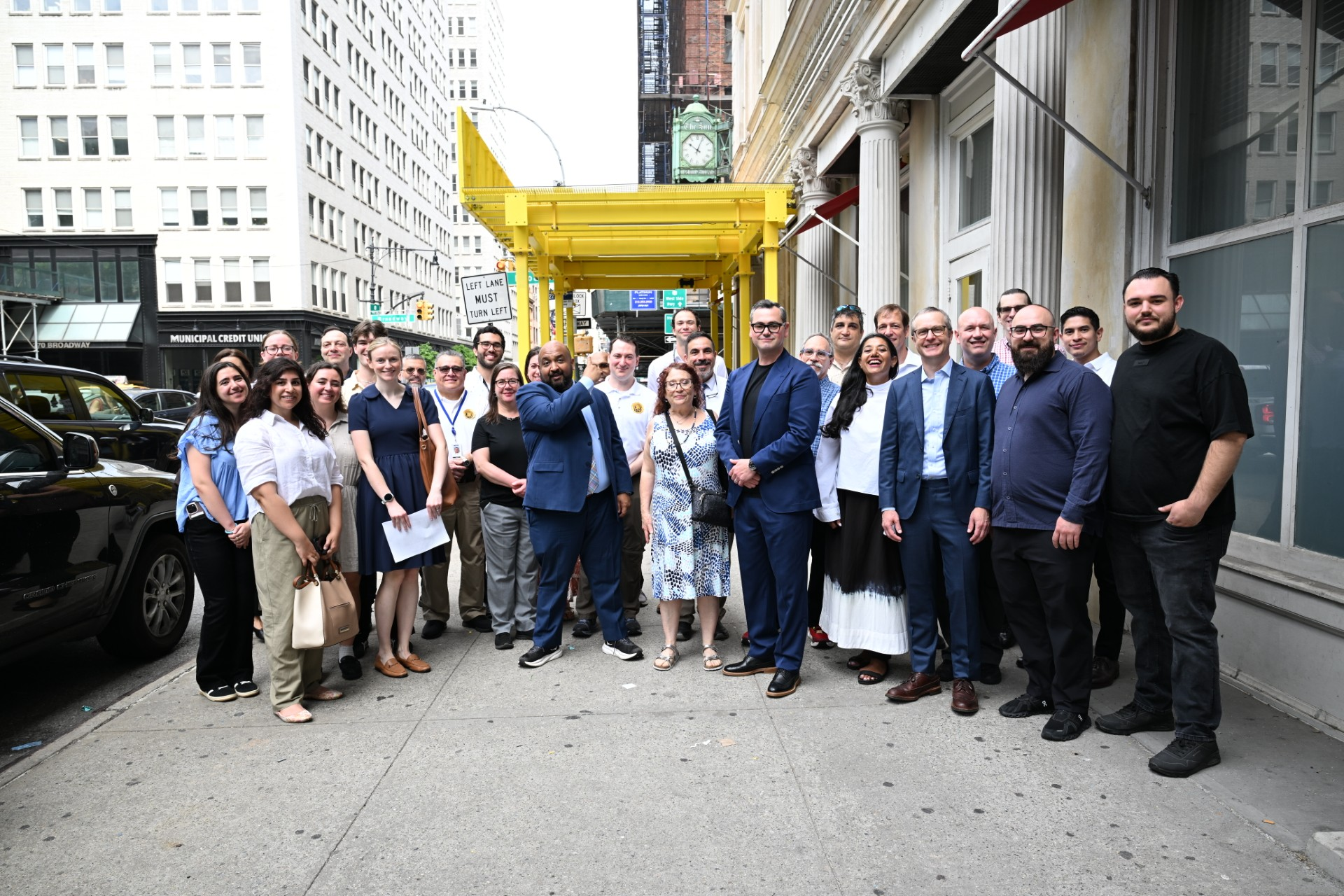


In a press statement today, Mayor Zohran Mamdani and Department of Buildings Commissioner Ahmed Tigani announced new enforcement measures to take sidewalk sheds down faster and proposed designs to make them less intrusive.
Among other new rules from the DOB, building owners will be required to effect repairs more quickly and dismantle sheds safely on a compressed timeline. The Mamdani administration first proposed these rules back in March, in accordance with reforms legislated by the City Council last year. The DOB is also publishing a Buildings Bulletin, clarifying the space sidewalk sheds can take up while still providing for public safety. This will especially affect people navigating large “campuses,” such as NYCHA properties, medical facilities, and schools. Six new sidewalk shed designs will be provided, which will hopefully be more adaptable and provide New Yorkers with light, visibility, and space.
“New Yorkers have gotten used to sidewalk sheds darkening our streets and taking up precious public space, but it doesn’t have to be this way. There are already close to 10 percent fewer sheds up than when we took office. With better designs and stronger enforcement, we are going to keep bringing down the number of sheds, opening up our sidewalks and making them safer, brighter and more welcoming for everyone,” Mamdani said.
“Sidewalk sheds can have a major impact on how New Yorkers experience of their city. With this suite of changes — from reducing the number of sheds on our streets to improving the sheds that go up when they are needed — we are taking a significant step toward safer and more welcoming public spaces,” said Leila Bozorg, Deputy Mayor for Housing and Planning. “Thanks to DOB’s work to craft and enforce these new rules, New Yorkers will be able to enjoy more light and clearer sidewalks in the years to come.”
“For decades, New Yorkers have lived with streets lined with bland-looking sidewalk sheds that stood in place seemingly without end. A high price in exchange for protecting pedestrians from hazardous building façades and construction activity,” said Tigani. “Thanks to the leadership of the Mamdani Administration we are now building a cityscape that New Yorkers deserve by driving down the total number of sheds citywide, implementing a new enforcement strategy to make sure this equipment stays up for only as long as needed and delivering significantly better design options.”
As of August 17th, there are 7,427 permitted sidewalk sheds across the city; more than 1,000 fewer than at this time last year, a long-term goal of the mayor’s. This is a reduction in almost ten percent since Mamdani took office on January 1st.
Sidewalk Shed Oversight and Enforcement
Following the passage of Local Laws 48 and 51 of 2025, the Department of Buildings adopted a rule establishing new oversight and enforcement requirements for sidewalk sheds.
Beginning this month, the statement said, any permit renewal (after ninety days now; instead of automatically every year) must include a report detailing what building repair will require pedestrian protection equipment and the progress made on those repairs since the last renewal.
Stronger penalties will fall on owners who leave shed in place when no work is taking place, or who neglect to repair façade repairs within a reasonable amount of time. Monthly penalties will be issued after 180; the size of the penalties will depend on sidewalk size and how long it has taken. They can be waived if the owner demonstrates meaningful progress. After reaching out to property owners, the DOB expects to begin imposing penalties next summer.
New Sidewalk Shed Designs
The DOB published in the City Record proposed rules to promote the use of six improved sidewalk shed designs. Though they serve an important public safety function, the typical designs impair light, visibility, and pedestrian access. The new designs, developed by architecture and design firms Arup and Practice for Architecture and Urbanism (PAU), are promised to improve the pedestrian experience while providing overhead protection. As municipal intellectual property, the designs are open-access, and anybody can copy and adopt them.
The public comment period for the proposed rule runs through September 24.
Smaller Sidewalk Sheds on “Campus” Properties
The DOB will also be publishing a Buildings Bulletin containing guidance on reducing the size of sheds on large “campuses”, such as NYCHA properties, multi-building developments, and universities. It will establish 40 feet as the maximum distance from the building the sheds could take up; previously, the requirement had required coverage over any walkway that was within a distance of half the building’s height.
“Manhattanites have long been clear: it’s time to get scaffolding off our sidewalks. As a State Senator, I went so far as to create the ‘Sheddie Awards’ to call out the worst offenders on the West Side, where hundreds of Manhattanites nominated the sheds they most wanted gone. Our ‘Worst Shed Overall,’ at 51 West 86th Street, had been up since 2006 — and I’m thrilled that it has since come down,” said Manhattan Borough President Brad Hoylman-Sigal. “Today, the City Administration is answering New Yorkers’ calls with stronger enforcement to get unnecessary sheds down faster, while advancing six new designs that will bring light, pedestrian access and visibility back to our sidewalks. I’m grateful to Mayor Mamdani, Deputy Mayor Bozorg and Commissioner Tigani for taking on an issue that affects our public safety, our small businesses and the daily experience of millions of New Yorkers.”
“Credit to Mayor Mamdani and Commissioner Tigani for implementing the Council’s reforms to hold building owners accountable for completing repairs and getting sheds down, and for commissioning new designs that will bring more light, visibility, and space to our sidewalks,” said Council Member Gale A. Brewer. “These changes will make a real difference on the Upper West Side, where we have the third-highest number of scaffolding permits of any neighborhood in the city. Sidewalk sheds are often necessary to keep New Yorkers safe from debris, but we know that getting sheds down and improving those that must remain is also a public safety issue. Dark sidewalks can provide cover for illegal activity and obstruct security cameras, and research shows that better street lighting can reduce serious nighttime crime by as much as 60 percent in the areas illuminated. Sheds should not be permanent fixtures that make our sidewalks darker, narrower, and less welcoming.”
“New Yorkers deserve sidewalks that are safe, bright, welcoming, and accessible, and these reforms are a major step forward. I applaud Mayor Mamdani, Commissioner Tigani and the Department of Buildings for making real progress in removing unnecessary sidewalk sheds while embracing innovative new designs that will improve our streetscape. With more than 1,000 fewer sheds on our streets than this time last year, it’s clear that this approach is already delivering results. I’m excited to see this work continue and help make our neighborhoods even better places to live, work and visit,” said State Senator Erik Bottcher.
“Sidewalk sheds — too many of them, up for way too long — are a scourge in our neighborhoods and a real quality-of-life and safety issue for New Yorkers. I applaud Mayor Mamdani and his administration for focusing on this issue and implementing real reforms to reclaim our sidewalks,” said Assembly Member Micah Lasher.
“If there’s one thing that unites New Yorkers, it’s our universal hatred of sidewalk sheds,” said Assembly Member Keith Powers. “I was proud to lead legislation at the City Council last year to dramatically transform the city’s sidewalk sheds to get them down quicker and improve the designs of those still up. I’m glad to see progress on this important issue so that fewer sidewalks become safe havens for illegal activity and more small businesses, and New Yorkers can enjoy the benefits of open sidewalks.”
“PAU believes sidewalk sheds can be far better than the dark and dreary structures we experience today.” said Vishaan Chakrabarti, founder of PAU. “We see them as an opportunity to make our sidewalks safer, inviting, beautiful and luminous. PAU was founded to design for the public, and there are few more direct ways to improve New York’s public realm than to rethink something that millions of New Yorkers encounter every day.”
“Our sheds are intentionally designed with highly flexible, modular components that can be reused and adjusted based on the streetscape. The proposed rules will bring us one step closer to creating the bright, open sidewalks that New Yorkers deserve,” said Seth Wolfe, Principal at Arup.