October 2, 2026
 Categories: Headline / Editorial
Mamdani’s Robotic Condemnations of Antisemitism Have Enabled It
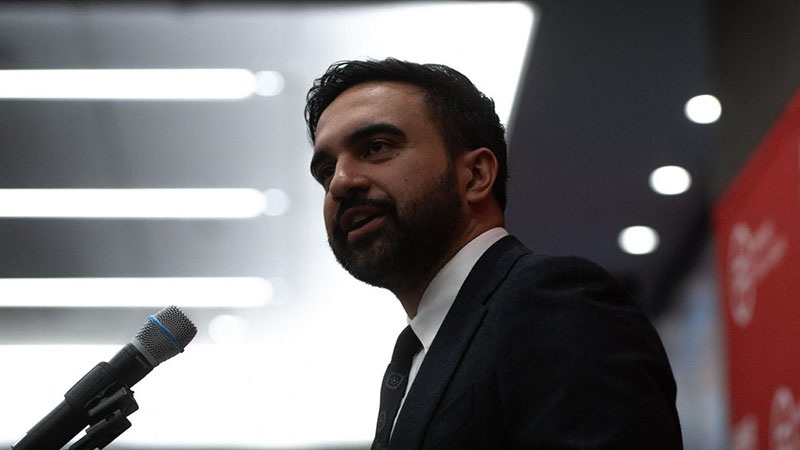


When a 46-year-old man stormed into Manhattan’s Central Synagogue, disrupting Friday night services before physically assaulting a 63-year-old congregant and headbutting a security guard, the reaction from City Hall was predictably swift. Mayor Zohran Mamdani issued his now-standard condemnation of the violence.
But to the Jewish community in New York City, the mayor’s words rang painfully hollow. You cannot spend months using the bully pulpit of City Hall to demonize the Jewish state, systematically dismantle institutional protections for Jewish New Yorkers, and then feign shock when antisemitic violence erupts in a synagogue. The attack was not some random anomaly occurring in a vacuum. It was the predictable manifestation of a hostile climate that the mayor himself has actively helped cultivate.
In fact, the mayor’s statement was not only a robotic recitation of political talking points, which it most certainly was, but it also contributed to the problem.
“There is no tolerance for antisemitism in this city,” Mamdani mechanically repeated to the press and then seamlessly pivoted to his standard disclaimer: “When we make criticisms of a nation state or policies, we have to remember those are criticisms of exactly that – never of a people, never of a faith.”
It was remarkably tone-deaf. By offering boilerplate condemnations of hate while simultaneously aggressively demonizing the Jewish state, Mamdani is trying to have it both ways. He issues sanitized press releases deploring violence, yet refuses to acknowledge how his own incendiary rhetoric actively fuels the hostility that leads to such attacks. His tepid criticisms do not combat antisemitism; they provide political cover for the radical climate that encourages it.
The mayor’s fundamental failure is his refusal to understand – or, as we are beginning to fear, his deliberate choice to ignore – how political rhetoric translates to the streets of New York City.
Over the past several months, Mamdani has transformed the office of the mayor into a megaphone for anti-Israel grievance. He released a video branding the democratically elected prime minister of America’s closest ally a “war criminal” responsible for a “genocide.” When he was forced to concede that he lacked the legal authority to have the NYPD arrest Prime Minister Netanyahu, Mamdani actively encouraged New Yorkers to protest and called for a federal prosecution instead.
The mayor insists that his attacks are purely geopolitical and completely divorced from Judaism. But extremists do not draw such fine academic distinctions. When the chief executive of the city repeatedly singles out the world’s only Jewish state for extreme, unprecedented vilification, it sends a blaring signal to agitators across the five boroughs. It creates a permissive environment where radicalized individuals feel emboldened to take out their “anti-Zionist” rage on Jewish institutions and citizens.
Nor has Mamdani addressed the catastrophic results of the society he has fostered. During the first seven months of 2026, the NYPD recorded 205 anti-Jewish hate crimes. While Jews make up roughly 10 percent of New York City’s population, anti-Jewish offenses now account for a staggering 56.9 percent of all confirmed hate crimes citywide.
Mayor Mamdani must face the harsh reality that governance is not activism, and words have profound consequences. When a mayor repeatedly alienates a marginalized community and dismantles their institutional protections to appease a radical political base, the ensuing violence is part of his legacy.
If Mayor Mamdani genuinely wants to stop the antisemitic attacks that have been mushrooming on his watch, he must stop issuing empty condemnations and start reversing the dangerous, hostile political climate he has spent the last eight months constructing.