September 11, 2026
 Categories: In Print / Money Matters / Featured
Nothing’s Broken, But Everything’s Cracking
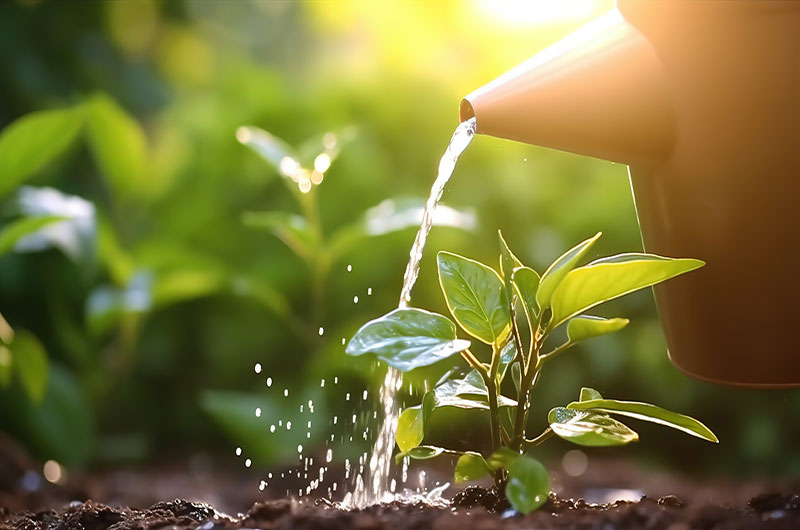


“The greatest losses in life rarely come from collapse. They come from neglect.” – Anonymous
As the year ends, many of us ask: What’s broken? What must I repair before the shofar sounds?
But maybe the more urgent question is not what’s broken, but what has been forgotten.
What Business Strategy Can Teach Your Life
In The First 90 Days, leadership expert Michael D. Watkins introduces the STARS model, a way to assess organizations through five strategic situations:- S – Startup: Build clarity and momentum in a world without structure or precedent.
- T – Turnaround: Make bold, urgent decisions under pressure while restoring morale.
- A – Accelerated Growth: Harness momentum without burning out your people.
- R – Realignment: Expose dysfunction in systems that look fine on the surface without breaking what still works.
- S – Sustaining Success: Guard against drift and complacency in places where everything seems fine, until it isn’t.
Avraham, Yitzchak, and Yaakov as Leaders
The lives of our forefathers mirror these strategic stages.- Avraham: The Startup. The founder who leaves the family business of selling idols and pitches monotheism to a skeptical market. He builds the first community of faith, es hanefesh asher asu b’charan. Bold, visionary, risky, pure startup energy. Av hamon goyim.
- Yitzchak: The Realignment. The COO type. He keeps the family enterprise working. He appears passive, but his strength is quiet preservation. He redigs his father’s wells, reaffirms the Covenant, and with painful clarity chooses Yaakov over Esav. He restores alignment without breaking the legacy.
- Yaakov: From Growth to Sustaining Success. Part-time patriarch, part-time wrestler, full-time father of twelve. His life is restless, full of struggle and change. Yet out of it comes expansion. He fathers tribes, turns family into nation, and leaves behind stability for the future, mitaso sh’leymah.
Planting Is Easy, Tending Is Hard
At first glance, Startup, Turnaround, and Accelerated Growth seem the hardest, because they demand vision, speed, and courage under pressure. But often these are the easier tests, because urgency sharpens us. In a crisis, no one wonders whether to act. The harder challenge comes in Sustaining Success or quiet Realignment, when things look fine on the surface. Comfort dulls us, small cracks go unnoticed, and the work of careful tending gets pushed aside. It is easier to plant seeds and even to pull weeds than it is to water a garden faithfully, week after week, when no one is watching. Yet mending the garden, keeping it alive, aligned, and fruitful, is the truest test of leadership, and the one most likely to determine whether growth endures or withers.The same is true in life. We notice what screams for attention: a fractured relationship, a career setback, a health scare. But what about what seems “fine?” A marriage that’s good enough. A spiritual life that’s lukewarm. A job that’s steady but uninspired. These don’t collapse from catastrophe. They wither from neglect.
Which leads to a radical idea: What if we applied the STARS model not to our businesses, but to ourselves?
“You Are All Standing Today” – But Where?
Parshat Nitzavim opens: “You are all standing today before Hashem your G-d...” (Deut. 29:9). The word nitzavim means more than standing. It means standing with intent, with purpose. And everyone is present: leaders and laborers, elders and children. It is the original all-hands, only without the swag.This moment is not crisis. It is renewal. And that is the point.
Similarly, the High Holidays are not only for those facing crisis. They are for all of us: for those desperate for a turnaround and for those who simply need realignment.
Leadership of the Self
What if, during the Aseres Yimei Teshuvah, we treated our own lives with the seriousness of a strategy session?Ask yourself:
Where am I in Startup – nervous, new, but hopeful? Are my spouse and I beginning a new stage of life as empty nesters, rediscovering each other after years of raising kids? You spend twenty years praying for quiet in the house, then when you finally get it, you look at each other and say, “Now what?”
What part of my life needs a Turnaround – decisive change? Are my children starting to hang around the wrong crowd, and do I have the courage to step in before small choices become lasting damage? Every parent says, “Not my kid” yet the teacher has your number on speed dial.
Where am I in Accelerated Growth, and how do I keep pace and protect from burnout? My seven-year-old has already moved from bedtime stories to screens. Am I adapting quickly enough to stay present in their world? Is my child in Israel becoming more frum, and do I need to help them grow while keeping them grounded? One minute they ask you for candy, the next they’re telling you they won’t eat it because the hechsher isn’t good enough.
What needs Realignment – quiet but essential course correction? Have I been so successful that I spend without thinking, only to realize my children are learning what I value by watching what I buy? How does the resurgence of antisemitism shape my choices? Should I consider aliyah? How do I prepare my children to thrive in a world that is hostile? We spend half our lives teaching our kids to fit in, then we remember they were never meant to fit in.
What is in Sustaining Success – stable but in danger of drifting? Am I spending enough time with my spouse and children and investing in the relationship? Is Shabbos my time to build my network and grow my waistline, or my time to build my family and grow in Torah? If Shabbos is the one day you finally see your family… but only across the table while you are half asleep, then maybe you are observing the day but not the people.
Teshuvah and the Call to Remember
Teshuvah, return, is more than repentance. It is reclaiming leadership over the systems of our inner life.
The goal is not just to fix what is broken.
The goal is to remember what matters, nurture what is working, and strengthen what will last.
Because in the end, teshuvah isn’t only about patching the leaks. It’s also about remembering to water the plants before they wither, especially the ones we’ve been too busy to notice. Some of life’s greatest losses don’t come from dramatic collapse, but from quiet neglect.
And that is the challenge and the gift of this season: to stand with intent, to notice, and to act.
Not just to blow the shofar at the start of the year, but to keep its echo alive in the choices we make long after the sound fades.