יום רביעי, ג׳ חשוון תשפ״זWednesday, October 14, 2026



Follow Us


Itamar Frankenthal is an electrical engineer and entrepreneur who helps professionalize and scale small businesses. Frankenthal spent eight years in San Jose, Calif., leading a small business. Now living in Rechovot, he welcomes all Jews to come home.
Read More

Rambam: “I regret it and I am ashamed of my deeds.” Two verbs, not one. Regret is a judgment about the act. Shame is a feeling about the self.

Four nations, four entirely different temperaments, and one thing in common. Every one of them reaches for its finest hour, or its highest hope, and sets that to music.

When large companies approached him with sales opportunities that would have eclipsed his existing business, he turned them down. Selling to them would make him beholden to them, and over time it would cost him his independence; they would become too important to lose.

The true measure of a catastrophe is not the moment of impact. It is everything that follows.

Over generations, the demands of the type of crop became the character of the people. Talhelm calls it the rice theory of culture: what people do for a living quietly shapes what a society values. And it persists.

The incumbent who selects his own successor tends to do one of two things: pick a mirror, or retain control through the pick. Bob Iger did both in 2020. The Torah removes the choice from the incumbent entirely.

Are you embracing time, letting each stage of life arrive and do its work? Or are you trying to freeze yourself, forever reaching back toward a younger version of yourself that is not coming back?

SpaceX's proposed IPO, targeting up to $75 billion in proceeds, would shatter the previous record held by Saudi Aramco, which raised $29.4 billion in 2019. Elon Musk could become the world's first trillionaire. The numbers are staggering, almost cartoonish. And yet the market believes. Why?

I became less of an operator and more of a leader. With exceptional people around me, I could delegate. I could focus on the few things only the CEO could do.

An inheritance is yours by default. It comes whether you asked for it or not. A heritage becomes valuable only when you claim it.
Every fifty years, in Yovel, ancestral land returns to its original family. Every seven years, in Shemittah, Hebrew slaves go free. At first glance, this looks like a Mamdani-style forced redistribution: confiscate, redistribute, repeat. It is not.

In almost every ancient civilization, priests were the masters of death.

In that sense, this article is itself an act of haggadah. The goal is to point at what is happening around us and say: look, this is what the hand of G-d looks like in history. That obligation falls on every Jewish parent and teacher…whenever history offers a teaching moment. And this year, history is not being subtle.

When Moshe asks to see the Divine presence, G-d responds: You will see my back, but my face cannot be seen (Shemot 33:23). We do not see providence as it unfolds. We see it only after it has passed.
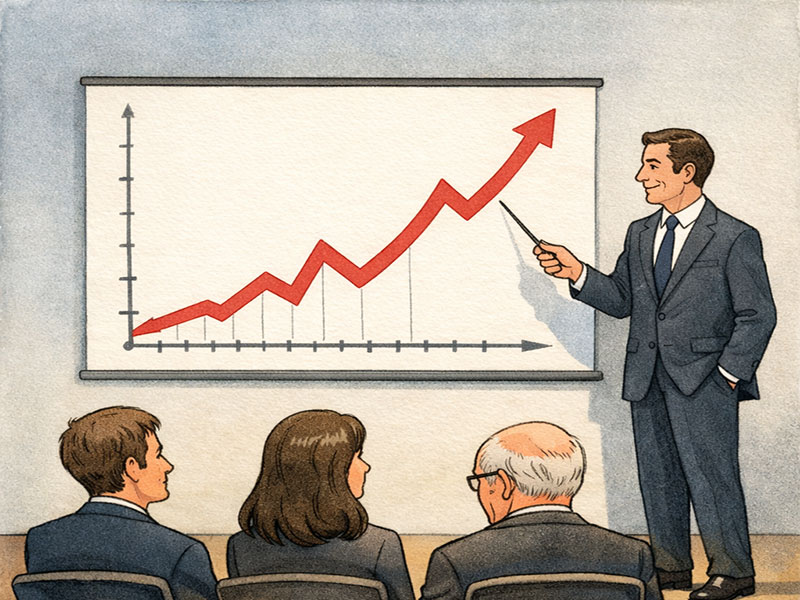
It is the only book in Tanach where G-d’s name does not appear. There is no open miracle, no prophecy, no explicit divine intervention.

Hegai provided not only access but instruction. He was not a prince or a general. But he knew the king. He understood the king. He knew what resonated, what was rewarded, what fell flat. He saw Esther’s potential and invested in developing it.

At Sinai, the Jewish people received the Torah, experienced direct prophecy, and felt G-d's presence in an overwhelming, transformative way. It was the founding moment of the nation.

Opportunity and obstacles often wear the same face. What separates those who seize the moment from those who retreat is the lens through which they interpret what they see.

What if the time we spend caring for our parents is not deducted from our lifespan but added to it? What if G-d is granting us additional years precisely for this purpose?

The real value of money, beyond comfort and security, is its power to buy back time. Time to think. Time to build. Time to teach. Time to parent. Time to choose meaning over urgency.

Behavioral economists have long wrestled with why smart people make bad decisions. Dan Ariely and others have shown that we often act against our own interests to protect pride, defend identity, or avoid appearing weak. What begins as conviction can harden into stubbornness.

Before you can move someone, you must understand their state of mind. Motivating someone who is emotionally depleted is like pressing the gas with an empty tank. Effort rises. Nothing moves.

Yaakov was not favoring one brother arbitrarily. He was reading the vessel. He blessed according to potential, not position.

When we first meet Yosef, he is seventeen, full of dreams and unaware of their weight. In one dream, his brothers’ sheaves bow before his. The sun, moon, and stars bow in another. These dreams center on status.

Behavioral science shows how powerfully environment shapes us. Who exercises, overspends, smokes, or shows up for family is often less about conviction than we like to believe. We are social creatures. If your friends go to the gym, you are more likely to go. If your colleagues drink heavily or live beyond their means, you may drift with them.
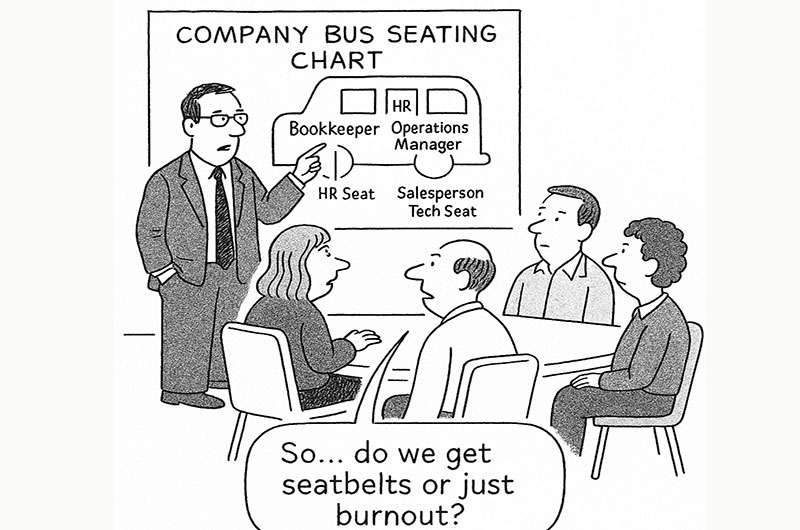
The right seat is more than a box on an org chart. It is the alignment of someone’s natural strengths with the role they occupy.
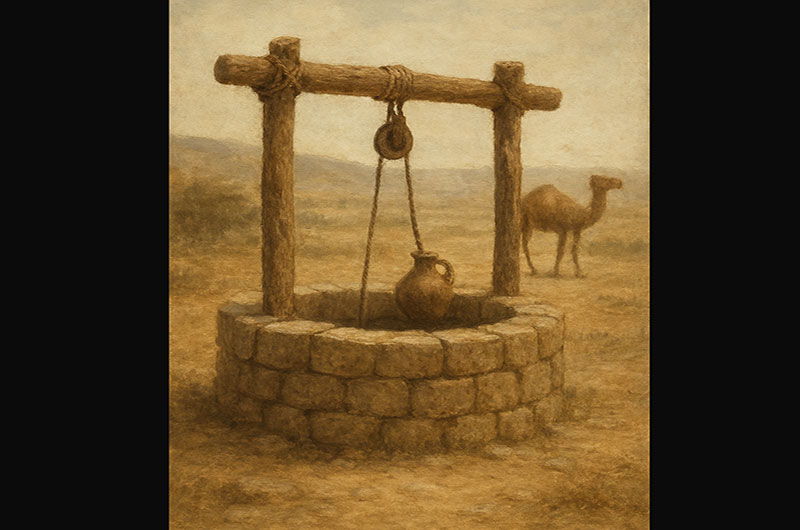
In life and business, we are often asked only for water. Whether we also draw for the camels is what separates technical competence from moral leadership. Rivka became a matriarch not through words, but through awareness and action.

Companies like Enron and Theranos rose on innovation and brilliance but fell to arrogance and deceit. Their failure was not from lack of intelligence but from loss of integrity.

In Parshat Lech Lecha, Avraham shatters the assumptions of his world. Surrounded by idol worship and inherited beliefs, he dares to ask: what if there is something greater, unseen, and just?

The World Bank and modern economists confirm what the Torah taught millennia ago: societies that protect property rights thrive; those that don’t decay. Trust, not gold or oil, is the real wealth of nations.

As Yom Kippur approaches, we are called to reflect not only on our choices, but also on the apparent randomness that shapes our lives.

We notice what screams for attention: a fractured relationship, a career setback, a health scare. But what about what seems fine? A marriage that’s good enough. A spiritual life that’s lukewarm. A job that’s steady but uninspired. These don’t collapse from catastrophe. They wither from neglect.

Gratitude does not just lead to joy. Gratitude produces joy. By tracing our blessings back through time, we cultivate the emotional soil in which joy grows.

Willpower is the scholar’s strength to seize back the microphone. To choose what I should do over what I want to do. But it is finite. Like a phone battery, it drains over the day, leaving the teenager in charge by nightfall.

Abraham Lincoln chose a different path. Instead of surrounding himself with loyalists, he built a “team of rivals,” appointing to his Cabinet, men who had opposed him and even run against him for the presidency. They disagreed with him often and sometimes bitterly, but Lincoln welcomed the challenge.
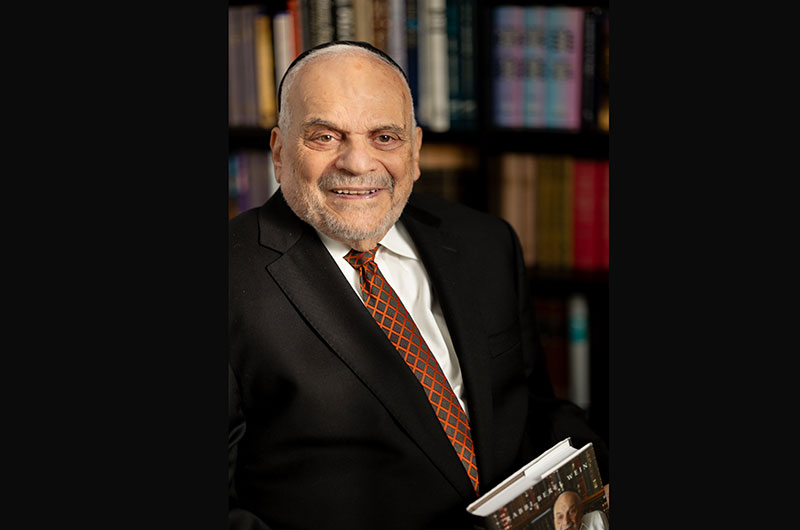
He made greatness approachable. Like a child aspiring to be like a parent. Not out of intimidation, but out of inspiration.
The Lubavitcher Rebbe, zt”l, refused to call a hospital a beit cholim, house of the sick, because words shape reality. He called it a beit refuah, house of healing, reinforcing hope and recovery. The label itself becomes part of the cure.

In much of the West, particularly in the United States, silence is often perceived as awkward, a sign of disengagement or lack of confidence. But in some East Asian cultures, such as Japan, silence conveys thoughtfulness, respect, and even wisdom.
As Steve Jobs said in his Stanford commencement speech, You can't connect the dots looking forward; you can only connect them looking backwards.

Viral shame is a digital stampede. Each click tramples someone closer to ruin.
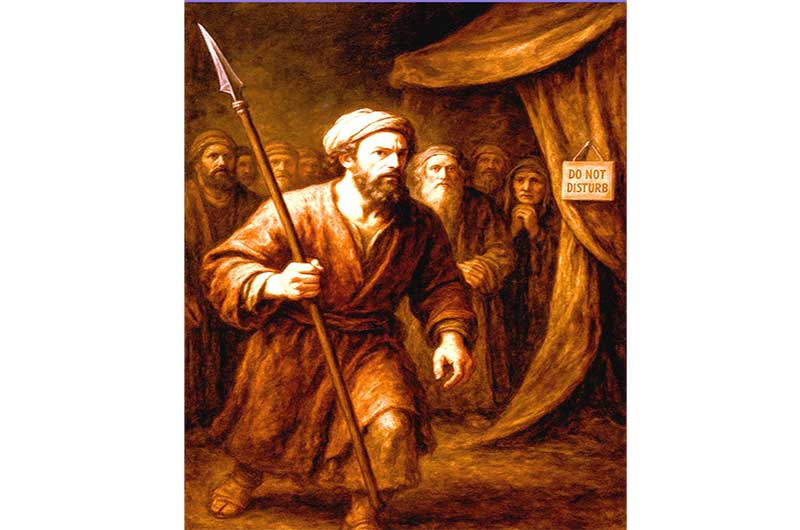
Speak up and pay the price or stay silent and enable failure. In such moments what organizations need isn’t just better ideas, they need better messengers. Outsiders with no agenda. Someone who can say what others can’t.

If we make people believe they are infallible, they eventually believe they can do no wrong – especially when they do.

As AI emerges as the next frontier, Apple’s magic – the sense that it knows what we want before we do – is at risk of growing stale.
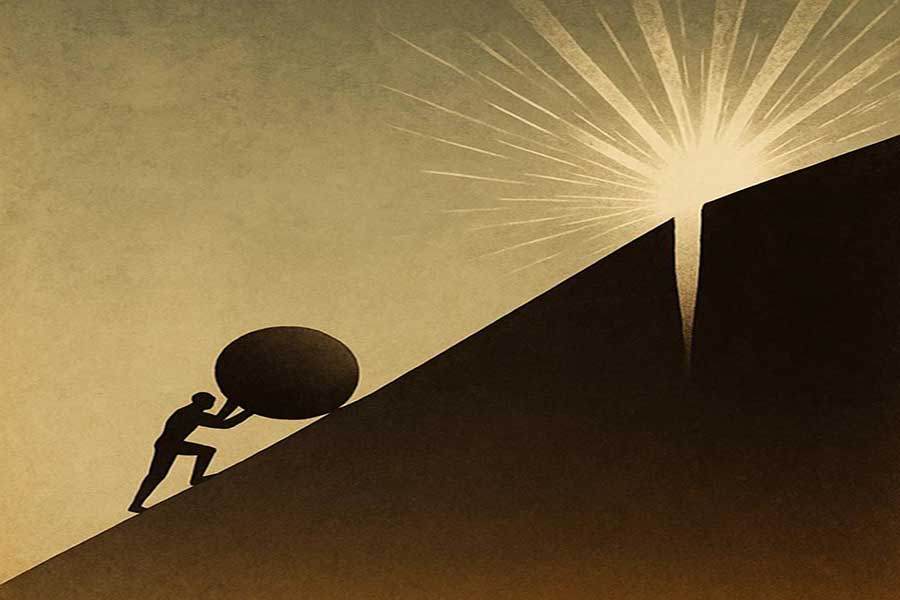
The Mishna teaches that any dispute not for the sake of Heaven will not endure. A dispute for Heaven asks, ‘What is right?’ A personal dispute asks, ‘Who is right?’

When we are stretched beyond our current ability, we enter discomfort. But that discomfort doesn’t mean we’ve reached our limit; it may mean we’re standing at the edge of our capability. Whether we step forward depends on mindset.

Adaptation does not mean straying from who we are. It means deepening our understanding of who we are meant to become.

Being Jewish is not merely about culture, religion, or ethnicity; it’s about being a nation – the Am Hanivchar – the chosen nation.
Yet, as time passed, the painful memories began to soften, making space for the joyful and vibrant ones to take their rightful place in her heart.


 October 9, 2026