 October 23, 2026
 Categories: Headline / Features
Orthodox Summer Camps Change Hands in SIMAD Bankruptcy
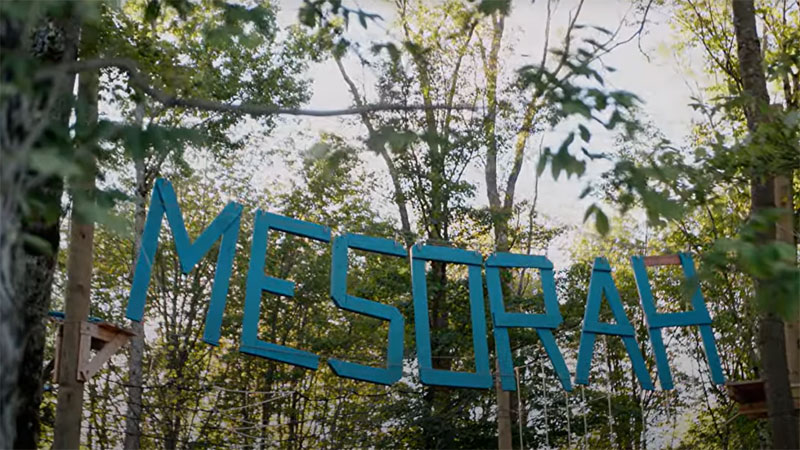


Five summer camps that serve the Orthodox Jewish community will soon operate under new ownership, as the bankrupt SIMAD Holdings begins to sell off its assets as part of Chapter 11 restructuring proceedings. The camps, Camp Achim in Catskill, N.Y., Camp Mesorah in Guilford, N.Y., Camp Tal in Greenville, N.Y., SHMA Camps in Swan Lake, N.Y., and Camp Lavi in Lakewood, Penn., are a few of the more than 30 camps currently owned by SIMAD, the firm of real estate mogul brothers Michael and David Shabsels. Many of the camps in the brothers’ $466.6 million portfolio are culturally Jewish or cater toward a Jewish demographic, but only a few serve an Orthodox population.
SIMAD, which filed for bankruptcy on June 4, is more than $346 million in debt, according to court filings. Chief Judge Christine M. Gravelle of the United States Bankruptcy Court for the District of New Jersey is overseeing the proceedings. SIMAD’s chief restructuring officer and its attorney did not respond to requests for comment as of this writing.
Of the five Orthodox camps owned by SIMAD, final sale agreements have been reached for Camp Achim and Camp Mesorah, while the others, Camp Tal, SHMA Camps, and Camp Lavi, had bidders selected by SIMAD at auction.
Camp Achim is set to be bought by its current operators, headed by Joseph Willner acting under the newly-created Camp Achim LLC. A $7 million sale agreement between SIMAD and Camp Achim’s operators was approved by the court on July 20. According to a 2025 appraisal by valuation organization Leitner Berman, Camp Achim, which it described as “the only Charedi boys’ camp in its market,” was worth $6.3 million.
On August 4, the court approved the sale of Camp Mesorah, a coed Modern Orthodox camp, to Daryl Hagler, a New York-based real estate investor who co-owns Centers Health Care and is the Vice Chairman of El Al. Hagler’s newly-created entity DHAN Masores LLC will acquire Mesorah on a credit bid of around $5.6 million, after he provided SIMAD debtor-in-possession (DIP) financing. He plans to invest $2.2 million into the camp, according to a Tel Aviv Stock Exchange filing first reported on by The Real Deal.
On July 28, Camp Tal, SHMA Camps, and Camp Lavi went to auction, along with 20 other SIMAD-owned camps. An August 4 court filing names successful bidders selected by SIMAD. The successful bid for Camp Tal, which operates legally as Camp Malka, was for $8.15 million, made by an entity called Cho Pro Holdings LLC. A public database identifies Cho Pro as operating since 2017 and based in Monroe, N.Y. The camp, which markets itself as for “the exemplary Bais Yaakov girl,” had an appraised value of $10.8 million in 2025.
SHMA Camps, which include Camp Mogen Avraham Heller and Camp Avraham Chaim Heller, boys’ camps, and Camp Sternberg/Anna Heller, a girls’ camp, are set to be sold to their current operators, under the entity SHMA LLC, for $22.4 million, more than their 2025 appraisal of $20.6 million. A court document names Dov Perkal, director of SHMA Camps alongside his wife Allyson, as a SHMA LLC member representing the entity in the sale.
According to a 2025 appraisal, SHMA Camps operate “as a single economic unit,” but they are often referred to in filings as Camp Mogen Avraham. As of this writing, representatives for SIMAD and SHMA LLC did not respond to requests for clarification.
Camp Lavi, a Modern Orthodox coed camp, is, as of this writing, set to be sold for $8.75 million to the successful bidder Ohel Children’s Home and Family Services, a New York-based global Jewish nonprofit offering social services and mental health treatment. But the proceedings have been embroiled in controversy.
The tension rests on the concern of many Camp Lavi parents that if Ohel were to buy the camp, they would no longer operate it as Camp Lavi. Ohel already owns and operates Camp Kaylie, an inclusive camp that serves campers with and without disabilities and that operates for boys one half of the summer and for girls the other.
When Ohel was rumored to be the successful bidder, Camp Lavi sent an email to its families. “Since learning of Ohel’s involvement, we have made every effort to engage with its leadership,” it said. “Our conversations have been respectful and sincere. Our goal was never to oppose Ohel or its extraordinary mission, but rather to help them understand what Camp Lavi represents and the impact losing it would have on hundreds of families and the broader Jewish community.” The email encouraged Camp Lavi families to speak out in support of the camp’s future.
On August 6, one day after Ohel was chosen as the successful bidder, a group of Camp Lavi parents obtained counsel and filed an objection to the sale of the camp to Ohel. “It is our understanding that, should Ohel be the successful purchaser of Camp Lavi, they will either shut down the Camp, or change it in a manner that would displace the 400 families and 600 campers who have historically sent their children to this Camp,” the filing said.
It further stated that the parents had wired into their attorney’s firm’s trust account a new bid of $10 million and asked for the auction to reopen, but a letter sent from the attorney to Judge Gravelle the next day corrected that the money had not been wired. The attorney, Ohel and Camp Lavi have as of this writing not responded to requests for comment.
Camp Lavi parents and some staff members also sent more than 100 emails to Judge Gravelle, and a change.org petition started on August 5 has more than 4,000 signatures. On August 9, the petition starter posted an update on the page attempting to raise the remaining $2 million of a $10 million bid for the camp.
In court filings, Judge Gravelle acknowledged the families’ concerns but said she could not accommodate their objection. Then, on August 10, counsel for the parents withdrew the objection. “Over the last several days, through numerous discussions, the Parents have been assured that the historical structure and fabric of Camp Lavi will be preserved by the proposed Buyer,” the attorney wrote. Later that day, a court document revealed David Brecher, the President and Treasurer of Ohel’s Camp Kaylie, to be the representative of Ohel in the sale.
Still, amidst the nearly continuous filings, parents of Camp Lavi campers who spoke to The Jewish Press after August 10 expressed ongoing uncertainty and a lack of reliable information regarding the future of the camp. “Lavi and its leadership and senior staff have been amazing for my kids, and the camp was a formative experience for my wife who went as a child,” said Camp Lavi parent Rabbi Joshua Lookstein.
Still, he shares in the confusion of many others: “There have definitely been a lot of well-meaning people, but no one has publicly stepped up to lead, whether due to humility or hesitation or something else,” he said. “The result has led to a scarcity of trusted information and an abundance of rumors, and that’s never good.”