 September 25, 2026
 Categories: Perspectives / Op-Eds
Playing The Islam Card: The Policy That Keeps Blowing Back
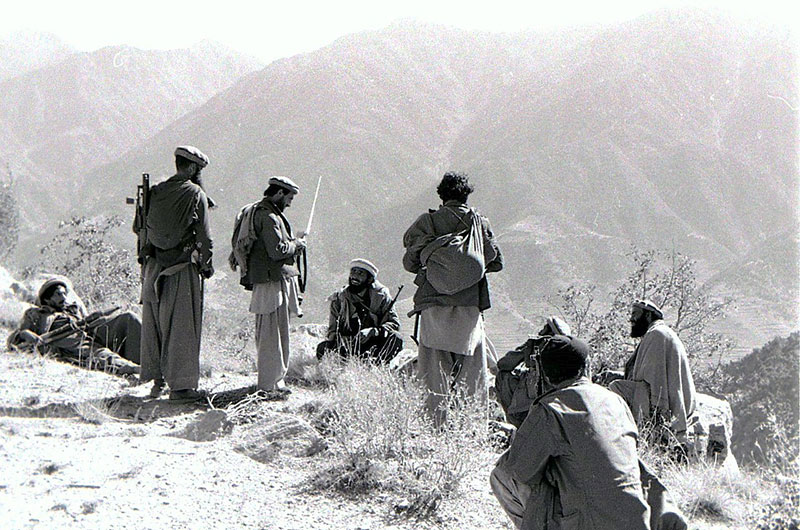


It may be hard to believe, but there was a time when Afghanistan was the name of a remote, rugged land that few Americans ever read or heard anything about. In fact, Afghanistanism was a pejorative term in American journalism – a dismissive label for foreign coverage, editors assumed readers would ignore.
I thought about that last week when Afghanistan again made headlines – horribly – in ways that underscored how, for implacable Islamist enemies of both the United States and Israel, the war-torn Central Asian nation is still the gift that keeps on giving.
Within 48 hours, an Afghan national once employed by the CIA shot two National Guard troops in Washington, DC, killing one; another Afghan national was arrested in Fort Worth, Texas, after allegedly posting a TikTok video claiming he was building a bomb and intended to target a local building; and The New York Post reported that more than 5,000 Afghans who entered the United States after the costly and chaotic 2021 withdrawal were flagged for “national security” concerns by the Department of Homeland Security. They were brought in after the U.S. abandoned more than $7 billion worth of military equipment to the Taliban – and only weeks after an Islamist suicide bomber slaughtered 13 U.S. service members and scores of Afghan civilians during the frenzied evacuation at Kabul airport.
Last week’s incidents weren’t random. They were the latest reminders of a Cold War strategy built on a fantasy – that Islamist groups could be safely used, controlled, and retired once they had served American purposes. They never could be. They never were. And Americans are still paying the price for believing otherwise.
What was sold in the late 1970s and ‘80s as “playing the Islam card” – treating Islamist insurgents as potential partners and aligning with them to weaken the Soviet Union – produced a recurring cycle of blowback that neither the U.S. nor its allies have been able to escape.
It began in Iran. As the Shah’s position deteriorated through 1978, with mass demonstrations, acts of terrorism, and rising clerical influence, the Carter administration concluded he could no longer retain power and persuaded itself that it could live with, and perhaps quietly shape, an emerging Islamic order.
Into this crisis came General Robert Huyser, dispatched to Tehran in January 1979. His mission was publicly described as an effort to stabilize a fast-unraveling situation. In practice, it took a different form. Huyser pointedly did not meet with the Shah and held discussions with opposition figures inside the U.S. Embassy – a shocking signal to Iran’s military that Washington had shifted its loyalties.
At the same time, Huyser discouraged the Iranian generals from intervening to save the monarchy or backing Prime Minister Shapour Bakhtiar’s last-chance secular government. While the U.S. explored channels to Khomeini’s entourage in Paris, Iran’s armed forces were urged to stand down rather than act decisively.
What Washington imagined as a managed transition to a more pluralistic system that would remain anti-Soviet and safeguard Western energy interests instead produced the collapse of a strategic ally and the birth of an explicitly anti-American, anti-Israel Islamic Republic. Far from being contained, the new regime spent the next four-and-a-half decades sponsoring terrorist proxies, pursuing nuclear weapons, vowing to annihilate Israel, and working to expel the U.S. from the Middle East.
Even the seizure of the U.S. Embassy in Tehran and the subsequent hostage crisis didn’t dissuade the Carter administration from courting Islamist groups elsewhere – most notably in Afghanistan. Carter authorized covert aid to the Afghan mujahideen as early as July 1979, months before the Soviet invasion that December.
After the invasion, he escalated support dramatically, directing weapons and training to the mujahideen through Pakistan’s intelligence agency. This was seen as a cost-effective way to contain – or roll back – Soviet power and stir unrest among Soviet Muslims in Central Asia.
Carter was heavily influenced by his National Security Advisor, Zbigniew Brzezinski, who in turn drew on the writings of Alexandre Bennigsen, a Russian émigré scholar who argued that Soviet Muslims retained a latent Islamic identity that could be politically activated. Rather than viewing the Iranian Revolution as a warning, Brzezinski and Bennigsen took it as proof of Islamism’s potency – and potential usefulness.
Brzezinski made this logic explicit in his 1998 interview with the French journal Le Nouvel Observateur, acknowledging that U.S. aid to the mujahideen preceded the Soviet invasion and was intended to increase the likelihood of a Soviet intervention that would mire Moscow in a Vietnam-like quagmire.
When asked whether he regretted supporting Islamist militants who later formed the backbone of the global jihad, Brzezinski dismissed the question.
“What is more important to world history?” he answered. “The Taliban or the collapse of the Soviet empire?”
Pressed again, he replied: “Regret what? Some agitated Muslims?”
It was the distilled essence of a mindset that valued tactical success over strategic foresight – and treated blowback as irrelevant.
The Reagan administration expanded Carter’s Afghan operation into the largest-ever covert campaign in U.S. history, transforming an Islamist-led revolt against a pro-Soviet regime into a magnet for jihadist volunteers. The regime had taken power in 1978 in a Communist coup against President Mohammed Daoud Khan – who himself had overthrown the Afghan monarchy just five years earlier.
Aided by Pakistan and Saudi Arabia, the mujahideen were armed, funded and celebrated – so long as they killed Soviet troops.
After 9/11, the calculus changed. It was unmistakably clear that the Taliban and Al-Qaeda and its offshoots had grown directly out of the environment the U.S. had helped create. The secret war in Afghanistan that had been hailed as a stroke of geopolitical genius had become the origin story of the modern jihadist international.
Still, history nearly repeated itself in Egypt. In 2011, as mass protests mounted, the Obama administration moved swiftly from urging restraint to signaling that President Hosni Mubarak’s long era was over. When the Muslim Brotherhood’s Mohamed Morsi was elected, the U.S. treated the Brotherhood as a legitimate partner leading a budding “Islamic democracy.”
Once again, a secular authoritarian ally was cast aside, and an Islamist movement was embraced as a potential stabilizing force. Only the Egyptian military’s intervention prevented a second Iran – on Israel’s border.
Turkey is another case in point. In the 2000s, the U.S. and the EU applauded reforms that weakened the Turkish military’s political role, assuming European-style civilian supremacy would modernize the country. Instead, the reforms dismantled the secular guardrails that historically had contained Islamist parties.
The neo-Ottoman AK Party – which is both Islamist and irredentist – then used democratic legitimacy to purge the military and other institutions, entrench an anti-secular authoritarianism, and adopt a foreign policy increasingly hostile to Western interests, including support for Hamas. The U.S. expected long-term moderation; it got long-term Islamization in a NATO member state.
Taken together, these episodes reflect not sober realism but a pattern of misguided Machiavellianism. Time after time, Americans convinced themselves that Islamist actors could be manipulated or moderated – only to find that once empowered, Islamists pursued their own agendas.
For Israel, the consequences are clear. Iran and its network of proxies – Hamas, Hezbollah, the Houthis, and their allies – confront the Jewish State on multiple fronts, while Turkey’s increasingly menacing posture adds a further layer of threat to an already volatile landscape.
Looking back at this history of blowback and unintended consequences, one could argue that the preventive measure America needed was more Afghanistanism, not less – meaning more serious, in-depth reporting and analysis. Better-informed journalism – and better-informed politicians and policymakers – might have helped Washington avoid the ever-renewing nightmare unleashed by the deadly decision to play the Islam card.