 October 16, 2026
 Categories: Ask the Rabbi / Torah
Q & A: Fulfilling the Seder Requirements


Question: I am anxious to fulfill the requirements of the Seder to the best of my ability. Notwithstanding that desire, I would like to know the minimal requirements of consumption and any possible leniencies or compensation for one who finds it difficult to eat matzah. Additionally, how absolute is the requirement not to eat anything after the afikoman?
Menachem Via email
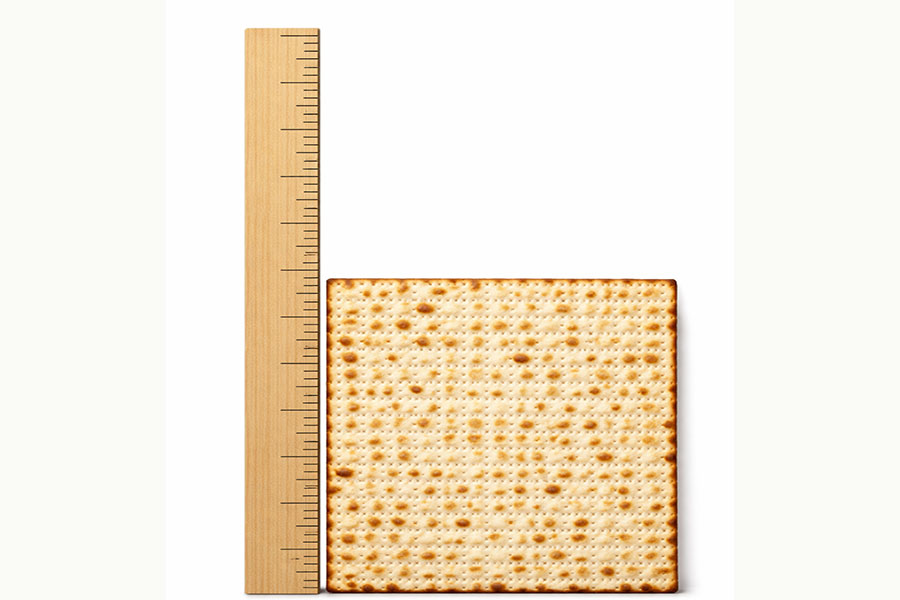
Answer: As regards the commandment to eat matzah on Pesach, Rambam (Hilchot Chametz U’Matzah 6:1) rules that it is a positive Biblical commandment – namely, a mitzvat aseh from the Torah to eat matzah on the evening of the 15th of Nissan, for it is written (Exodus 12:18), “Ba’erev tochlu matzot” – In the first month, on the fourteenth day of the month, in the evening shall you eat matzot. He bases this ruling on Rava’s statement (Pesachim 120a) that eating matzah is a Biblical requirement. Rambam adds that the performance of this precept is a requirement applying everywhere, even outside of the Land of Israel, and at any time, even when we are bereft of the Temple. It is therefore with great trepidation that one would consider leniency in this matter, assuming that leniency could dispense with the mitzvah altogether. Yet we might deduce that there is a possibility of a lenient attitude in this regard from Rambam’s wording in that same chapter (6:3), where he notes the case of one who ate matzah unintentionally (i.e., without the intention to perform the mitzvah) as well as the case of one who is a shoteh (idiot). (Note: the Rabbis defined several levels of imbecility or madness and the ensuing legal implications regarding the obligations and responsibilities of such an individual. The reference here, based on Tractate Rosh Hashanah (28a), is to a person who is sometimes in his sound mind and sometimes crazy.) If a shoteh ate the appropriate required quantity of matzah (a kezayit) while not in his right mind and then subsequently recovered – obviously referring to a case where the healing occurs on that same day, the 15th of Nissan – Ramam says that he is obligated to eat matzah again, in a state of awareness. Rambam concludes that rule with the phrase, “For that consumption [of matzah] occurred at a time when he was exempt from fulfilling any mitzvah.” (See the Mechaber, Orach Chayyim 475:5, Hilchot Pesach, who issues the same statement.) Why did Rambam find it necessary to add that phrase? It is obvious that he is referring to Rava’s statement (Rosh Hashanah ad loc.) that one must be cognizant when listening to the blowing of the shofar because of the Biblical command of “zichron teruah.” The sounding of the shofar must be for the sake of blowing, not for a melodious production of sounds. We might therefore think that on Pesach, since the person has in fact eaten the matzah, he has fulfilled his obligation. Therefore, Rambam explains that as long as the person has not recovered mentally, he had no obligation whatsoever (and therefore could not fulfill any obligation either). We see that we are very strict regarding the consumption of matzah on the 15th of Nissan (the night of the Seder; and the first two nights in the Diaspora). Rambam states, quoting the Gemara (Pesachim 120a), that the obligation of eating matzah applies to the Seder only, and is optional during the remainder of the festival. At the Seder, we are also very strict regarding the quantity of matzah that is to be consumed, which is defined as a kezayit, the “size of an olive.” What is this measure? Continuing the legacy of their father, Rabbi Avraham Blumenkrantz, zt”l, late rav of Bais Medrash Ateres Yisroel in Far Rockaway, NY, his sons have published his very fine and useful work, which is updated every year, Kovetz Hilchos Pesach (available in most Judaica stores as well as many kosher supermarkets). It includes a compendium of laws relevant to the holiday as well as a yearly updated list of products that may be used on Passover. The section dealing with the Seder includes a discussion of the interconnected measures – kezayit for solids and revi’it for liquids – providing a concise guide for the required quantities of wine, matzah and maror we are to consume at the Seder. We shall now quote from that section, with minor adaptation:Do It Right on Pesach Night: Shiurim – Measurements What? When? How Much?
Required quantities of ritual foods and beverages for the Pesach Seder were compiled by Kollel Beth Medrash L’Torah VHoroah, founded by HaGaon HaRav Moshe Feinstein, zt”l, and presently under the leadership and guidance of his son, HaGaon HaRav Dovid Feinstein, shlita. NOTE: These minimum requirements must be adhered to by women as well as men.- Four Cups of Wine
- Matzah
- For HaMotzi and Afikoman – a quantity of meal that can be compacted into a 1.5. fl. oz. vessel.
- For Korech – a quantity of meal that can be compacted into a 1.1 fl. oz. vessel.
- Maror
- If you use pure grated horseradish:
- For Maror – 1.1 fl. oz.
- For Korech – .7 fl. oz.
- If you use Romaine lettuce leaves:
- For Maror – enough leaves to cover an area of 8 x 10 inches.
- For Korech – the same.
- If you use Romaine lettuce stalks:
- For Maror – enough to cover an area of 3 x 5 inches.
- For Korech – the same.
- The size of a “cup” for the four cups of wine at the Seder is a revi’it.
- A revi’it is the quantity of water displaced by a middle or average sized egg and a half (1½ eggs).
- The quantity of matzah and maror needed to perform the mitzvot of matzah and maror is a kezayit.
- through the water displacement of eggs (by experimentation) ;
- through thumbs;
- through “stricter” thumbs.
- a) The “large” egg is the middle-sized egg in the five sizes of eggs commercially sold today (small, medium, large, extra-large, jumbo).
- b) The large egg is the average egg consumed in the world. After this decision was made, we realized that “large” eggs are not all the same; there is a minimum weight and maximum weight requirement that eggs must satisfy to be categorized as “large.”
- The cup of the Chofetz Chaim held 5 fluid ounces, while the cup of R. Yisrael Salanter held 4.1 fluid ounces. The Chazon Ish opined that a cup should not hold less than 5.07 fl. oz., while the Chofetz Chaim held that the cup should not hold less than 4 fluid ounces.
- We mentioned above that the Talmud teaches us that 1 kezayit = ½ a betzah, and revi’it = 1 ½ betzah. Rambam reckons this Talmudic betzah as the volume of 18 “drams” of water, the dram being a standard measure in his time; this value is quoted and used in practice by the Shulchan Aruch and later authorities, down to the present day, including the Ben Ish Chai. The dram referred to is equivalent to slightly more than three metric grams. Hence, since the volume of a gram of water is exactly one cubic centimeter, it follows that:
* * * * *
Now, let us turn to your question regarding not eating after one has partaken of the Afikomen. At the Passover meal of old, when the Korban Pesach offering was brought to the Temple, no food was eaten after the meal so that the taste of the Paschal sacrifice would linger. Therefore, they would not follow the meal with post-prandial sweets (or entertainment). Now that we do not have the opportunity to offer the Paschal sacrifice, the “Afikoman matzah” is the symbolic reminder of that custom, and it indicates the formal closure of the Seder meal. As such, it is not the dessert itself that is not permitted, but rather any additional courses that are clearly beyond the parameters of the meal itself and that are served after the conclusion of the meal, namely, after partaking of the half of the middle matzah that was set aside for the Afikoman, which is part of the “matzot chova” of the Seder (see Rashi and Rashbam, Pesachim 119b-120a, s.v. Barishona lo). The Gemara explains that it is clearly not permitted to eat anything after the last obligatory portion of matzah (i.e., the Afikoman) since its taste is not strong enough to linger (de’la nafeish ta’ameih). Rashi and Rashbam (s.v. Ein maftirin) rule that it is precisely the matzah of Afikoman that is considered the obligatory matzah on Pesach, and therefore we should have been required to postpone the blessing of “Al achilat matzah” until the end of the meal. But we cannot do so, in line with R. Hisda’s ruling in regard to maror (ibid. 115a) since we are already sated with the matzah in the course of the meal. The Mordechai (ibid. 119b) offers an explanation of the word Afikoman, suggesting a composite of two Aramaic words, “afiku” (bring forth) and “mini,” an assortment [of sweets]. He also questions why we do not wait with the blessing of “Al achilat matzah” until we eat the Afikoman, inferring that this is how it was done in earlier times. He posits that in earlier days, they ate matzah ashira, a lighter, fruit-based matzah, during the course of the meal, and that matzah was not as satiating as the regular matzah. Thus, they were able to postpone the blessing of “Al achilat matzah” until the Afikoman. The Mordechai then asks the obvious question: Why don’t we do the same? He answers that we are not as careful as our ancestors, and we might attain a full degree of satiation even with this lighter product. The Chayyei Adam (126:7, Hilchot Pesach), quoting the Rema, (Orach Chayyim 462), cautions that in “our lands,” we do not use this type of fruit-based matzah (which includes our egg matzah) except in the case of an ailing person (who, following medical and halachic advice, must eat only this kind of matzah). Nevertheless, it seems clear that the matzah referred to as matzah ashira, lit. “rich matzah,” is not in the spirit of the requirement to eat lechem oni, the bread of affliction, on Pesach. Its permissibility in cases of need does not allow us to meet the requirement of eating the measure of two kezayit of matzah that is incumbent upon us. We also quoted Rabbi Blumenkrantz’s suggestion to grind matzah for those who are unable to eat it in its original form. However, when there is true medically ordered need, one is to follow medical advice, and if it is determined that he is unable to satisfy these requirements, he should not feel guilty about not meeting any of the above shiurim (measurements). Rather, heed the medical advice, as the Torah in Parashat Va’etchanan (Deuteronomy 4:15) warns us, “V’nishmartem me’od l’nafshoteichem…” – You shall greatly guard your souls. Obviously with the exception of one who is ill or proscribed for some medical reason from discharging his requirement with matzah and thus finds that he must use matzah ashira, we find that the Aruch HaShulchan (Orach Chayyim 462:sk5) is very strict in regard to the eating of matzah ashira, which he only permits for someone who is ill. He decries what he saw in his time as becoming a pervasive custom of breaking an age-old minhag Yisrael and urges us not to do so. He concludes with a blessing: that those who are careful about this matter [eating matzah shmurah] will merit all the good that is hidden for the righteous in Gan Eden.