 October 23, 2026
 Categories: Torah / Ask the Rabbi
Q & A: Havdalah Wine Overflow (Part II)
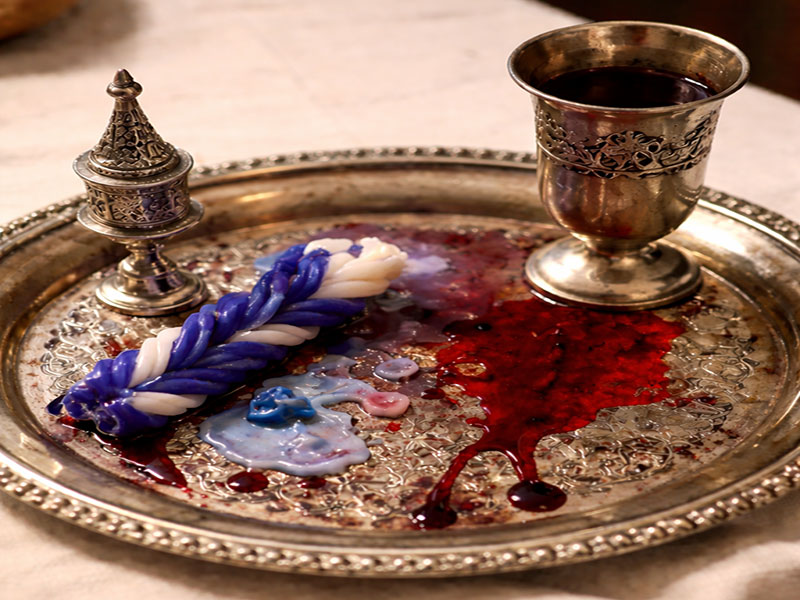


Question: Should the goblet used for havdalah be so filled that wine overflows? Additionally, is doing so not a violation of baal tashchit – deliberate wastefulness?
George Nevens Via E-mail
Synopsis: Last week, we noted that Rema cites the ancient custom for the havdalah wine to be filled to overflowing as a special sign of blessing, even to the extent that one actually pours some onto the ground. Magen Avraham takes issue with this practice and suggests only filling to overflow, and that the overflow will, of its own, pour over onto the ground. To do otherwise is a wasteful destruction of food and drink. We cited from Shulchan Aruch Horav who sees a purpose in the overflow of the wine as a means of extinguishing the flame at the conclusion of havdalah. Mishneh Berurah, in agreement with Magen Avraham, would limit filling the goblet to a minimal overflow.
* * * * *
Answer: The Aruch HaShulchan (Orach Chayyim 296:sk11) also cites Rema and focuses on Rema’s reason for pouring (or spilling) the wine onto the ground – that it is done in that manner in order to ensure that the wine goblet not be deficient – but questions this explanation. He goes further and cites Levush who states that one should not spill at the beginning of the blessing (probably meaning immediately before he recites the blessing) in order that he not bless on a deficient goblet. This, too, the Aruch HaShulchan questions, as so doing would not deem the goblet deficient; rather, only when one drinks from the goblet would that cause its deficiency.The Aruch HaShulchan (Orach Chayyim 296: s.k.11) further modifies Rema’s position. He contends that even Rema would negate any active pouring of wine onto the ground or even on the table. Indeed, to even consciously fill the goblet to such an extent that wine overflows is wrong, for it is a form of denigrating a mitzvah – bizui mitzvah. He suggests the following interpretation of the custom: The cup should be filled, as are all goblets used for a blessing. Yet while reciting the blessing and holding the wine goblet, there is a tendency for one’s hand to shake. This natural hand movement generates some wine to spill. The halacha directs that should this take place, one should not spill too much. Yet it should be noted that if a small amount did spill, it is still considered a full goblet. After havdalah, we intentionally pour wine into a vessel (such as a saucer) to extinguish the havdalah candle, and place some of the wine on our eyes for healing purposes and to show love of the mitzvah.
From the above, it is obvious that the halachic authorities looked with disfavor upon those who simply wasted good wine to create a major overflow. Magen Avraham and Mishnah Berurah among others follow this opinion. And others, like Shulchan Aruch HaRav and Aruch HaShulchan, held that one should avoid any spilling at all.
We note that though Rema described the wine-pouring custom to be specifically a Motza’ei Shabbat procedure as a good sign for the coming week, many follow the same custom even for Friday night or Yom Tov kiddush.
The Matteh Moshe (504), a compilation of customs by a disciple of the Maharshal, offers that the spilling of wine is a custom that is limited to Motza’ei Shabbat. He explains: “From Esau and Ishmael emanate 70 powers that are dormant on Shabbat, but on Motza’ei Shabbat are revived and seek to castigate Israel. The Hebrew word for wine is yayin, which has a numerical value of 70. The wine [symbolizing the 70 ‘antagonists’ – the angels assigned to each of the 70 nations] is allowed to spill to the ground right after Shabbat to weaken their powers.” Additionally, at havdalah, we must formally separate ourselves from the children of Korach [those who did not repent] by pouring wine on the ground…” Accordingly, such mystical, kabbalistic reasons are simply irrelevant on Shabbat or Yom Tov.
Of course, today, in our homes we have other issues with this practice. Would we be happy to see wine spilled on our beautiful carpets or wood floors, or even on expensive tablecloths or napkins? Surely not.
Indeed, I cite from Rabbi Yaakov Simcha Cohen, zt”l, my late, friend, mentor, and fellow halacha columnist here at The Jewish Press, with whom I discussed this subject a number of years prior to his passing. He quoted to me from his own grandfather, the Minchat Shabbat (96:19), who cites the scholars who note that the common custom is not to pour (or spill on the ground), but to overflow the goblet just sufficiently that it spills on the table (or onto a saucer). This would be closer to what our practice is today. Most people have coasters that are placed under their becher (wine goblet), so that any wine that spills over will spill onto the coaster and not soil the tablecloth or napkins.
In summation, the customs of Israel are cherished and followed, but always with care not to overdo beyond our Sages’ rulings.