 September 25, 2026
 Categories: Redeeming Relevance / Rabbi Francis Nataf
Redeeming Relevance: Vayekhel: A Personal Donation


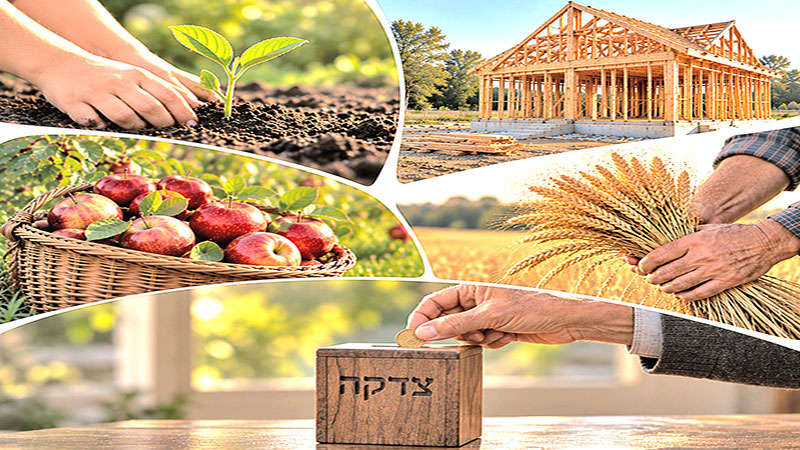
In this week’s parsha, R. Shlomo Ephriam Luntschitz, the Kli Yakar, notes that in requesting contributions for the Mishkan (Shemot 35:5), Moshe is commanded to tell the Bnei Yisrael, “kechu mitchem terumah” (take from yourselves a gift). Kli Yakar is not the only one to notice this rather strange turn of the phrase - generally, we think of ourselves as giving gifts, even if they are from something that already belongs to us. Hence, it is a phrase that deserves some thought.
the Kli Yakar was known for his critique of the rich and more generally as a keen observer of how people deal with their money. Upon noticing this phrase, he makes several perceptive observations. He points out that since all the Jews were being asked to contribute, when it would come to a poor person, any gift would feel like it is actually coming from their flesh, and so, taking from themselves would be understood quite literally.
Along similar lines, he comes to an even more profound observation about how and why people give to worthwhile causes. Anyone who has learned a little about fundraising knows that a lot of giving is based on the possibility of impressing others. But even when it is quite sincere, we are still moved to give when we see others doing what we know we can do as well. Hence organizations encourage their large donors to make their giving as public as possible. While this certainly has a place – as doing the right thing is meritorious regardless of its motivation – there is a higher level than this. In this case, says Kli Yakar, God wants the Jews to act based on completely personal motivation – it has to be taking from yourself, not from others.
That means that in certain situations, it is not just about the result but even more about how it is accomplished. It would make sense that building the Mishkan would be one of those situations. Representing the point of intersection between man and God, there could be no institution more worthy of pure intention. Indeed, we all know that on Yom Kippur this was the place where the Kohen Gadol would need to be completely dedicated to the task at hand.
Even if we consider ourselves simple Jews, a simple Jew is also expected to try to get a taste of what total service to God is about. If it is not something we can do all the time, it is something that we must nonetheless understand through personal experience. Every individual must try to find instances and places where they attempt to perform a commandment with total dedication. Judaism creates certain situations meant to give us such opportunities – we simply need to open our eyes and ears to find them.