יום שבת, כ״ב תשרי תשפ״זSaturday, October 3, 2026



Follow Us



Of course, Yosef wasn’t planning on Yehudah’s powerful speech bringing him to his knees and forcing him to reveal himself as their long-lost brother. Hence, he had to come up with a new plan.

Even if it may have been clear to both men that theirs was the only way to assure any type of future, the isolation and opposition they must have encountered (as explored in many Midrashim) would have brought down anyone lacking the legendary fortitude of these two heroes.

The theological questions from October 7 appear to be answering themselves in a way we can more readily understand.

Rebbe Akiva. He is the Jewish hero par excellence, which means that, on some level, his life story encapsulates the values and ideals of the Jewish people. And yet, perhaps not coincidentally, he lived in the shadow of death.
Involving our bodies in the holiness of looking for chametz or preparing for Shabbat is something that can become a habit. That is not to say that we shouldn’t use our minds to superimpose even greater meaning on these actions while we perform them. But it does mean that accustoming our bodies to do good things has value unto itself
More than one scholar has noted the absence of self-critique in ancient literature of all peoples except the Jews.
the Talmud speaks about His presence moving away from the Temple only gradually during its last days. So would it not have made more sense for G-d’s presence to also come down gradually while the Tabernacle was being builtT

It seems like no coincidence, then, that we read Esther and Ruth at the beginning and end of this period in the year.
Nadav and Avihu don’t only teach us about how to relate to God, but also how to relate to each other

Perhaps it is the nature of debate that blinds many from the wisdom of the opposing position, but our sages clearly advocated both approaches simultaneously.
There is one great payback to mentoring. It brings one a certain type of immortality even in this world.
" I went to the woods because I wished to live deliberately, to front only the essential facts of life, and see if I could not learn what it had to teach, and not, when I came to die, discover that I had not lived." Henry David Thoreau
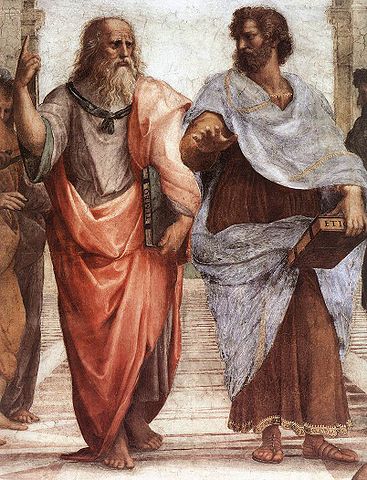
While I respect many of the moral accomplishments of the West, I believe that Judaism still has much to offer in critique of the West’s many remaining failings.
Historical perspective should humble us. It should make us realize how little we understand the true nature of what is going on around us. But it should also make us realize that things truly worthwhile have a staying power.
Even as Western society has become uncomfortable with religion, it has also become increasingly uncomfortable with its own discomfort.
The sum of the whole is greater than the sum of the parts
To understand why we don't see people like these anymore, it is worth pointing out that Rosenzweig and especially Weil could be described as “Renaissance men.”
Ya’akov is the patriarch that reached the pinnacle of the early Biblical period by combining the strengths of both his father and grandfather and raising all thirteen of his children to follow in his footsteps.

Though many of us remain focused on Israel’s current war, the more general polarization in Israeli society and throughout much of the world that preceded it and continues to serve as its backdrop should be an even greater concern.
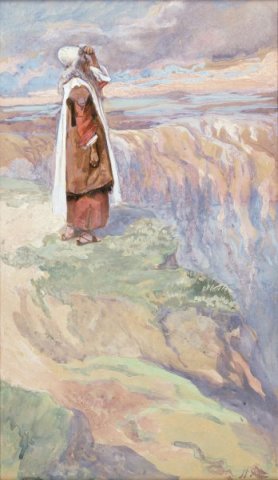
There is no more meaningful relationship than the relationship of someone who teaches Torah with their students. And yet, no student is the same as their teacher.
While Moshe saw all the Jews as one whole, it was the ones in front of him who served as the representatives for all those who had lived and would live in the future.

Many commentators wonder why not proffering bread and water is considered such a great crime
The Torah standard for the conviction of criminals is set much higher than in most contemporary systems of law
The reward matches the challenge.
NEVER lose sight of the gol
...And Why You Might Have Thought Otherwise
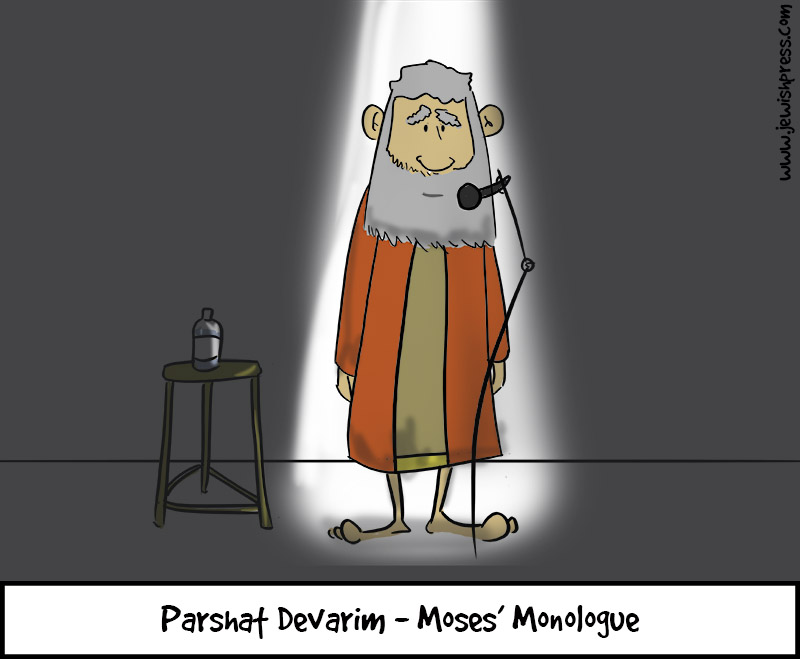
The Land of Israel being the ideal homeland of the Jews is that it is the only one. It is ideal, and nowhere else
once Aharon dies and they confront the king of Arad, they decide upon a different journey in which they will enter Israel through the “side door.”
How important are failed plans and plots, such that the Torah needs to mention any of them at all?
When God gets angry at the people, all Moshe can do is fall on his face in grief at his own responsibility about what was happening-- But Moshe doesn’t stay on his face for long.
Being a real hero is not just about what we do, it is also about when we do it.

One may then raise the question of why should Moshe have gotten married to begin with
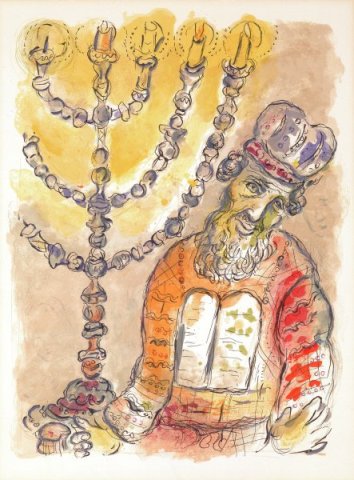
The Kohen is the one who will accompany these three alienated individuals and, by so doing, become their connection to the rest of society.
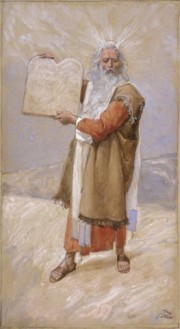
Judging from the sources in the Talmud, there is more than a tinge of ambivalence about the non-Jews being left out of Matan Torah. Though the Talmud was written in the context of a nascent Christianity that preached a gospel to all men, it was likely more than this that prompted the rabbis to justify […]

Since historical events like these have the potential to challenge our faith, they create a religious imperative to search for God’s loving hand even in the face of tragedy and sorrow. That is an important part of R. Akiva’s legacy as well as that of R. Shimon’s.
As we continue to speak less, we will continue to have less room for defilement… and for sanctity
It is well known that one of the causes for tzara’at is evil speech... However, the far more powerful example of the power of speech is the Torah’s conditioning the legal existence of tzara’at upon the priest’s declaration.
it seems hard to understand how the rabbis could come right back with the conclusion that Nadav and Avihu were greater than Moshe and Aharon
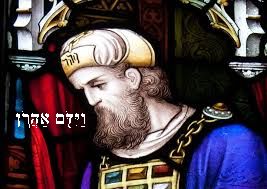
Exposure to evil prevents us from an illusion of pleasant stability--and stability is the very thing that prevents the good from getting better.
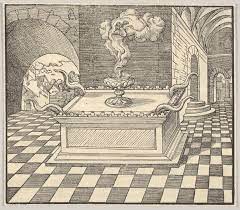
The incense that burned on this altar has always attracted special interest for its unusual life-giving properties
The measure of things...
I believe that the Torah is telling us something more nuanced. I think it is telling us that God wants the people to listen to Moshe even when he is wrong!
Throughout history, the Jews have not had many friends Faced with a hostile world, when they came across a truly righteous gentile, it was a bit of a surprise. Rare indeed was the gentile who would be kind not only to his fellows but also to the Jew. Thus, when the Jews met a highly […]
Leading by example must be calculatedly visible, not only from a point of view of where it is done, but even when and how it is done. Doing something privately is not an act of leadership.
The experience of the generation that came out of Egypt shows us that the clarity we think we so much want from God would actually hurt us more than it would help us.
Moshe’s complaint to God is that even though he would have the best human understanding of the Divine will, he had difficulty bringing it down to regular people.

While there is an important place for reflecting about past mistakes, that is only with regards to preparing ourselves to do better in the future.
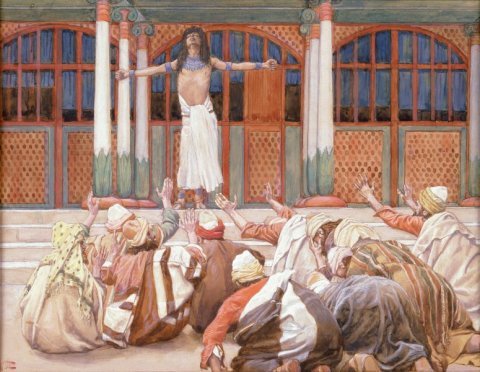
Neither Yosef nor Yehudah panicked. They did not know how the next parsha would begin, but they did know that the larger story had to have a happy ending.
Do "clothes make the woman"?

Ya'akov's youth resembles that of his passive and isolated[…] father, his adult life resembles the trials and tribulations of Abraham among the nations.
If we are constantly looking for the ideal, we may never find it, but if we start doing the possible, we may find that the ideal is just down the road

I am convinced that meeting Yitzchak was a much more intense experience than meeting Avraham.
We should remember that though Avraham was the first Jew, Yitzchak was the first born Jew. In other words, a certain paradigm of Jewish existence is created by Yitzchak’s birth, a birth in total contradiction to the physical reality of other men.
What does this have to do Yom Kippur?
This inability to understand others with whom we disagree underlies the polarization in Israel today
How might Moshe looked back upon his life? Ironically, the man unsurpassed in so many ways may actually have seen himself as a failure. Yet that is certainly the impression one gets from reading through most of this book.
The concept of “Beshert" in life
This is not to say that there is no such thing as a wrong turn. Though we can even learn from a mistaken path, we have good reason to want to avoid it.
One doesn’t die from a question
we need to first discuss the logical problem posed by chametz.
The Torah is based on the spot-on premise that basic features of the human condition remain constant throughout history
By using humor, he could bring home what simple study in a beit midrash could not.
Apparently, God is only actively engaged when man is conscious of Him
If I am indeed correct that each of the four descriptions of Yitzchak represents a different aspect of the test and Avraham is only congratulated for two, could it not be that Avraham did not pass the two aspects of the test that went unmentioned?
Some people get angry at the Jewish calendar. It takes away their ability to decide when they want to rejoice, when they want to mourn and when they want to repent. While narrowing our choices is true of halacha in general, there is something about the calendar that can feel especially oppressive. But even without […]
“I have learned much from my teachers and even more from my friends, but from my students I have learned most of all” (Taanit 7a).
The most outstanding Torah scholar may not be the greatest mentor and visa-versa. It is wonderful (and convenient) when we can find someone, who is “one-stop shopping.” Yet the story of Rav Kahana shows us that life is not always so tidy.
The pernicious difficulty of keeping self-love in check and not having it warp the way in which we see others is brought to our attention in the story of R. Elazar
Wishing all a Happy New Year-but when?
When it came to the “Jewish question,” Achashverosh seemed to be completely neutral. So how could he be as bad as the man who destroyed the Temple?
The goal is not to have God do what we want, but rather to do what He wants and thereby sanctify Him in the world. Often, that is accomplished by praying, but sometimes it is better accomplished by not praying – we are to look to halacha to tell us which situation is which
The alchemy of teshuva: Turning lead into GOLD.
While there is plenty of room for cooperation and interaction with other larger cultures, it is important for the Jewish people to remember that a key role God wants it to play is to often stand on the other side and follow our own path.
Almost always, the reason we are not willing to forgive offenses against us has almost nothing to do with the offense, and everything to do with it being done to us. Once we can internalize this, we can move to a God’s-eye perspective and forgive others more easily.
And so Moshe’s ultimate message here, according to Netziv, may be that even if the curses are fulfilled, that is no reason to abandon God.
One might think that there's nothing we understand better in the world than ourselves--after all, we spend every waking minute with ourselves. But is this self-understanding really the case?
In other words, it is not our strength at all that gives us the victory, but the workings of God.

As if Our Life Depended on it
There is an important teaching here for those who seek to have legitimate grievances addressed.
Precisely because the work that the second-generation did take place was less dramatic and required human participation that it created its own more organic resilience, making it a better model

Why twelve? If what is really important is the number ten, God could have theoretically created anywhere from eleven to nineteen tribes, and we would still have had decision-making with a majority of ten...
I don’t think it would be an exaggeration to suggest that the whole reason God created man, male and female, was for us to better understand our relationship with Him.
Since the commandments are all meant to engender some positive effect; when a commandment is not practiced, that effect will not be attained either.
Living at the height of European Romanticism and on the cusp of Nietzsche’s writings – which both contributed to a new much more pronounced interest in the individual – Netziv surely intuited the need to address the legitimate aspects of trends making inroads upon his students.

'--and Why We Avoid it Nonetheless
Although there is a strong basis for our propensity to be more stringent on Pesach than we are during the rest of the year, we should not turn that into a blanket attitude in which stringency is always followed, regardless of the other values at stake
The easiest way out of my problem would be to say that the Mishkan was designed based on people’s need to be impressed
Yet, if Mordechai teaches us that doubt is no reason for inaction, it is Esther that teaches us that it is actually a reason for even more effort
But the Torah was given to real people, for whom love of the outsider would not always be so obvious.

This story is actually a brilliant depiction of the interplay between divine providence and free will. Without taking away our ability to “surprise Him,” God – when needed – doesn’t hesitate to steer us in the direction He wants.
So while a proper reading of the Book of Bereshit introduces us to moral complexity, its end pushes us even further. It prepares us for the fact that there is even a level of moral complexity, which we should realize exists even if we may never understand it
How Yehudah Turned Bnai Ya’akov into Bnai Yisrael
Rav Hirsch famously criticizes Yitzchak and Rivkah for not educating Esav according to his innate personality, and instead trying to force him to be like Ya’akov. His insight is meant to teach that while it was Esav that made the choice to go ‘off the derekh,’ there is always much that parents can try to do before that happens.
Being bound on Mount Moriah gave Yitzchak a connection with God that would be disturbed by living outside the Land of Israel.

In fact – at its core – there is no better argument than Avraham’s. For his petition is asking for nothing else than what is good for God. For when God executes strict justice, He often “sacrifices” His own reputation for the sake of the truth.
 October 2, 2026


