יום ראשון, ל׳ תשרי תשפ״זSunday, October 11, 2026



Follow Us


When Moshe is told about the plague of the first born (4:22-23), God gives an explanation, something we do not see with any of the other plagues. Yet is it actually middah keneged middah?
Moshe complained to God that even though he would have the best human understanding of the Divine will, he had difficulty bringing it down to regular people. That role-"turgaman/navi"-Aharon filled
While Moshe may have eventually become even greater than the avos, we must always strive for the faith of his predecessors and for the inner flexibility that such true faith brings with it.
Ya’akov decides to prioritize the younger son, Ephraim, over the older Menashe
Yosef wanting to see his father Yakov again is understandable. Perhaps Yosef could not have left Egypt to do so. But did Yosef’s desire to see him justify making his father leave Israel for Egypt?
We generally assume that Yosef, as a victim of cruelty and not its perpetrator, had nothing to regret. Yet a careful reading shows he had a significant role in creating the tension with his brothers
How could Ya’akov make the same 'mistake' as his father, to favor one child over another after all the troubles that plagued him resulting from Yitzchak favoring Esav?
The actual tale of Rivkah and Esav is of a mother who continued to care and love a delinquent child who became a problematic adult, proving she will always be his mother and he will always be her son.
Like Rivkah before them, neither Rachel nor Leah created the situation that was about to have extraordinary influence on the rest of their lives and, ultimately, on the lives of countless others
On the one hand, we see that Rivkah was right about Ya’akov’s potential. On the other hand, we will never be sure who was right about Esav.
Yitzchak, did not go to Be’er Lechai Ro’ee to pray or meditate. Rather he was on a mission, and that mission was to return Hagar to Avraham in marriage.
Isn't it surprising that Avraham who prayed for Sodom's salvation did not protest God commanding him to kill his own son? For the Netziv, this was actually exactly what God wanted from Avraham. Why?
While we read of tests of Avraham, it is clear that Sarah endured tests of her own. According to Ramban, she failed her test in her treatment of Hagar
The Torah itself presents parallel narratives of the same stories, thereby showing that the same events can truthfully be constructed in more than one way.
Though a woman helps her partner and remains his equal, she nurtures and thereby becomes a man's superior. Paradoxically, therefore, woman may be just a bit closer to the image of God than man.
It was not enough for Moshe to die by himself, however; his separation from family and nation had to be total, even after his death. And so his burial spot would need to be hidden from all.
God’s foremost desire is to conduct a relationship with the Jewish people built on love and commitment. The song of Ha’azinu reassures us that the relationship will never die.
As we approach Yom Kippur, it is time for us to think creatively, the willingness to chart a new path, about what we can do better.
Many commentators sense a significance to the placement of the bikkurim declaration, at the beginning of this week’s pasha, right after the injunction to destroy Amalek. What is the connection?
Battling Amalek presents an important warning to any Jewish military leader that there is a need to maintain a basic respect for what it means to be human, even when dealing with mortal enemies.
Is the Torah to be read exactly as the Jews who received it would have, or, is it actually to be read in a contemporary way that can't possibly be the same as those who first received the Torah?
A musical perspective on Parshat Ekev...
Understanding why these Ten Statements were chosen-as opposed to others omitted-could well lead us to a greater grasp of the essence of this venerable text.
An obstacle to understanding Devarim is thinking of it as a book. Devarim literally means “[spoken] words” and should therefore be primarily considered in its 'orality'
Why did Moshe include part of Menashe together with Gad and Reuven in the Transjordanian settlement?
The fact it was specifically Midianite and Moabite women involved with Jewish men {Moshe and men involved with Ba'al Peor) shows that an existential bond existed between these nations and Israel.
Bilaam not only doesn't appear to be great, he seems to be base as well as foolish (outsmarted by his own donkey!). So how can the midrash claim he was really at least as great a prophet as Moshe?
Moshe was ideally suited to the role of an intermediary between God’s immanent presence and Israel but not so well suited to leadership in front of a hidden God
The communication gap here is really two-sided. It certainly starts with Korach and his group, but it subsequently infects Moshe as well.
The incident of the spies was a completely new and problematic transgression, it was not toward the rarified wilderness, but rather toward the earthly existence promised in the Land of Israel.
If Moshe was the greatest man that ever lived, his silent partner Tzipporah deserves much of the credit for it.
Enjoyment of God’s world always comes with some innate meaning – something which is lacking in the case of abstinence, the case of the Nazir.
The Torah recognizes the phenomenon of leadership and brings it to our attention subtly in the Book of Bemidbar, through the way it lists the names of the different tribes.
Had the Jews not sinned with the spies, they would have gone into the land led by Moshe at the end of Parshat Shelach. Hence the end of Vayikra would have basically been the end of the Torah
The Torah is telling us something here: Though we may sometimes act too rashly, there are times when rash action is the only way to prevent a complete catastrophe.
In this week’s parsha, the Torah further develops the statement that opens Parshat Kedsohim, the need to be 'Kadosh.'
Parshat Achrei Mot represents a transition in the book of Vayikra from an emphasis on Aharon and his sons to the Jewish people as a whole
Man in his ideal form is described as a speaker. Fitting that the sin most closely associated with tzaraat is misuse of speech.
The outcast metzorah or zav, is essentially promised a quick rebirth within the Jewish nation.
Vayikra, unlike Shemot, is not really about revelation. It's about the daily struggle to raise man above his own physicality.
Vayikra, the Torah’s middle book, gives the critical light to the Torah's other books around it.
Perhaps God’s own 'completeness' prevented Him from dwelling in a Mishkan waiting to be finished?
The Mishkan's building was a situation where the process was at least as important as the result
Paradoxically, it is when we confront evil we have the opportunity to make the world a better place.
The sages believed each of the Kohen Gadol's vestments brought atonement for a different type of sin
If we truly want to be involved in Torah study, than we, ipso facto, are involved in Torah study.
By first putting parents before "self" we learn to put the more abstract God before self.
Yitro may well be the prototype of the righteous gentile, maintaining a distinct non-Jewish identity
The first 30 years of the State of Israel allowed many to see God in history
Shifting the year's start from Tishrei to Nissan symbolizes a shift in perceiving the natural world.
According to the Baal haTurim the snakes created by the magicians represented Phaorah himself
Tzipporah is largely invisible & almost entirely silent, we hear her only when she rebukes Moshe
Did you ever wonder if Yosef and his brothers ever conclusively put their past friction to rest?
Yakov realized there was a Divine plan all along; God did not inflict suffering on him for no reason
Yosef’s tale illustrates that "clothes don't make the man"
Tamar initiates the process, opening Yehudah’s eyes to her essence; “clothes don’t make the (wo)man"
People have 1 name because it supposedly reflects identity. What if a person has a double identity?
Of all the many fathers-in-law in the Bible, only Yitro & Lavan are singled out for this designation
Ever wondered why the least funny Jew in the entire Torah should be named Yitchak, “He Laughed?”
At the beginning of this week's parsha, Rashi informs us that Sarah's death was no accident, but rather a result of hearing about Avraham almost sacrificing her beloved only son, Yitzchak. Based on the midrash, Rashi explains that the terrifying image of such a scene was more than she could handle. Though Sarah would almost […]
The greatest impact of an individual is generally felt when he acts as part of the larger community.
If everything depends on the final test, the Sacrifice of Yitzchok, why give Avraham other trials?
The remarkable gift of unity should be a powerful tool to further mankind and to further God’s will.
‘God doing exactly as He planned’ does not mean that all occurred without any ambivalence & tension.
Haazinu encourages Jews in times of national emergency & documents our eternal connection to God
Moshe's message lives on forever: Life's potential is a very lofty goal that we must strive to reach
The Netziv’s point: Self-assessment should be based on who we are, not based on who our neighbor is.
The bikkurim declaration praises Gd & distills the Egyptian experience down to its spiritual essence

Mighty Amalek deliberately attacked enemy's weakest members, despicable even by ancient standards
Judges, essentially apolitical, fulfilled a temporary purpose and then returned to private life
God's greatest gift for growth & coming closer to Him is "feedback;" Eretz Israel is set up that way
In the Shema, Jews sense personal address but know deepest expression of loyalty to God is communal
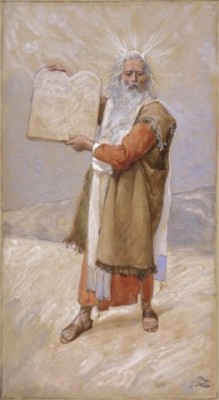
The 10 Statements main point was not content but the encounter between G-d & His nation, Israel
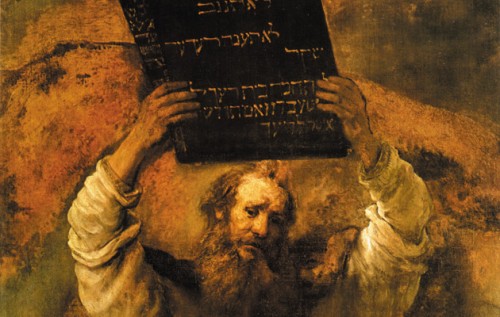
Words & expressions that don’t appear anywhere in Torah’s first 4 books suddenly appear in Devarim

Gad’s tremendous wealth considered with other points led rabbis to deduce Gad was very materialistic

5 sisters, with no brothers, questioned an assumed law concerning land inheritance in Israel-and won

Bil’am’s character is complex and nuanced; neither purely good nor purely evil.
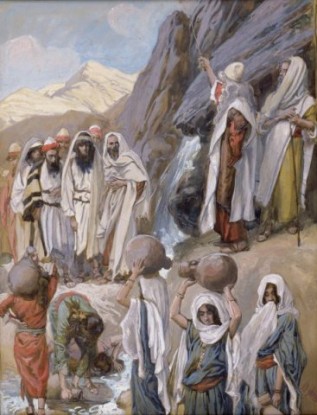
Israel's complaining frustrated Moshe, making it increasingly hard for him to lead effectively
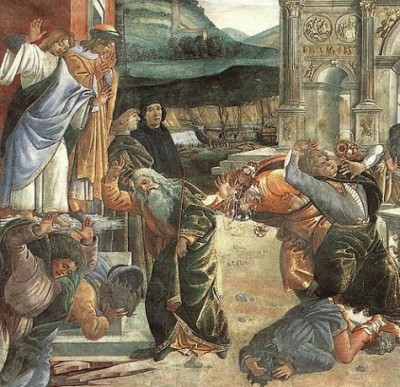
Korach demonstrates how "charisma" can lead to a breakdown in the legitimate forms of leadership

The Children of Israel chose a natural human existence, as opposed to living supernatural lives

Despite unequal status, teamwork is the surest route to harmony and maximum self-expression.
Many of us simply don’t get the need for the Torah to list the exact same gift offering, 12 times!

From Bemidbar on and in Nevi’im, the nation is viewed primarily by its component parts, the tribes

Faith is responding to demands that we wouldn’t think of taking on were we left to our own devices.

With ubiquitous texting, social media, & email, society is mislead to think that words are ephemeral

Putting parents before oneself is a step toward putting the more abstract concept of God before self
For humans, reducing flesh is generally a good thing whereas its expansion is generally a bad thing
The successful student listens more than speaks out; wants his ideas critiqued, not just appreciated
Rambam warns that a festival meal without taking care of the needy isn't fulfilling simchat yom tov
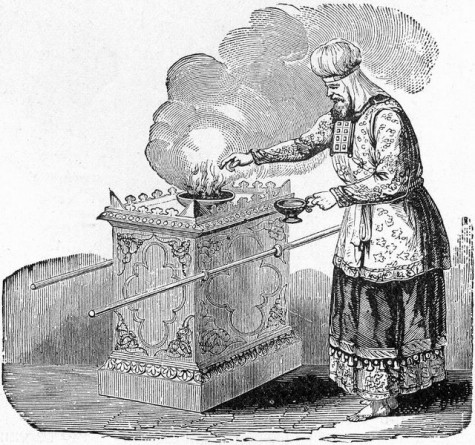
Though God can’t benefit from gifts to him the best way to create a relationship is by giving to Him

Torah is written with a human bent; As the Talmud says, "The Torah speaks in the language of men."
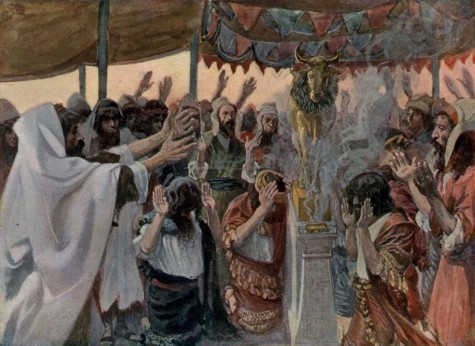
Aharon’s guilt with the golden calf is not clear-cut. What if Moshe were in his brother’s place?
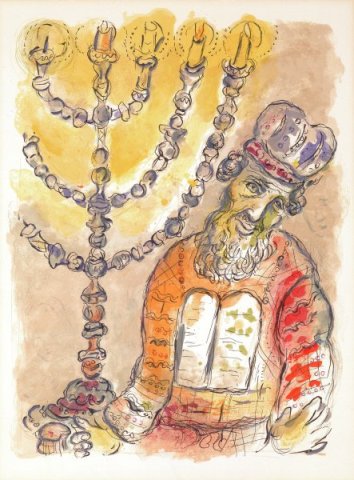
What about the Temple service required God to intervene commanding Aaron what he needed to wear?
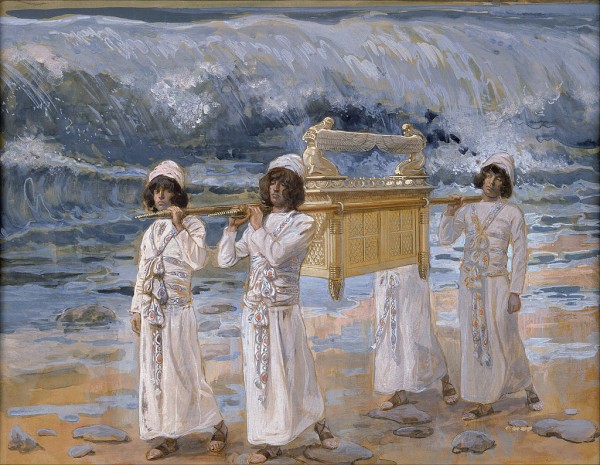
The notion of duality is paradoxically a very important part of God’s unity.
"Hamas" means "violent," via undue human pressure on a process not meant to be controlled by humans
Shemot relates the transition from the story of one family-Yaakov’s-to the story of a nation-Israel
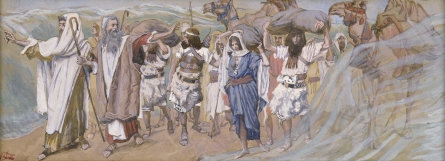
Leading by example must be visible, regarding where, when and how-like Nachshon entering the Red Sea

Pesach is called "zikaron," a Biblical term used describing an object eliciting a certain memory
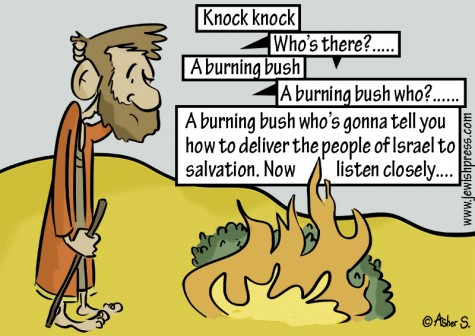
Moshe viewed his speech impediment as part of his core identity and his intrinsic human imperfection
God wants man to maximize benefit from Creation only in ways that don’t compromise spiritual health
 October 9, 2026