יום רביעי, י״ט תשרי תשפ״זWednesday, September 30, 2026



Follow Us


Investors also possess superpowers that can help them overcome financial challenges. If implemented, they can help families – even those with modest incomes – achieve wealth and prosperity.

While we should all daven for divine intervention to protect us and help us make good decisions and achieve our goals, I find that, in the realm of personal finance, far too many people seem to rely solely on miracles to secure their financial future.
The best way to manage the inevitability of changing market dynamics is to plan ahead.

For every bad financial experience regarding kollel, I imagine there are many positive ones. The most non-financially stressful kollel experience requires a Yissachar and Zevulun relationship that is clearly defined from the onset.

In my annual investment outlook, I always try to focus on strategies that are more practical for investors. My friend, Yoni Raab, suggested that this year I look to Parshas Mikeitz and Pharaoh’s dreams to glean some timeless Torah wisdom for investors to apply in the year ahead. As always, Mr. Raab’s suggestion turned out to be spot on.

While I truly believe that most people in the investment business conduct themselves with high ethical standards and are motivated to help investors achieve their financial goals, there are a few bad apples out there that are usually the loudest and most skilled salespeople.

In the realm of estate planning, if one son is in kollel and the other son is an investment banker, more money may be needed to support the former. The latter may appreciate a different type of non-financial support to help them achieve their full potential.

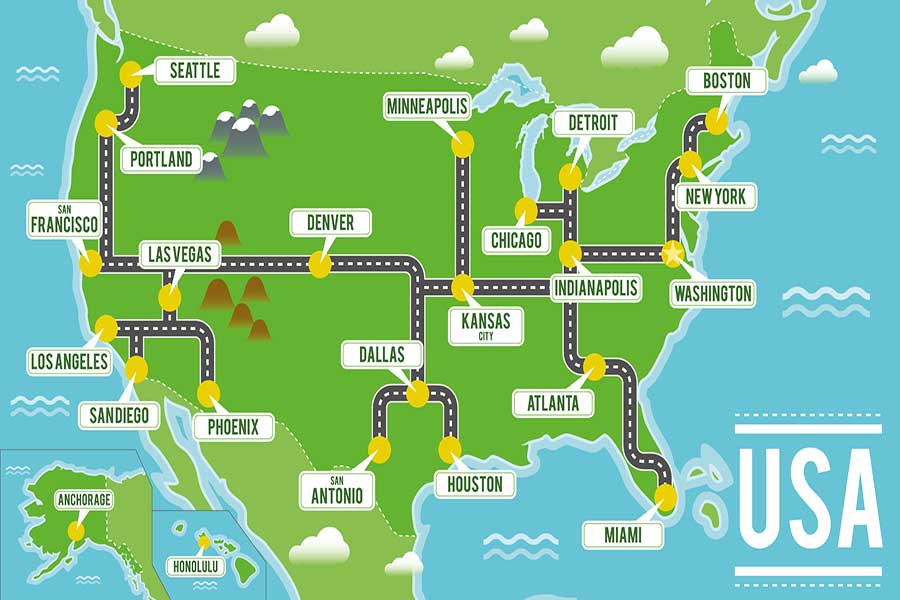
I’m sure readers can point to their own parents, grandparents, or great-grandparents, who moved to this country to improve their respective circumstances. Whether it was to flee antisemitism and pogroms, or perhaps to find a job, moving has always been an effective financial planning strategy.
Do not rush to make investment decisions based on who the new president is. Take time to digest the information.

To determine how best to allocate your funds, it’s important to understand your personal financial goals.

The cornerstone of personal finance is to live within your means. Buying something you can’t afford goes against this dictum and will set you up for financial ruin.
The importance of creating meaningful experiences is especially relevant as we approach the chagim.

A caveat on my perspectives. My kids are not yet of marriageable age. My only wedding planning experience comes from my own nuptials. Although beyond showing up with a suit and kittel, and selecting a stellar mesader kedushin, my involvement was modest, and that’s being generous. My opinions, therefore, don’t stem from the details of planning.

At the end of the day, believing in your plan can keep you committed to it when the going gets tough.
Surround yourself with people who derive joy from other aspects of life beyond materialism to eliminate the feeling of constantly needing to keep up with friends in your community.

Investors tend to make drastic decisions when they are feeling scared, greedy, or impatient. Unfortunately, these impulsive moves rarely, if ever, work out. Emotional decisions have no place in the world of successful investing.

It’s always worth reminding yourself that wealth is what you don’t see. Houses, cars, fancy clothes, and the like are all visible things on which people spend money. What’s actually in their bank account is not advertised to the public.

It’s possible Nvidia may continue to rise. It also may plummet like many of the aforementioned investments. The main point, and a good reminder for all investors, is: You will NOT win the investing lottery!
Successful investing does not mean perfection. There is no perfect portfolio or time to invest in the market.

The question I constantly find myself asking is why does this intellectual dishonesty occur? The answer, at least partially, is due to confirmation bias.
Unpleasant surprises that induce feelings of helplessness can also strike our personal finances. In fact, the likelihood of adverse financial events impacting our nest eggs is far higher than experiencing an earthquake.
The essence of this message is simple. It’s to continue living by the same traditions and values that have been passed down from generation to generation.

The biggest stumbling block for many investors is themselves. The tendency for people to get in their own way is usually what prevents folks from achieving success in the markets.

This week I’ve decided to compile some popular rules of thumb to share with readers and offer my own thoughts on the relevance of each rule. Keep in mind that it’s OK if your personal situation doesn’t alight exactly with every rule.
Annuities have a bad reputation, and rightfully so. In my opinion, they are a jungle of high fees, moving parts, and lack of transparency. In short, they are not usually the best choice.
When I meet with affluent families, I endeavor to frame money as a tool and not a scorecard. Communicating this viewpoint is often even more impactful than the investment recommendations or tax mitigation strategies I implement on their behalf.
I share this dose of reality: You don’t get a pass on math. If you do not have a high household income, you can’t live an extravagant lifestyle. You will need to make compromises on where and how you live.

To get you started, below I share some common discussion points that come up frequently in my practice when strategizing with folks who just sold their primary residence and are also approaching retirement.
When it comes to personal finances, there are also many cool things out there. However, the determinant of success always comes down to sticking to the basics.
As I say every year, it’s important to keep in mind that these predictions are nothing more than educated guesses, wishful thinking, and marketing.
There are also other ways of advocating for Israel. This may include peaceful rallies and writing letters to your local politicians. While it may feel like our elected officials have their own agenda, the reality is they like their jobs and can’t totally ignore their constituents.
The end of the secular year typically coincides with certain deadlines. It is also a great opportunity to set the stage for a financially successful new year.
No matter how challenging the environment, there is always reason for hope and items for which to be grateful. This is true for life as well as investing.
When I discuss college planning strategies with clients, I typically focus on how to afford these steep tuition costs.
I’m inspired by the people all over the world, Jews and non-Jews alike, who are donating time, money, supplies, and food, to help defend Israel.
For any reader who made it through this article, congratulations! You now know more about financial planning than the overwhelming majority of your friends and fellow countrymen!
Technically, stocks have unlimited upside. That’s why they may be the best vehicle for long-term investors who need their money to outpace inflation over that long period.
The theme of living a Torah lifestyle became much more important to me and guides my decision-making process today.
One of the biggest determinants of financial success is the ability to stick with a strategy through many different environments.
At this stage of your child’s life, the most important thing is to engage them in discussion about basic financial literacy.
While sacrifices need to be made to live a frum lifestyle, NO family should be expected to accumulate credit card debt to send their kids to yeshiva. It's the yeshiva’s responsibility to do more to help parents in this scenario!
Freeing up cash from unnecessary expenses can give you the flexibility to spend more on areas that are more meaningful for you, like family, vacation, or making necessary home improvements.
The urban legend is that in honor of Haym Salomon's pivotal contributions the 13 stars, representing the colonies, on the back of the dollar bill were arranged in the shape of the Star of David.
An open letter to recent college graduates.
It’s important to note that while you are allowed to collect Social Security and unemployment benefits simultaneously, depending on where you live, your unemployment benefits might be reduced.
Sensitivity to taxes can also manifest itself in portfolio construction. Certain investments are more tax efficient than others.
I don’t oppose lavish vacations. In fact, as long as someone is living within their means, saving for their future, and giving to tzedakah, they should be able to go on the most extravagant and over the top vacation that they want.
Yes, finances are a very important consideration when dating. In fact, I would rank it among the most important criteria.
Sadly, there is no combination that is more dangerous to your nest egg than overconfidence mixed with a lack of experience.
Start-up companies were the bank’s major clients, and they tend to borrow a lot of money. When rates were low, business was easier. When rates climbed, it became much more expensive to run their business and things gradually became more challenging for them.
Before delving into the more involved questions about life insurance, it’s worth reviewing what it is and why it is important.
The KCP is often the result of social pressure from one’s community and circle of friends. It’s quite common for people to exhibit conformity bias, where they behave according to, and make decisions based on, what others around them deem acceptable.
If you spent many years working for a company, it is possible that this pool of money is one of your most significant assets. Therefore, proper management of these funds is foundational to a successful retirement.
As I watched the documentary, reliving what I saw unfold firsthand in 2008, I couldn’t help but note several timeless investing lessons that could be learned from the greatest scam in history.
Investors should remember that despite what is happening in the world, the markets and humankind have always prevailed.
Little did he know that he taught me much more about investing and retirement planning than the training program at a major Wall Street bank early in my career.
It’s tempting for clients to want their fees to be the lowest possible. However, working with someone just because their fees undercut the competition may be shortsighted.
For folks who are deep in debt, getting to a $1,000 emergency fund is a big accomplishment.
I am also thankful that we have a well-established system for handling bankruptcy just in case an investor overextends themselves on any speculative investments. Most people deserve a second chance after they learn from their mistakes.
High-interest debt is a cancer to personal finance. It can quickly grow out of control and become insurmountable. To dig yourself out of your financial hole and begin building wealth, you need to get rid of your loans.
Attempting to time your home purchase with the optimal market conditions is like trying to time when to invest in the stock market. In both situations, you will most likely not be successful.
The social pressures that come with living in a tight knit community or having a close group of friends may be some of the most difficult money challenges to overcome.
These trusts are a wonderful way to benefit charity and achieve a family’s retirement and estate planning goals in a tax advantaged manner.
Current estimates suggest that Biden’s program would cost around $300 billion, or about $2,300 per U.S. household. While this burden would not actually be shared equally across all households, it provides some perspective on the cost of the program.
Many congregants feel the costs to daven in shul are unwelcome or unnecessary. Their frustrations are valid. A frum lifestyle is expensive, and shelling out more money is a challenge for many.
Any college-bound person should fill out the FAFSA a year prior to matriculation. Remember, your family doesn’t need to have a low income to qualify for assistance.
College is an investment: Don’t let any admissions officer, friend or family member sway you with less important factors like campus life, extracurricular activities, junior year abroad options, national rankings, how many alumni are Nobel laurates, or the university’s sports team.
If you are baffled by this definition, you are not alone. Yet, this confusion hasn’t stopped many folks from enthusiastically investing in and utilizing this asset.
While you seem less enthusiastic about your son’s plans, your in-laws may be ecstatic about the idea. They may be more than willing to pick up the tab.
Financial planning is not only about the accumulation of wealth, it is also about the transmission of values to the next generation.
There is a tendency for investors to find, and pile into, the hot investment du jour... When things go south, having an overly concentrated position in any one area of the market can be devastating.
Besides mortgage and insurance payments, there is a myriad of costs associated with maintaining a home. It’s important to factor in these annual upkeep costs to ensure you are purchasing a home that you can actually afford.
Despite what may seem like my impassioned defense of Los Angeles, I have only been there as a visitor. I can appreciate a great dinner with friends at Pat’s on Pico... However, I can’t pretend to fully understand the daily struggles of the average frum family there.

Taking the time to go through a checklist of items to ensure that your investments and financial plan are all up to date is imperative to achieving one’s goals.
If you are a few years from retirement or in retirement, inflation becomes a bigger concern. You may no longer have a paycheck, can’t take as much risk with your portfolio, and don’t necessarily have the luxury of waiting out a long inflationary cycle.

It’s important to remember that this is not the first time that the world has been on edge.
One of my most interesting observations is that the folks who accumulated the most assets were often not the ones with the highest incomes.
The rule of thumb is to have three to six months’ worth of expense money in your account as a cushion in case a need arises.
When deciding where to live, there may be a tradeoff between the percentage of your income that goes towards housing costs and the number of options for frum amenities which are more plentiful in high cost of living communities.
You may be surprised how many companies would be open to having the right candidate work remotely regardless of their location.
Housing is the obvious example of potential cost-saving by moving. I am always astounded when friends and clients in other parts of the country tell me how much they spend to purchase a new home.
None of these strategies are easy, but they may all be effective when taken seriously.
Some readers may be concerned about putting all their money into the stock market since its fluctuations can be nerve-racking.
Downsizing is a great time for retirees to go through their own things and dispose of items that they no longer need. It’s also a great opportunity to gift more sentimental items to children, grandchildren, or charity.
You will hear all about the investments on which your friends made a windfall but will never hear about the duds that cost them a fortune.
 September 25, 2026