 October 16, 2026
 Categories: Arts
Seeking Holiness
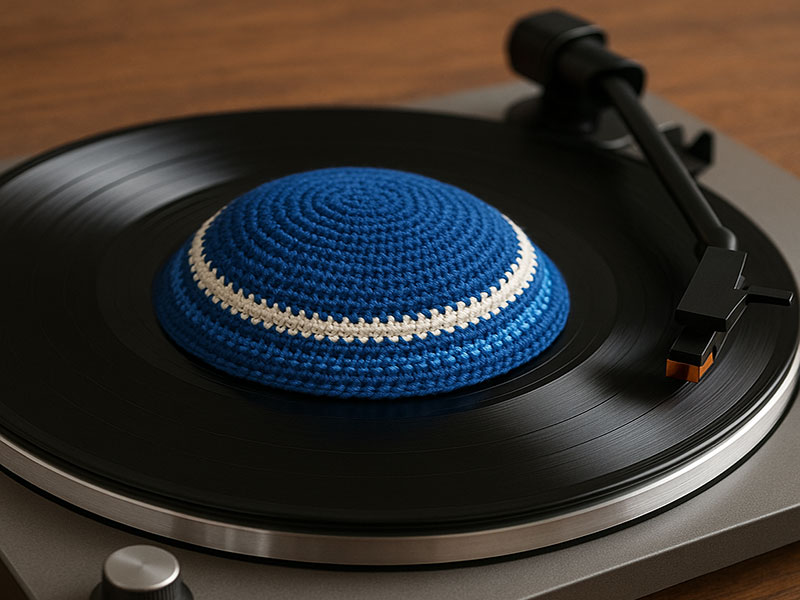


Next week is Yud Tet Kislev (19 Kislev), which is a date that almost every Chabad chasid out there is familiar with. But Yud Tet Kislev is also the yahrzeit of Rabbi Moshe Zvi Neria, zt”l, who is called “Avi Hakipot Hasrugot” (Father of the Knitted Kippahs). This refers to the Dati Leumi community in Israel, which is the closest parallel to the Modern Orthodox in the U.S. Rav Neria also had a strong connection to Chabad and to the Rebbe. Rav Neria was also the founder of Yeshivat Bnei Akiva Kfar Haro’eh and was the rosh yeshiva there for many years.
The Mizrachi movement was a Modern Orthodox political movement which started in 1902. It put at the center shmirat hamitzvot – keeping the mitzvot the Orthodox way – combined with Zionist views. In parallel to the Mizrachi movement, there was the Hapoel Hamizrachi movement, which started in 1920 and grew out of the Mizrachi movement but emphasized social values from our tradition. The youth movement of Hapoel Hamizrachi was Bnei Akiva, while the youth movement of the Mizrachi was Noar Hamizrachi, which in short was called Noam.
Unfortunately, many frum kids involved in the youth movements became secular, and one of the reasons was that they didn’t have an appropriate educational framework. Rav Neria thought that having their own school would help keep the youth religious. This is how he came to start Yeshivat Bnei Akiva Kfar Haro’eh with only 13 students. In the first years of the yeshiva, they studied only Torah during the day, without general studies. A few years later, the No’ar Hamizrachi (Mizrachi Youth) movement established its own yeshiva high school in Pardes Hanna and they called it Midrashiyat Noam. There the students had half a day of Torah studies and half a day of general studies. After that, Yeshivat Bnei Akiva Kfar Haro’eh began to teach general studies half a day as well.
For many years there was a competition between Midrashiyat Noam Pardes Hanna and Yeshivat Bnei Akiva Kfar Haro’eh. The Midrashiya, as they called it, was considered more elite, with difficult exams you had to take to get accepted. But I’m not objective in this discussion, since I studied at the Midrashiya in Pardes Hanna for high school. But I remember the competition with Kfar Haro’eh, which is actually very close by – maybe about a 20-minute drive. By the way, a lot of the chasidic music I still listen to today (and write about in this column) I was exposed to during my years at that high school.
The concept of “yeshiva tichonit” (yeshiva high school) came to address the problem of young frum kids becoming secular, as well as to give them pride. To create a brand, an identity they could feel proud of. Many students who graduated from Yeshivat Bnei Akiva Kfar Haro’eh or the Midrashiya and other yeshiva high schools in Israel reached prominent positions in the country – in the IDF, the media, industry, etc.
Dedi Graucher, z”l, studied at Yeshivat Bnei Akiva Kfar Haro’eh. In an interview, he once spoke about his special connection to Rav Neria, zt”l. If you Google “Dedi Graucher Rabbi Neria” in Hebrew, you can watch the one-minute interview where he speaks about Rav Neria. It’s a fascinating story.
One day, a girlfriend of one of the students in the yeshiva in Kfar Haro’eh, Ovadia Chen Tzion, made him a knitted yarmulke – a kippah srugah. It was not the knitted kippah we have today – it was sharp at the edges and with a small pom-pom on top. It didn’t catch on. A few years later, after they got married, she made him another kippah, more in the style of the regular knitted kippah that we have today. A few days later, Rav Neria saw his former student walking in Tel Aviv with the new kippah and asked him if his girlfriend, now his wife, Pnina, could make the Rav such a kippah too. The student’s wife agreed, and Rav Neria changed his kippah from the black one he used to wear to the knitted kippah made by Pnina, the wife of his student. From that time, all the young people of the Dati Leumi community in Israel started wearing knitted yarmulkes – kippot srugot. (This story is taken from the Facebook page of Matzav HaRuach magazine and was related by the editor Haggai Hoberman.)
One of my favorite songs is a beautiful song the lyrics of which are the last words Rav Neria, zt”l, spoke before he died.
The song is called “Kedusha Ani Mevakesh” and it was composed by Hillel Paley. Paley became famous when, at 25, he composed the hit “Shiru Lamelech” for Yeedle Werdyger. Since then, his tunes have been sung by many popular chasidic singers. “Kedusha Ani Mevakesh” is performed by Dudi Kalish who is a singer, composer, maestro, and producer.
These are the words:
“Kedusha ani mevakesh” (I am seeking holiness). “Kodesh Kodashim ani mevakesh” (I am seeking the Holy of Holies). “T’nu li k’dushat Eretz Yisrael” (Give me the holiness of the Land of Israel) – “T’nu li k’dushat ahavat Yisrael” (Give me the holiness of ahavat Yisrael).
Ahavat Yisrael – loving and caring for another Jew as though he were you – is something which is identified with Rav Neria, zt”l. Over the years, his students have told many stories about how he loved them, how he cared about each of them, and how he loved Am Yisrael.
The song starts with a niggun: just “Na na nai nai na nai nai nai nai” to the tune of the song, with electric piano in the background, which takes you into the atmosphere of the song. And then the powerful words, “Kedusha ani mevakesh, Kodesh Kodashim ani mevakesh…” with strings joining and adding to the feeling. Then the song gets a little more upbeat with drums.
It is very touching and moving. I encourage you to find it on YouTube and listen to it.
As I mentioned, Yud Tet Kislev (19 Kislev) is also a big Chabad holiday – Chag HaGeulah (Festival of Redemption). It is the day that the founder of Chabad, Rabbi Schneur Zalman of Liadi (1745-1812), was freed from his imprisonment in Czarist Russia.
Chabad has a lot of beautiful tunes and music. One column is perhaps not enough to cover it all.
One of the most popular – if not the most popular of the Chabad niggunim is “Niggun Arba Bavot” (Nigun of Four Stanzas). It is also called “Niggun Admor Hazaken” (sometimes also “Nigguno Shel HaRav” – the Rabbi’s Melody) and is considered the deepest and most important Chabad tune. The old Admor composed the niggun while he was visiting his rabbi, the Maggid Mi’Mezeritch, Rabbi Dov Ber of Mezeritch.
It’s a beautiful and touching niggun. There are many performances of it, and if you just Google “Niggun Arba Bavot,” you can find them. I like the one by Chilik Frank.
Another favorite Chabad niggun which I also have on my music player (and my kids also really enjoy listening to in the car) is “Niggun Chasidi HaTzemach Tzedek – HaRikud Shel Tzama” by Avraham Fried. One of the reasons I like this niggun is because it is available for purchase in high-resolution (HiFi), and you know already I prefer HiFi, a.k.a. “lossless,” music… It’s an upbeat and fun tune with a good rhythm. When you listen to it, you want to dance.
Put it on and dance!