 September 4, 2026
 Categories: Halacha & Hashkafa / Torah
First Rights
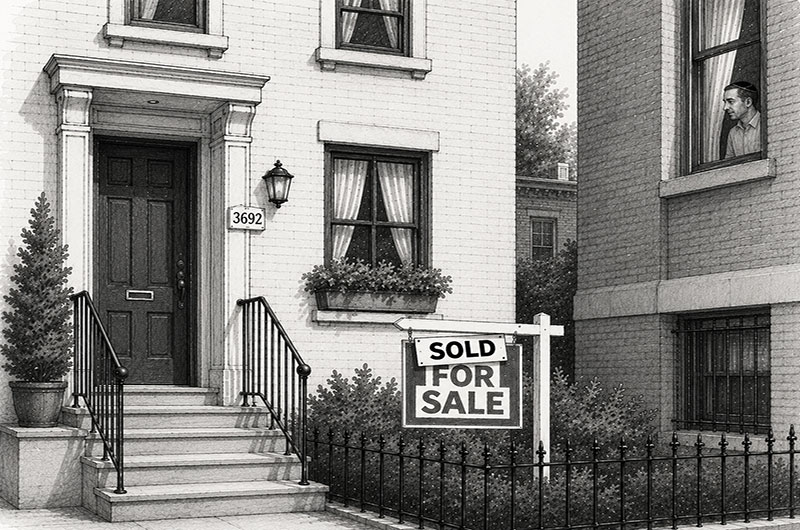


After years of dreaming, Mr. Landman and his wife finally decided to make aliyah.
The decision brought excitement, but also an endless list of things to arrange. Near the top of the list was selling their apartment.
After showing the apartment to several interested buyers, Mr. Landman finally found a serious prospect. After multiple meetings, inspections, and negotiations, the two sides were ironing out the final details.
“We’re almost there,” the buyer said during one meeting. “I’d like to move forward as soon as possible.”
“So would I,” replied Mr. Landman. “The sooner this is settled, the sooner we can finalize our plans for Israel.”
Word of the impending sale quickly spread through the neighborhood. One evening, Mr. Landman’s next-door neighbor knocked on his door.
“I heard you’re selling,” the neighbor said.
“Yes,” replied Mr. Landman. “We’re hoping to move to Israel in the coming months.”
“In that case, I want to exercise my rights as bar metzra,” said the neighbor. “Since my property borders yours, I have first rights to purchase your apartment.”
Mr. Landman was taken aback.
“We’re already in the final stages with another buyer,” he replied. “Starting over now could complicate everything and delay our move.”
The prospective buyer was equally unhappy when he learned of the neighbor’s offer, having invested considerable time and expense.
However, the neighbor remained firm. “Chazal granted the bar metzra priority,” he claimed. “I am prepared to match the deal and arrange payment promptly.”
Unable to resolve the matter, the three appeared before Rabbi Dayan.
“Is the bar metzra entitled to first rights here?”
“Chazal granted first rights to the bar metzra based on ‘v’asisa hayashar v’hatov,’ which requires us to act in a fair and beneficial manner,” replied Rabbi Dayan. “However, there are several limitations to this halacha when granting priority to the bar metzra could adversely affect the seller (B.M. 108a-b).
“For example, if a person sells a field far from the city in order to purchase a closer one, or sells a low-quality field to purchase a better one, bar metzra does not apply. Delaying the sale to accommodate the bar metzra could adversely affect the seller, since the closer or better field might be sold to someone else in the meantime (C.M. 175:42).
Shach (175:38) derives from this that bar metzra does not apply to one who sells his property to move to another city, as we find elsewhere that selling property to move to another city is like selling a low-quality property, since the seller no longer wants to live there (see C.M. 190:12).
Noda B’Yehuda(C.M. 1:24) questions this analogy, though, since regarding bar metzra,the focus is on the seller’s intention to buy the closer or better field, whereas when selling a low-quality field without intent to purchase a better field, bar metzra doesapply.
Therefore, he limits the Shach’s ruling to a case where the seller has limited opportunity to buy a house or take a job in the new city, such that delaying the sale could adversely affect his prospective option. However, if the seller does not have a limited or defined option in the new location, the laws of bar metzra apply.
However, several Acharonim uphold the Shach’s ruling. Sha’arMishpat(175:3) cites from the Rosh (B.M. 9:27) that when a person sold all his property to a single buyer, an arrangement which is hard to come by, then even if the bar metzra is later willing to match the purchase, Chazal did not grant him priority. If we would require notifying the bar metzra initially, the rare potential buyer might back out in the meantime, adversely affecting the seller.
Similarly, when the seller wants to leave the area, if we would require notifying the bar metzra initially, the prospective buyer might retract in the meantime and delay the move, adversely affecting the seller even if he did not have a defined prospective option elsewhere. Therefore, Chazal did not apply the rule of bar metzra, even if the latter is now willing to match the deal (see Pischei Teshuva 175:16; Mishpat Shalom 175:42).
“Therefore,” concluded Rabbi Dayan, “since requiring the involvement of the bar metzra initially could have delayed Mr. Landman’s plan to move to Israel, Chazal did not grant him priority rights in this case.”
Verdict: If a person sells a property to buy a better property elsewhere, there is no rule of bar metzra, since during the delay, the other property may be sold. Shach applies this also to one who wants to move elsewhere, if there is concern that delaying might adversely impact his move.