 October 16, 2026
 Categories: In Print / Headline / Arts
Songs Of Return


The lyrics for two of my favorite songs are taken from this week’s haftara. One is “S’ee Saviv” by Avraham Fried from the album My Fellow Jew – Yochid V’rabim (which is also one of my favorite albums). The other is “Banayich Merachok” which was composed by Naomi Shemer based on a few different pesukim in the haftara.
Shemer composed the song for the 1990 Shirutrom. The Shirutrom was an annual fundraiser for the benefit of Israeli soldiers. The song was originally composed for Lehakat Hanachal, but today I’d like to recommend a different performance by Asaph Neve Shalom. The reason I prefer that one is because in her version, Shemer changed the words “uk’vod Hashem alayich zarach” to “uk’vod haEl alayich zarach,” but Asaph Neve Shalom uses the original words of the pasuk. (To find this performance on YouTube, search for “‘Lehavi Banayich Merachok’ (in Hebrew) by Asaph Neve Shalom.”)
Both songs are about the same subject – the return of Am Yisrael to Eretz Yisrael from the galus. And both have a nice rhythm.
As a child, I had a very heartbreaking and touching experience with the song “Banayich Merachok” that I’d like to share with you. Don’t worry – even though the story is sad, it has a happy ending! But before we get to my story, let’s talk about the songs.
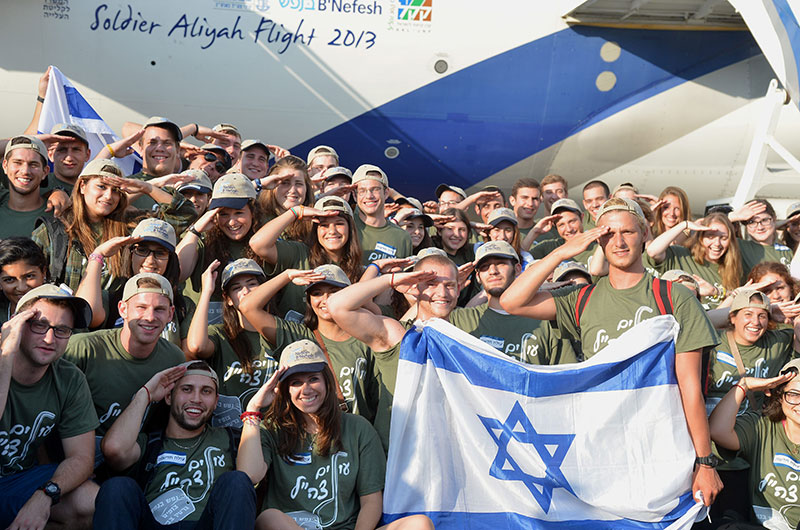
The navi Yishayahu compares the return of Am Yisrael to Eretz Yisrael as doves who return to their home. The navi continues and describes how the gates of Israel will be open day and night for Jews to return home. And indeed, in the past 77 years, Jews from all over the world have returned home. Day and night. Whether on commercial flights, or special flights and special operations that the modern State of Israel organized to bring home our brothers and sisters from all over the world.
“S’ee Saviv” begins with an acoustic guitar solo and strings in the background, taking you right into the atmosphere of the song. “S’ee saviv eynaich ure’i, kulam nikbetzu ub’a’u lach” – Raise your eyes and look, everyone has gathered and come to you! “Banayich merachok yavo’u u’bnotayich al tzad teemana” – Your sons and daughters from afar will come. And indeed, this is exactly what has happened.
The next song, “Banayich Merachok,” opens with the words that open the haftara of Parashat Ki Tavo which we read this week: “Kumi ori ki ba orech u’kvod Hashem ala’ich zarach” – Rise, shine, because your light has come, and the glory of Hashem shines on you. And then, as in “S’ee Saviv,” “Banayich merachok yavo’u u’bnotayich al tzad teemana” – Your children will return from afar. “Ve’az tir’i venahart, tir’i venahart, u’pachad verachav levavech” – Then you will see and your heart will expand and swell with joy. “Mi ele k’av te’ufeina, u’kayonim el aruboteihem, lehavi banayich merachok, lehavi banayich merachok” – Who are they who fly like a cloud, and like a dove returning to their home, bring your children from afar. “U’pitchu she’arayich tamid, yomam valaila lo yisageru, u’pitchu she’arayich tamid vesamtich lige’on olam” – And your gates shall be always open, day and night they shall stay not close, and I will give you glory. “Lachavosh lenishberey lev, velikro l’shevuyim dror” – To heal broken hearts and to give freedom to captives.
No wonder this song became identified with aliyah. These words literally describe the modern State of Israel, when Jews from all over the world have returned to Israel. And indeed, in the past 77 years, the gates of Israel are open day and night for Jews from all over the world to return home. To our homeland, Eretz Yisrael.
Now to the story. I was in fourth grade when I first entered Bnei Akiva (a youth movement in Israel, similar to NCSY in the U.S.). In Bnei Akiva there are shvatim (tribes), which begin with “Nevatim” in fourth grade, “Nitzanim” in fifth grade, then “Maalot,” “Maapilim,” and “Haro’ee.” Then, in ninth grade, each year the ninth graders get a new tribe name which stays with them from then on. So, as I said, the first tribe you are in when you join Bnei Akiva in fourth grade is Nevatim. I was so excited. You get the blue tie, the special symbol – and the highlight? The first “Shabbat Irgun.”
What is “Shabbat Irgun,” you ask? For those who are not familiar with it, I’ll explain.
The greatest event of the year in Bnei Akiva is the Shabbat Irgun, where on Motzaei Shabbat the young kids (fourth to eighth graders) embarrass themselves in front of the whole moshav (or the community where they live) and have a special performance which they work tirelessly on during the preceding month, known as “Chodesh Irgun.” Almost every evening during the month of Cheshvan, the kids come to their Bnei Akiva center (called the “snif”), decorate their room, and work on the show in which they are going to embarrass themselves in front of the whole community.
The kids wait for this performance the whole year. And when you are young and have just entered Bnei Akiva, the excitement is even greater. For the kids, standing on the small stage in the community hall in the moshav is like standing on the stage at Broadway.
So, I joined Bnei Akiva with a lot of excitement. We got our two madrichim (counselors) and began to work on our room – painting, coloring, decorating – and of course, to get ready for the big show. Our show consisted of dances to two songs. The second song was – you can already guess – “Banayich Merachok.”
Our counselor worked with us on the choreography. Honestly, the whole choreography was silly. We had to do many rehearsals to satisfy our counselor. It was so important to her that the silly movements and waves with our hands would be precise.
Somehow – I don’t remember why – I missed one or two of the last rehearsals before the big show. To my great disappointment, the counselor told me the difficult, heartbreaking message that unfortunately I would not be able to perform the dance for the song “Banayich Merachok,” and when the first song ends, I’d have to get off the stage and go back to my seat.
I was so disappointed. I didn’t know what to do. I tried to convince the counselor to let me perform. I told her I could do it; I’d practice more if needed. “Please, please, please,” I begged, “let me perform in the second song.”
“No,” she said, “you missed the last rehearsal and I can’t let you be on the stage.” I didn’t know what to do.
Shabbat Irgun arrived. The whole Shabbat was so uplifting. We had so many activities and so much fun. And then, on Motzaei Shabbat, the whole moshav came to the Beit HaAm (local community center) to watch the young kids embarrass themselves, jump on the stage with silly choreography, and show their talent. We were all so excited.
Our show was the first, as we were the youngest. We were all dressed nicely after a month of endless practice. Our parents sat in the audience, waiting to see us on the stage.
The show began.
The first song started to play in the background. We walked onto the stage and started to wave our hands and do the dance we had practiced the whole month. My parents had even brought their old camera to take a picture of me on the stage. My younger brothers came to watch me.
Then, when the first song ended, I stepped down from the stage, sad. But I didn’t go back to my seat. Instead, I stayed and stood next to the stage. My counselor didn’t notice that I hadn’t gone back to my seat. So, I waited a few seconds, and once the music started again, little Mendi (that’s me) jumped onto the stage, grabbed the microphone from someone’s hand, started dancing, and even sang (well, yelled) with the microphone in my hands.
Even when the mic was supposed to go to the next kid, I kept it in my hand and didn’t transfer it until the end of the song.
And that’s my sad story with a good ending about “Banayich Merachok.”
Shabbat Shalom.