October 2, 2026
 Categories: Headline / Features / Money Matters
Strong Shekel, Weak Dollar: What U.S. Dollar Earners in Israel Should Do Now


In May, I had the good fortune of visiting the Holy Land for my niece Shira's bat mitzvah. Over the course of the trip, we had multiple tour guides and drivers as we explored the country. During conversations with them all, two themes constantly resurfaced:
1) Israel desperately needs more tourists. Tourism is a meaningful source of revenue for the country, but since October 7th tourism has slowed to a trickle.
2) The strengthening shekel versus the dollar has made earning a living more challenging.
My suggestion to readers regarding the first issue is simple: Put Israel on your short list of vacation destinations this year. My family had a meaningful and enjoyable experience while also benefiting the Israeli economy. If you have the means and the time, consider making your next vacation a trip to the Holy Land.
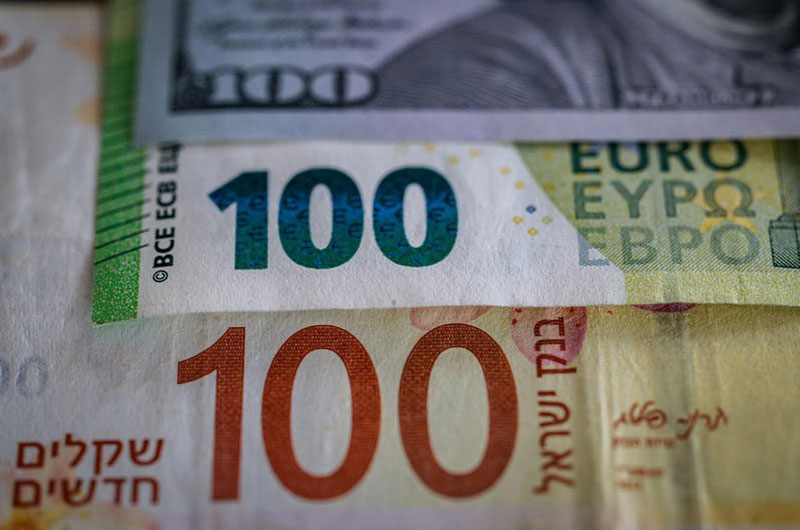
The second issue, currency fluctuations, is a more complicated problem with no perfect solution. Almost all major global currencies have depreciated against the Israeli shekel over the past 12 to 18 months. The shekel has been one of the world's strongest-performing currencies. The U.S. dollar has fallen roughly 20% against it, dropping below the NIS 3/USD threshold in early 2026. The euro has weakened considerably against the shekel as well.
Why has the Israeli shekel strengthened against the dollar? The Israeli shekel has strengthened relative to the U.S. dollar due to strong foreign investment, particularly in Israel's technology sector, a persistent current account surplus, and demand created by Israeli financial institutions hedging foreign investments. At the same time, part of the story is a weaker U.S. dollar, as expectations for lower interest rates and slower economic growth have pressured the currency. While a strong shekel creates challenges for Israelis who earn dollars, it also reflects confidence in Israel's economy and helps lower the cost of imports, reduce inflation, and make international travel more affordable.
What can you do? If you work in Israel but are paid in U.S. dollars, then as the dollar weakens against the shekel, each dollar you earn converts into fewer shekels, reducing your effective income in Israel. Here are some practical considerations for how different groups of people can manage this risk:
Non-Profit Organizations: Many non-profits that benefit Israel have struggled because their donor base is concentrated in the United States. One possibility is to invest funds that are not needed for immediate expenses. Organizations can maintain a short-term account to cover near-term obligations while using money market funds to invest excess dollars. This allows those excess funds to earn an attractive yield rather than sitting idle in cash. While this may not fully offset the steep decline of the dollar relative to the shekel, it can help lessen the impact.
I also recommend establishing a longer-term investment account focused primarily in equities. If an institution does not need the funds for many years, the stock market can allow those assets to appreciate meaningfully over time, potentially outpacing inflation and helping offset adverse currency fluctuations.
Another consideration for non-profits is to create marketing campaigns that raise funds from a more geographically diversified donor base. While the United States may remain the primary fundraising market, expanding efforts into Jewish communities around the world can help mitigate currency risk.
Tour Guides: While getting paid in U.S. dollars may have been the norm, we have reached a crossroads where negotiating partial payment in shekels makes sense. If possible, receiving some compensation directly in shekels reduces exposure to exchange-rate fluctuations. Tour guides can also consider increasing fees to help offset the impact of a weaker dollar.
As I discussed with one tour guide, if you cater to a somewhat higher-end clientele that is not especially price-sensitive, raising prices by 20% may not cost you business, but could significantly reduce your currency risk.
Israelis Working for U.S. Companies on American Salaries: I spoke with several attorneys who are paid American salaries in U.S. dollars, whose compensation packages are now worth significantly less than when they originally negotiated them. For these individuals, the options are more limited because they will almost certainly continue to be paid in dollars and are unlikely to be able to negotiate compensation in shekels.
The best advice I can offer is similar to what I would tell someone experiencing a financial or economic downturn in their business. Spend less money, maintain tighter control over cash flow, and daven that the trend reverses. If a strengthening shekel becomes the new normal and family finances are under strain, exploring additional employment opportunities or diversifying income sources may be sensible. That answer may not be satisfying, but it is pragmatic.
New Olim and Individuals Looking to Buy Property in Israel: My framework for purchasing a home for personal use may be helpful in this situation. Since a home is unlikely to be an attractive financial investment after accounting for expenses, fees, and maintenance, the key is not becoming overly focused on obtaining the "best" price. Rather, the goal is to determine when it makes sense to move forward with a home purchase in Israel. This includes: 1) You are in the market to buy a home. 2) You find a community in which you want to live. 3) You find a house that satisfies your needs. 4) You can afford the house.
The only additional step I would recommend specifically for an Israeli home purchase is evaluating the rental market. Renting in Israel is often more attractive than in many U.S. cities, and tenants frequently receive significantly more value for their money. Particularly for those approaching retirement or those with limited resources, renting may be a far more financially sensible approach than purchasing a home.
Other General Considerations for Handling a Strengthening Shekel vs. the U.S. Dollar:
1. Convert dollars to shekels regularly: If you need shekels for living expenses, converting a portion of each paycheck promptly reduces the amount exposed to future currency movements.
2. Keep part of your savings in shekels: If your future expenses will primarily be in Israel, maintaining some savings in shekels creates a natural hedge. Your assets and liabilities are denominated in the same currency.
3. Use forward contracts or currency hedging: This is generally not a realistic option for individual investors, but it is worth mentioning. Banks and foreign-exchange brokers can allow you to lock in an exchange rate for future conversions. While this provides certainty, it often involves substantial costs and minimum transaction sizes that make it impractical for the average family or small business.
4. Invest with currency exposure in mind: If most of your income is in dollars and most of your spending is in shekels, you may want a portion of your investment portfolio denominated in shekels or hedged to shekels. The appropriate allocation depends on your overall financial situation.
It is worth noting that currency movements work both ways. A stronger shekel hurts a dollar earner, but a weaker shekel benefits one. The goal is usually not to eliminate all currency exposure, but rather to reduce the risk that exchange-rate fluctuations disrupt your budget or long-term financial plans.
Additionally, it is important not to lose sight of the bigger picture. Ultimately, a strengthening currency benefits residents of that country because their money has greater purchasing power. Imported goods, such as electronics, clothing, automobiles, and food, become cheaper, while inflationary pressures are reduced because foreign inputs cost less. International travel also becomes more affordable because the local currency converts into more foreign currency abroad, reducing the cost of hotels, meals, and transportation. Although exporters may face challenges as their products become more expensive overseas, consumers and import-reliant businesses often enjoy meaningful financial advantages when their currency appreciates.
While no individual can change the relationship between the shekel and the dollar, it is worth focusing on the strategies that are within your control. Adapting to this new environment by being proactive is the best way to navigate what is currently a challenging financial situation.