יום שני, י״ג אב תשפ״וMonday, July 27, 2026



Follow Us


By Jewish News Syndicate (JNS)
Inside were 350 objects, including artifacts from the World War I and 18 cap badges with the initials of Austro-Hungarian emperor Franz Joseph, who ruled from 1848 until his death in 1916.
By JNi.Media
The online Bezalel Narkiss Index of Jewish Art preserves the rich artistic heritage of the Jewish people throughout time and across the globe.

Joel Silverstein is a comrade-in-arms. We share many ideas about the creation and nature of contemporary Jewish Art, as well as a commitment to the growing Jewish Art community, exemplified by the Jewish Art Salon of which we are both founding members and curators. This exhibition of his recent work at the Kraft Center for Jewish Student Life at Columbia/Barnard gives us the crucial opportunity to examine the complex richness of his artwork.

Photographs seems like cruel slices from the past, frozen images of what will never be again. Since we assume the photographic image is, by and large, a factual view of some reality, it is inherently believed and trusted. But now be forewarned. It ain’t necessarily so. Bill Aron’s new images at the 92nd Street Y betray and beguile so as to force us to reassess the meaning of what we see.
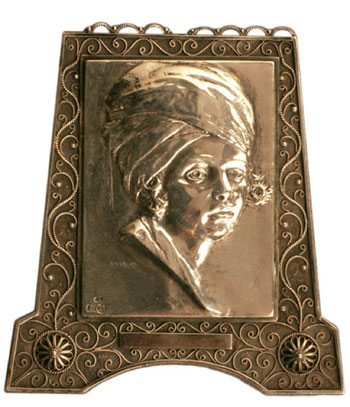
Boris Schatz (1866 – 1932) had a revolutionary vision. He believed that the creation of a new modern Jewish visual culture would become a major force to both articulate a Jewish national identity and sustain the Zionist enterprise. In 1904 he approached Zionist leader Theodor Herzl with the proposal to establish a national arts and crafts school in Palestine and got his blessing. Tragically Herzl died later that year, but the Zionist leadership in Vienna assumed responsibility for the project and its funding.
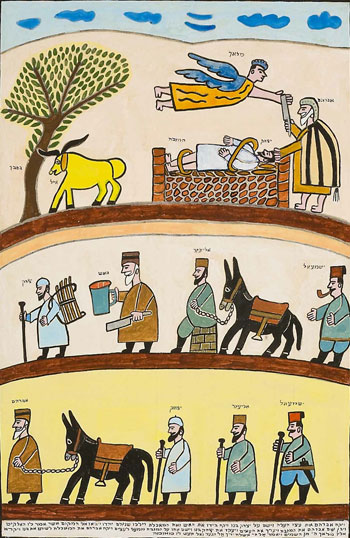
The exhibitions that precede Judaic auctions are rather special events for anyone who has a feeling for the fabric of Jewish life as it has been lived for the last 500 years. Not only is one afforded the opportunity to see a wide variety of Judaica, books, manuscripts and Jewish art of considerable historic importance, but if something strikes your fancy; intellectually or acquisitively, you can actually handle the objects. For most artwork the thrill is in seeing it up close and judging the brushstrokes and details of a painting or watercolor. One stands in the exact proximity as the creator did.

The auction at Christie’s in Paris this May 11 of a Tuscan Mahzor, created and illuminated in the 1490’s, will be an extraordinary event. This rare example of illuminated Jewish art has not been seen publically in over 500 years and, aside from tantalizing internal suggestions, lacks conclusive identification of the scribe and illuminators. Because the gold-tooled goatskin binding was made about 50 years after the manuscript and has a different coat of arms than those found in the machzor, it is assumed that this prayerbook may have quickly changed hands.
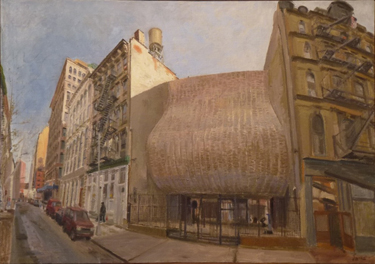
One thing is certain about Robert Feinland - he has shuls on his mind. His career has spanned over 40 years, exploring landscape, cityscape, sculpture and abstraction. For many of those years he has focused on the relentlessly changing urban landscape of New York, feeling the necessity to document and, in some way preserve, the physical fabric of the city he loves. A selection of recent paintings, most concentrating on the Crown Heights community, is currently at the Chassidic Art Institute. Many of the images are of shuls.
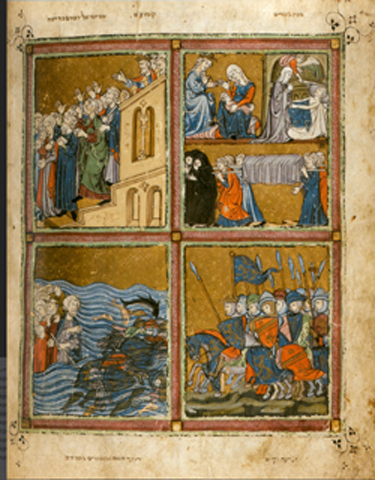
The Golden Haggadah was created in Catalonia, Spain sometime around 1320. So named because all the illustrations are placed against a patterned gold-leaf background, it is a ritual object of incredible luxury and expense. In light of Marc Michael Epstein’s analysis found in his recent book The Medieval Haggadah, this tiny masterpiece of Jewish art easily ranks among other towering works of complex narration including Giotto’s Scrovegni Chapel in Padua and Michelangelo’s Sistine ceiling in Rome.
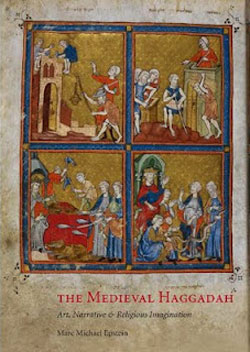
Bird’s Head Haggadah Revealed The Medieval Haggadah: Art, Narrative & Religious Imagination By Marc Michael Epstein, Yale University Press, New Haven and London 2011
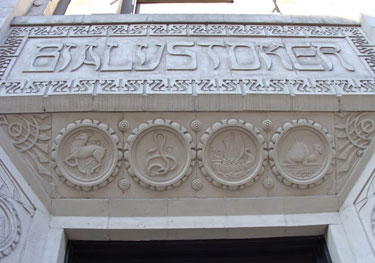
A quiet monument to the courage and determination of hundreds of thousands of Jews sits vulnerable on the Lower East Side of New York City at 228 East Broadway. This location was the former home of the Bialystoker Center, built in 1931.
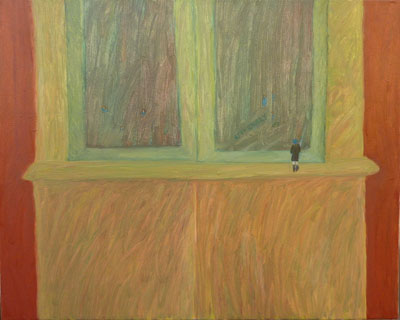
We live in a wonderful time for Jewish art. The orthodoxy of 20th century High Modernism has given way to a chaotic but liberated postmodernism willing to try anything, even serious “ethnic” art.
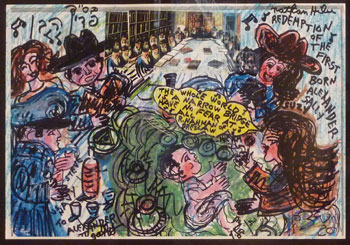
“Man must make the Torah manifest” in every action, speech and creative act. That is clearly the credo of Nathan Hilu, master-artist of the Lower East Side, Torah, Tanach, midrash, Gemara and beyond.
 July 24, 2026