 October 23, 2026
The Apostate
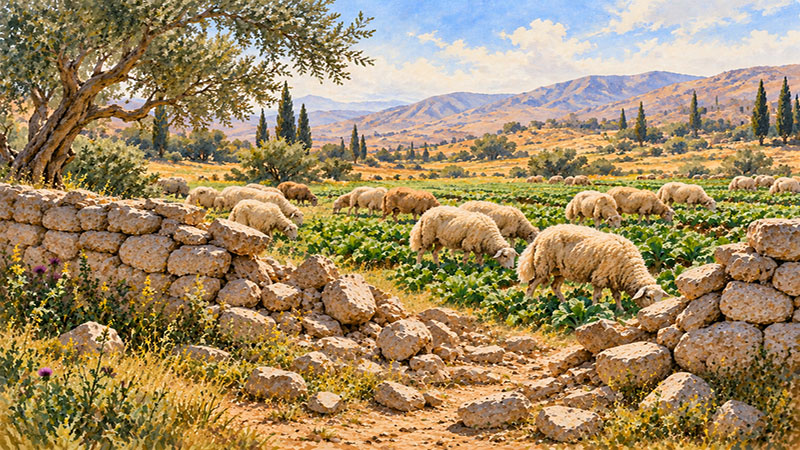


“And there was a quarrel between the herdsmen of Avraham’s cattle and the herdsmen of Lot’s cattle… and Avraham said, ‘Please let there be no quarrel … for we are relatives’” (Bereishis 13:7-8).
Rashi comments that Lot’s herdsmen were wicked – grazing their animals in the fields of others – and Avraham’s herdsmen rebuked them. Rashi also notes that they all resembled each other.
The question is asked: What did the thievery of Lot’s herdsmen have to do with Avraham’s herdsmen? Even if we say that there is a mitzvah to reproach someone who is doing something wrong, the pasuk tells us that they were quarreling. That would indicate that they had already been criticized and nothing would be gained by admonishing them further. Indeed, our Sages tell us (Yevamos 65b),“Just as it is a mitzvah for a person to say that which will be heeded, so it is a mitzvah for a person not to say that which will not be heeded.”
So why did Avraham Avinu go to Lot concerning the thievery?
The Chasam Sofer says the answer is alluded to in the words “we are relatives.” Even though Avraham was older than Lot, in those days people did not show signs of aging, and the two were very similar in appearance. People would err and accuse Avraham Avinu of Lot’s transgression.
The Chasam Sofer offers another explanation. He breaks down the words of the pasuk differently: al na –please let there not be (an association); tehi merivah – there should be a separation between us. Avraham wanted to create a distance between himself (and his herdsmen) and Lot (and his men) to eliminate the spiritual threat that they presented.
R’ Simcha Bunim of Psische once asked his attendant to hire a wagon driver to take him to a bar in Warsaw. At the entrance stood two drivers who were drinking, and one asked the other: “Did you learn Chumash today?” “Yes,” said the other, “but I had difficulty in Parshas Vayeira 21:27.It says there, ‘And the two of them entered into a covenant.’ How did Avraham make a covenant with Avimelech – a non-Jew?” The other answered: “My question was why it says ‘the two of them’; it could have just said ‘they entered into a covenant.’ However, we learn that although they made a covenant, they remained ‘the two of them,’ i.e. two separate entities and they did not become one body.”
This concept is, in fact, expressed in the previous pasuk (13:6),“And the land did not bear them to dwell together, for their possessions were many, and they could not dwell together.” Careful analysis of the phraseology reveals that Avraham and Lot could not dwell together for two reasons. One was because they had a wealth of possessions; the second was because of the differences in their ethical and moral values, and the negative impact Lot could wield.
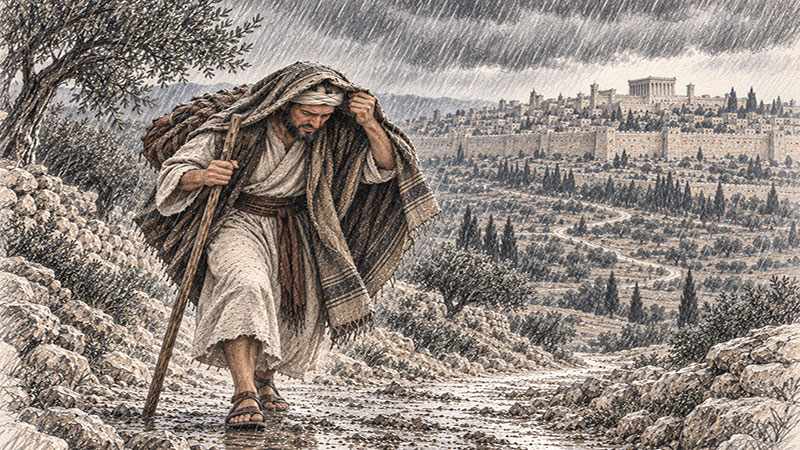
An apostate who lived in Kovno during the Holocaust was married to a non-Jewess, and no one had any inkling that he was, in fact, a Jew. The Jews of Kovno had already been corralled in the ghetto when the apostate’s father appeared to him in a dream one night. He asked him to make every effort to help R’ Mordechai Pogromansky escape from the ghetto. The apostate dismissed the dream the next morning as inconsequential. Not only would he be endangering his own life, as he could be killed for facilitating the escape, but he would be suspected of being a Jew himself and would have to suffer along with his fellow co-religionists. However, night after night his father would reappear to him in a dream. After many nights the apostate could no longer take it and he began to argue with his father in the dream: “How can I go into the ghetto? How will I ever find this Jew? How will I get him out? And what do I do with him then?”
His father gave him explicit instructions: “Tomorrow go to the gate of the ghetto. The first Jew that you meet will be R’ Mordechai.” He then outlined the entire plan for him. When the apostate woke up the next morning, he realized he had no choice but to follow through.
Later that evening, as he approached the ghetto, he saw a Jew standing by himself near the fence. He whispered to him: “Are you R’ Mordechai Pogromansky?” The man answered in the affirmative. Now there was no longer any doubt in the apostate’s mind that the dream was substantial. He instructed R’ Pogromansky what to do, and later that night, he left the ghetto, and the apostate brought him to his home, which was in the center of the city and considered completely clean of Jews by the Nazis.
R’ Mordechai was curious about his savior’s ethnicity, and the apostate murmured that no one knew he was a Jew and his wife was a non-Jew. R’ Mordechai began to tremble and said: “I cannot remain in a home where you are not living a proper Jewish life. I must leave immediately.”
The apostate was very frightened. “I endangered myself to save you,” he cried. “Don’t leave; they will kill you as soon as you are seen.”
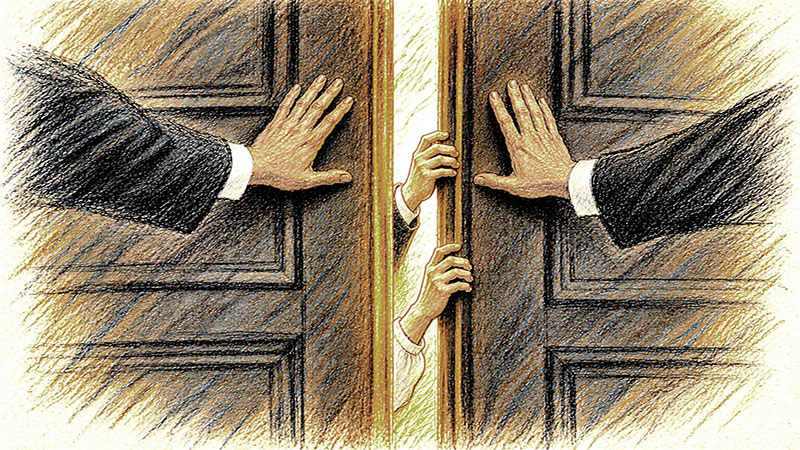
R’ Mordechai was adamant. “If you will not separate from your wife, I am leaving immediately.” The apostate explained the complexities of leaving his wife, and the rav agreed that if it was possible to rectify the situation, he would wait a short amount of time before he left.
Inexplicably, circumstances changed, and the apostate’s wife ultimately left him. R’ Mordechai lived in the apostate’s house for an entire year until the end of the war. The apostate continued to conduct himself like a non-Jew and, amazingly, the apostate’s former wife never revealed his true identity. After the war, the apostate did teshuvah and established a true Jewish home in America.
The lesson is clear: R’ Mordechai was willing to put his life in danger rather than compromise his spirituality. He understood that holiness and impurity cannot occupy the same space. Similarly, no matter how great the sanctity of Avraham Avinu, he would not be successful in influencing Lot to repent. He therefore resolved that it was better to distance himself from Lot. The kedusha of Avraham Avinu could not co-exist with the tumah of Lot.