September 11, 2026
 Categories: Headline / Perspectives
The Case for Putting Your Money Where Your Heart Already Is
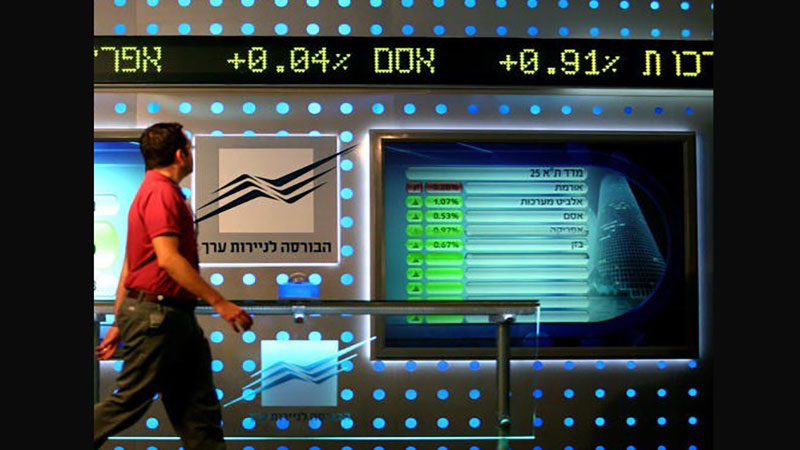


For most of my career, when people found out that I was in the investment business, they asked me about the U.S. market, or maybe Canada’s. Nobody asked about Israel. It was small, thinly covered, easy to skip past. I didn’t think much about it as an investor either. I supported Israel the way a lot of us do – through charity, through the causes that matter to us. Putting real investment capital there just wasn’t something I considered. Also, practically speaking, in the past, the Israeli markets were not easy to invest in as the capital markets were immature.
My mindset has changed. The numbers are compelling.
Since the day before October 7th, the TA-125 – the broad index of Israel’s largest companies listed on the Tel Aviv Stock Exchange (TASE) – is up 116% (as of the close of trading on July 30, 2026). The shekel is up 26% against the dollar over the same stretch.
I’ve spent 46 years as an investment analyst, portfolio manager, and CIO in Canada’s mutual fund and pension industries, and I can’t think of another economy that has put up numbers like that while fighting a multi-front war.
It’s not just the market. Israel’s trailing fiscal deficit narrowed to 3.3% of GDP at the end of June – well below the government’s own 4.9% target for the year. The Bank of Israel just raised its growth forecast to 4.0%. Tax revenue in the first half of the year ran 11% ahead of last year. A country still at war is running its finances better than most countries at peace.
And a few weeks ago, Israel signed the largest defense export deal in its history: a $4 billion air defense system sold to Greece, beating the previous record – a $3.5 billion sale to Germany. The system includes David’s Sling, one of the most advanced air defense technologies in the world, which Israel had sold to only one other country before now. Greece is buying it because Turkey has made itself the threat to regional peace. Whatever you think of the regional politics, the business logic is simple: When the world needs technology only Israel reliably builds, Israel gets paid for it. Elbit Systems, traded on both the TASE and the Nasdaq, is one direct way investors can get exposure to that. Nations condemn Israel publicly and then quietly make business deals with the Jewish state.
None of this happened by accident. Israel’s defense and technology industries weren’t built for this moment – they were built over decades by people who understood, long before most Western economists did, that the country would need to produce its own security and its own innovation. The war didn’t create that capability – it just made the rest of the world notice it.
And the world is noticing. Global capital that ignored Israel for years is starting to take it seriously as a market, not a charity case. That’s a different kind of commitment than what most of us have given Israel in the past. Charity says, “I want to help.” Investment says, “I believe this economy can produce, grow, and pay me back for believing in it.” For a country that has spent decades being underestimated, that’s worth something.
Here’s what I find most interesting, though: Even with all this, Israeli markets still trade cheap relative to what they’ve proven. An increase of 116% sounds dramatic, but it’s coming off a base that ignored Israel for years before the war forced a reassessment. I’ve spent a career looking for the gap between what a market has proven and what it’s priced at. That gap does not stay open forever, and I don’t think Israel’s will stay open much longer. The Israeli stocks are priced like an emerging market, with a risk premium that is too high, price-earnings multiples that are relatively low, and dynamic earnings growth.
Compare that to where a lot of Western capital currently sits – particularly in Western Europe, where growth has been flat for years, populations are aging, and there’s no single event forcing anyone to reassess anything. Israel had its reckoning forced on it, all at once, in the worst possible way, and came out with a stronger balance sheet and a bigger backlog of defense orders than before.
I’ll say plainly what I believe: Investing in Israel isn’t only spreadsheet math for me, and it doesn’t need to be for you either. When I look at a line on the TASE, I see a balance sheet – but I also see a country that keeps building against long odds, one capable of sustaining itself and the Jewish people who depend on it for generations. Putting capital behind that doesn’t need to be called charity to be meaningful. It can just be good investing that happens to line up with what a lot of us already believe. That is in sharp contrast with my native Canada, which has been in economic decline for over a decade.
None of this means Israeli markets are risk-free. They aren’t. No market is. The geopolitical risk is real and it is not going away. But that risk is better understood now than it was before the war. The market had to answer a real question about whether this economy could function under sustained pressure. It answered it: 116% and counting.
For readers of this newspaper, I doubt the emotional case for Israel needs making. What I’d add is the financial one. The market already told us something. The only question left is who was paying attention.