October 2, 2026
 Categories: Money Matters / Headline / Business/Finance
The Debt Behind the Simcha: What Frum Families Don't Talk About
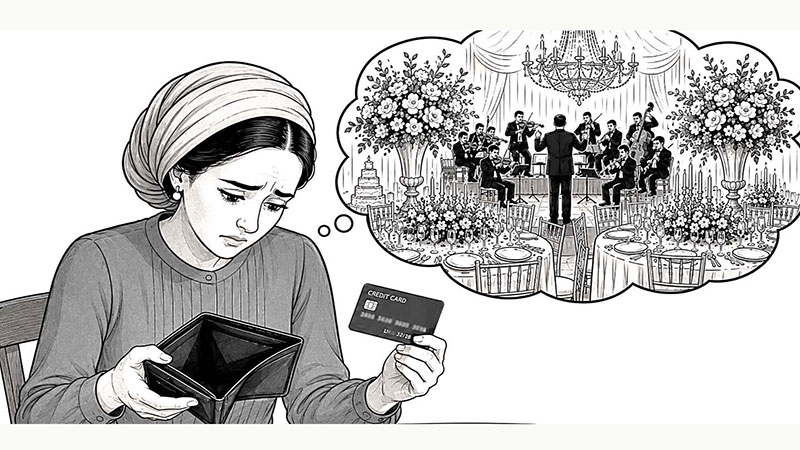


We are planning for a family simcha and money is tight. Friends keep telling us that everyone borrows to cover costs, not just for simchas but for vacations, summer camp, cars, and even second homes. I am surprised how common this is in our community. Is this actually responsible? Is this approach to debt really so bad if most people are doing it?
Using debt to finance a frum family's lifestyle is remarkably common. In my own practice, I am often struck by how many people are living beyond their means and by the reasons behind their borrowing. Saying all debt is terrible lacks nuance. Sometimes debt is a useful tool that can help build wealth. Other times, it is a decision that creates endless financial strain.
Below highlights the common ways frum families borrow to support their lifestyle, along with the merits and tradeoffs of each.
Mortgages: A mortgage is generally the healthiest form of household borrowing available. Rates tend to be relatively low. Repayment stretches over decades. The debt finances an asset the family actually uses and one that may appreciate over time. Taking on a mortgage also lets a family preserve its investment liquidity rather than draining all their savings to buy a home outright.
The healthiest use of a mortgage is financing a reasonably priced primary residence. The unhealthy version is stretching to the maximum a bank will allow just to reach a more impressive address. A lender approving a large loan does not mean a family can comfortably afford the resulting payment.
As I remind first-time home buyers, the mortgage is only one expense of owning a house. There are also taxes, maintenance, and ongoing upkeep. Buy a home with all these costs in mind and only borrow what you can comfortably pay each month.
Auto Loans: Financing a car can be a sensible way to preserve cash while covering a necessary purchase. Payments are predictable, and many buyers can find attractive promotional rates. The catch is that a car loses value the moment it leaves the lot, so the family is borrowing against a depreciating asset rather than an appreciating one.
When I see people driving around in luxury vehicles they cannot really afford, I think about all the extra money that could have gone somewhere else. It could have built savings, funded a family vacation, paid for a simcha, or grown an emergency fund large enough to remove financial stress altogether.
Home Equity Lines of Credit: A HELOC is a flexible loan that lets you borrow against the value of your house. Similar to a credit card, you get a credit limit, take money out when you need it, and pay interest only on what you actually use. This can be cheaper and more flexible than a personal loan or credit card, and it can be genuinely useful for a temporary cash need or a home improvement project, sometimes with a tax benefit attached.
A HELOC is one of the most common tools that I see Orthodox families use. The risk is that your home secures the debt, and rates are usually variable, so payments can rise unexpectedly, creating bigger cash flow problems down the road. Home equity is easy to treat like an ATM, and many families slide from using a HELOC for a defined purpose into using it to cover ongoing expenses their income no longer supports. It should not be used to fund your lifestyle. It should be reserved for rare occasions and treated as a last resort.
Securities-Backed Lines of Credit: For a financially strong family with substantial investments, borrowing against a portfolio can provide liquidity without triggering a taxable sale of securities, often at a lower cost than unsecured debt. This is a sophisticated tool, and it carries real risk. Since the loan is tied to portfolio value, a significant market decline can create a collateral shortfall, forcing the family to post additional funds or repay on the lender's timeline rather than their own.
While I have the ability to, I do not offer this type of lending to clients whose investment portfolios I manage. I believe it works against building real wealth. It encourages unnecessary risk and leads people to finance their lifestyle with borrowed money instead of their own resources. There are a handful of very wealthy families with large, embedded tax liabilities where this strategy might make sense. However, it is rare to find someone wealthy enough, sophisticated enough, and disciplined enough to borrow responsibly against their own portfolio.
Personal Loans: A personal loan does not require pledging a house or an investment account, which is its main appeal. That convenience comes at a price. Rates are usually much higher than secured borrowing, and the fixed monthly payment leaves no underlying asset to show for it. It can make sense for a specific one-time expense. It becomes a problem when it turns into a habit, quietly consolidating one round of lifestyle spending only to make room for the next.
Credit Cards: Used properly, a credit card is simply a payment method. Paid off in full every month, it is convenient and offers useful protections. Carried as debt, it becomes the most dangerous option in this entire list. Interest rates are extremely high. Minimum payments create the illusion of affordability. Balances compound quietly until they become unmanageable, with no appreciating asset behind them at all.
I often call credit card debt the cancer of personal finance. A small balance can balloon quickly and become insurmountable. Every so often, a prospective client tells me about someone in their community who got rich using credit card debt to buy real estate or start a business. For every winner, there are far more losers. Unless you know for certain that you can pay your balance in full every month, avoid carrying credit card debt like the plague.
Life Insurance Policy Loans: Borrowing against a life insurance policy is often marketed as effortless, since there are no underwriting and no credit check. That ease is exactly what makes it risky. Interest accrues continuously, and because repayment is optional, families often let the balance grow unchecked for years. As the loan grows, it directly reduces both the policy's cash value and the death benefit meant for one's heirs. If the loan ever approaches the cash value, the policy can lapse entirely, and the IRS treats the accumulated gain as taxable income all at once, creating a painful surprise bill.
One of my pet peeves is watching people in my industry market life insurance as an option to fund a lifestyle. That is not what life insurance is for. Borrowing against it can set off a chain reaction that ultimately harms the very people your policy was meant to protect.
The Bigger Lesson: The real mistake families make is rarely the borrowing itself. It is using borrowing to make an unsustainable lifestyle look sustainable. A family earning $400,000 a year that spends $450,000 and borrows the difference has not found a financing strategy. It has created a future income problem that will eventually need to be repaid with interest.
A useful test for any family considering this kind of borrowing is simple. If the borrowing stopped tomorrow, could the family's income support its current lifestyle? If the honest answer is no, the question is not which loan carries the lowest rate. The real issue is that the family is living beyond its means, and no amount of clever financing changes that underlying reality.
Borrowing to Pay for a Simcha: Now back to the reader's original question. Borrowing money to pay for a simcha is imprudent and ill-advised. I understand the social pressure to throw a beautiful party, but doing so at the risk of derailing your financial life is a mistake. If money is tight, keep the simcha modest.
The heart of a meaningful simcha is never about how much money was spent. It is about the event itself and the family and friends who show up to celebrate. After a few hours, nobody will remember the DJ, the venue, or the menu. However, showing up for a friend or loved one on their special milestone creates a feeling that lasts for decades. Holding onto that truth will keep both your celebration and your finances exactly where they should be.