 October 16, 2026
 Categories: Featured / Parsha / Torah
The Historic Declaration of Na’aseh v’Nishmah
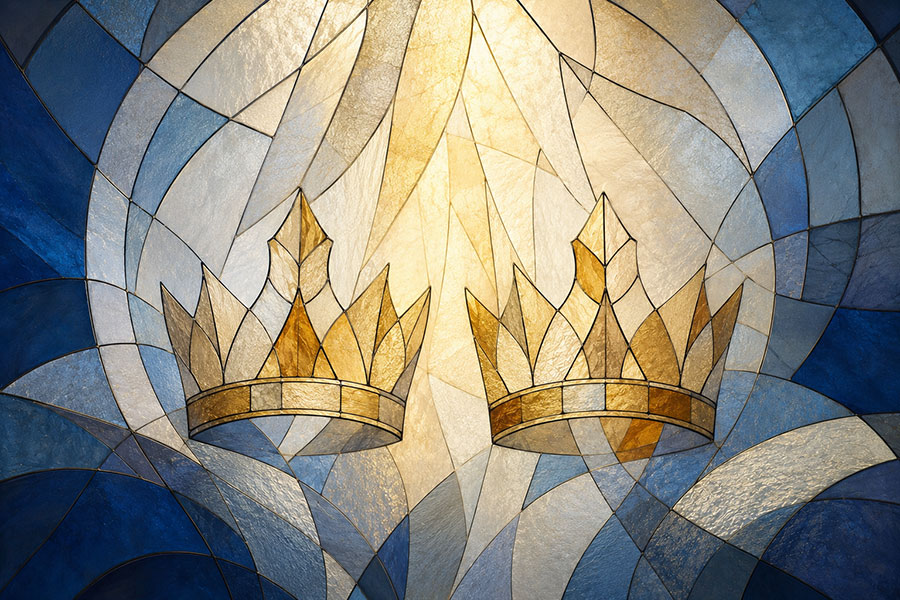


As we celebrate the wonderful Yom Tov of Shavuos, one of the things that we recall is the historical and admirable proclamation of Klal Yisrael, “Na’aseh v’Nishmah – We will do and we will listen.” This was such a monumental accomplishment that we are taught that angels came and put upon the head of every Jew two celestial crowns, one in the honor of Na’aseh and one in the honor of Nishmah. Let’s delve a bit into the significances of this memorable proclamation.
First, I think the location of Na’aseh v’Nishmah in the Torah is significant. It is found in Sefer Shemos, chapter 24, pasuk 7, which remarkably points to the fact that Na’aseh v’Nishmah is a 24/7 obligation. Now, I know that some of my readers will scoff, saying that the pesukim and chapters came from a gentile source. I respond that the holy Shefa Chaim, the Klausenberger Rebbe, zt”l, zy”a, in his Chumash shiur would attach significance to such numbers, so we can do so as well.
The next thing I’d like to point out is a global custom that, if someone is making noise during davening, we silence him with the expression, “Nu!” What exactly does nu, spelled simply nun-vav, mean? I had always suggested it’s a reference to Siman nun-vav in Shulchan Orech, in the Laws of Kaddish. This is the first place the Shulchan Orech tells us to be quiet during davening. So, we say, “Nu, Remember Siman nun-vav!” However, it later dawned on me that “nu” is an acronym for Na’aseh v’Nishmah, so we are chastening the talker to remember that we pledged to do and to listen.
Of course, the obvious question is that our commitment seems to be in the wrong order. Wouldn’t it be more sensible to say Nishmah v’Na’aseh, first saying “Let me hear,” after which I could then responsibly say, “I’ll be able to do it.” Herein lies one of the great significances of this declaration. We are espousing to Hashem that we do not need to hear what it is first. Rather, whatever He gives us, we will be sure to listen to for we have firm faith that “Ein haKadosh Baruch Hu bah b’trunya im briosav – Hashem does not ask from us more than we can handle,” and therefore we can say with complete conviction, “Na’aseh, we’re ready to do whatever it is, for we know that You (Hashem) will only give us what’s good for us and what is within our toolbox.”
This is of great solace to someone who is given a serious challenge such as the loss of a child or a major sickness, lo aleinu. If Hashem gave the person such a nasoyan, challenge, then he is certainly up to the task, to meet it, and to get through it.
But Na’aseh v’Nishmah has another significant intent. Nishmah refers to Torah study, for it is when we learn Torah that we are listening to Hashem’s words. Again, we would think that it should therefore say Nishmah and then Na’aseh, first we should listen to Hashem’s Torah to know what to do and then fulfill it. But the Bnei Yisrael got the order right. The Torah is not like calculus or physics which you can accomplish merely with assiduous study and a modicum of intelligence. One’s ethical and moral behavior has nothing to do with the equation. This is definitely not true when it comes to Torah. One will only succeed if he first is a worthy vessel through his own ethical and moral behavior. Thus, we are taught, “Derech eretz kadma l’Torah,” behaving like a mentch precedes the Torah.
In his masterpiece on Pirkei Avos, Rabbeinu Yonah says that is why it says, “Sur mei ra v’aseh tov – Turn away from evil and do good.” We know that the word tov, good, refers to Torah, as in the verse, “Ki lekach tov nasati lachem Torasi al ta’azovu – A goodly merchandise I have given you; do not forsake My Torah.” To prosper in Torah, one must be a mentch first and turn away from evil. It is quite understandable that a mouth sullied with lashon hara, vulgarity, or hurtful words will not thrive in the arena of Torah discussion. Nor will ears that listen to forbidden gossip, someone else’s secrets, or heretical thoughts prosper in the holy Torah.
Therefore, we say “Na’aseh,” first we will do, we will behave ethically and morally and only then will we succeed in our career of Nishmah. Just like the finest wine will be ruined if you pour it into a dirty goblet, so too the Torah will be spoiled if a sinful impure person tries to absorb it.
We are taught, “Adam l’amal yulad – A person is created to toil.” The word l’amal, to toil, is an acronym for Lilmod Al Menas Laasos, to learn in order to perform. It is only when one studies with the goal of practicing what he learns that he will accomplish and grow in his studies. This is why a boy who learns in a yeshiva away from home returns and is chutzpadig to his parents, or a husband who goes to a Daf Yomi shiur, returns home and is unkind to his wife, will not be given the true delights of Torah. This is what we remember when we say “Na’aseh v’Nishmah.” Make out of yourself a person of value and then you will be able to hear and experience the sweetness of Torah.
Rav Avraham Pam, zt”l, zy”a, has a fascinating twist to the age-old declaration “Na’aseh v’Nishmah.” He explains that we said with assurance to Hashem, Na’aseh, our ancestors Avraham, Yitzchak, Yaakov, and the Shivtei K”a, the holy Tribes, already performed the Torah and showed their loyalty. So, Torah commitment is already in our genetic base. It is embedded in our very DNA. Therefore, we can assure you, Hashem, that Nishmah, we too will listen and adhere to your holy Torah.
My dear readers, I want to add a personal blessing that you and your families should have a healthy and inspiring Shavuos, full of new commitment to the Torah. In that vein, I’d like to point out that in this coming year you can join my Daf haYomi family with a commitment to learn Torah every day by going to zoomdaf.com and entering meeting code RMMW. This coming Sunday through Thursday, the shiur will be at 8:55 p.m. and motzei Shabbos at 10:40 p.m. You can learn my Chumash Gems on the same zoom address on Wednesday nights at approximately 9:40 p.m. and join our “For the Shabbos Table” shiur on Thursday nights, also at 9:40 p.m. On your own schedule, you can delve into the archives of TorahAnytime, my YouTube channel, or tune in on KolHalashon and listen to my shiurim on marriage, such as, “A Marriage Workshop” or “Sweetening Our Marriage,” deepen your tefillah in a shiur like “A Shemoneh Esrei Primer,” or my new series, “Chess: Lessons for Life.”
In the merit of our renewed Torah commitment, may Hashem bless us with long life, good health, and everything wonderful.