 October 9, 2026
 Categories: Headline / Collecting / Features On The Jewish World
The Jewish World of Elvis Presley


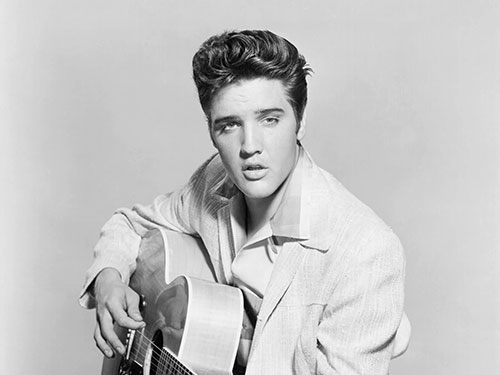
Elvis Aaron Presley (1935-1977), aka “The King of Rock and Roll,” is widely regarded as one of the most culturally significant figures of the twentieth century and has long been one of the most intensively scrutinized figures in twentieth-century American culture: icon, commodity, a locus for debates about race, religion, and nation. Less frequently examined, and yet richly suggestive for what it reveals about identity, belonging, and the social meaning of religion in midcentury America, is Elvis’s relationship to Jewish people, Jewish institutions, and Jewish symbols.
Over the last decade a number of documentary discoveries, archival displays, and first-person reminiscences have made it possible to tell a nuanced, evidence-based Jewish story: Elvis grew up in a neighborhood with active Jewish families; he was told about a Jewish ancestor on his mother’s side; for much of his later life adopted Jewish symbols and practices as part of a broader, plural, spiritual seeking; he formed deep personal friendships with American Jews (including some who were among his closest confidants); he gave discreetly and publicly to Jewish institutions in Memphis; and, as a young man, he acted as what Jewish communities call a “Shabbos goy” for an Orthodox family who lived above his family’s apartment. Each of these claims rests on documentary traces and reliable testimony and, taken in the aggregate, they show how Jewish life entered Elvis’s social world, how he engaged with it intellectually and charitably, and how Jewish identity – both in heritage and practice – was experienced and presented in the Presley circle.
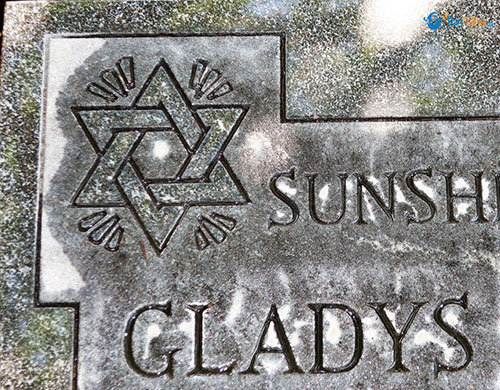
A starting point is the claim of Elvis’s biological descent through the maternal line; specifically, Elvis had a maternal ancestor who was a Jewish immigrant from Lithuania who settled in Memphis in the 19th century and who appears in nineteenth-century American records as Nancy (sometimes spelled “Nancy J.”) Burdine (sometimes rendered Burdine Tackett). Nancy raised a family, including sons Sidney and Jerome and a daughter, Martha. Martha, an observant Jew, had a daughter, Octavia, who gave birth to Gladys, who married Vernon Presley and who, in 1935, gave birth to twin boys, Jesse and Elvis.
Several independent investigations and mainstream fact-checking organizations have confirmed that his maternal great-great-grandmother was, in fact, Jewish. The Jewish Telegraphic Agency reported on a newly revealed headstone for Gladys Presley (Elvis’s mother) that had been stored in the Graceland archives and whose design – made by Elvis himself –featured a Star of David on one side and a cross on the other; the JTA story explains that Graceland archivists and family researchers traced the maternal line back to a woman identified as Nancy Burdine and presented the headstone display in 2018-2021 as one piece of evidence connecting Elvis’s family to Jewish ancestry. That article adds that Elvis’s own library and his philanthropy to Jewish causes suggested an awareness and embrace of that lineage.
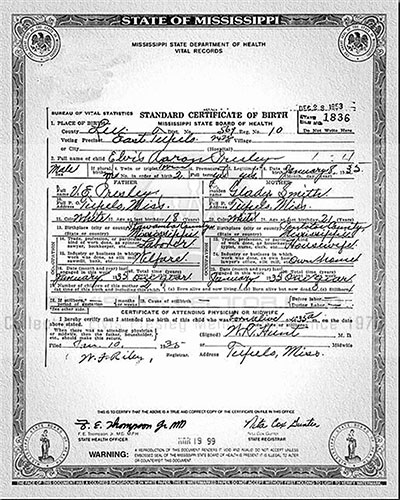
There is also the fact of his middle name, “Aaron,” which sounds like it could have been based upon the biblical brother of Moses. However, his parents chose his middle name to rhyme with “Jesse Garon Presley,” his stillborn brother’s name and, although his birth certificate records his name as “Aron,” later in life he preferred the biblical spelling “Aaron,” which is the version on his tombstone at Graceland.
Independent genealogical and journalistic work has both supported and questioned the more expansive claims that have circulated among fans and in some popular accounts. For example, Snopes, which investigates and rates viral claims, reviewed the genealogical evidence and found the core statement – namely, that Elvis’s maternal great-great-grandmother, Nancy J. Burdine, was Jewish – to have sufficient documentary grounding to be rated true, while also noting uncertainties about the exact genealogical chain and the ways family memory and secondary sources have shaped the narrative over time. Other commentators and genealogists have raised legitimate cautions about the reliability of oral testimony and the difficulty of tracing nineteenth-century borderland identities; the upshot is that while there is credible evidence of a Jewish ancestor in Elvis’s maternal line, the genealogical story is not so simple or uncontested that it should be stated as an uncontestable fact without qualification. However, the most careful reading of the record treats Elvis’s Jewish heritage as both real and meaningful to him and his family (and recognized by Graceland’s own curatorial team), while acknowledging that the older published claims sometimes compress or simplify a more complicated genealogical record.
Perhaps even more consequential for Elvis’s encounter with Jewish life than his maternal genealogy is the fact that, while still a teenager, he and his family lived in the same small Memphis apartment building as an Orthodox Jewish family – the Fruchters – whose patriarch, Rabbi Alfred Fruchter, came to Memphis to establish the city’s first Jewish day school and went on to become a notable teacher and the first principal of the Memphis Hebrew Academy. Neighborhood memory, recorded interviews with members of the Fruchter family, and public radio and magazine pieces produced in the 2010s have reported in striking detail the friendly relationship between the Presleys and the Fruchters.
Elvis was born in Tupelo, Miss., but the family moved to Memphis when Elvis was thirteen and lived at 462 Alabama Avenue. The Fruchter family occupied the upstairs duplex while the Presleys lived below; the two families shared ordinary neighborly ties – shared telephones, which helped to pay bills – and a genuine friendship that left lasting impressions on all participants. Gladys Presley and Jeannette Fruchter became close friends who enjoyed afternoon tea together nearly every day, and the Presleys were invited to Shabbat dinner once a month, leading Elvis, who had a penchant for the rebbetzin's cooking, to develop a fondness for challah, carrot tzimmes, and matzah-ball soup. (The young Elvis reportedly kept a kippah in his pocket in case he was going to visit the Fruchters.) The Fruchters, who were observant, would sometimes ask the teenaged Elvis to perform small tasks on the Sabbath forbidden to Jews on Shabbat, such as turning lights on and off. Jewish life includes the recognized, longstanding practice of using a “Shabbos goy” – i.e., a non-Jew who performs such tasks on behalf of observant Jews.
Fruchter family members and others who have told the story credibly affirm that Elvis served in this role with evident goodwill. Harold Fruchter has said that his parents never had a clue that Elvis was Jewish and, had they known, they never would have even considered asking him to serve as their Shabbos Goy. Oral testimony recorded by KCRW’s UnFictional program, Tablet magazine, and other outlets recounts these episodes in the family’s own voice; Harold, who as a child played with the young Elvis and later recounted the story publicly, has described Elvis’s eagerness to help the family and a touching scene when a newborn Fruchter was carried upstairs by Elvis at the family’s request.
Rabbi Fruchter regularly played cantorial and Jewish liturgical recordings, and Elvis would listen, even borrowing the rabbi’s phonograph to play his first single for Sun Records, That’s All Right, Mama, for his parents. His proximity to their music led Jeannette Fruchter to suggest that some of that liturgical rhythm may have influenced young Elvis. “When he played his song, it had a strangely familiar rhythmic sound,” she recounted. In a 1957 pre-concert press conference in San Franciso, Elvis stunned the journalists when he introduced Alfred Fruchter as “my rabbi.”
That kind of neighborly intimacy opened Elvis to other Jewish relationships that would grow and endure, including friendships with two of the most consequential Jewish figures in Elvis’s adult life, George Klein and Larry Geller. Klein, a Northeast Memphis native who was Elvis’s classmate at Humes High School, was from an immigrant Jewish family and remained one of his closest friends until Presley’s death. In memoirs and interviews, he made clear that his Jewish upbringing and friendship with Elvis were matters of mutual affection: Klein was part of the immediate social circle, the so-called “Memphis Mafia.”
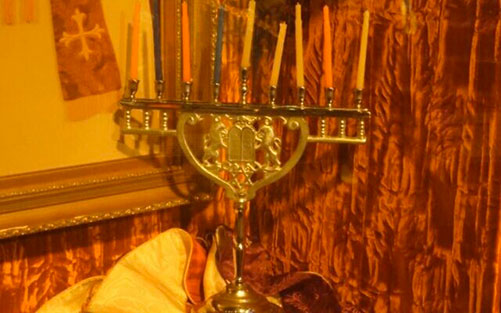
Klein quoted Elvis as saying “Man, it used to confuse the hell outta me as a kid. In church all they talked about was how great all the Jews were, Abraham, Moses, Ezekiel, and all those other prophets. They were all Jewish. But outside of church, they would talk about ‘those damn Jews.’ They would put them down. I just couldn’t understand it.” In I said Kaddish for Elvis, an interview/profile in The Jewish Chronicle (2010), Klein states that “When he died, I said kaddish for him in Hebrew” and “I followed the Jewish tradition of yahrzeit – a year of mourning marked with daily morning and evening prayers.”
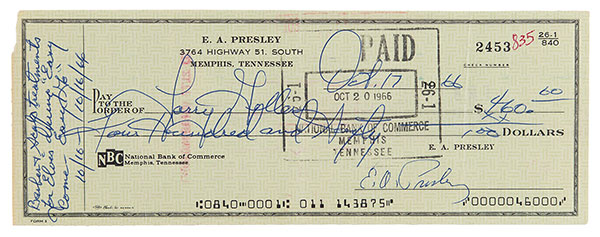
Geller, who met Elvis in the mid-1960s and became his hairdresser and de facto spiritual adviser, is another crucial conduit through which Jewish ideas and symbols entered Elvis’s reflective life. Geller was raised culturally Jewish and had studied a range of spiritual traditions; he introduced Presley to a library of mystical, philosophical, and religious books and to certain Jewish ideas and Hebrew letters and symbols. Geller’s own accounts – books, interviews, and numerous contemporary articles – describe times when Elvis read Jewish writings or expressed admiration for Jewish history and practice. In some interviews, he quotes Elvis as saying that he wanted to be part of the “chosen people” metaphorically or spiritually, and that he found Jewish ritual and symbolism compelling precisely because they offered an alternative language for his search for meaning.
There is credible, contemporaneous evidence that Elvis became interested in Jewish mysticism/ Kabbalah as part of a much larger turn to New-Age and esoteric literature in the mid-1960s, but most of that evidence is anecdotal – chiefly Geller’s statements – and there is no documentary proof that Elvis ever studied canonical Kabbalistic texts (e.g. the Zohar) or made public, sustained statements about Kabbalah. Geller’s memoirs and interviews, and accounts provided by other eyewitnesses, recount lengthy private spiritual conversations with Elvis and say that he introduced Elvis to Jewish mysticism (and to other esoteric systems). In an interview with Maariv, Geller stated that “Elvis was thirsty to learn more about Judaism and delve deeper into it. I brought many books to read on Judaism and even taught him Kabbalah, Jewish tradition and its symbols, and even the Hebrew alphabet.” He later said that if there was one regret that he had about his time with Elvis, it was that he was not able to wrap teffilin with him.
Scholars and critics who have examined testimony by Geller – who later became an Orthodox Jew and became known to some as Chaim Lev – treat it as an insider’s account, and his role helps to explain why, by the late 1960s and especially in the 1970s, Elvis often wore Jewish symbols, most famously his Star of David and “chai” (Hebrew for “life”) necklaces, and why he amassed books on Jewish topics in his private library. Nor were Elvis’s material gestures toward Jewishness merely ornamental: The headstone he personally designed for his mother, and which Graceland stored and eventually displayed, bears a Star of David on one side and a cross on the other, an object that Graceland curators cite as evidence of Elvis’ intention to honor what he had been told about his mother’s ancestry. (Following an attempt to steal Elvis’ body from a Memphis cemetery, Vernon Presley had the remains of his son and wife moved to Graceland for security reasons, and Gladys’s grave marker with the Star of David was kept in storage for years before Graceland agreed to display it.)
Philanthropy and civic engagement offer another, complementary line of evidence for Elvis’s relationship to Jewish institutions. Multiple reliable accounts, including archival photographs, Graceland exhibition materials, and contemporary press, record Elvis’s donations to the Memphis Jewish community. In particular, JTA’s reporting and Graceland documentation describe donations to the Memphis Jewish Community Center and to local Jewish educational institutions, and a plaque at Graceland commemorates his support of Jewish causes. Contemporary Memphis reporting and later inventories of Elvis charitable checks indicate that he often distributed sizable charitable gifts at year’s end and gave both publicly acknowledged and anonymous donations to a wide array of civic beneficiaries in Memphis, including Jewish recipients. One of the most colorful stories about his largesse is the famous account of his writing a $150,000 check to the Memphis JCC for its Memphis Jewish Welfare Fund; the JCC had afforded him free admission while he was a poor youth, and a grateful Elvis never forgot it. (When his advisors asked Elvis about whether his donation should be made public, he reportedly explained that it had to be done anonymously because "that's the Jewish way.")
Many of Elvis’s biggest hits were written by Jewish songwriters: Songwriting giants like Jerry Leiber & Mike Stoller, Ben Weisman, Doc Pomus & Mort Shuman, Aaron Schroeder, Ben Weisman, Wally Gold, and Florence Kaye penned numerous top-charting hits for him – including Hound Dog, Jailhouse Rock, Don’t, Little Sister, and Viva Las Vegas. An article in The Forward emphasizes that while Elvis’s sound is credited to “black music done by a young white kid,” the foundation of his early material came from these Jewish songwriters. The only time that he is known to have sung a Jewish song is a recording of him attempting to sing Hava Nagila.
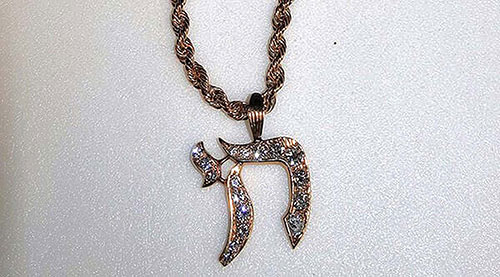
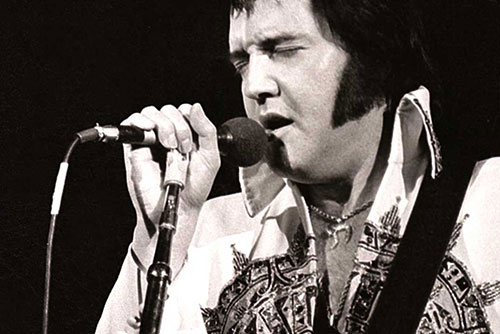
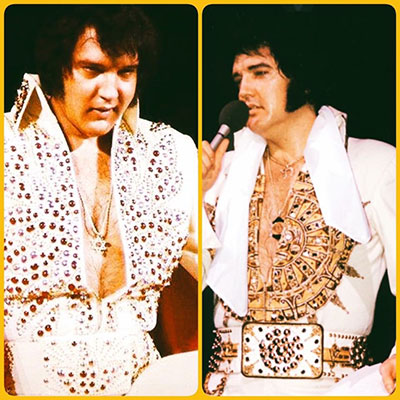
Elvis’s personal use of Jewish symbols in his public persona, especially during the 1970s, has attracted attention because it contradicts simplistic categories that would confine him to a single religious identity. Photographs from late in his life have him wearing a Star of David pendant on stage and, in the mid-1970s, a gold “chai” necklace embedded with 17 diamonds; these items are preserved in museum cases and were featured in the Graceland exhibit that first made the headstone widely visible. Elvis humorously explained: “I don’t want to get left out of heaven on a technicality,” suggesting that wearing all these symbols was his way to “keep all his bases covered.” More seriously, his adoption of Jewish symbols can be read as part of a broader late-life spiritual eclecticism in which he sought consolation from multiple religious traditions, including Christian gospel, popularized Eastern spirituality, and Jewish textual and symbolic resources, without formally converting to any single institutional identity.
Elvis never became a public political spokesperson for Israel in the way that some entertainers did at the time, and he never made a public state visit; there is no record that he ever performed in Israel or formally endorsed political positions regarding Israeli policy. Nonetheless, journalists and community leaders in Israel and the United States have long remarked that Elvis expressed admiration for the “Holy Land” and that Israeli fans have cherished him as a global cultural presence. Press reports from Israeli and international outlets in the last fifteen years capture the fact that Elvis apparently had an interest in visiting Israel, the land that is central to Judeo-Christian religious history, and Israel has reciprocated culturally, with Elvis memorabilia and fan sites (including a small museum and diner outside Jerusalem known as the “Elvis Inn”) that treat him as a beloved foreign icon. In short, Elvis’s relationship to Israel appears mainly as that of a spiritually inclined celebrity who admired the Holy Land and who had been warmly embraced by Israeli fans and entrepreneurs.
There are stories – some plausible, albeit not well documented – that Elvis’s managers advised him, in the racially charged environment of mid-century America, not to emphasize a Jewish heritage because of concerns about the prejudices of Southern audiences. Some contemporaries have suggested that Vernon Presley and Colonel Tom Parker preferred to present Elvis in religious and cultural ways that would maximize his appeal to mainstream – i.e., largely Christian – American audiences, but direct documentary evidence of an active cover-up at the organizational level is thin.
In his biography about Elvis’s manager, Colonel Tom Parker: The Curious Life of Elvis Presley’s Eccentric Manager, James L. Dickerson raises the possibility – briefly and tentatively – that Parker may have had Jewish roots or an unusual origin story, one rumor being that he was born to Jewish parents in Russia and later adopted. But his treatment is apparently entirely speculative, as he offers no documentary proof.
Dickerson entertains alternative origin stories for Parker (born Andreas van Kuijk) and discusses rumors that circulated about Parker’s early life, including versions that place his birth/origin in locations or circumstances other than the accepted Breda, Netherlands, account. In that context he notes (and quotes or cites) theories that Parker might have been born in a different place, that he may have been adopted, and that some people claimed he might have non-Dutch (even Russian) parentage. Those possibilities open the door for speculation that Parker might have had Jewish ancestry, but even Dickerson treats these as mere possibilities rather than established fact.
Dickerson links the speculation about Parker’s origin to broader puzzles in Parker’s biography – Parker’s lifelong evasions about his name, his habit of inventing stories, his illegal immigration and use of aliases, and conflicting family accounts discovered later. In that sense, Dickerson’s suggestion of a possible Jewish origin is part of a larger argument: Parker’s past is oddly murky and some origin stories are inconsistent – and, though rank speculation, might not Parker be trying to hide his Jewish origins?
What is clear, though, is that Elvis and his family were careful about public self-presentation, as would any star’s handlers, and Elvis himself occasionally downplayed or bracketed particular identities when he thought doing so would make his life simpler. In fact, when Gladys informed Elvis of his Jewish lineage, she also warned him to keep it to himself, because “some people don’t like Jews.” Among those to whom Gladys was likely referring was Congressman John Rankin – who represented the town for 30 years, including the years when Presley was growing up and had a well-known hatred for Jews – and her husband, Elvis’s father Vernon, as well as to the members of the extended Presley clan, all of whom were apparently Jew-haters. As such, while there is little support for a conspiratorial account in which there was a systematic effort to erase his Jewish genealogy, historians do point to a mix of private caution, social pressures in the South, and personal ambivalence about identity that was characteristic of many Americans living in that era.
It is also useful to place Elvis’s Jewish connections within the larger social history of midcentury Memphis and American popular music. Memphis was, historically, a crossroads city where African-American, white Southern Protestant, and immigrant Jewish communities coexisted and where music was a common civic language. Jewish entrepreneurs, merchants, and cultural figures were central to the city’s civic life, and neighborhood interactions, like that between the Presleys and the Fruchters, were not uncommon. Elvis’s musical trajectory, his absorption of gospel, blues, and country idioms, was shaped by cross-community encounters; his Jewish friendships and the mentorship he received from Jewish friends and cultural figures should therefore be read as part of the broader, interracial and interfaith exchanges that gave birth to rock and roll. Moreover, Jewish patrons, record executives, and music-industry figures played important roles in the development and commercialization of rhythm and blues and rock music and, while Elvis’s fame eclipsed all his contemporaries, he rose to stardom in an environment in which Jewish actors were present, sometimes as producers and sometimes as close personal friends, and Memphis’s pattern of interethnic neighborliness is reflected in the Presley story.
Taken together, the archival, testimonial, and material traces offer a richly textured portrait: Elvis Presley grew up with proximate Jewish neighbors; he learned from them in ways that left lasting impressions; he retained and deepened friendships with Jewish men and women who were formative in his social and spiritual life; he adopted Jewish symbols and made material contributions to Jewish institutions; and he claimed, in the design of a headstone and in his public and private iconography, a place for Jewishness among the many sources from which he drew. Whether one frames Elvis as “Jewish” in a narrowly halachic sense, as ethnically or ancestrally Jewish, or as a public figure with Jewish affinities – and there is evidence to support each of these claims to differing degrees – none of these possible framings by itself exhausts the complexity of his relationship to Judaism. Instead, Elvis’s Jewish world is best described as a layered set of relationships: genealogical ties told to him in childhood, neighborly obligations performed as a teenager, lifelong friendships with Jewish confidants, philanthropic bonds to communal institutions, and a late life eclectic spirituality that included Jewish books, symbols, and ritual gestures. These layers illuminate not only Elvis’s personal life but also the dynamics of American religious pluralism in a century of rapid cultural change.

There is an Elvis “museum” of sorts in Jerusalem, which curious readers may want to visit. Often referred to as the Elvis Inn, Elvis American Diner, or Elvis Shrine, this spot is actually a gas station-restaurant situated on the Tel Aviv–Jerusalem highway near the village of Abu Ghosh or Neve Ilan, roughly twelve miles west of Jerusalem. The shrine was created by Uri Yoeli, a Jerusalem native and lifelong Elvis fan, who began by decorating a simple truck-stop diner with a few Elvis photos, which gradually expanded into a full Elvis-themed tribute. By 1995, what began as a modest gesture, became “the Middle East’s best museum dedicated to Elvis Presley,” boasting nearly 800 pieces of memorabilia and a striking, large statue of the King in the parking lot.
In August 1997, a bronze statue designed by Israeli sculptor Richard Shiloh was unveiled during a ceremony commemorating the anniversary of Elvis's death, which was said be possibly the world’s largest Elvis statue at the time. The “Elvis Inn” is a testament to Elvis's global appeal, a slice of Americana and rock-and-roll nostalgia situated surprisingly in the Israeli landscape. It has become a quirky pilgrimage for fans and tourists alike and a conversation piece about how fandom crosses cultural and geographical boundaries.
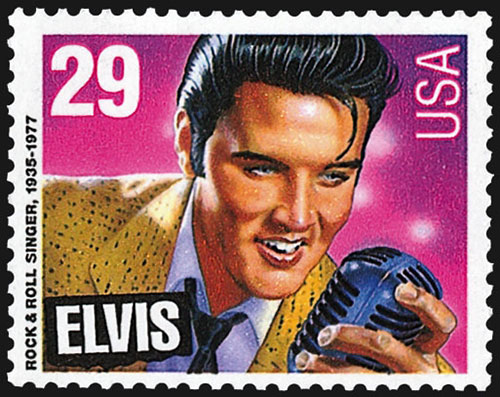

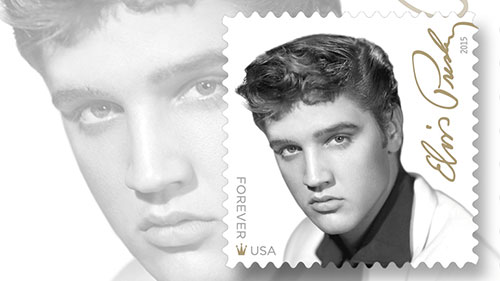
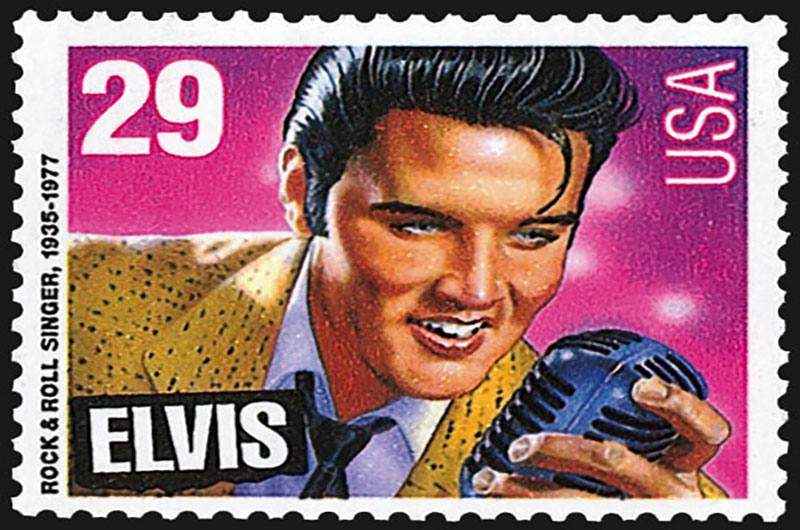
The “Elvis stamp election” of 1992-1993 is one of the most celebrated episodes in U.S. postal history. In 1993, the U.S. Postal Service (USPS) planned to issue a stamp honoring Elvis, and it commissioned two proposed designs (exhibited here): “Young Elvis,” based upon a 1950s publicity still (Elvis in a bright suit, microphone in hand, pompadour), and “Older Elvis,” portraying him in the 1970s (wearing one of his trademark sequined jumpsuits). The Postal Service decided to let the American public choose which version would be issued, the first ever national vote in USPS history. The voting ran from April 27 through June 7, 1992; an incredible 1.2 million votes were received; “Young Elvis” won overwhelmingly by a 75% to 25% margin; and the stamp was issued on January 8, 1993, which would have been Elvis’s 58th birthday, at Graceland in Memphis. It has become the most popular U.S. commemorative stamp ever, with over 500 million copies sold.